
#Life
The Many Faces Of Ramadan
From childhood laughter to the quiet prayers of motherhood, one woman reflects on how Ramadan reveals a different face in every stage of life.

I’ve been here before, standing at these gates, shaking a little—another Ramadan lies just past this doorway—but it’s never quite the same I or the same here.
Some things are the same, like the trepidation, always the trepidation—the feeling that I’m not ready. But is it not the Giver who decides on the timing of the gift and not the recipient?
I did not always see the gift, could not always put into words what it meant to me, but year after year, there was something to gain, something to learn.
Keep supporting MuslimMatters for the sake of Allah
Alhamdulillah, we're at over 850 supporters. Help us get to 900 supporters this month. All it takes is a small gift from a reader like you to keep us going, for just $2 / month.
The Prophet (SAW) has taught us the best of deeds are those that done consistently, even if they are small. Click here to support MuslimMatters with a monthly donation of $2 per month. Set it and collect blessings from Allah (swt) for the khayr you're supporting without thinking about it.
As a child, I barrelled through its gates headfirst, shrieking with laughter at my big brother’s suhoor antics: tumbling out of bed minutes before fajr, bleary-eyed, glasses askew; glugging down a full pitcher of water as five younger siblings cheered him on; inhaling whatever food remained on the table; turning, with cheeks bulging, to whichever clock showed an extra minute. There were no decorations or coloured lights in my Toronto home those days, but Ramadan glowed brightly with family, good food, and a shared challenge.
As a teen, I entered its gates more mindfully, resolving to read a juz a day, along with the English translation. Despite my short-lived enthusiasm—when I fell a few days behind, I threw my hands up in defeat—it was the beginning of a journey. I let go of the timeline and puttered along anyway, taking charge of learning the message I’d only experienced secondhand. I filled the margins with pencilled-in notes, curly brackets, and underlines; my eyes and heart were opened wide; I often thought, How have I never read this before?
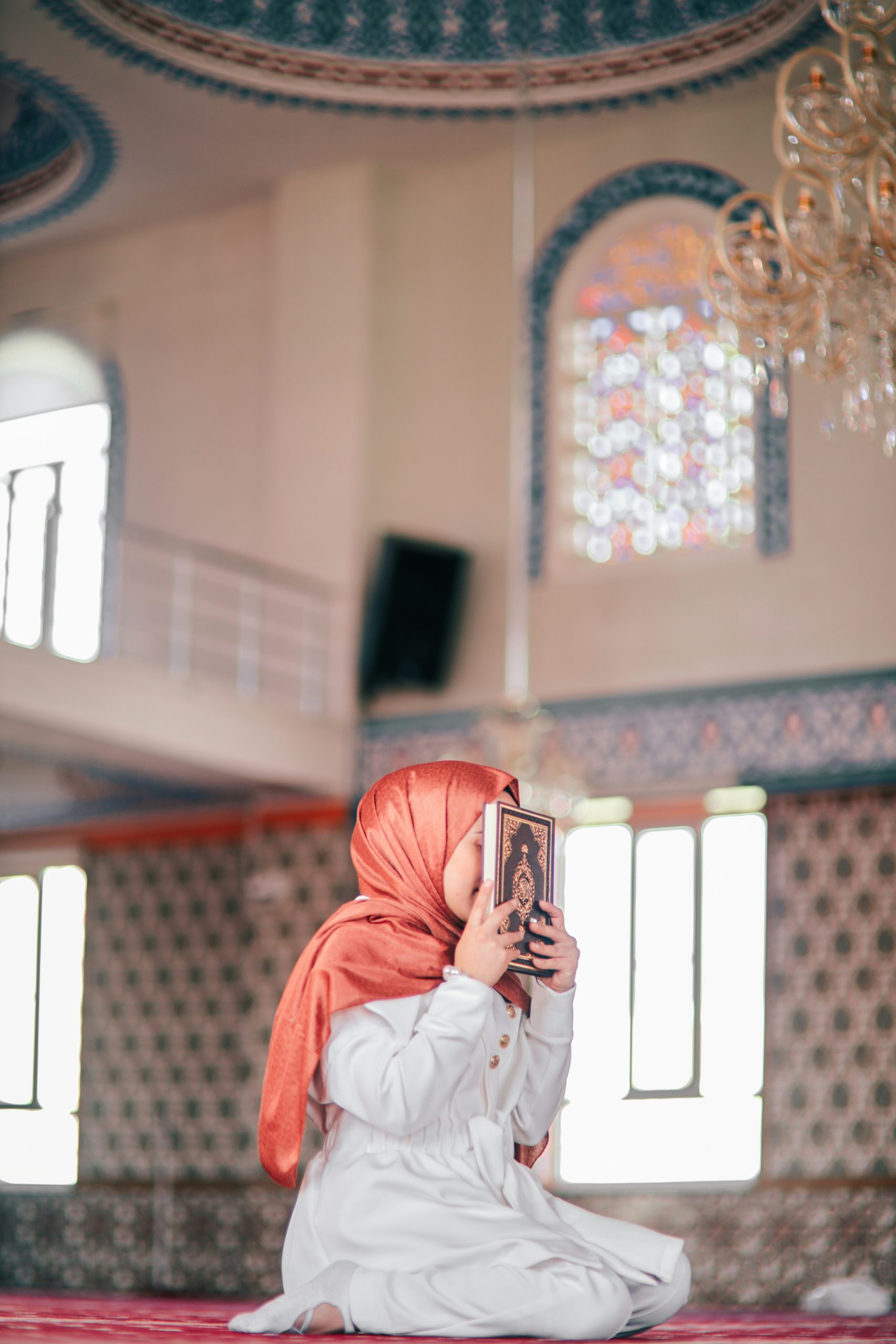
In my twenties, I saw Ramadan as a mirror that showed me where I was and where I needed to go. After iftar, I’d rush to get ready as family negotiations began on which mosque to visit that night, my father threatening to stay home if my siblings and I were late: If we’re going to miss ishaa, we’re not going! I found a space, those nights, when the words of God fell directly on my heart, and the world around me fell away.
There was space, too—an opening—for supplication, a direct line to request all that I wanted. The most fervent duaa, to be sure, was for a righteous spouse; Abee seemed the most difficult human on earth when it came to marriage.
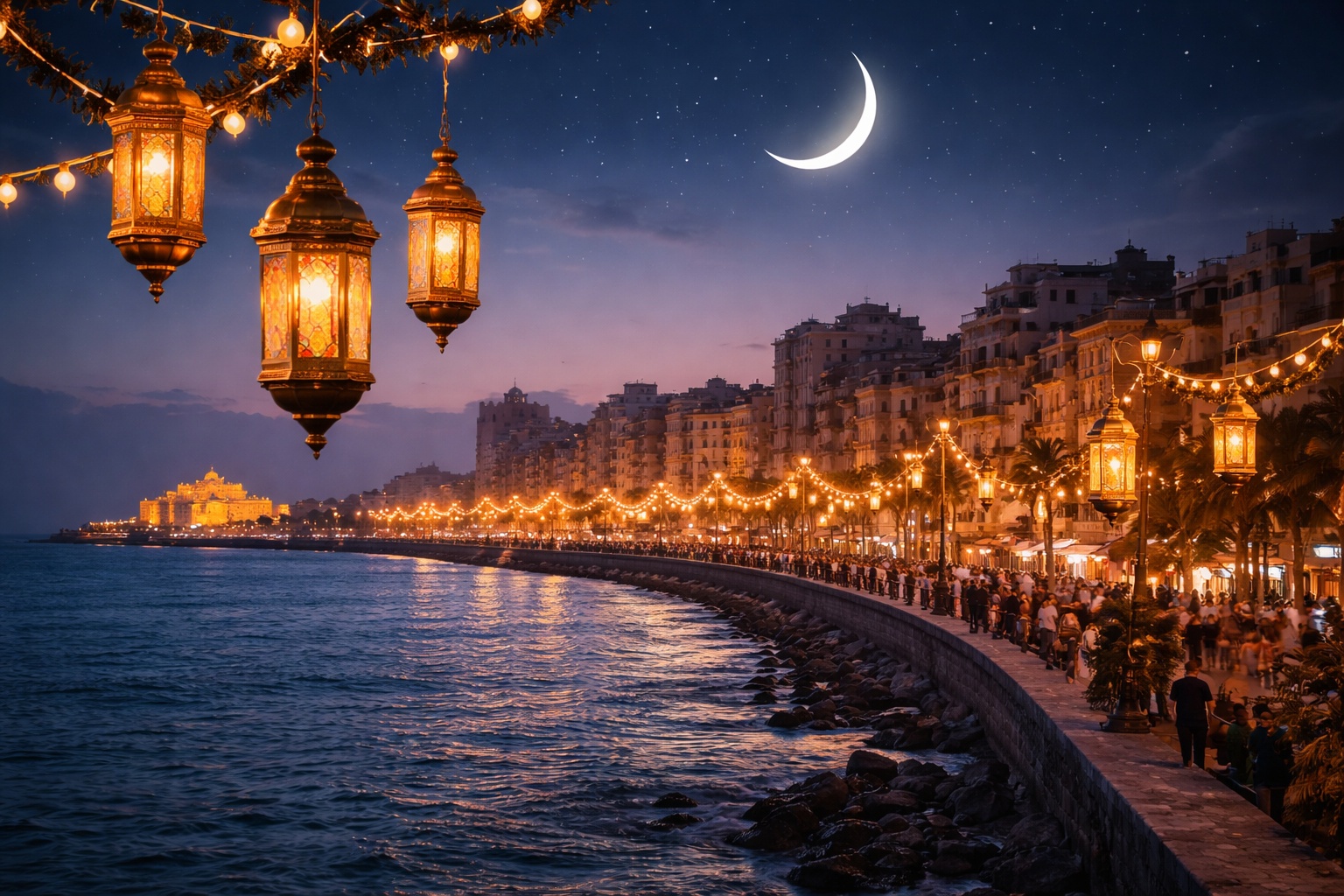
Then, just like that, Ramadan came upon me as a new wife in a new land. Egypt was my parents’ homeland, Alexandria the destination of many past summers, but its energy and colour were lost on my homesick self—until Ramadan arrived with the comfort of constancy and the promise of a new beginning. Every street corner was bursting with its presence, from the gigantic metallic lanterns and strung-up lights to the recitation that filled the night and the callers who woke the sleeping for suhoor.
Another Ramadan taught me hard lessons on moderation, intuition, and respecting my body’s limits. My second child was two months old, my first a toddler; the summer fasting days were long and hot. But I tried to fast, ignoring all the ways my body was saying, This is too hard. I pushed myself, barely functioning, until my baby screamed all night because my milk had run dry. I learned that Ramadan was meant to be a mercy, not a punishment, and that exemptions were gifts from the One who knew we would need them.
As my babies grew, I learned to let go of my pre-motherhood expectations of Ramadan. I lived and breathed the knowledge that Ramadan looked different for each person, in each circumstance.
For me, it meant snatching exhausted rak’ahs while my baby wriggled on my prayer mat and, later, while my girls played pretend nearby. It meant, when I returned to Canada with my husband and girls and was working fulltime, that my living room became my masjid after I put the girls to bed. I learned that worship has many faces, some quieter and less visible than others.
Fast forward a few Ramadans, and I was back in Alexandria, where once again, lanterns and lights decorated every entrance; where recitation filled the night, voices crisscrossing on the breeze; where rows of worshippers stood under the night sky while stray cats scurried between the rows. And where, more often than not, I still pray in my own room—fighting fatigue and heavy eyes—while my daughters, now grown, each recite in separate rooms.
And I can’t help but remember the verse, And He gave you from all you asked of Him. And if you should count the blessings of Allah, you could not enumerate them. Indeed, mankind is most unjust and ungrateful.
So rejoice, my dear soul, at the gift that was not requested but desperately needed, at the blessing of another Ramadan and another breath, at meals and moments of calm, at hearts broken and bruised, yet finding healing in His words and in His promise.
Related:
– My Best Ramadan – Four Stories Of Ramadans Past
– Ramadan With A Newborn: Life Seasons, Ibaadah, And Intentionality
Keep supporting MuslimMatters for the sake of Allah
Alhamdulillah, we're at over 850 supporters. Help us get to 900 supporters this month. All it takes is a small gift from a reader like you to keep us going, for just $2 / month.
The Prophet (SAW) has taught us the best of deeds are those that done consistently, even if they are small. Click here to support MuslimMatters with a monthly donation of $2 per month. Set it and collect blessings from Allah (swt) for the khayr you're supporting without thinking about it.



Widening Wars Leave the Middle East in Shambles

15 Things You Didn’t Know About Makkah and the Ka’bah [Part 1]

Eid Mubarak from MuslimMatters

Selamat Hari Raya! – Celebrating Eid In Malaysia

AL-AQSA IS CLOSED

[Podcast] Ramadan Is Not For Your Private Spirituality | Dr Farah El-Sharif

Ramadan, Disability, And Emergency Preparedness: How The Month Of Mercy Can Prepare Us Before Communal Calamity

She Cried At The Door Of The Masjid: A Case For Children In Mosques

When to Walk Away from Toxic Friends | Night 9 with the Qur’an

I Can’t Stop Thinking About Someone | Night 10 with the Qur’an

Coming Full Circle: Who Are You Now? | Night 30 with the Qur’an

Running Away From Who We Are | Night 29 with the Qur’an

Building From the Ground Up: Week 4 Recap | Night 28 with the Qur’an

The Muslim You Are Becoming | Night 27 with the Qur’an

What Will You Leave Behind? Legacy in Islam | Night 25 with the Qur’an
-

 #Islam1 month ago
30 Nights with the Qur’an: A Ramadan Series for Muslim Teens
-
#Current Affairs1 month ago
An Unending Grief: Uyghurs And Ramadan Under Chinese Occupation
-
#Society1 month ago
Where Does Your Dollar Go? – How We Can Avoid Another Beydoun Controversy
-
#Current Affairs3 weeks ago
[Podcast] Ramadan Is Not For Your Private Spirituality | Dr Farah El-Sharif


