
#Islam
The Ramadan Mask: Why We Perform Piety And Bypass The Soul

I see it every year. Two weeks before the moon is sighted, a specific “Ramadan Anxiety” starts to settle in.
It’s a heavy, unspoken pressure. We feel the sudden, frantic need to “fix” fractured family ties that have been broken for years, as if a change in month could magically override years of boundary violations and deep-seated trauma. We are told this is the month to ask for what we want—to cry in Tahajjud—as if our spiritual performance is a transaction that will force the universe to grant the wishes our hearts desire. But what if we’re too numb to even know what to ask for? What if the tears just won’t come?
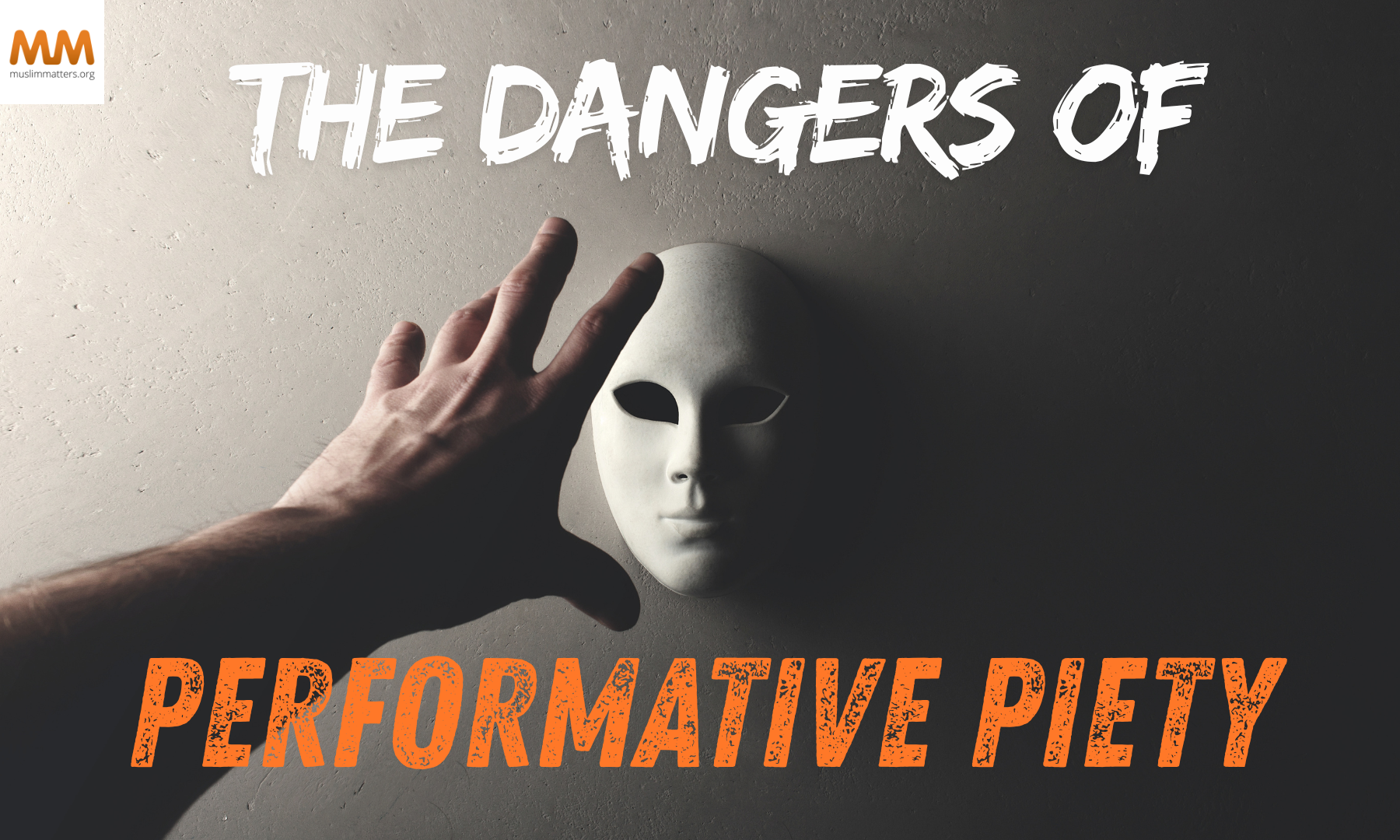
So, we put on the mask.
Keep supporting MuslimMatters for the sake of Allah
Alhamdulillah, we're at over 850 supporters. Help us get to 900 supporters this month. All it takes is a small gift from a reader like you to keep us going, for just $2 / month.
The Prophet (SAW) has taught us the best of deeds are those that done consistently, even if they are small. Click here to support MuslimMatters with a monthly donation of $2 per month. Set it and collect blessings from Allah (swt) for the khayr you're supporting without thinking about it.
We have turned Ramadan into a competition. Who reads the most Quran? Who stayed up the latest for Taraweeh? Who has the most “productive” schedule? We post polished pictures of our Ramadan decor and our perfectly set Iftar tables, but let’s address the elephant in the room: Many of us are faking the “Ramadan High.”
The Exhaustion of the Competition
When we focus on the competition, we are essentially performing for an audience of people—even when we’re standing alone in the dark at 3:00 AM. We worry about how our journey looks to others because if we aren’t “doing,” we’re forced to “be.”
And “being” is terrifying.
“Being” means admitting that you’re entering the holiest month feeling burnt out. It means acknowledging that you’re angry, or that you’re struggling with your mental health, or that you feel like a fraud. We mask because we’re afraid that if we show our true, messy selves, we won’t be worthy of the Rahma (mercy) we’re seeking.
The “NPC” Muslim
In our digital age, it’s easy to slip into being the “NPC” version of a Muslim—the non-player character who just mindlessly follows a script, reciting words we don’t feel and smiling through the burnout because that’s what the “level” requires.
Why do we do this? Because looking within is painful. It’s much easier to finish a reading goal than it is to sit in silence and ask: “Why am I so disconnected from my own heart?” But as a therapist, I have to tell you: We cannot bypass our humanity to get to our spirituality. Allah  doesn’t want the programmed version of you. He didn’t ask for a filtered, hollowed-out performance.
He asked for YOU.
The one who is tired. The one who is struggling. The one who doesn’t have it all together. If we spend thirty days ignoring our internal reality just to keep up with the competition, we aren’t “growing”—we’re just suppressing. True ‘ibaadah isn’t found in mindless rituals; it’s found in the raw, honest space where your real life meets your faith.
Trading Performance for Presence
As a therapist, I want to challenge you to drop the “perfect” act this year. Honesty with ourselves and others is the only way to actually experience the healing this month offers. Here’s what that looks like:
– Honest Du’a (The “Unfiltered” Prayer): Instead of reciting a laundry list of things you think you should want, try being radical. “Ya Allah, I feel nothing right now. Please meet me in this numbness.” That is a more sincere prayer than a thousand words you don’t mean.
– Authentic Boundaries: If “fixing family ties” means breaking your mental health to sit with people who belittle you, honesty looks like protecting your heart while praying for theirs from a distance. Healing isn’t a performance for the relatives.
– Measuring “State” over “Stats”: At the end of the day, instead of asking “How many pages did I read?”, ask yourself: “Was I present for one minute today? Did I let myself feel a real emotion without judging it?”
– Community Vulnerability: When someone asks “How is your Ramadan going?”, try dropping the “Alhamdulillah, amazing!” mask if it isn’t true. Try: “Honestly, it’s been a bit of a struggle for me mentally this year, but I’m taking it one day at a time.”
The mask protects us from being seen, but it also prevents us from being loved and healed. This year, let’s try something different. Stop “performing” Ramadan, and let it just be. Bring your actual, messy, aching self to the prayer rug and see what happens when you finally stop pretending.
Related:
– Recognizing Allah’s Mercy For What It Is: Reclaiming Agency Through Ramadan
– Ramadan In The Quiet Moments: The Spiritual Power Of What We Don’t Do
Keep supporting MuslimMatters for the sake of Allah
Alhamdulillah, we're at over 850 supporters. Help us get to 900 supporters this month. All it takes is a small gift from a reader like you to keep us going, for just $2 / month.
The Prophet (SAW) has taught us the best of deeds are those that done consistently, even if they are small. Click here to support MuslimMatters with a monthly donation of $2 per month. Set it and collect blessings from Allah (swt) for the khayr you're supporting without thinking about it.



15 Things You Didn’t Know About Makkah and the Ka’bah [Part 2]

Widening Wars Leave the Middle East in Shambles
15 Things You Didn’t Know About Makkah and the Ka’bah [Part 1]

Eid Mubarak from MuslimMatters

Selamat Hari Raya! – Celebrating Eid In Malaysia

[Podcast] Ramadan Is Not For Your Private Spirituality | Dr Farah El-Sharif

She Cried At The Door Of The Masjid: A Case For Children In Mosques

The Trials Playlist: A Chaplain’s Set To Steady Your Heart

[Podcast] Is Your Sadaqah Paying an Influencer Instead of Going to Charity? | Mufti Abdullah Nana & Dr Shafi Lodhi

Every Sin Has a Cure | The Venom and the Serum Series

Coming Full Circle: Who Are You Now? | Night 30 with the Qur’an

Running Away From Who We Are | Night 29 with the Qur’an

Building From the Ground Up: Week 4 Recap | Night 28 with the Qur’an

The Muslim You Are Becoming | Night 27 with the Qur’an

What Will You Leave Behind? Legacy in Islam | Night 25 with the Qur’an
MuslimMatters NewsLetter in Your Inbox

Sign up below to get started
-

 #Current Affairs4 weeks ago
[Podcast] Ramadan Is Not For Your Private Spirituality | Dr Farah El-Sharif
-
#Society3 weeks ago
She Cried At The Door Of The Masjid: A Case For Children In Mosques
-
#Current Affairs1 month ago
Op-Ed: Can Zakat Be Used For Political Campaigning? An Argument In Favor
-
#Islam1 month ago
When You’re the Only Muslim in the Room | Night 4 with the Qur’an


