
#Current Affairs
An Unending Grief: Uyghurs And Ramadan Under Chinese Occupation

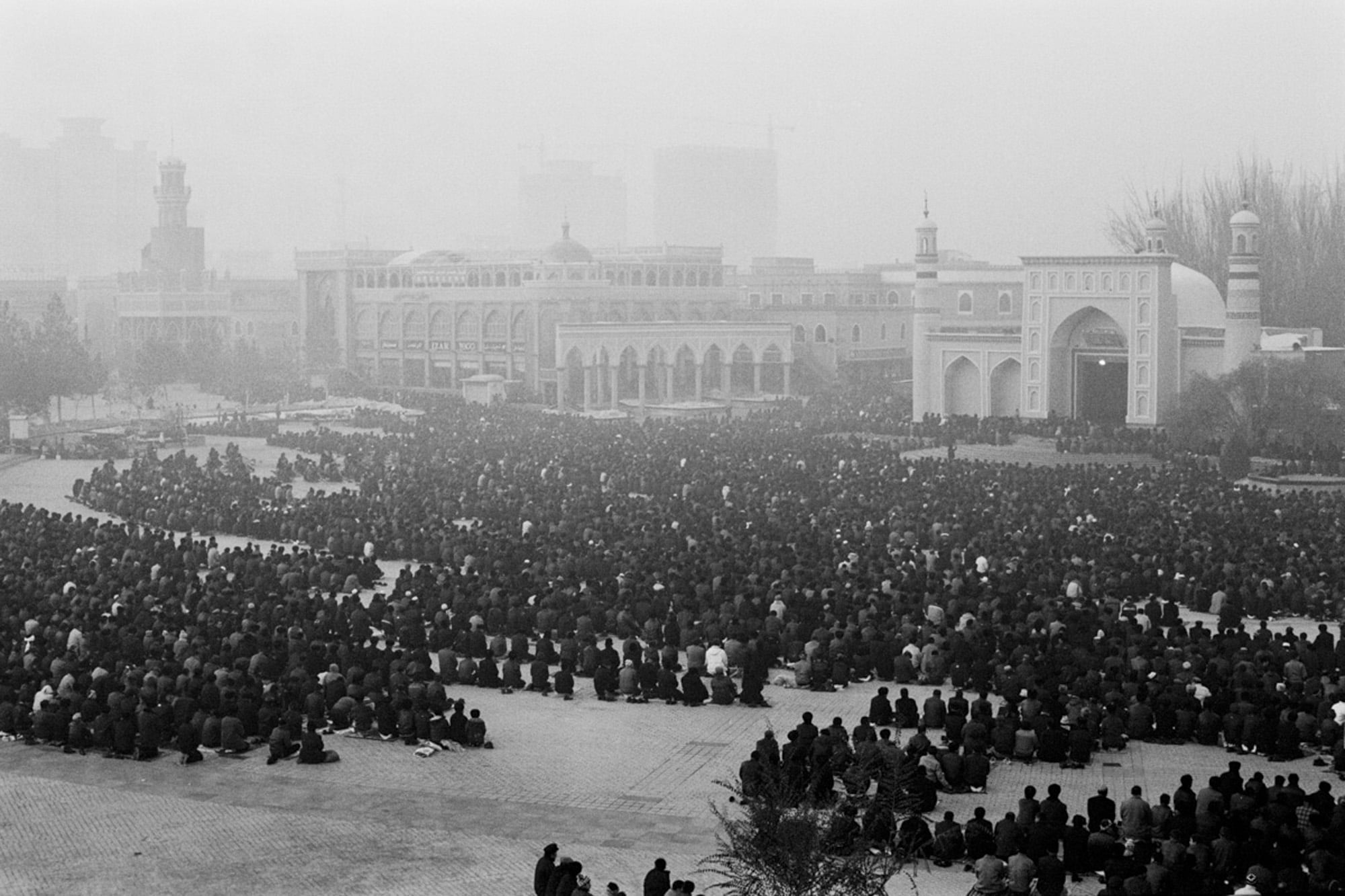
Around the world, Muslims rejoice with anticipation and excitement for the blessed month. They get to wake up before dawn with lights on for suhoor, set “Ramadan goals,” deepen their relationship with the Qur’an, stand shoulder-to-shoulder in taraweeh prayers, retreat into the masjid for i‘tikaf, and ultimately celebrate Eid with their families in lit-up mosques.
But for other Uyghurs and myself in the diaspora, this experience summons a different reality — one where our hearts turn to our people in Chinese-occupied East Turkistan (Xinjiang), a land whose occupation and suffering still remain largely forgotten by the ummah.
I describe the Ramadan most Muslims know, because it feels increasingly necessary to name what Uyghur Muslims have been denied, in a land where Islam has been woven into the fabric of life since the 10th century. And it still feels like the community has so much more to do and learn to understand the gravity of our genocide.
Keep supporting MuslimMatters for the sake of Allah
Alhamdulillah, we're at over 850 supporters. Help us get to 900 supporters this month. All it takes is a small gift from a reader like you to keep us going, for just $2 / month.
The Prophet (SAW) has taught us the best of deeds are those that done consistently, even if they are small. Click here to support MuslimMatters with a monthly donation of $2 per month. Set it and collect blessings from Allah (swt) for the khayr you're supporting without thinking about it.
How many years has it been since Uyghurs in East Turkistan last heard the adhan echo through their neighborhoods? How many years have they been forced to eat suhoor in darkness, fearing that a lit kitchen might be flagged as “extremism,” a suspicion that can lead to a decade or more behind torture and death-ridden prison walls?
How many Uyghur students have been compelled to eat in daylight under the watchful eyes of teachers, forced to prove they are not fasting? How many have been publicly humiliated, coerced into drinking alcohol or eating pork during the holiest month, performing loyalty to a state that criminalizes Islam in its entirety?
What does Eid even look like when often at least one family member is in prison, parents are separated from their children because they are forcibly sent to state-run orphanages, and thousands of mosques are either closed, or demolished and repurposed into propaganda centers? What does Eid look like when the Chinese government criminalizes gatherings, despite the centrality of family visits and communal celebration in Uyghur culture?
What depths of trauma must someone endure to be imprisoned for praying, naming a child Muhammad, or owning a Qur’an — only then to be tortured, indoctrinated, and forced to renounce one’s faith in these facilities?
I will never forget the stories and testimonies of Uyghur prisoners, like that of Adil Abdulghufur, an Uyghur man who told me the unfathomable horrors he experienced for 18 years behind Chinese prison walls. I interviewed him in 2016, one year before the Chinese government started rounding up over a million Uyghurs and other Turkic people into concentration camps and prisons.
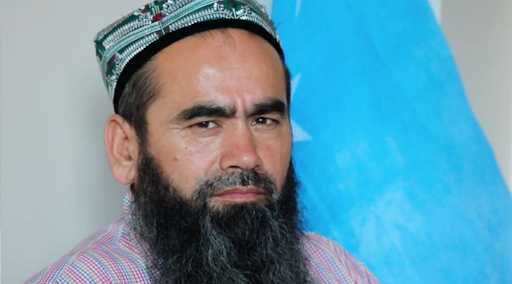
“Adil Abdulghufur during an interview with the author in Istanbul, Türkiye, 2016.
Below are two excerpts from Adil’s interview highlighting China’s crackdown on religion in prison:
Adil: “I will tell you about one disaster that happened to me. In 2002 or 2003, they said I called the adhan in my sleep. Even saying bismillah is forbidden. We are not allowed to pray. If we sit still, they accuse us of praying. We are expected to constantly read and memorize Chinese laws.
That night, they dragged me from my bunk by my feet. I was naked. As they pulled me across the floor, the skin on my back and head tore. There was blood.
It was January. The snow outside had frozen like ice.
In the prison office, soldiers demanded to know what I had done. I told them I must have been talking in my sleep.
They said, ‘You screamed “Allahu Akbar.”’
I said I had not prayed. They accused me of lying and beat me — like wool rolled and kicked to make kighiz (a rug) — until they were exhausted.
After nearly half an hour, I could no longer feel the blows. My body was drenched in sweat, dirt, and mud.
They threw clothes at me. Then they chained my hands and feet.
Finally, they hung a 25-kilogram cement board around my neck. Carved into it were the words: ‘For stubborn prisoners who refuse to bow to Chinese rule.’”
———
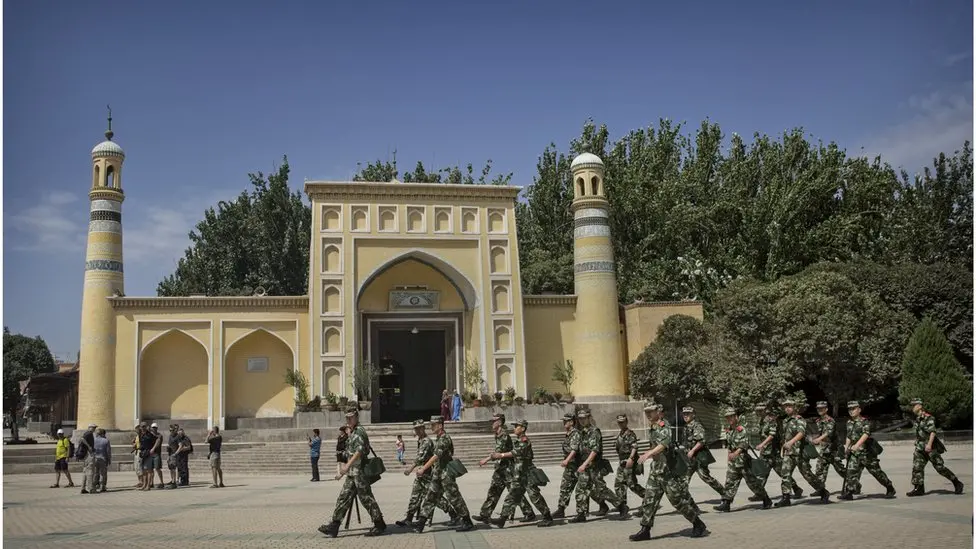 There is something else the Chinese authorities do, something the international community must hear.
Every year in March, they would administer a questionnaire to prisoners like us. Hundreds of questions are placed before those considered “patriotic” or “faithful” Turkistanis, or prisoners accused of opposing the Chinese government.
The first question is always the same:
“Is there a God or not?”
We are not allowed to explain. Only “yes” or “no.”
Then the following questions would come up:
“Were the heavens and the earth created by God or by nature?”
“Can the Holy Qur’an save mankind?”
“Is East Turkistan part of China, or is it a separate country?”
“Are you praying in prison?”
“Will you pray in the future?”
“What will you do once released?”
“What kind of person is Osama Bin Laden?”
“If Chinese and Uyghurs live together, will society flourish?”
Each answer must be reduced to a single word. Yes or no. No context. No explanation.
Based on those answers, we are sorted into four groups, each marked by a colored card.
Those assigned a red card are permitted to walk upright. They are the ones deemed compliant: prisoners who deny God, who affirm that East Turkistan is China, who give the “correct” answers.
Those given a yellow card must walk with their hands locked behind their heads. Those with brown cards are forced to move bent over, hands behind their heads. And those given green cards, my group, are not allowed to walk at all. We must crawl.
In 2002, my mother was allowed to visit for the first time. I had not seen her in four or five years. When the guards asked whether I wanted to see her, how could I refuse?
The distance from my cell to the visitors’ center was nearly a mile. They told me I could see my mother, but only if I crawled. I told them I would roll if I had to.
So I crawled.”
———
According to Gene Bunin, founder of the Xinjiang Victims Database, an online archive documenting known individuals detained in East Turkistan, more than 500,000 individuals are estimated to have been imprisoned, with roughly half believed to have been released after completing their sentences. Many of the charges stem from ordinary religious practices, prosecuted under vague accusations such as ‘extremism,’ ‘inciting religious hatred,’ and similar offenses.
The Uyghurs do not have the means to freely broadcast their suffering. Their cries are muffled by walls of fear, propaganda, and relentless censorship imposed by the Chinese government.
Ramadan is not meant to be only a personal, spiritual retreat. To isolate ourselves from the world and grow numb to suffering runs contrary to its very purpose. Rather, Ramadan should sharpen our awareness, soften our hearts, and move us toward action.
The least we can do this month is keep the Uyghurs in our conversations and our du‘a, learn their history and their stories, and strive to stand more consciously for the betterment of the ummah.
May Allah  uplift and ease the suffering of our brothers and sisters in Chinese-occupied East Turkistan, Indian-occupied Kashmir, Burma, Palestine, and for Muslims oppressed in all corners of the earth.
May He grant us the strength to do more for our brethren, and never allow us to grow weary of doing even the bare minimum.
Related:
– Ramadan At The Uyghur Mosque: Community, Prayers, And Grief
Keep supporting MuslimMatters for the sake of Allah
Alhamdulillah, we're at over 850 supporters. Help us get to 900 supporters this month. All it takes is a small gift from a reader like you to keep us going, for just $2 / month.
The Prophet (SAW) has taught us the best of deeds are those that done consistently, even if they are small. Click here to support MuslimMatters with a monthly donation of $2 per month. Set it and collect blessings from Allah (swt) for the khayr you're supporting without thinking about it.



Ramadan In India’s Capital: A Photo Essay

The Pilgrim [Part 2] – Things To Give

Taqwa: The Foundation | 30 Nights with the Qur’an

Speaking to Allah in the Last 10 Nights: Du’a for Our Children | Part 2

Entering The Last 10 Nights: What Ramadan In Gaza Taught Me About Gratitude

30 Nights with the Qur’an: A Ramadan Series for Muslim Teens

Where Does Your Dollar Go? – How We Can Avoid Another Beydoun Controversy

An Unending Grief: Uyghurs And Ramadan Under Chinese Occupation

[Podcast] Ramadan Is Not For Your Private Spirituality | Dr Farah El-Sharif

Who Am I Really? What Surat Al-‘Asr Teaches Muslim Teens About Identity | Night 1 with the Qur’an

What Will You Leave Behind? Legacy in Islam | Night 25 with the Qur’an

The Why Behind Our Actions | Night 24 with the Qur’an

Your Place in the Ummah | Night 23 with the Qur’an

What’s My Purpose? | Night 22 with the Qur’an

Doubt, Depression, Grief, Shame, Addiction: Week 3 Recap | Night 21 with the Qur’an
MuslimMatters NewsLetter in Your Inbox

Sign up below to get started
-

 #Islam4 weeks ago
30 Nights with the Qur’an: A Ramadan Series for Muslim Teens
-
#Society3 weeks ago
Where Does Your Dollar Go? – How We Can Avoid Another Beydoun Controversy
-
#Islam1 month ago
[Podcast] Guardians of the Tradition: Muslim Women & Islamic Education | Anse Tamara Gray
-
#Current Affairs2 weeks ago
[Podcast] Ramadan Is Not For Your Private Spirituality | Dr Farah El-Sharif


Bint Ari
February 19, 2026 at 10:06 PM
Thank you for this article. Can you suggest any materials for learning more about the Uyghurs?