
#Life
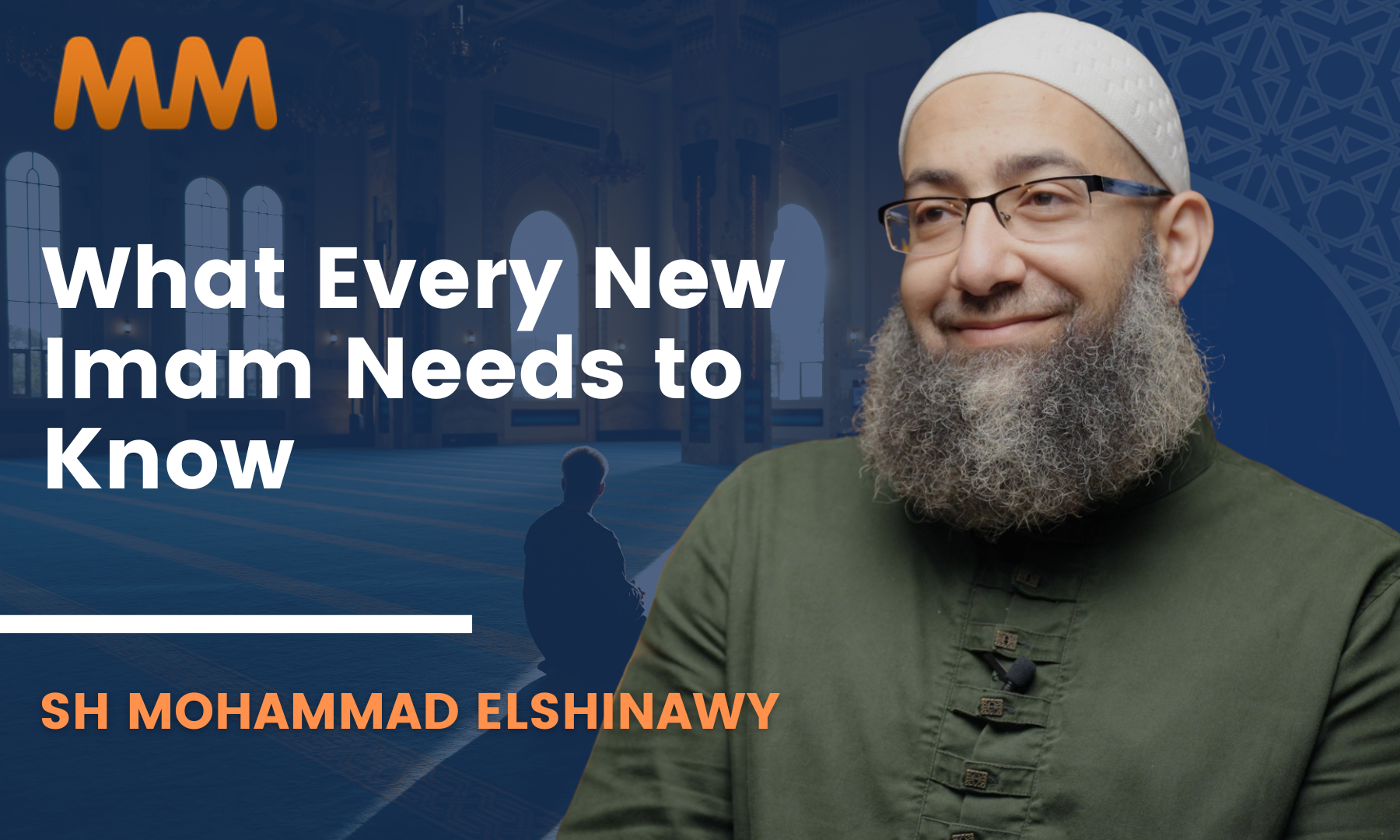
[Podcast] The Parts of Being an Imam They Don’t Warn You About | Sh Mohammad Elshinawy

Keep supporting MuslimMatters for the sake of Allah
Alhamdulillah, we're at over 850 supporters. Help us get to 900 supporters this month. All it takes is a small gift from a reader like you to keep us going, for just $2 / month.
The Prophet (SAW) has taught us the best of deeds are those that done consistently, even if they are small. Click here to support MuslimMatters with a monthly donation of $2 per month. Set it and collect blessings from Allah (swt) for the khayr you're supporting without thinking about it.



The Pilgrim [Part 1] – A Ramadan Story

What Will You Leave Behind? Legacy in Islam | Night 25 with the Qur’an

The Dua Of The Overwhelmed Believer

[Podcast] Is Your Sadaqah Paying an Influencer Instead of Going to Charity? | Mufti Abdullah Nana & Dr Shafi Lodhi

The Why Behind Our Actions | Night 24 with the Qur’an

30 Nights with the Qur’an: A Ramadan Series for Muslim Teens

Where Does Your Dollar Go? – How We Can Avoid Another Beydoun Controversy

An Unending Grief: Uyghurs And Ramadan Under Chinese Occupation

[Podcast] Ramadan Is Not For Your Private Spirituality | Dr Farah El-Sharif

Who Am I Really? What Surat Al-‘Asr Teaches Muslim Teens About Identity | Night 1 with the Qur’an
What Will You Leave Behind? Legacy in Islam | Night 25 with the Qur’an
The Why Behind Our Actions | Night 24 with the Qur’an

Your Place in the Ummah | Night 23 with the Qur’an

What’s My Purpose? | Night 22 with the Qur’an

Doubt, Depression, Grief, Shame, Addiction: Week 3 Recap | Night 21 with the Qur’an
-

 #Islam4 weeks ago
30 Nights with the Qur’an: A Ramadan Series for Muslim Teens
-
#Society3 weeks ago
Where Does Your Dollar Go? – How We Can Avoid Another Beydoun Controversy
-
#Current Affairs3 weeks ago
An Unending Grief: Uyghurs And Ramadan Under Chinese Occupation
-
#Islam1 month ago
[Podcast] Guardians of the Tradition: Muslim Women & Islamic Education | Anse Tamara Gray


Amer Rizvi
January 29, 2026 at 9:52 AM
I wish Muslim scholars and imams, in general, knew more about worldly affairs and not just religious matters. I asked one scholar from AMJA as to what I should do about the vicious racial discrimination I faced in the public school I taught in. He said I should forgive them as Muslims are allowed to forgive disbelievers. And on the Day of Judgement I will get my justice! What I wanted was some encouragement to get my rights as a human being, not a formula to become another Muslim doormat!
Wael Abdelgawad
January 31, 2026 at 12:08 AM
To be fair, a religious scholar can’t know everything about everything. He can’t be a civil rights expert, marriage counselor, financial advisor… You should have consulted a CAIR official or civil rights attorney.
Amer Rizvi
January 31, 2026 at 8:15 AM
Religious scholars who give fatwa in our country should be broadly educated and have strong knowledge particularly of civil rights issues.
Educated Muslims in the US now realize that to thrive as a community, and not just survive, pursuing careers in just IT, business and medicine will not cut it. Muslims are now entering fields like broadcast journalism, law enforcement, public school teaching, politics (Democratic and Republican), public service, sports, the entertainment industry etc. As Muslim trailblazers, they are going to encounter much racial and religious discrimination. I believe a strong background in civil rights is critical for a religious scholar and Imam working in our country.
I did not take the Fatwa from the AMJA scholar. In my opinion, the fatwa to forgive the perpetrators and oppressors would have allowed religious and racial discrimination as well as child abuse at the school I was working at to continue.
As a Virginia public school teacher, an American Red Cross lifeguard and a mandated reporter of child abuse, I had to send a firm message to our school district. And, most importantly, on the Day of Judgement, I would have to answer to Allah: Did I try to stop the evil I saw in this world?
Fortunately, the scholars at our local ADAMS Islamic center were well aware of civil rights issues. First, they listened to me with empathy, the most important thing for a scholar to do. They understood the trauma I had been through. They said I had a strong case and the main Imam even referred me to a former school board member. May Allah reward them all.
And of course I went to CAIR. CAIR informed me, “CAIR receives a large volume of complaints each month and is unable to accept all complaints that it receives. Upon reviewing the information you provided in connection with your claim, we are unable to assist you with your case at this time.”
I also consulted with several civil rights lawyers. They were asking for retainer fees from $20,000 to $30,000 up front. I could not afford that. So, I sued the school board myself,
حسبي الله و نعم الوكيل
Wael Abdelgawad
February 1, 2026 at 1:38 AM
What he said to you does not sound to me like a fatwa. It sounds like a bit of advice based on his personal opinion.