
#Islam
What Shaykh Muhammad Al Shareef Taught Us About Making Dua

I took Visionaire, a course about making “dream duas,” the last time it was ever taught by Shaykh Muhammad al Shareef. While I thought I would continue to learn and deepen my understanding of his teachings for years to come, Allah  had different plans. As I revisit the course in preparation for Ramadan this year, here are the basics of what I learned about making dua from the shaykh before his passing.
It’s Sunnah to Aim for the Highest in Your Duas
The Prophet’s  final words were a dua. He was lying in the lap of his beloved wife, Aisha
  , and she just used a miswak to clean his teeth. His final words were, “Oh Allah, in the highest companionship,”1https://sunnah.com/bukhari:4463 referring to his desired station in the akhirah. Throug this dua, we can see the final act of the Prophet was making a lofty dua.
Following in his footsteps, we should also make huge duas that only Allah can fulfill. Dua is not about us, what we can have, or what we deserve; dua is about the One who will answer it. Thus, we raise our standards when it comes to dua without needing to be timid, moderate, shy, or embarrassed to ask Allah or anything we want.
Keep supporting MuslimMatters for the sake of Allah
Alhamdulillah, we're at over 850 supporters. Help us get to 900 supporters this month. All it takes is a small gift from a reader like you to keep us going, for just $2 / month.
The Prophet (SAW) has taught us the best of deeds are those that done consistently, even if they are small. Click here to support MuslimMatters with a monthly donation of $2 per month. Set it and collect blessings from Allah (swt) for the khayr you're supporting without thinking about it.
If we can reach the zone of “slightly unrealistic,” we’ve started asking Allah at a scale that is fitting to His Majesty. We’ve reached that zone when we become confused or feel uncomfortable because we can’t figure out how a dua could ever come into volition. For example, someone wants to change their career and needs time and money for further education. Once they start struggling to figure out the logistics of how they would make ends meet without working full-time and balance their family life, that’s where Allah’s Divine capability intercedes. The duas we make should aim to reflect Allah’s infinite ability and not our finite human limitations.
You Can Make Dua Out of Pain or Pleasure
We can make dua from a state of pain or pleasure, and that Allah listens to both.
Allah answers the duas of pain and desperate need and says so in the Quran.
“Is He [not best] who responds to the desperate one when he calls upon Him and removes evil and makes you inheritors of the earth? Is there a deity with Allah? Little do you remember.” [Surah An-Naml; 27:62]
The Prophet has also taught us that Allah guarantees to answer anyone who uses the specific dua of Prophet Yunus  2https://sunnah.com/tirmidhi:3505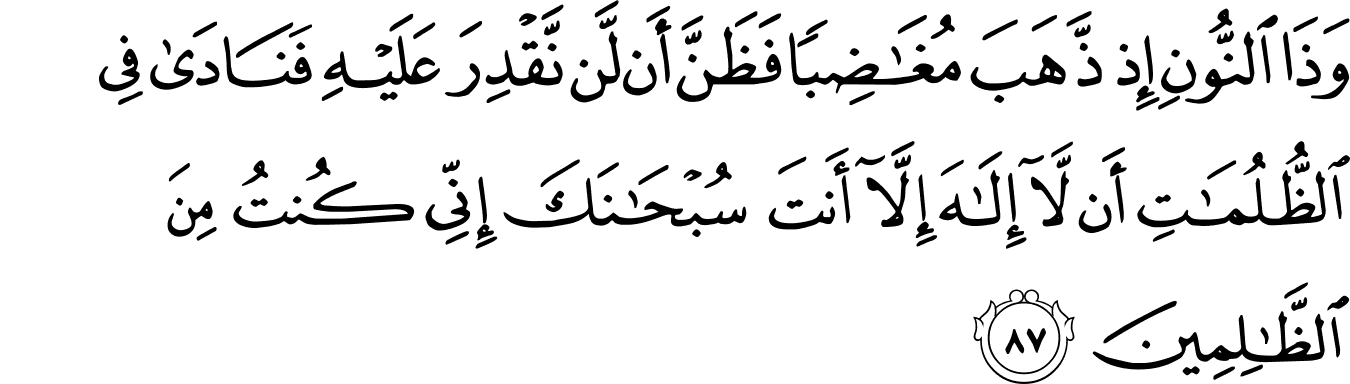
“And [mention] the man of the fish, when he went off in anger and thought that We would not decree [anything] upon him. And he called out within the darknesses, “There is no deity except You; exalted are You. Indeed, I have been of the wrongdoers.” [Surah Al-Anbiya; 21:87]
The good news is that when we are trapped in the belly of the whale, so to speak, in our own lives, we know our pleas will be answered. However, if times of crisis are the only times when we make dua, we will find ourselves constantly needing to be in a disaster to perform this powerful act of worship. On the flip side, when we’re not in pain, we completely disconnect from dua and remain quiet. That sounds pretty sad and is a huge disadvantage to only make dua from pain.
However, we can also make dua out of pleasure–ones that make us excited and put a smile on our faces. These duas are the ones we say, “I can’t wait to get into sajdah to make dua for this” because we’re looking forward to having them answered with so much anticipation. These duas can be separated into three broad categories: things we want to experience, things we want to own, and the type of person we would like to become. Being able to connect to the duas that encapsulate our dreams, is not silly or trivial. They build the intimacy in our relationship with Allah because we continue to ask and ask and ask from Him, even during the good times.
Finally, we should look for hacks to create optimistic duas we can feel excited for even during times of sadness and distress. If we are experiencing doom during a calamity, is there a happy future we can look forward to? We should try to make dua for that as a solution to the current crisis we are facing. For example, a woman has just given birth but has severe health complications and has been in the ICU for a week. While her family is distraught, hoping she’ll recover, they probably can’t think of anything else to pray for. Instead of repeating Ya Allah, give her a full recovery, maybe they can look forward to the mom enjoying her baby’s first birthday or high school graduation in full health. Ya Allah, let her bake the baby’s first birthday cake. Ya Allah, let her make a heartfelt speech about her baby’s accomplishments at his graduation dinner. Doesn’t that sound optimistic, exciting, and so beautiful? Sometimes, it is easier to repeat a dua and stay consistent with asking for it when the dua itself looks on the brighter side of a painful, trying situation.
Give Your Dua an Emotional Charge
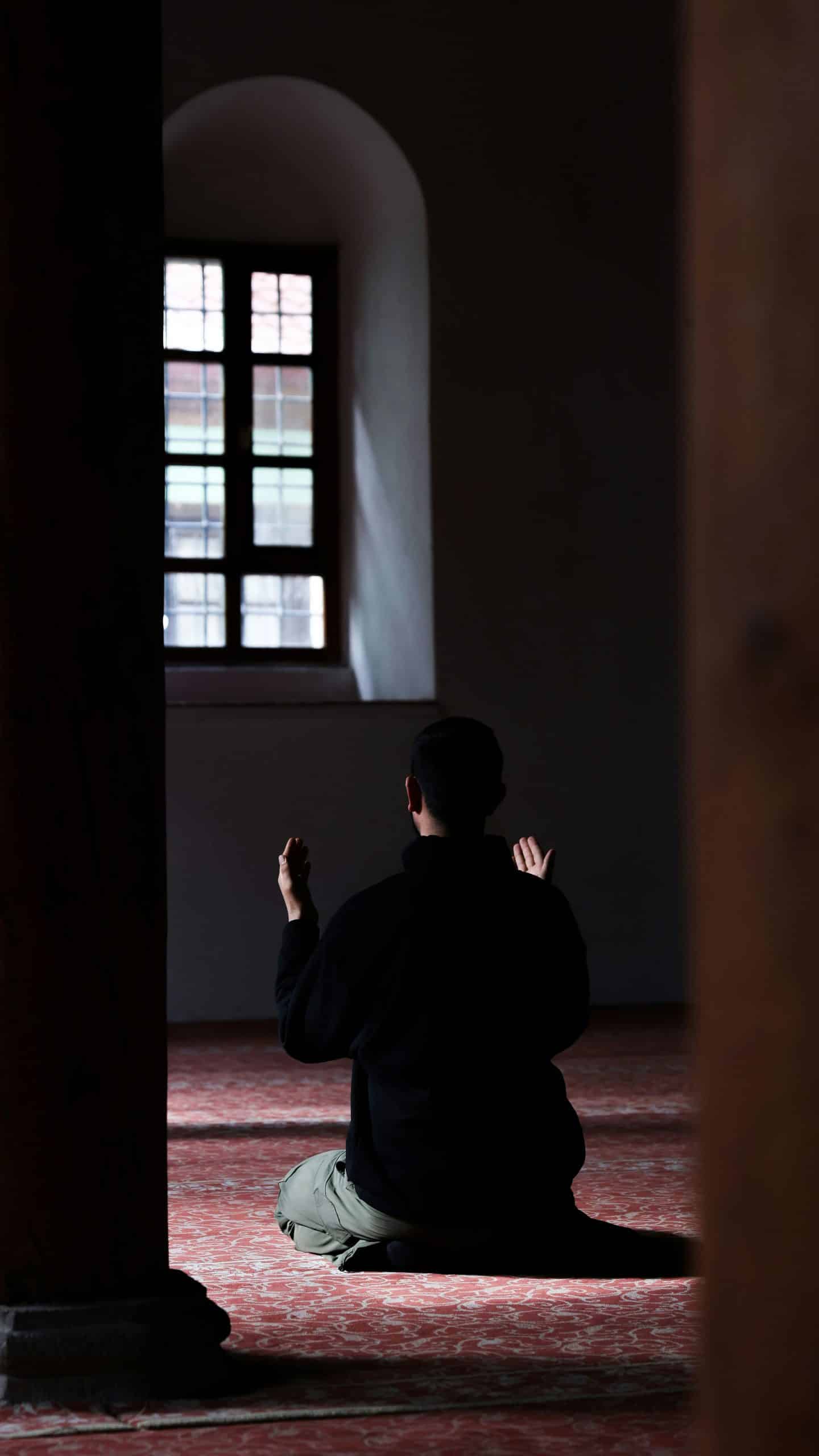
“The undercurrent to making dua regularly and being truly committed to it is being moved emotionally in some way.” [PC: Haci Elmas (unsplash)]
Dua is Not Just Spontaneous, it Involves Careful Preparation and Diligent Work
Dua doesn’t have to be a spontaneous string of words that come from fleeting feelings in our hearts at the given time of the dua. Dream duas that we commit to repeating often involve careful preparation. We must introspect on our current lives and the future lives we wish to live. We can try to visualize what those duas would look, smell, feel, sound, and taste like. We can explore all of the possibilities and brainstorm before committing to a select few. We can think about the words that best capture what we imagine. It might take 10 or 20 attempts to find the perfect wording for a dua and even involve input from others. The duas we make don’t have to be carefully guarded and secret; we are welcome to get help for them.
The work doesn’t stop at coming up with the duas. We can commit to making dua according to a dua habit we devise. (Specifically in Visionaire, the dua habit involves making dream duas multiple times a day/night throughout Ramadan and for 6 months afterwards.) We can also commit to working on making those duas come true with our own efforts, keeping in mind that we seek the worldly means and trust in Allah .3https://sunnah.com/tirmidhi:2517
Grand Duas Help us Grow
As humans, there is no point where we’ve finally “arrived” or “made it” in our lives because things constantly change. We are either growing or dying in everything we do. There is always another mountain to climb; we just have to be the ones to find it. The champion MMA fighter Khabib couldn’t get any higher than being a world champion, right? What he decided to pivot to next was coaching a future world champion. He found another goal to fight for. Our grand “dream duas” benefit us by helping us find, and eventually achieve, our next growth.
Moreover, dream duas can help motivate us, keep us focused on a clear vision, and hold ourselves accountable. If we find that there are duas we keep coming back to over 5-10 years, we can double down on investing in ourselves in those areas to complete our end of the bargain.4https://sunnah.com/tirmidhi:2517 We can do whatever we can in that area and leave the rest to Allah .
Don’t Feel Guilty about Making Dua for Dunya
There is nothing wrong with making dua for the dunya. In the Quran, we are taught to say a dua that asks for the best in this dunya.
But among them is he who says, “Our Lord, give us in this world [that which is] good and in the Hereafter [that which is] good and protect us from the punishment of the Fire.” [Surah Al-Baqarah; 2:201]
The key is that we are not exclusively making dua for the dunya. That feeling of guilt is coming from Shaytan, who is trying to prevent us from engaging in a good deed. We shouldn’t be shy about asking for anything from Allah. As a matter of fact, the more we ask, the happier Allah is and the closer we become to Allah through dua.
Another form of guilt that can deceive us is feeling as if we shouldn’t ask for more if we’re supposed to be grateful for what we already have. However, Allah states that those who are truly grateful will experience an ever-increasing abundance of more to be grateful for [https://quran.com/ibrahim/7.] This dispels the idea that being truly grateful means that a person will never deserve, or desire, more.
I’m Too Scared to Make Dua for the Wrong Thing
Some of us may be faced with dua paralysis when we feel nervous that we are going to ask Allah for something that will turn out to be bad for us in the end. To quell this fear, we should look at the three ways in which Allah answers duas. The first answer to the dua is yes, and exactly what the dua asked for. The second answer is yes, but not now. It will happen later. And the third is yes, but I have something better for you. The protection from making dua for a bad thing is built into the way Allah promises to answer all duas, so make the dua and then leave the rest to Allah . We must have the best opinion of Allah and know that He will always send us good according to His all-encompassing knowledge5https://sunnah.com/bukhari:7405.
Dua is a Lifeforce that will Change You
Dua is a lifeforce that reminds us of the miracles that we are. Aren’t humans just “ghosts inside a skeletal meat living on a rock hurtling through space?” Shaykh Muhammad reminds us.6https://quran.com/51/20-22 Our lives are a sign of Our Creator, the One who can do what we aren’t even capable of imagining or knowing. Thus, dua isn’t about us; it’s about the all-powerful and infinite God whom we worship. As a matter of fact, even non-Muslims know dua works–they just call it by different names like manifesting, the principle of positive attraction, etc. Even Shaytan knows dua works…and he shows us how intensely he understands that duas are not about the asker, but the Responder. Shaytan makes the craziest dua–to live forever and have the power to tempt and lead mankind astray. That is a scary level of yaqeen we can all learn from.
Dua is the only tool we have to rewrite our destiny. Dua is larger than us. Sometimes we feel like we have to change a lot of things in our lives in order to start or return to making dua. However, we don’t need to change; all we need to do is begin in order for dua to change us. Allah will outstrip our smallest baby steps at the onset of this journey and facilitate our progress as we strive to turn and ask from Him.7https://sunnah.com/ibnmajah:3821 So, what are we waiting for now? Get excited about making dua. Godspeed!
Related:
– Constructing Your Personal Arafah Dua List I Sh. Muhammad Alshareef & Sh. Yahya Ibrahim
– From The Chaplain’s Desk: Sayyid Al-Istighfar – The Greatest Dua For Seeking Forgiveness
Keep supporting MuslimMatters for the sake of Allah
Alhamdulillah, we're at over 850 supporters. Help us get to 900 supporters this month. All it takes is a small gift from a reader like you to keep us going, for just $2 / month.
The Prophet (SAW) has taught us the best of deeds are those that done consistently, even if they are small. Click here to support MuslimMatters with a monthly donation of $2 per month. Set it and collect blessings from Allah (swt) for the khayr you're supporting without thinking about it.




Widening Wars Leave the Middle East in Shambles

15 Things You Didn’t Know About Makkah and the Ka’bah [Part 1]

Eid Mubarak from MuslimMatters

Selamat Hari Raya! – Celebrating Eid In Malaysia

AL-AQSA IS CLOSED

[Podcast] Ramadan Is Not For Your Private Spirituality | Dr Farah El-Sharif

Ramadan, Disability, And Emergency Preparedness: How The Month Of Mercy Can Prepare Us Before Communal Calamity

She Cried At The Door Of The Masjid: A Case For Children In Mosques

When to Walk Away from Toxic Friends | Night 9 with the Qur’an

I Can’t Stop Thinking About Someone | Night 10 with the Qur’an

Coming Full Circle: Who Are You Now? | Night 30 with the Qur’an

Running Away From Who We Are | Night 29 with the Qur’an

Building From the Ground Up: Week 4 Recap | Night 28 with the Qur’an

The Muslim You Are Becoming | Night 27 with the Qur’an

What Will You Leave Behind? Legacy in Islam | Night 25 with the Qur’an
-

 #Islam1 month ago
30 Nights with the Qur’an: A Ramadan Series for Muslim Teens
-
#Current Affairs1 month ago
An Unending Grief: Uyghurs And Ramadan Under Chinese Occupation
-
#Society1 month ago
Where Does Your Dollar Go? – How We Can Avoid Another Beydoun Controversy
-
#Current Affairs3 weeks ago
[Podcast] Ramadan Is Not For Your Private Spirituality | Dr Farah El-Sharif


Amer Rizvi
January 24, 2026 at 9:47 AM
The careful preparation and diligent work for making dream duas has already been done for us by the best “dream dua makers” of all time: the Prophets (عليهم الصلاة و السلام).
And this is the beauty of Islam, the hard work has already been done for you! No need to reinvent the wheel!
Think of Prophet Mūsā (عليه الصلاة و السلام). What did he ask for just after helping the maidens at the well? “Oh Razak, grant me a high-paying job at a large well in Madyan that is 6 feet in circumference?” Nope!
He asked:
“ربي إني لما أنزلت إلي من خير فقير”
A dua that seems coming from way out of left field, but it was the perfect dream dua if you understand its wisdom.
Think of Prophet Yunus (عليه الصلاة و السلام), trapped in the belly of the whale. What did he say? “Ya Qawiy, Ya Jabbar, make a Great White bite that whale to set me free?” Nope.
He said:
“لا إله إلا أنت سبحانك إني كنت من الظالمين”
Again, seems unrelated but perfectly suited for his (عليه الصلاة و السلام) situation.
I remember a sister during one Vissionaire who wanted a house. So, she found a picture of a house and started making her dream dua for it. Then she posted a picture of a house she actually bought, which kind of looked similar to the one in her dream dua, and everyone was like, “Wow!”
The best dream duas are the Prophets’ (عليهم الصلاة و السلام) duas, even though they may seem unrelated to your specific needs.
Rather than spending time coming up with my own dream duas this Ramadan, I would memorize the prophetic dream duas (and learn the pre-requisite Arabic). You will never go wrong with a Prophetic dream dua, because in the end, the main purpose of dua is not to get it answered but to come closer to Allah. 🙂
يا الله بلغني رمضان
Amer Rizvi
January 24, 2026 at 3:55 PM
Sorry! I meant a well six feet in diameter, not circumference; that would have helped prevent the crowding when the two maidens went to draw water.
Amer Rizvi
January 26, 2026 at 7:20 AM
May Allah reward Shaikh Muhammad Al-Sharif with Firdous Al-Ala in Jannat. I loved his humorous way of communicating.
He once took the time to answer a question that I had and I am so grateful to him for that.
I took Vissionaire twice, in 2016 and again in 2024.
The first time was when our family was returning home after a long stay overseas. I was so nervous I wouldn’t find a job in an environment that I liked. I even wrote my seven dream duas on cards and laid them out in Prophet Muhammad’s (صلى الله عليه و سلم) Rawdah and read from them.
The second time I took Vissionaire was after a public school district retaliated against me for being a whistleblower.
I realized I was on my own.
So, I joined Vissionaire again. With encouragement from the Vissionaire support group, I created a powerful dream dua. I am now suing the school board by myself, Alhamdulillah.
I do prefer to use the prophetic duas (عليهم الصلاة و السلام) during sajdah because I love how they are written and what they mean. For those special needs, however, I return to Vissionaire.