
#Current Affairs
Op-Ed: Understanding The Somaliland Recognition Decision – A Counterargument To The Prevailing Muslim Consensus

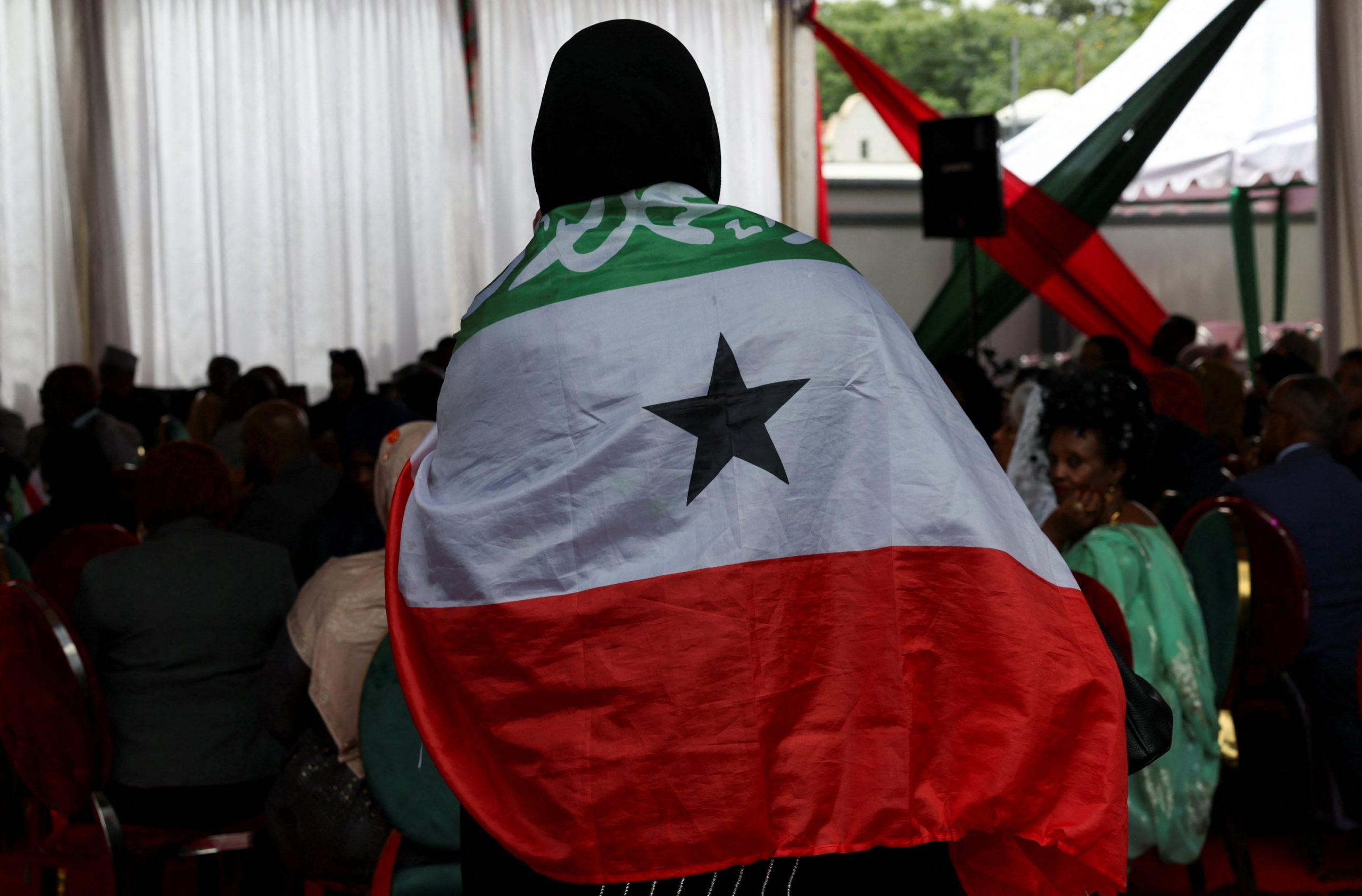
An Introduction To Somaliland
With Israel’s recent recognition of Somaliland, many in the Muslim world are hearing about the country for the first time. It is an unfortunate introduction to a nation that, for those who have followed it, has long been a quiet success story. Somaliland has been synonymous with peace, stability, post-conflict reconstruction, reconciliation, and democratic governance in an otherwise unstable region. Now it is reduced to a single data point and reframed almost entirely as an Israeli project. That framing has come to define the country in the eyes of many.
For those genuinely interested in Somaliland’s history, Mark Bradbury’s Becoming Somaliland presents a comprehensive account. For shorter reads, see nearly any serious article written about Somaliland prior to this week’s announcement. They all tell the same story of resilience despite the odds.
Why Somaliland Deserves Recognition
Somaliland was a recognized state before voluntarily entering a union with Somalia in 1960; a union that failed because political power was centralized in Mogadishu. The presidency and premiership were held by Somalia. Budget allocations were deeply unequal, with Somaliland receiving roughly 10 percent of national spending despite representing at least a quarter of the population.
Keep supporting MuslimMatters for the sake of Allah
Alhamdulillah, we're at over 850 supporters. Help us get to 900 supporters this month. All it takes is a small gift from a reader like you to keep us going, for just $2 / month.
The Prophet (SAW) has taught us the best of deeds are those that done consistently, even if they are small. Click here to support MuslimMatters with a monthly donation of $2 per month. Set it and collect blessings from Allah (swt) for the khayr you're supporting without thinking about it.
More devastatingly, a prominent clan in Somaliland, the Isaaq, was targeted as a matter of state policy. Military communiqués instructed senior officers to “break the back of the Isaaq,” advising them to “leave nothing but the crows,”; language widely understood as genocidal intent. These findings were backed up by a 2001 UN Report that concluded “the crime of genocide was conceived, planned and perpetrated by the Somali Government against the Isaaq people of northern Somalia between 1987 and 1989.” Human Rights Watch documented that at least 50,000 Isaaq civilians were killed by the Somali state between 1987 and 1989, with locals estimating as many as 100,000 lives lost. The scale of destruction left the capital and other major cities in Somaliland flattened. The trauma and devastation formed a major impetus for autonomy.
Since withdrawing from the union in 1991, Somaliland has been saddled with failures that are not its own. Somalilanders live with the consequences of a collapsed Somali state next door. They are effectively trapped, unable to travel freely, holding passports that grant entry to very few countries. The country cannot meaningfully leverage its natural resources because international investors are reluctant to commit capital in an uncertain legal environment. Oil and minerals remain locked in the ground.
Somaliland is repeatedly told to wait for Somalia to right itself. After more than three decades, that demand is wearing thin. Somalia continues to struggle with corruption, patronage, and fragile governance. Somalilanders are expected to remain hostage to that reality indefinitely.
Why Recognition Matters
Being a recognized state enables access to international investment, bilateral trade, tourism, and travel. It allows education systems and professional credentials to be formally recognized. It better facilitates improved health outcomes and prevents deaths from curable and preventable diseases.
Somaliland and Somalia rank among the lowest globally on social development indicators. In Somaliland’s case, the government has effectively operated like a nonprofit state, relying on port revenues, taxes, and remittances. There is no access to sovereign debt or international capital markets. Even its reserve banking relies on Djibouti’s patronage. Infrastructure projects and basic social services often depend on the generosity of partners such as the UAE. This is not a viable long-term model for any country.
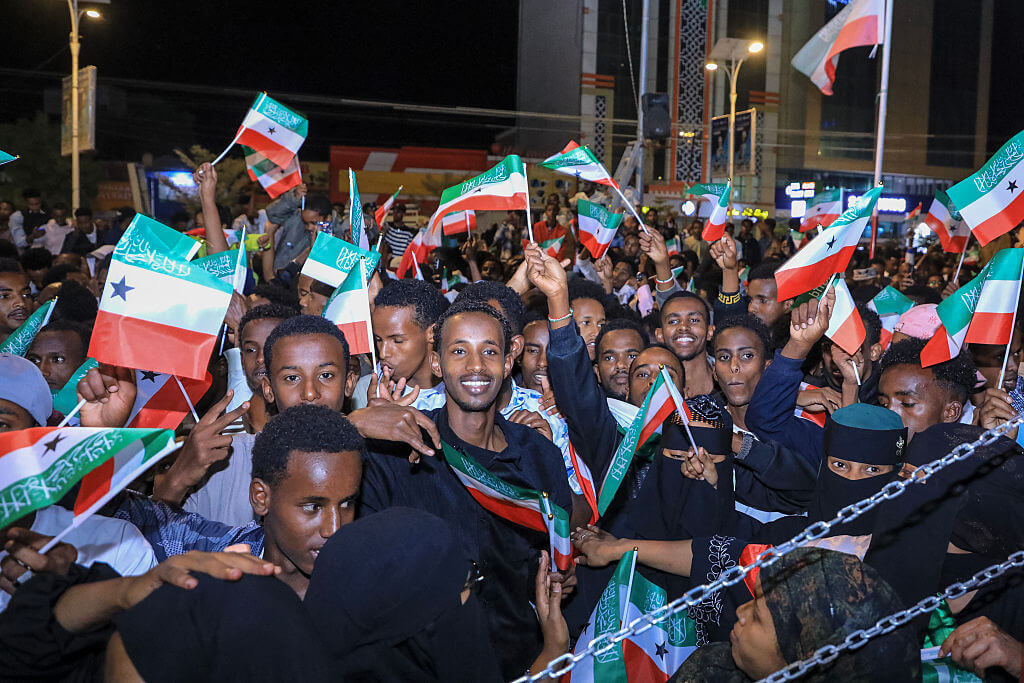
Residents wave Somaliland flags as they gather to celebrate Israel’s announcement recognizing Somaliland’s statehood in downtown Hargeisa. [PC: Farhan Aleli/AFP via Getty Images]
Most importantly, recognition has been the collective aspiration of Somaliland’s 6.2 million people. It is a legitimate national ambition, and one to which every people is entitled.
Why Somalilanders Are Celebrating
What Somalilanders are celebrating is not Israel. It is proximity to recognition. Speaking with friends and family back in Somaliland, the mood is jubilant and gleeful. Crowds are beaming with a sense of pride for a promise that has begun to come true. Yet for many non-Somalilanders, the jubilation is difficult to understand as they remain fixated on who recognized Somaliland first. This, I believe, misses the point entirely. Somalilanders do not harbor any special affection for Israel. They abhor the genocidal state as much as any Muslim, but for Somalilanders, the significance of the moment lies in the fact that recognition has begun at all.
That said, there have been videos and images of Israeli flag-carrying youth, outrageous comments from excited but ignorant Somalilanders. The individuals publicly praising Israel or Netanyahu represent a small minority. The same few images and videos are circulated repeatedly by observers, unfortunately seeking to make a broader political argument. This amplification is deliberate and misleading.
A Call For Caution And Respect
Everywhere in the Muslim world, we are led by despots and tyrants who sell out their people and the broader Muslim world. With every leader and every instance of betrayal, we are reminded that the government is not its people. We can condemn governments for their decisions, but we do not condemn an entire population for its aspirations.
Much of the online discourse has devolved into abuse. Accusations of disbelief and moral betrayal are casually deployed. Scripture is quoted selectively, while the same standards are rarely applied to Muslims from countries that maintain cordial, strategic, transactional, or openly friendly relations with Israel.
Moralizing From Comfort
“Some of you may die, but that’s a sacrifice I’m willing to make.” – Lord Farquaad
It is easy to condemn choices that do not affect you. From the comfort of warm homes in the UK, the US, or Canada, people lecture those living with limited access to opportunity, mobility, and capital. I’ve heard some say, “you don’t drink seawater just because you’re thirsty,” in relation to Somaliland’s deal with Israel. A more astute and honest comparison would be, you don’t chastise the man in the desert with nothing to eat but swine.
Somaliland could have been recognized by Somalia itself or by any Muslim-majority state. None did. Instead, Somaliland was left to navigate a world where others preferred to prop up a nominal government with little legitimacy in Somalia itself and virtually none in Somaliland.
To tell Somalilanders to refuse recognition from Israel is, in effect, to tell them to reject recognition altogether. To condemn its people to permanent isolation.
What Were Somaliland’s Options?
Former US president Joe Biden captured a well-understood concept in electoral politics when he argued, “Don’t compare me to the Almighty, compare me to the alternative.” It may feel moral to hold Somaliland to an ideal, but a fairer and more practical assessment of reality demands comparison to the alternative. If Somaliland had rejected Israel’s recognition, it still would have been a signatory by default.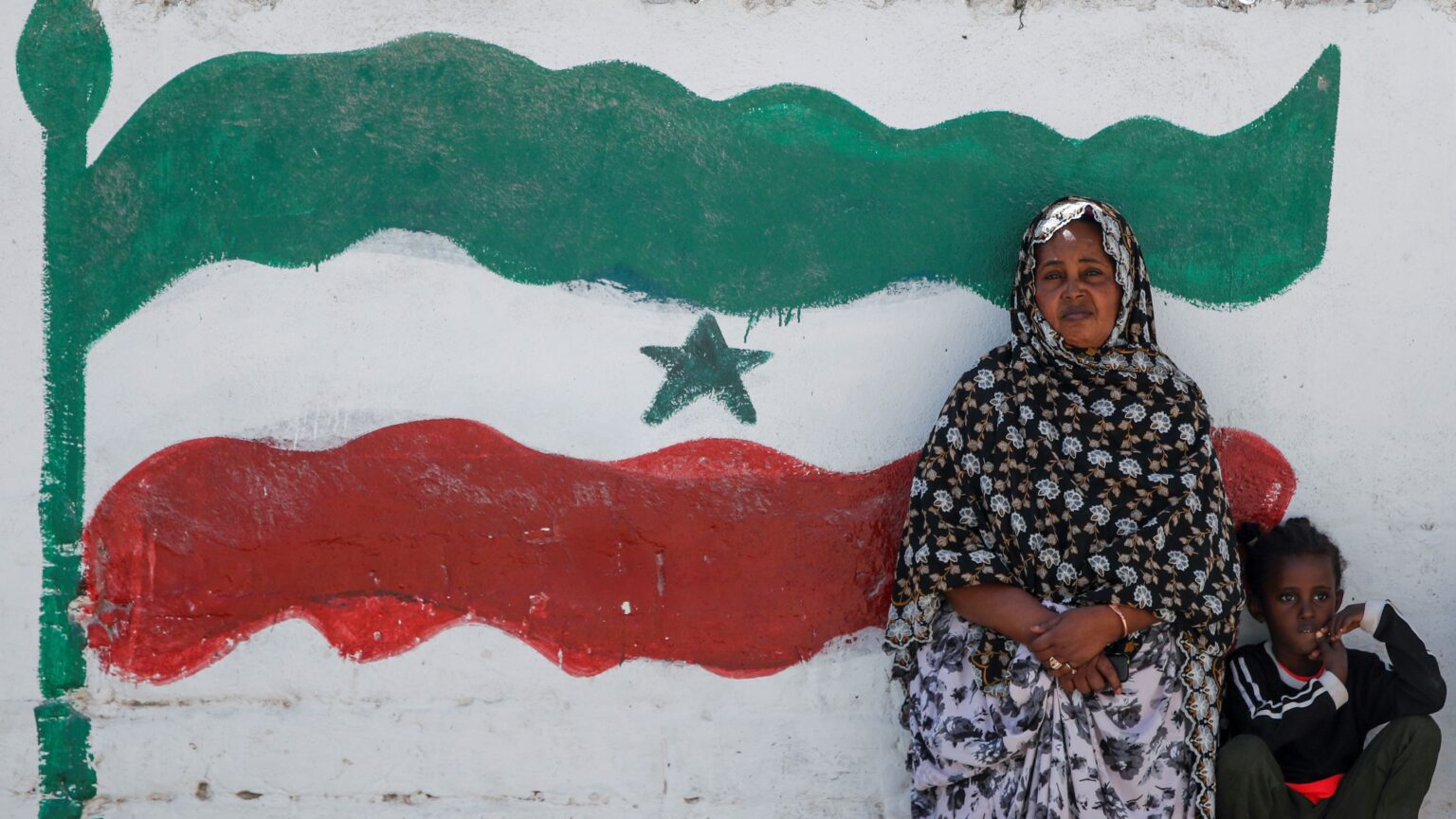
The reality of the matter is that Somalia itself had sought closer ties with Israel and was actively pursuing inclusion in the Abraham Accords through U.S. lobbying efforts. The Somali government paid conservative lobbyists BGR Group $50,000/month in an attempt to curry favor with the new US administration, block potential US -Somaliland recognition, and, notably, join the Abraham Accords, as evidenced by leaked email correspondence. These efforts failed not because of moral restraint, but because Somalia lacks effective control over its territory, most especially the Gulf of Aden.
While many continue to approach this issue through a moral lens, international politics does not operate on virtue. States act in their own interest. To expect otherwise from Somaliland is divorced from reality.
On Instability And Fear-mongering
Claims that recognition will destabilize the region raise a basic question: what stability, and for whom?
Somalia remains deeply unstable, with credible threats of political fragmentation and rival administrations. Somaliland, by contrast, has maintained internal stability for decades.
Assertions that recognition will trigger armed escalation from various tribes are routinely overstated. Claims that largely reflect a limited understanding of local political dynamics. While tensions exist, as they do in any plural society, they have not and do not constitute an existential threat.
Claims that this will strengthen the Somali-based Al-Shabaab terror group are also misguided. Al-Shabab has no operational presence in Somaliland and remains focused on overtaking Mogadishu as they continue to make inroads towards the capital. Recognition does not meaningfully make them more or less likely to be motivated to overthrow the Mogadishu government.
What Comes Next?
Condemnation from Arab, Muslim, and African states presents challenges, but it is not the deathblow opponents to Somaliland recognition might think it is.
Even if the United States, the United Kingdom, the UAE, and other Somaliland-friendly countries deny Somaliland’s legitimate claim to independence today, there is little reason to believe that position will not change in the near future. States operate on their own timelines and through their own processes, and any serious observer of international politics knows there is little daylight between Israeli, American, and Emirati strategic interests in the Red Sea and Gulf of Aden. Stern words and denunciations may slow momentum, but they no longer amount to a death sentence for Somaliland.
The precedent has been set. Over time, more states will recognize that propping up a nominal Somali government while ignoring Somaliland’s lived reality is neither principled nor sustainable. Turkiye will seek to maintain its control over the Somali government, Saudi Arabia will attempt to counter Emirate influence, but sooner or later, states will operate in their own interest.
With the seal of recognition broken, Somaliland will need to make the case for recognition to countries beyond Israel: to prove to the Muslim world that they are worth a second look.
And while I recognize the stain of normalizing relations with Israel may never be washed out, I hope this recognition results in lives saved through improved economic conditions, better healthcare, and stronger educational outcomes. More than anything, I hope there is an opportunity to reintroduce Somaliland to the world in a way that we can all be proud of.
[Disclaimer: this article reflects the views of the author, and not necessarily those of MuslimMatters; a non-profit organization that welcomes editorials with diverse political perspectives.]
Related:
– What A Rubio: United States Throws Weight Behind Israel After Aggression On Qatar
Keep supporting MuslimMatters for the sake of Allah
Alhamdulillah, we're at over 850 supporters. Help us get to 900 supporters this month. All it takes is a small gift from a reader like you to keep us going, for just $2 / month.
The Prophet (SAW) has taught us the best of deeds are those that done consistently, even if they are small. Click here to support MuslimMatters with a monthly donation of $2 per month. Set it and collect blessings from Allah (swt) for the khayr you're supporting without thinking about it.



15 Things You Didn’t Know About Makkah and the Ka’bah [Part 2]

Widening Wars Leave the Middle East in Shambles
15 Things You Didn’t Know About Makkah and the Ka’bah [Part 1]

Eid Mubarak from MuslimMatters

Selamat Hari Raya! – Celebrating Eid In Malaysia

She Cried At The Door Of The Masjid: A Case For Children In Mosques

The Trials Playlist: A Chaplain’s Set To Steady Your Heart

[Podcast] Is Your Sadaqah Paying an Influencer Instead of Going to Charity? | Mufti Abdullah Nana & Dr Shafi Lodhi

Every Sin Has a Cure | The Venom and the Serum Series

Accessibility As Mercy: How Laylatul Qadr Guides Towards Disability Justice

Coming Full Circle: Who Are You Now? | Night 30 with the Qur’an

Running Away From Who We Are | Night 29 with the Qur’an

Building From the Ground Up: Week 4 Recap | Night 28 with the Qur’an

The Muslim You Are Becoming | Night 27 with the Qur’an

What Will You Leave Behind? Legacy in Islam | Night 25 with the Qur’an
-

 #Current Affairs1 month ago
[Podcast] Ramadan Is Not For Your Private Spirituality | Dr Farah El-Sharif
-
#Society3 weeks ago
She Cried At The Door Of The Masjid: A Case For Children In Mosques
-
#Current Affairs1 month ago
Op-Ed: Can Zakat Be Used For Political Campaigning? An Argument In Favor
-
#Society1 month ago
Ramadan, Disability, And Emergency Preparedness: How The Month Of Mercy Can Prepare Us Before Communal Calamity


