
#Culture
Far Away [Part 3] – Wounded
A mistake in the new city’s crowded and dangerous streets leaves Darius wounded, sick and alone on the road.

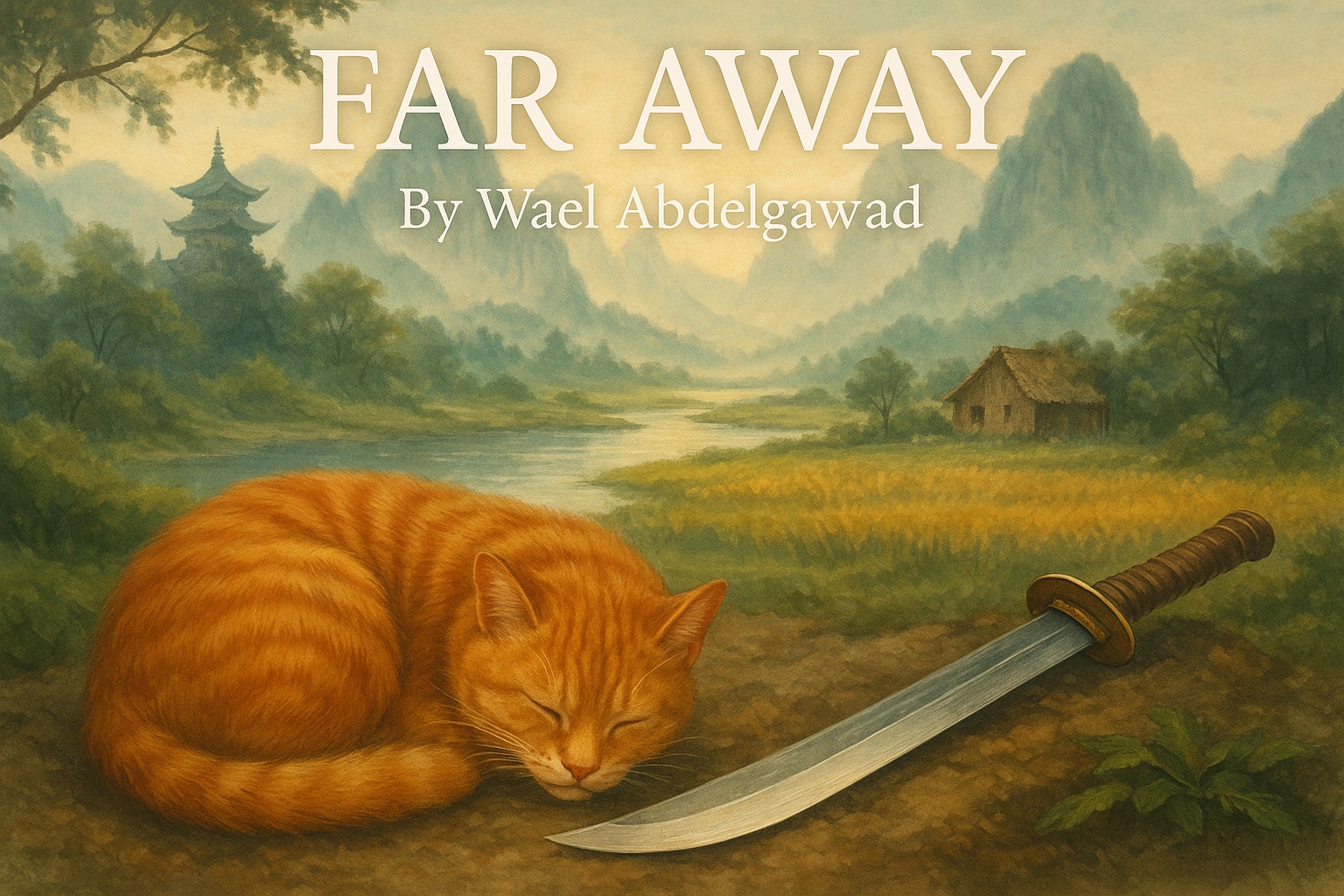
A mistake in a crowded street leaves Darius wounded and sick.
* * *
Both Sides Match
Keep supporting MuslimMatters for the sake of Allah
Alhamdulillah, we're at over 850 supporters. Help us get to 900 supporters this month. All it takes is a small gift from a reader like you to keep us going, for just $2 / month.
The Prophet (SAW) has taught us the best of deeds are those that done consistently, even if they are small. Click here to support MuslimMatters with a monthly donation of $2 per month. Set it and collect blessings from Allah (swt) for the khayr you're supporting without thinking about it.
Criminals were criminals wherever one went. Having been a low-level criminal myself, I knew the culture, expectations, and rules. These men saw me, a 13-year-old boy, as an easy score in a town that was apparently lawless.
My father had taught me never to reveal my skills before the fight begins. In this way, I could catch the enemy off guard. But I didn’t want to engage in a public brawl that could end up with either me dead, or the blood of these men on my hands. Perhaps if I were to demonstrate my ability to defend myself, these ruffians would seek easier prey.
I settled on a compromise. I already had the spear in my hand. I would strike one of the men hard enough to hurt, but not hard enough to kill, and then wait to see what the other would do.
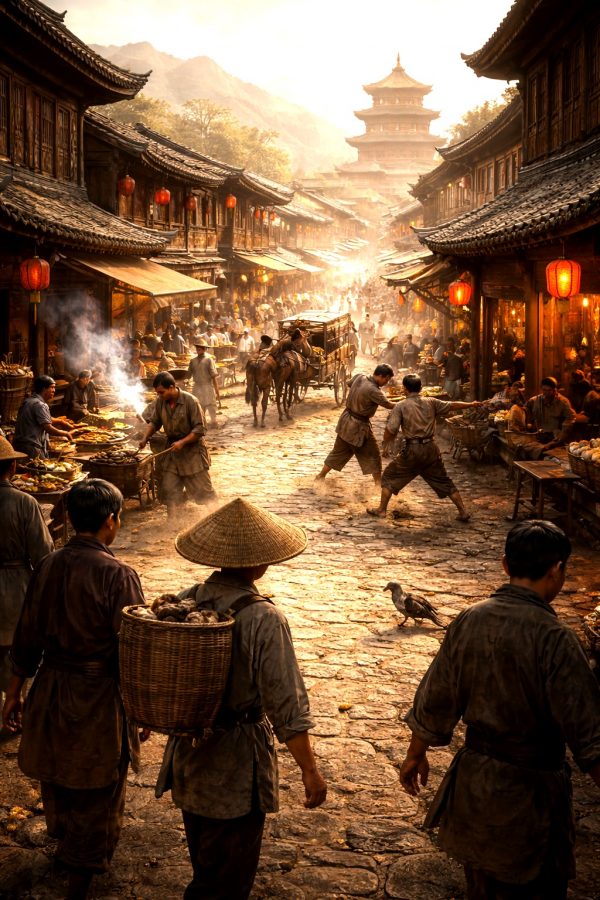 A piercing sound made me flinch. A constable came running up, blowing a silver whistle and swinging a baton. So the town was not lawless after all. Like me, the constable wore dark trousers, a knee-length jacket, and cloth shoes with white socks, but he also wore a tall, cone-shaped hat. A badge hung from his waist identifying him as an officer of the law. The overall effect was comical, and I smiled. The constable was not coming for the ruffians or me, but for the two brawling men.
As I was distracted by this spectacle, the thug with the scarred mouth lashed out with a kick aimed at the inside of my knee. I reacted instinctively, sweeping the spear across the front of my body to redirect his kicking leg. Scar Mouth was fast, however. The kick had only been a feint to distract me from the knife, and he now lashed out with the blade, aiming for my neck. I tucked my head and took the cut across my shoulder, and at the same moment brought up the point of the spear and raked it across the attacker’s face, opening a deep wound from the corner of his mouth to his temple. He cried out and stumbled back, blood pouring from the wound.
“There,” I said savagely. “Now both sides match.” Even as I said these words, I knew I sounded like my father – cold rage was the essence of his personality – yet I did not care. I was furious, more at myself than at Scar Mouth. Like a fool, like a day-one novice, I had allowed myself to be distracted from an imminent threat, and it had nearly cost me my life. Nor had I entered River Flow, the combat state of mind my father had taught me, in which one moved without thought or emotion. What a debacle. My father would be ashamed.
The other ruffian, the red-eyed one, drew his knife and stepped forward, but at that moment another constable came running, whistle piping. Red Eyes picked up his companion, who had fallen to the ground, and tried to hustle him away, but the constable caught them and struck Red Eyes on the back of the head with a wooden baton. He collapsed like a dead man, and the constable proceeded to beat them both.
A Bloody Grin
I took the opportunity to walk quickly away, clutching my wounded shoulder. I ducked into a narrow alley between two shops, where laundry hung on ropes overhead, and the ground was littered with broken tiles and scraps of paper. Pressing my back to the wall, I drew a slow breath to steady myself, then removed my jacket – which was now sliced open across the shoulder – and peeled my shirt down to get a look at the wound. The cut ran like a bloody grin across the top of my shoulder. It was long but not deep, yet the edges already looked angry and dirty. Blood ran freely down my arm and abdomen. I was sure the ruffians’ knives were filthy. If I left the cut alone it would surely get infected, and I had no wish to lose an arm… or my life.
The alley was not as empty as I’d hoped. A woman paused at the far end, a basket of scallions on her hip, and stared at me with wide eyes. A pair of boys lingered nearby, whispering to each other, one pointing at the blood on my arm. An old man shuffled past slowly enough to make it clear that he was taking his time so he could watch. He grinned in embarrassment and looked away. Soon, two more people stopped. The city, it seemed, always had eyes.
I had been cut many times while training with my father. My father had always washed the wounds, poured rice wine over them – his drink of choice – and wrapped them in clean cloth.
I ignored the watchers and went to a public water pump at the end of the alley. The water smelled faintly of iron, but water was water.
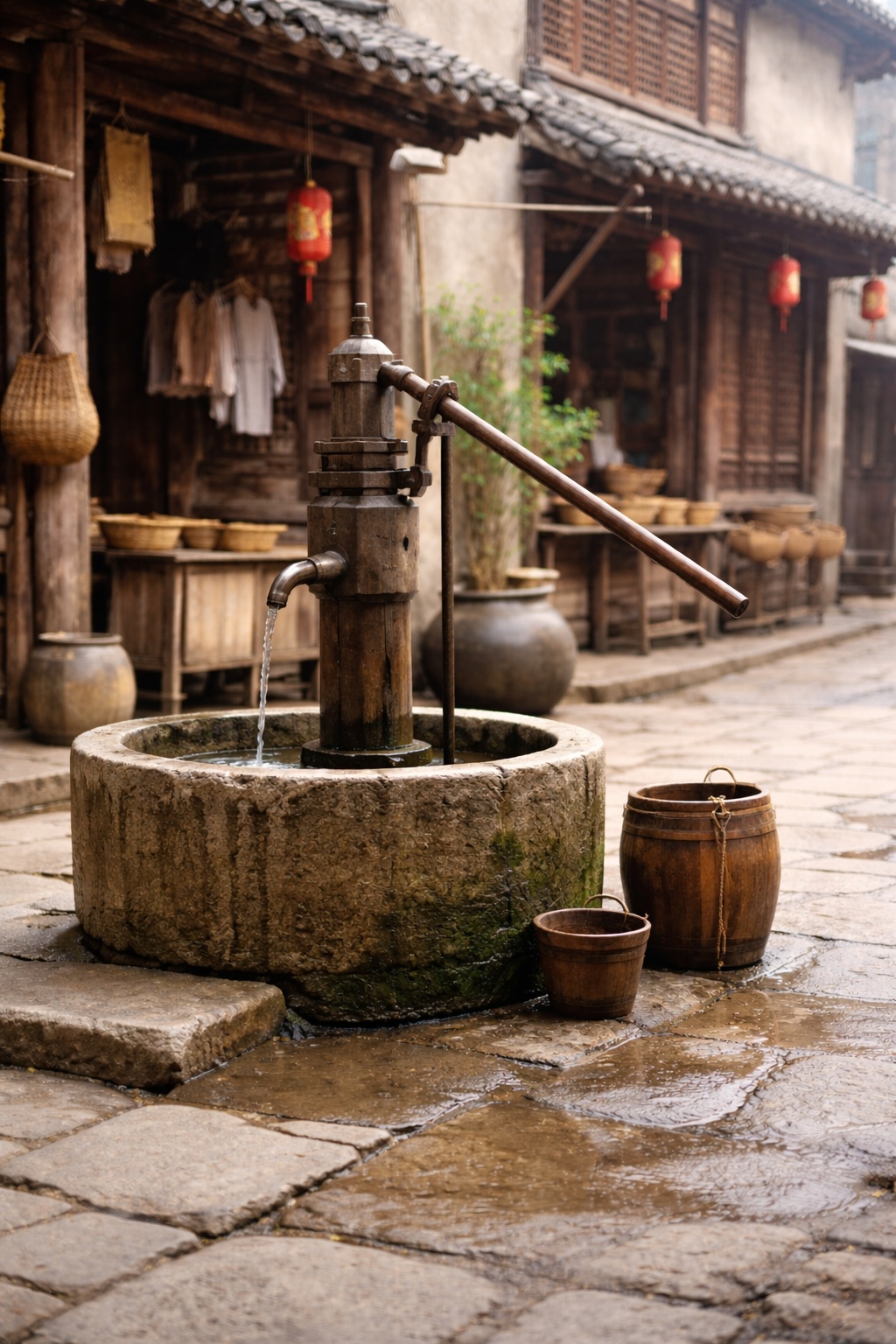
I gritted my teeth and splashed it over the wound, rubbing gently with the corner of my shirt to wash out any dirt. Blood and water ran down my chest. It stung so badly that my hands shook, but I kept going until the water ran mostly clear.
A vendor’s stall stood just beyond the alley. I pressed a coin onto the counter without meeting the owner’s eye. He frowned at my age, at the blood, but handed me a small clay bottle of liquor. I uncorked it and poured it over my shoulder.
The pain roared up my arm like a wildfire. I might have collapsed if not for the fact that I had been through this before and knew what to expect. My breath hissed out between clenched teeth; my vision wavered. Someone gasped. Someone else muttered that I was mad. I braced my good hand against the wall and waited. When the fire subsided, I dared to look. The blood had slowed. Good enough.
Trust No One
As I tore a strip from the bottom of my shirt, a shadow fell over me. A woman — middle-aged, with a face like weathered bark and kind eyes — crouched beside me.
“Child,” she said gently, “you’ll ruin that shoulder if you leave it like that. Come to my house. My husband was a soldier. I know how to treat these things properly.”
I hesitated. She did not smell of wine or filth. Her hands were clean. There was nothing cruel in her eyes, only concern. For a heartbeat, I wanted desperately to go with her — to be tended to, spoken kindly to, looked after.
But I did not know her. I trusted no one in this place. My father had drilled this into me quite literally, that no one in this world could be trusted but family, and even then, with reservations. “Do not trust even me,” he used to say, and I knew he meant it, for he had been my tormenter as well as my caretaker.
“My aunt is nearby,” I lied. “She’ll see to it.”
She studied my face, as if weighing my words. Then she sighed, nodded once, and pressed a hand briefly — almost motherly — to my uninjured arm.
“Make sure you keep it clean,” she said. “And change that bandage in the morning.”
She left, and the little audience, sensing the show was done, drifted away. Only the boys remained long enough to give me a last curious stare before running off.
I pressed the folded strip of cloth to the wound and tied it in place with another strip looped under my arm and across my chest. It was clumsy work, but it held. The bandage soon grew warm and damp with blood, but not soaking. I could still move my arm. It was painful, but it moved.
“There,” I muttered under my breath. “So much for my first day in the city. Get it together, Darius.”
I pulled my bloodstained jacket back on, though the movement made me wince, and tightened the spear strap. I smelled like wine, sweat, and copper. I needed to find my aunt. This town was too much for me. The noise, stink, and sense of danger were overwhelming. I felt as out of place as one of the temple carp would be if taken out of the pond and placed upon a horse charging into battle.
For a moment, the image made me smile. A giant carp riding horseback, wearing battle armor and holding the reins, its mouth working as it gasped for air. I laughed out loud, drawing a few open stares from passers-by. The sound of my own laughter, as much as anything that had happened to me so far, frightened me. I sounded like a crazy person.
A woman passing by slowed at the sound. She held the hand of a little girl, perhaps ten years old, who was chewing thoughtfully on a glossy brown sweet skewered on a thin stick. The girl stopped to stare at me openly, her steps lagging until her mother tugged at her hand.
“Come on,” the woman said sharply, not unkindly but with impatience.
The girl resisted, craning her neck to look at me as if I were something curious washed up from the river. Then, to my surprise, she pulled free. Before her mother could stop her, she trotted toward me, the sweet bobbing in her hand.
“Lihua!” the woman called, startled, hurrying after her.
The girl stopped a few paces from me. She did not come too close. She looked at my bandaged shoulder, then at my face, then held out the sweet without a word, her arm fully extended, her eyes lowered in sudden shyness.
I stared at it, uncertain. No one had ever offered me food unprompted before. I took it carefully, as if it might vanish if I moved too fast.
The mother caught up, breathless. I braced myself for her to snatch the child away, to scold her, perhaps to curse me for frightening her daughter.
Instead, she looked at me and said sternly, “What do you say?”
I did not understand. I stood there holding the sweet, mute. “Hello?” I said finally. I looked the girl up and down. “Your dress is pretty.”
The girl giggled, but the mother frowned. “You say, ‘thank you,’” she snapped.
“Oh.” Heat crept up my neck. I had not been raised with such polite expressions. “Thank you,” I said quickly. I bowed deeply to the girl, deeper than necessary, the movement tugging painfully at my shoulder. The girl giggled again, pleased, and allowed her mother to take her hand.
They went on their way, the girl glancing back once, smiling.
I stood there holding the sweet until they were gone. Then I ate it slowly. It tasted of sesame and sugar, and might have been the best thing I had ever eaten. My heart lightened a bit.
I had been told by the Mayor that my aunt’s name was Jade Lee, her husband was Zihan Ma, and they had a child whose name the Mayor did not know. I walked through the streets asking about them. People waved me off, shook their heads, provided conflicting answers, offered to sell me things, and, in the case of one noble, spat on me.
Ming
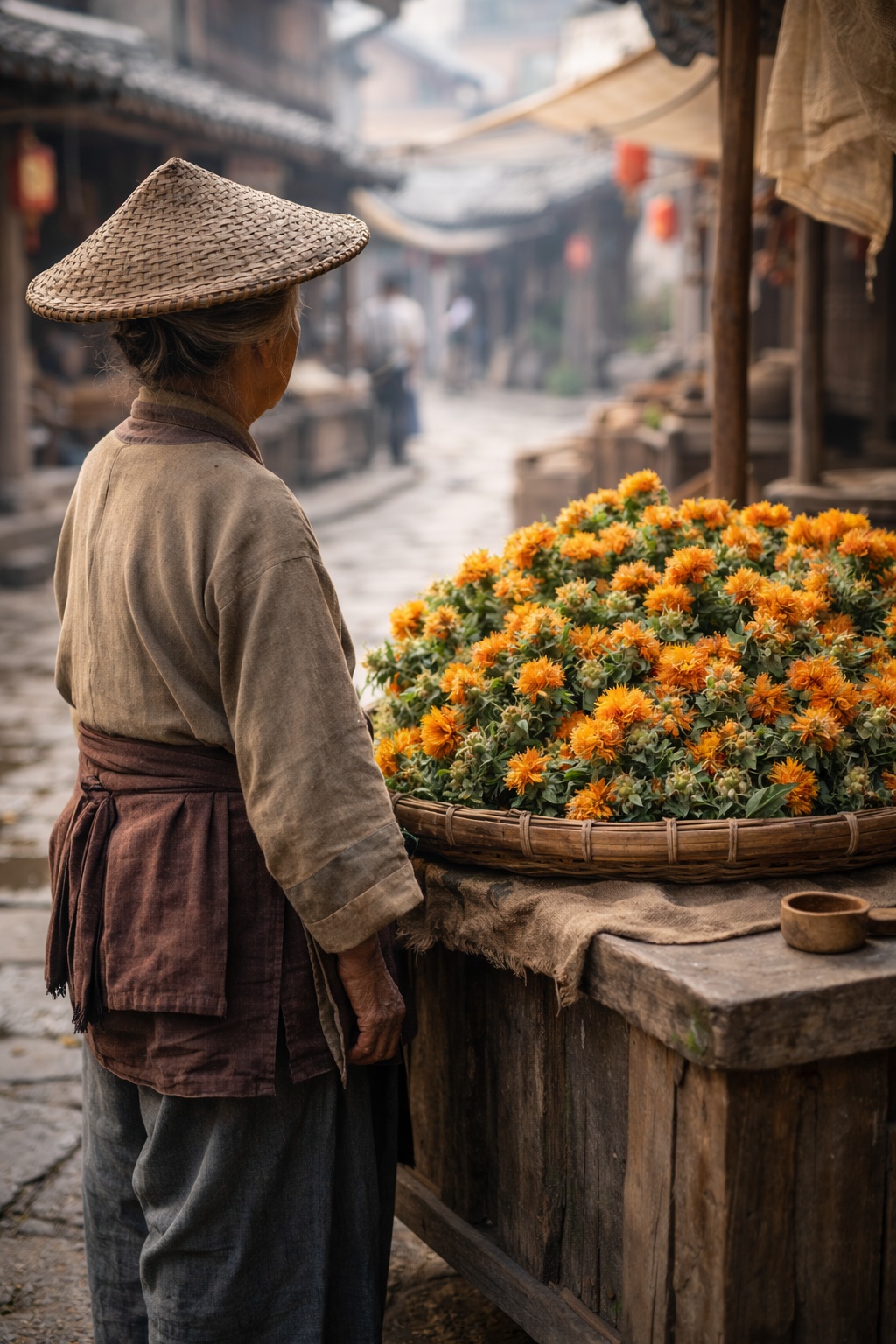
When I presented my question to an old woman who owned a stand heaped with some kind of orange flower, she looked me up and down skeptically. “Are you Darwish Lee?”
I frowned. “No. I am Darius Lee.”
She snorted derisively. “How does someone not know how to pronounce his own name? Your father is that miserable lout, Yong Lee?”
I was stunned. How could someone know my father’s name in this town? “He’s not a lout,” I said hotly. “He was a peanut farmer, and he is in the army fighting the invaders. He’s… well… the Mayor says he died.”
The woman’s face softened. “I am sorry. To Allah we return. I will not speak ill of the dead.”
So this woman too worshiped the God called Allah. Before I could ask about it, she went on: “Your auntie’s husband, Zihan Ma, is my brother. My name is Ming.” She studied me more carefully. “You have been wounded.”
I tipped my head to the side as if to say, “I suppose so.”
“I am working now,” Ming said, “but if you are hungry you can go to my house and my daughter will feed you.”
I was, in fact, hungry, tired, and hurt, but I had come this far, and I wanted to meet my aunt. I told Ming so, and she gave me directions. I should follow the main road, then turn right when I reach a huge elm tree that shades the entire road. Continue past the temple, walk until I can no longer hear the temple bells anymore, then turn left. From there, it would be a quarter day’s walk. My aunt’s house was set back from the road, but they were the only farm on that road growing safflower, so when I saw the safflower, I should enter through the gate. There I would find my aunt’s house.
“I don’t know what safflowers look like,” I said.
Ming shook her head sadly. “You have a wooden head, don’t you?” She picked up one of the stalks heaped on her stand and shook it in my face. It had small green leaves and a roundish orange flower with spiky petals. Its scent was sweet but mild. “This is a safflower, strings-for-brains. From your auntie’s farm, in fact.”
A Long Walk
Before setting out, I bought a wedge of cheese and filled my gourd flask at a public well. I slung the spear over my good shoulder and started down the road Ming had described.
The town fell away behind me, swallowed by dust and distance. The sounds of carts and hawkers faded, replaced by the quiet tapping of my own footsteps and the soft slosh of water in the gourd. The road was lined here and there with elms and poplars, their leaves whispering in the breeze. Fields stretched on either side, some green and thriving, others bare and brown, like my father’s land in the bad years.
After a while, the cut in my shoulder began to throb – slowly at first, then harder, beating in time with my heart. The bandage felt hot against my skin. I shifted the spear and immediately regretted it. Pain shot down my arm like fire. I took the jacket off and tied it around my waist, then lifted my shirt and checked the bandage. The cloth was dark with fresh blood, and something thicker and sticky seeping through. I re-tied it as tightly as I could manage and kept walking.
By midday, the world seemed brighter than it should have been. The sun pulsed like a fevered eye. I felt sweat trickling down my back, but at the same time a strange chill crawled over my arms, raising gooseflesh. My mouth tasted bitter, my head felt stuffed with wool, and my shoulder was as hot as a coal burned beneath the skin. I tried rolling my arm to loosen it and nearly cried out. I could not lift the arm properly anymore. I noticed that my jacket had come undone from around my waist and was gone. It had fallen somewhere on the road. I could not go back for it.
I thought of Far Away and Lady Two. Were there thieves in my house even now, digging up the bare earth floor, searching for gold that did not exist? Would the Mayor sell the house, or simply take it? Would some stranger sleep on my straw mattress, or would it all be left to rot? I had worked so hard to bring that land back from the dead. The thought of it slipping from my hands made something tight form in my chest.
To distract myself, I ran through the Five Animals forms in my mind. Tiger claw to the throat, crane beak to the eyes, leopard fist to the ribs, snake flick to the groin, dragon kick to the head. I pictured my father correcting me, rapping my legs with a stick when my stance was not deep enough, shouting at me to sink, sink, sink. Now I could barely keep myself upright.
The truth that my father was almost certainly gone pressed up from the inside of my mind like hot, bubbling mud. He had been the foundation of my life as well as its bane. He had beaten me, starved me, and abandoned me, yet he had also trained me, fed me when there was food, and wept when he saw what his absence had done to me. Now there was no one between me and the world but myself. I felt sorry for myself in a way I never had before. The feeling was like a weakness in my legs, as if they had turned to noodles.
Step, step, step. One foot in front of the other. I tried to imagine my aunt, Jade Lee, and her husband, Zihan Ma. What kind of people were they? Would they welcome me, or see me as a burden? More beatings, more shouting, more nights going to bed hungry? If that proved to be the case, I decided, I would not stay. I knew how to steal without getting caught, how to move quietly, how to run. I could live as a thief if I must. I did not want that life, but I would survive. I had already survived worse.
By the time the sun tilted toward late afternoon, every step was an effort. My feet were sore, my back ached from the weight of my pack and the dao, and my shoulder burned as if dipped in boiling water. A faint buzzing filled my ears. The world swam slightly if I walked too fast. Twice I stumbled, and once I had to stop and lean against a poplar tree until the dizziness faded.
I followed Ming’s directions as best I could: past the great elm that shaded the road, past a small roadside shrine, past a temple whose bells I could hear faintly behind me even after it vanished from sight. The sound seemed oddly distant, like something heard underwater. At last, I saw a field blazing with orange flowers – safflower, I knew now – from which rose the low hum of bees. I hoped my aunt’s door was not far beyond it, because I was no longer certain how much farther I could walk.
Farmhouse
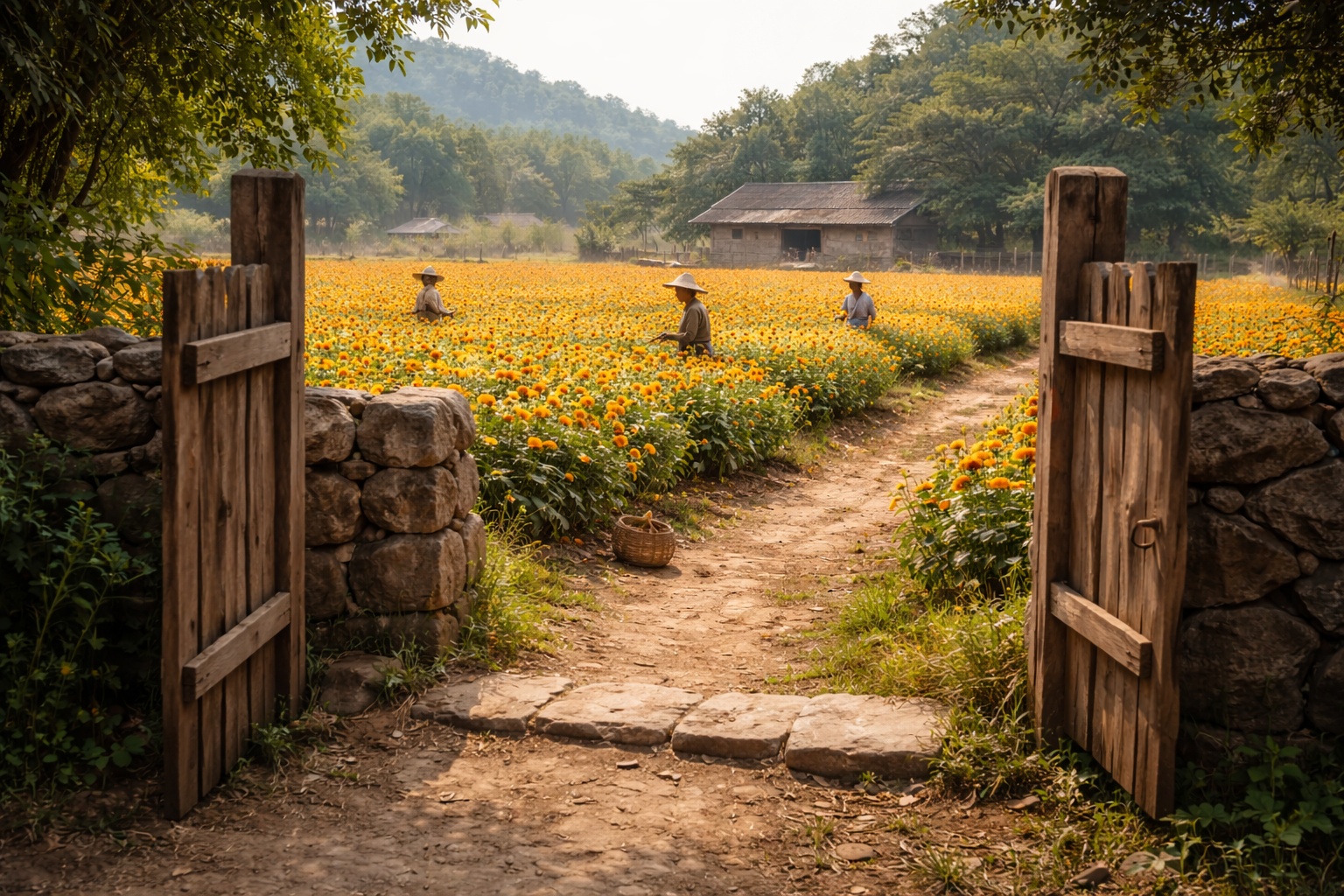
A low stone wall bordered the road. A gate of rough-hewn wood stood open. As I stepped through, a man in a blue jacket and soft shoes was coming out, leading a horse by the reins. He had the soft hands and weak shoulders of a city man, and he smelled faintly of incense and wine.
“He’s in fine form today,” the man said to no one in particular. “Totally cured my gout. His needles are blessed by heaven.”
I stepped aside to let him pass. As he passed me, he got a better look, or perhaps a whiff, and reeled back, covering his mouth with a sleeve. He mounted his horse with a grunt and rode off toward town.
Inside the gate, I found myself on a working farm. A few young men – hired hands, I guessed – were out in the fields tending the safflowers, wearing wide-brimmed hats, and moving carefully between the rows with baskets slung from shoulder poles. In a nearby pen, goats cropped at a low wooden trough, their bells tinkling softly. From a barn with wide double doors came the sound of cows mooing, deep and content. A henhouse squatted beside it, chickens scratching in the dust around the door. Two gray-brown donkeys grazed freely near a stack of bundled firewood, occasionally flicking their tails at flies.
An old gray and white cat lay perched atop a carriage near the barn, paws tucked under its chest, watching me with half-lidded eyes as if it had seen a thousand boys like me and expected nothing new.
It was a far wealthier farm than that which my father and I had owned. The buildings were straight and well-kept, the fences repaired, the tools neatly stacked under the eaves. Smoke rose from the chimney of the main house in a steady plume, carrying with it the faint smell of cooked vegetables and something savory.
I stood there in the yard, dust on my shoes and sweat drying on my back, and thought that they must be eating supper. I felt as weak as a newborn calf. My clothing was drenched in sweat, and my heart beat too hard as I stepped up to the heavy wooden door, and heard voices talking inside. I raised my hand to knock, hesitated, and dropped it. Then I took a breath, let it out, and knocked on the door.
Unwelcome
The man who answered was of average height but stocky and a bit chubby, with muscular arms and shoulders. His face was dark and handsome, with a thick black mustache and inquiring black eyes. His hair fell to his shoulders in soft waves – very unlike my father, who had kept his hair short or shaved.
He did not look like a native of this land, and I wondered for a moment if he was an invader, but that was silly. The invaders were said to be tall and ivory-skinned, wearing armor that shone like moonlight. This man was of average height, and darker-skinned than me.
Close behind him stood a woman, and a boy of perhaps 10 years old. The boy was lean and used to hard work, I judged, but nevertheless had a softness about his face, as if he had never faced any great hardship, never been abandoned, never been beaten. I almost hated him for that.
As for the woman, she was short, and her eyes had pronounced folds. Her teeth were white, and even from the way she stood I could tell that she was martially trained, as there was a restrained power in her posture. Even relaxed, she appeared poised to strike.
The man’s eyes shot to the dao on my back and spear in my hand, then roamed over me, perhaps taking in my calloused hands, young but muscular body, and my altogether wretched condition. The torn and bloodstained shirt, the sweat and grime.
“Are you here for treatment?” His voice was not welcoming. “I do not work after sundown. And if it’s trouble you’re looking for, you’re in the wrong place.”
I tried to speak, but what came out was a croak. A bout of dizziness washed through my head, and I planted the spear to steady myself.
Someone said something, but I didn’t understand the words. My vision had gone entirely gray. I felt myself falling. I dropped the spear and reached out for purchase, but found only air. And then I was aware of nothing.
* * *
Reader comments and constructive criticism are important to me, so please comment!
See the Story Index for Wael Abdelgawad’s other stories on this website.

Wael Abdelgawad’s novels – including Pieces of a Dream, The Repeaters and Zaid Karim Private Investigator – are available in ebook and print form on his author page at Amazon.com.
Related:
Keep supporting MuslimMatters for the sake of Allah
Alhamdulillah, we're at over 850 supporters. Help us get to 900 supporters this month. All it takes is a small gift from a reader like you to keep us going, for just $2 / month.
The Prophet (SAW) has taught us the best of deeds are those that done consistently, even if they are small. Click here to support MuslimMatters with a monthly donation of $2 per month. Set it and collect blessings from Allah (swt) for the khayr you're supporting without thinking about it.





Widening Wars Leave the Middle East in Shambles

15 Things You Didn’t Know About Makkah and the Ka’bah [Part 1]

Eid Mubarak from MuslimMatters

Selamat Hari Raya! – Celebrating Eid In Malaysia

AL-AQSA IS CLOSED

[Podcast] Ramadan Is Not For Your Private Spirituality | Dr Farah El-Sharif

Ramadan, Disability, And Emergency Preparedness: How The Month Of Mercy Can Prepare Us Before Communal Calamity

She Cried At The Door Of The Masjid: A Case For Children In Mosques

When to Walk Away from Toxic Friends | Night 9 with the Qur’an

I Can’t Stop Thinking About Someone | Night 10 with the Qur’an

Coming Full Circle: Who Are You Now? | Night 30 with the Qur’an

Running Away From Who We Are | Night 29 with the Qur’an

Building From the Ground Up: Week 4 Recap | Night 28 with the Qur’an

The Muslim You Are Becoming | Night 27 with the Qur’an

What Will You Leave Behind? Legacy in Islam | Night 25 with the Qur’an
-

 #Islam1 month ago
30 Nights with the Qur’an: A Ramadan Series for Muslim Teens
-
#Current Affairs1 month ago
An Unending Grief: Uyghurs And Ramadan Under Chinese Occupation
-
#Society1 month ago
Where Does Your Dollar Go? – How We Can Avoid Another Beydoun Controversy
-
#Current Affairs3 weeks ago
[Podcast] Ramadan Is Not For Your Private Spirituality | Dr Farah El-Sharif


Bint Ari
January 4, 2026 at 1:31 AM
Exciting new chapter! I hope Darius gets to enjoy some comfort and ease and heal his wounds in peace.
Kathleen
January 4, 2026 at 3:24 PM
Okay WOW. This chapter wrecked me, in a good way, alhamdulillah. The street fight was brutal and grounded. I actually winced at the shoulder wound. And the little girl with the sweet. SubhanAllah.There is so much sabr in this chapter, even when he does not know the word yet. This feels real. May Allah protect this boy, because I am fully invested.
Karim
March 23, 2026 at 10:37 PM
Great chapter! I really hope Darius finds a good home. Each character in his family sounds interesting. Looking forward to the next chapter!