
#Islam
Restoring Balance In An Individualized Society: The Islamic Perspective on Parent-Child Relationships


We’ve raised children who know how to take, but have we taught them how to give? This article dives into the Islamic response to a culture of entitlement.
In today’s increasingly individualized society and entitlement-driven culture -shaped heavily by Western ideals of autonomy and self-fulfillment- a worrying trend has emerged: many young people have come to see their parents not as figures of reverence, guidance, and gratitude, but as service providers; even well into adulthood. This shift is particularly visible in children who, while benefitting from years of care and sacrifice, respond with entitlement or neglect. Some even say, “We didn’t ask to be born, it was your choice!” This perspective, although widely normalized in modern Western discourse, is deeply misaligned with the values and principles of Islam.
The Islamic Understanding of Parent-Child Relationships
Life as a Divine Trust
Islam offers a profoundly different understanding of the parent-child relationship; one rooted in divine purpose, obedience, and honor. Contrary to the notion that parents choose to bring children into the world, Islam teaches that it is Allah  Who creates life and chooses its circumstances. He says in the Qur’an:
Keep supporting MuslimMatters for the sake of Allah
Alhamdulillah, we're at over 850 supporters. Help us get to 900 supporters this month. All it takes is a small gift from a reader like you to keep us going, for just $2 / month.
The Prophet (SAW) has taught us the best of deeds are those that done consistently, even if they are small. Click here to support MuslimMatters with a monthly donation of $2 per month. Set it and collect blessings from Allah (swt) for the khayr you're supporting without thinking about it.
“To Allah belongs the dominion of the heavens and the earth. He creates what He wills. He gives to whom He wills female [children], and He gives to whom He wills males.” [Surah Ash-Shuraa 42;49]
The arrival of a child is not merely a human decision—it is a manifestation of Allah’s Will. The argument “we didn’t ask to be born” overlooks this spiritual truth. Children are not random by-products of human desire but are sacred trusts (amanah) from Allah , and parents are the vessels through which Allah’s Decree is fulfilled.
Obedience to Parents as a Divine Command
In Islam, obedience to parents is not a personal choice—it is a divine commandment. The Qur’an establishes this in clear terms: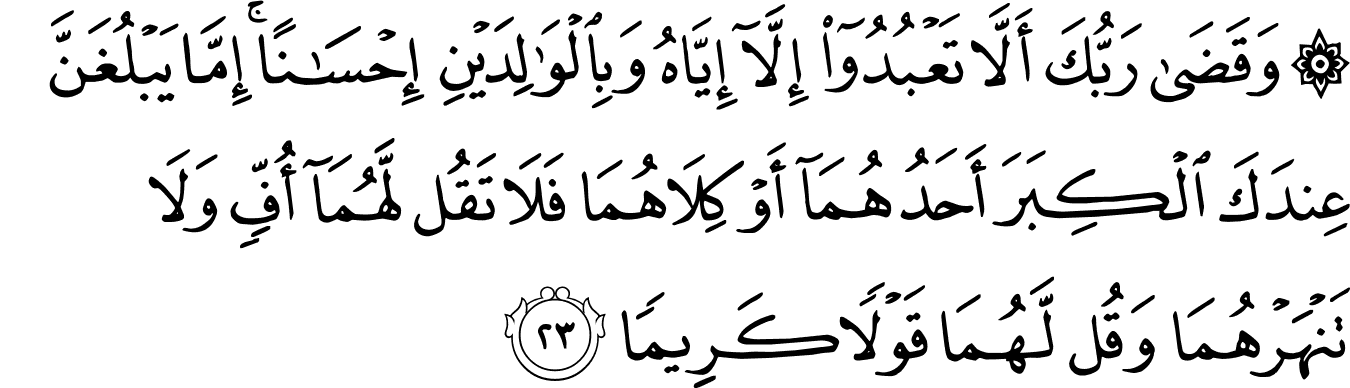
“And your Lord has decreed that you not worship except Him, and to parents, [show] excellent treatment. Whether one or both of them reach old age [while] with you, say not to them [even] ‘uff’ and do not repel them but speak to them a noble word.” [Surah Al-Isra; 17:23]
The prohibition of even uttering “uff”—a mild sign of frustration—shows how seriously Islam regards the dignity of parents. Islam does not tie this obedience to whether parents are perfect, modern, educated, or emotionally ideal. It is a matter of obedience to Allah and a sign of piety.
The Prophet ﷺ also listed disobedience to parents among the gravest major sins, placing it alongside shirk (associating partners with Allah ):
“Shall I not inform you of the biggest of the major sins?” They said, “Yes, O Allah’s Messenger!” He said, “To associate others with Allah and to be undutiful to one’s parents…” [Bukhari and Muslim]
When Parents Are Imperfect
And what about those who say, “My parents don’t understand me. They’re too harsh. They weren’t perfect.” To such people, Allah presents us with one of the most profound and emotionally rich stories in the Qur’an: the story of Prophet Ibrahim  and his father, Azar.
Azar wasn’t just a difficult parent. He was an open enemy of the truth. He built idols with his own hands and forced his son to conform to the same false religion. He didn’t just disagree with Ibrahim’s faith—he threatened him. He rejected his dawah and even said:
“If you do not desist, I will surely stone you. So leave me alone for a prolonged time.” [Surah Maryam; 19:46]
Why is this story in the Qur’an? It’s not just for bedtime storytelling.
Every word in the Qur’an is deliberate. There are no filler verses. So, when Allah preserved this conversation between father and son for over 1,400 years, it’s not for entertainment—it’s for transformation.
Have we taken the time to reflect? His example demonstrates that Islam does not permit disrespect, rebellion, or cruelty toward parents—even when obedience cannot be maintained. In most family situations, parental shortcomings do not resemble Azar’s extremity. The Qur’an instructs believers to continue accompanying their parents with kindness and patience, even amid disagreement, so long as no sin is involved: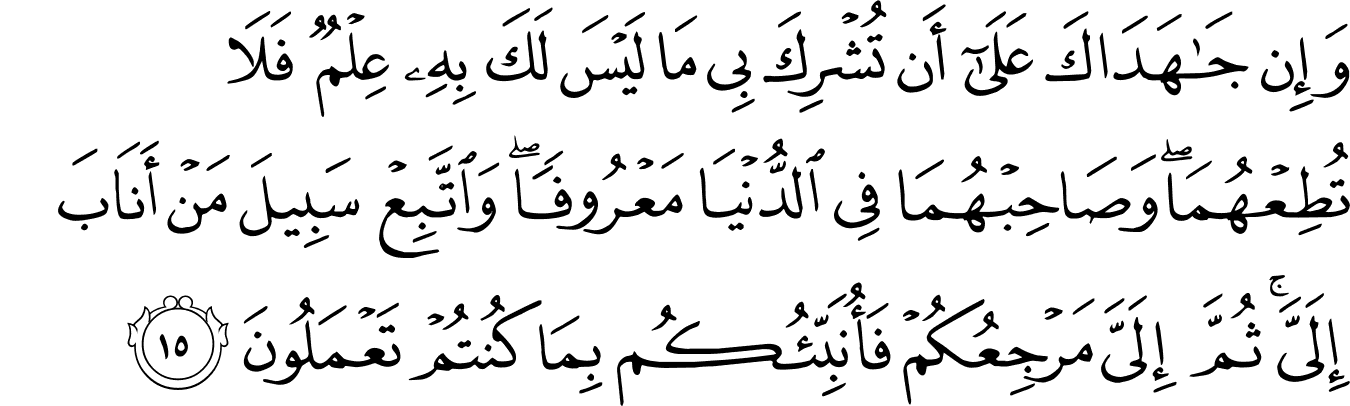
“But if they endeavor to make you associate with Me that of which you have no knowledge, do not obey them but accompany them in [this] world with appropriate kindness and follow the way of those who turn back to Me [in repentance]. Then to Me will be your return, and I will inform you about what you used to do.” [Surah Luqman; 31:15]
Within a Muslim family ethics framework, coping with parental conflict involves maintaining adab, engaging in respectful dialogue, practicing sabr, and making duʿāʾ for guidance and reconciliation.
Proactive Obedience as a Virtue
Moreover, the Prophet ﷺ described the most virtuous child as the one who serves and cares for their parents before being asked.
In one narration, three men were trapped in a cave and sought Allah’s help by mentioning their most sincere deeds. One man said he never fed his own children before feeding his elderly parents, even after a long day of work. His devotion was accepted, and the rock shifted. [Sahih al-Bukhari, no. 3465]. This powerful story illustrates the blessings that come from proactive, sincere obedience and care.
The Impact of Individualism on Parent-Child Relationships

“Many young adults are quick to point out their parents’ flaws but slow to recognize their sacrifices.” [PC: Nadine E (unsplash)]
:
“And We have enjoined upon man [care] for his parents. His mother carried him, [increasing her] in weakness upon weakness, and his weaning is in two years. Be grateful to Me and to your parents; to Me is the [final] destination.” [Surah Luqman; 31:14]
The entitlement culture has produced children who often consume more than they contribute, and who question the very people who sacrificed the most for them. But Islam calls us back to a sacred standard: a life of duty, compassion, and humility.
Restoring Balance Through Duty, Compassion, and Humility
Islam does not leave the parent-child relationship to culture or personal judgment—it elevates it to the level of ‘ibadah (worship). Obedience to parents is not optional; it is a spiritual duty. But this obedience is not blind servitude—it is a meaningful act that reflects humility before Allah and gratitude toward those through whom He gave us life. Just as prayer and fasting are acts of worship that earn reward, so too is every moment of kindness shown to one’s parents—even in the moments when it feels difficult.
Self-Reflection Questions for Youth
Ask yourself today:
Do I rush to help my parents the way I rush to answer my phone?
Do I speak to them with the same softness I use with strangers?
Do I honour them in private, or only when others are watching?
If we want to restore the balance eroded by individualism, we must revive these teachings—not just in books or lectures, but in our homes, hearts, and everyday behavior. A generation raised with these values will not only honor their parents—they will carry the legacy of Islam with dignity and grace.
And if you’re a young adult reading this—ask yourself: Am I writing a story that Allah will be proud of? Or one I’ll regret on the Day of Judgment? The answer lies not in grand gestures, but in the quiet, consistent choices we make every day.
Practical Ways to Honor Parents
Restoring balance begins with small, consistent actions. Here are a few ways youth can bring these teachings to life:
– Begin by checking in on your parents daily, not out of obligation but out of love. Ask them about their day, seek their advice, and make them feel seen and valued.
– Express gratitude openly—a simple “JazakAllahu khayran” or “thank you” softens hearts more than silence.
– Offer acts of service without waiting to be asked—make them tea, help with chores, drive them to appointments, or assist with technology. These seemingly small gestures are weighty in Allah’s Sight.
– Pray for them regularly, even when they are not present, for the Prophet ﷺ taught that a child’s dua for their parents continues to benefit them after death.
– When disagreements arise, choose patience over pride; lower your voice, listen before responding, and remember that respect is a form of ibadah.
– And finally, educate yourself and your peers—revive conversations in your circles about honoring parents, so that this forgotten sunnah becomes part of our generation’s identity once again.
The Urgency of Acting Now – Healing Families and the Ummah
One day, the voices of our parents will become memories—their footsteps in the hallway will fade, their advice will no longer be heard, and we will wish for just one more chance to serve them. Before that day arrives, let us honor them while they are still within reach. Let every message we send, every errand we run, and every word we speak be a sadaqah in disguise. The world tells us to chase independence; Islam calls us to embrace interdependence—with Allah , with our parents, and with our ummah.
If we, as the youth of today, can realign our hearts with these timeless teachings, we will not only heal our families but also mend the fractures of our ummah—one act of kindness, one softened heart, and one obedient prayer at a time.
Related:
– Podcast: The Rights of Parents vs Parental Oppression | Sh Isa Parada
– Family Relationships in Surah Maryam: IOK Ramadan Reflections Series #16
Keep supporting MuslimMatters for the sake of Allah
Alhamdulillah, we're at over 850 supporters. Help us get to 900 supporters this month. All it takes is a small gift from a reader like you to keep us going, for just $2 / month.
The Prophet (SAW) has taught us the best of deeds are those that done consistently, even if they are small. Click here to support MuslimMatters with a monthly donation of $2 per month. Set it and collect blessings from Allah (swt) for the khayr you're supporting without thinking about it.



15 Things You Didn’t Know About Makkah and the Ka’bah [Part 3]

Beyond Ramadan: Connecting to Allah Through His Beautiful and Majestic Names
15 Things You Didn’t Know About Makkah and the Ka’bah [Part 2]

Widening Wars Leave the Middle East in Shambles
15 Things You Didn’t Know About Makkah and the Ka’bah [Part 1]

The Trials Playlist: A Chaplain’s Set To Steady Your Heart

[Podcast] Is Your Sadaqah Paying an Influencer Instead of Going to Charity? | Mufti Abdullah Nana & Dr Shafi Lodhi

When The Qunoot Becomes Politics: Religious Theater in Saudi Arabia

Accessibility As Mercy: How Laylatul Qadr Guides Towards Disability Justice

The Weight Of Fear And The Will To Survive: Fasting In Times Of War

Coming Full Circle: Who Are You Now? | Night 30 with the Qur’an

Running Away From Who We Are | Night 29 with the Qur’an

Building From the Ground Up: Week 4 Recap | Night 28 with the Qur’an

The Muslim You Are Becoming | Night 27 with the Qur’an

What Will You Leave Behind? Legacy in Islam | Night 25 with the Qur’an
-

 #Current Affairs1 month ago
[Podcast] Ramadan Is Not For Your Private Spirituality | Dr Farah El-Sharif
-
#Society1 month ago
She Cried At The Door Of The Masjid: A Case For Children In Mosques
-
#Islam4 weeks ago
The Trials Playlist: A Chaplain’s Set To Steady Your Heart
-
#Culture4 weeks ago
[Podcast] Is Your Sadaqah Paying an Influencer Instead of Going to Charity? | Mufti Abdullah Nana & Dr Shafi Lodhi



GregAbdul
December 26, 2025 at 11:38 AM
a little excited, sorry….unconditional love is the Western idea that smashes into Islam and breaks families. Western children are taught no one gets to require anything of them, not even that they work hard in school. Parents in the West are supposed to love unconditionally, so that later on the children can abandon them to a nursing home or to die alone. The Universtity system in America is breaking rapidly, financed by haram crooked loan schemes that put children in debt for decades after they graduate. This dumbing down is a lot of it. Islam depends so much on knowledge, while many Western societies are going away from education because it is too much of a way for everyone to be equal. Authoritarianism is for people who cannot think and let the cult think for them. Democracy requires respect for those around you based on knowledge. Time is proving that Islam is more pro democracy than the other major religions.
Hajara
December 27, 2025 at 1:46 PM
JazakAllahu Khairan for the insightful and impactful writing
Amer Rizvi
December 27, 2025 at 6:39 PM
Beautiful message, Alhamdulillah. Honoring parents is truly a timeless value. Growing up in Pakistan, I was fortunate to be raised in a culture where this respect for parents was deeply rooted and practiced not only by Muslims, but also by other faith communities.
GregAbdul
December 27, 2025 at 8:27 PM
This is a BEAUTIFUL article Sister. May Allah reward you for reminding us of what is clearly spelled out in the Quran. Such excellent speech, I hate to add, as if I could speak on this level, but I humbly add: The Quran says Nuh (AS) had a son who refused to obey. The Prophet had an uncle that was an enemy of Islam and a pagan. Some of us come from cultures where blood ties are everything. The basis for Muslim family unity is ISLAM…so when the murtads in the family cut up, we don’t need to execute them as it says in Reliance of the Traveller. But you don’t get to spit on Islam and then sit in my home teaching me about “unconditional love.” Jannah, nor being in a good state with Allah is “unconditional.” Too many young people know conditions when you go on that white man’s job or do business. Then walk into the parents’ home and think gravity and physics don’t apply for the people who raised them.
Amer Rizvi
December 28, 2025 at 5:12 PM
Islam calls for boundaries and dignity; neither is reflected in your comment.
Summiya Shaikh
December 29, 2025 at 2:43 PM
I appreciate you taking the time to engage so thoughtfully. When love, rights, or democracy are detached from obligation and knowledge, institutions and families weaken rather than strengthen. Islam puts a lot of weight on knowledge, responsibility, and accountability, both in families and in society as a whole. That feels like a real contrast to systems that increasingly value comfort over character.
Sonia
December 30, 2025 at 3:01 PM
Islam also states children of divorced parents should be sent to live with their fathers after the mother remarries. This is what was done to me and my sibling. That felt like abandonment