
#Life
AI And The Dajjal Consciousness: Why We Need To Value Authentic Islamic Knowledge In An Age Of Convincing Deception

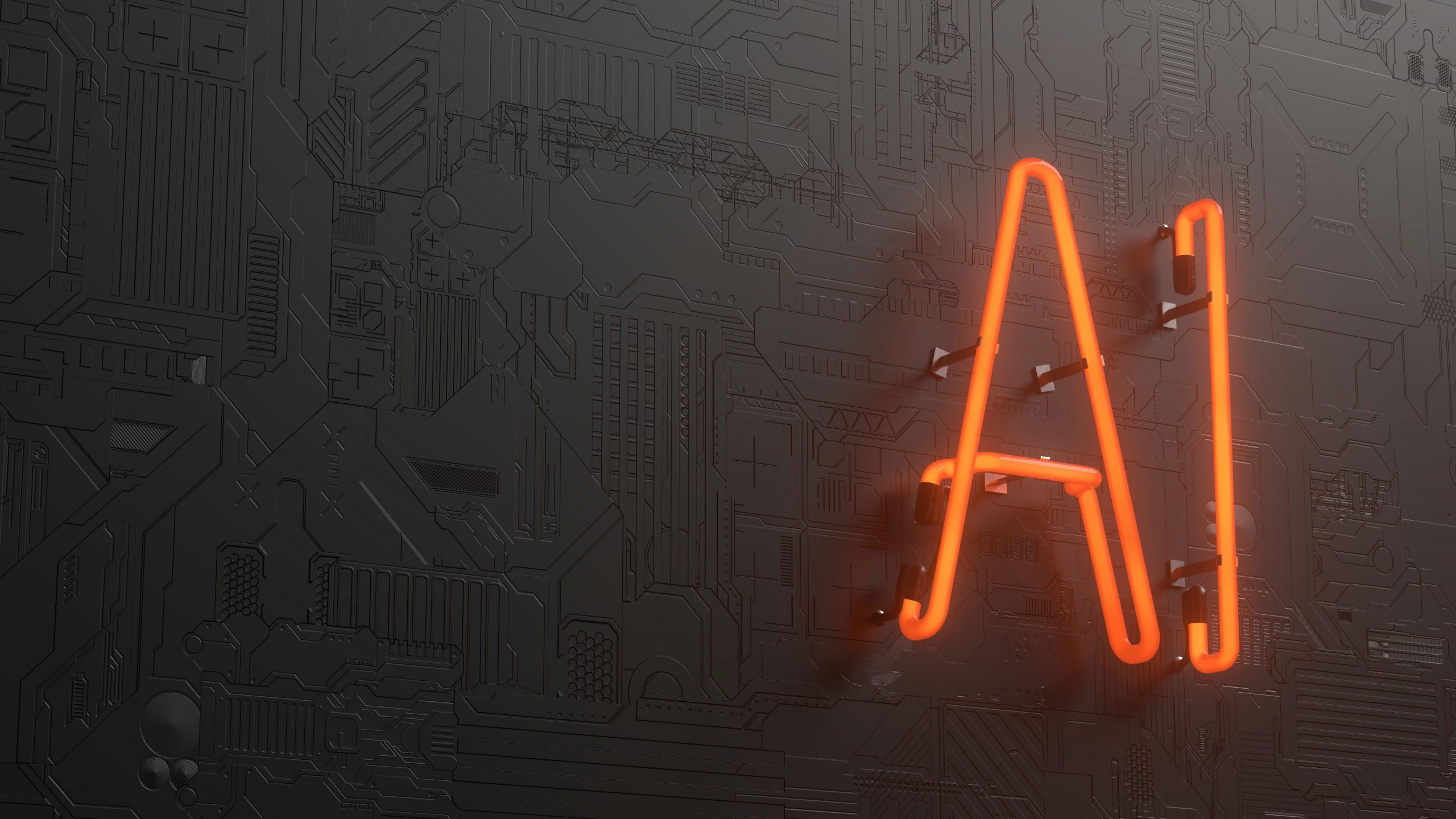
Laziness and lack of passion, combined with the rise of artificial intelligence (AI), will be the bane of our Ummah’s existence. Short-form media that constantly fires our synapses for that feel-good chemical, catering to limited attention spans, has taken over our lives. This has narrowed our chances of passing the ultimate test of the dunya.
In Islamic tradition, the Dajjal is described not only as a figure of physical trial, but as a master of deception, illusion, and confusion, someone who blurs the line between truth and falsehood until people no longer know what to trust. Whistleblowers are dismissed as conspiracy theorists, seemingly Islamic videos microdose incorrect information to slowly make people question their faith, and scholars are categorized as extremists. I am not saying that the Dajjal will take on any other form than what is clearly stated in our Quran and ahadeeth, but with the onslaught of microtrends, mainstream fashion, popularized language, and made-up ideologies, we are already prone to a form of deception that is already infiltrating our minds; not through force, but through familiarity, convenience, and constant exposure.
How Deep Has This Deception Sunk In?
It has become increasingly difficult to hold onto our faith in this day and age, as foretold to be a sign of the end of time. As narrated by Anas ibn Malik  , the Prophet
  said:
said:
Keep supporting MuslimMatters for the sake of Allah
Alhamdulillah, we're at over 850 supporters. Help us get to 900 supporters this month. All it takes is a small gift from a reader like you to keep us going, for just $2 / month.
The Prophet (SAW) has taught us the best of deeds are those that done consistently, even if they are small. Click here to support MuslimMatters with a monthly donation of $2 per month. Set it and collect blessings from Allah (swt) for the khayr you're supporting without thinking about it.
“A time of patience will come to people in which adhering to one’s religion is like grasping a hot coal.” [Sunan al-Tirmidhī 2260, Sahih (authentic) according to Al-Albani]
With the world changing so rapidly, Islam can sometimes feel centuries behind in its practices. Determining what is halal and haram, and what is permissible in interactions, dealings, and research, can make Islam seem more rigid than it truly is. While endless information is available with a few clicks, the more advanced technology becomes, the less informed people seem to be.
AI Videos and the Threat of Misinformation
AI has been in development long before its public release. Now, with common citizens having access to powerful technologies, it is increasingly difficult to discern what is real. Globally, this poses threats to security, sincerity, and solidarity. Fake pictures and videos can deceive the untrained eye and spread misinformation rapidly. Recently, videos of sheikhs, muftis, and scholars have been scrutinized for questionable statements. Short clips of muftis giving fatwas without proper evidence have become popular among those who lack deep knowledge of Islamic Fiqh. Comments often show confusion and doubt, highlighting the need for proper understanding.

“Relying solely on what we see, instead of belief grounded in authentic teachings, contradicts Islamic principles.” [PC: Aerps.com (unsplash)]
This illustrates a severe unity and media literacy problem within the Ummah. Many Muslims turn against one another online, often prioritizing personal validation over seeking truth. Relying solely on what we see, instead of belief grounded in authentic teachings, contradicts Islamic principles. Being knowledgeable in deen should not negate being competent in understanding the world around us. Proper understanding of religion requires awareness of modern technologies and media, as well as the tools to critically assess information.
The Rise of “Sheikh GPT” and AI Misguidance
AI is increasingly being used as a resource for Islamic guidance. Columbia Journalism reported that AI models provided incorrect answers to more than 60 per cent of queries (Columbia Journalism, 2025). These systems can offer biased, speculative, or incorrect responses. Many people unfamiliar with scholars turn to conversational AI for religious advice, believing they are receiving reliable guidance.
Religious questions, especially nuanced ones, require consultation with scholars, muftis, or sheikhs. Classical knowledge involves research, evidence, and context, often unavailable online. The preservation of Islamic knowledge was never casual or convenient. Scholars of hadith would travel for months, sometimes years, to verify a single narration, carefully examining chains of transmission, the character of narrators, and the consistency of reports. Imam al-Bukhari is reported to have memorized hundreds of thousands of narrations, accepting only a fraction after rigorous scrutiny, prayer, and verification. Knowledge was earned through discipline, sacrifice, and accountability, not instant answers or surface-level familiarity.
AI cannot replace the depth of human scholarship or the oral traditions through which Islam has historically been transmitted. Old manuscripts, parchments, and other sources of wisdom are not accessible to AI, which only draws from online content. While AI may provide answers to simple questions, it encourages habits of shallow engagement, diminishing the practice of active research and reflection.
Digital Manipulation and Contextual Misuse
Creators who are not knowledgeable about Islam often take ayahs, hadith, and practices out of context to produce viral content. These clips spread quickly, often with inflammatory captions, provoking outrage rather than informed discussion. A 2025 UNESCO report described AI-generated content as creating a “crisis of knowing,” making it difficult for users to distinguish authentic from fabricated material (UNESCO, 2025).
This is particularly dangerous for religious content. AI-manipulated videos of respected scholars, like the case of Sheikh Dr Al-Sudais, demonstrate how quickly misinformation can erode trust. AI models are often seen as convenient conversationalists, but they lack accountability, depth, and the ability to interpret religious context, nuance, and jurisprudential principles. Overreliance on these tools fosters a “copy-paste” mentality and encourages superficial engagement with Islam.
The Role of AI in Surveillance and Control
The concept of AI itself is not inherently bad. AI has many legitimate applications in research, organization, and efficiency. However, with it increasingly used directly against Muslims, including in surveillance, data tracking, and social monitoring, we must approach it with caution. Reliance on AI can subtly condition compliance and even make us more receptive to the tricks of the Dajjal. It is no longer merely a tool for convenience; it has become an instrument of influence and control that can weaken spiritual and communal resilience.
Returning to Authentic Learning of Islam
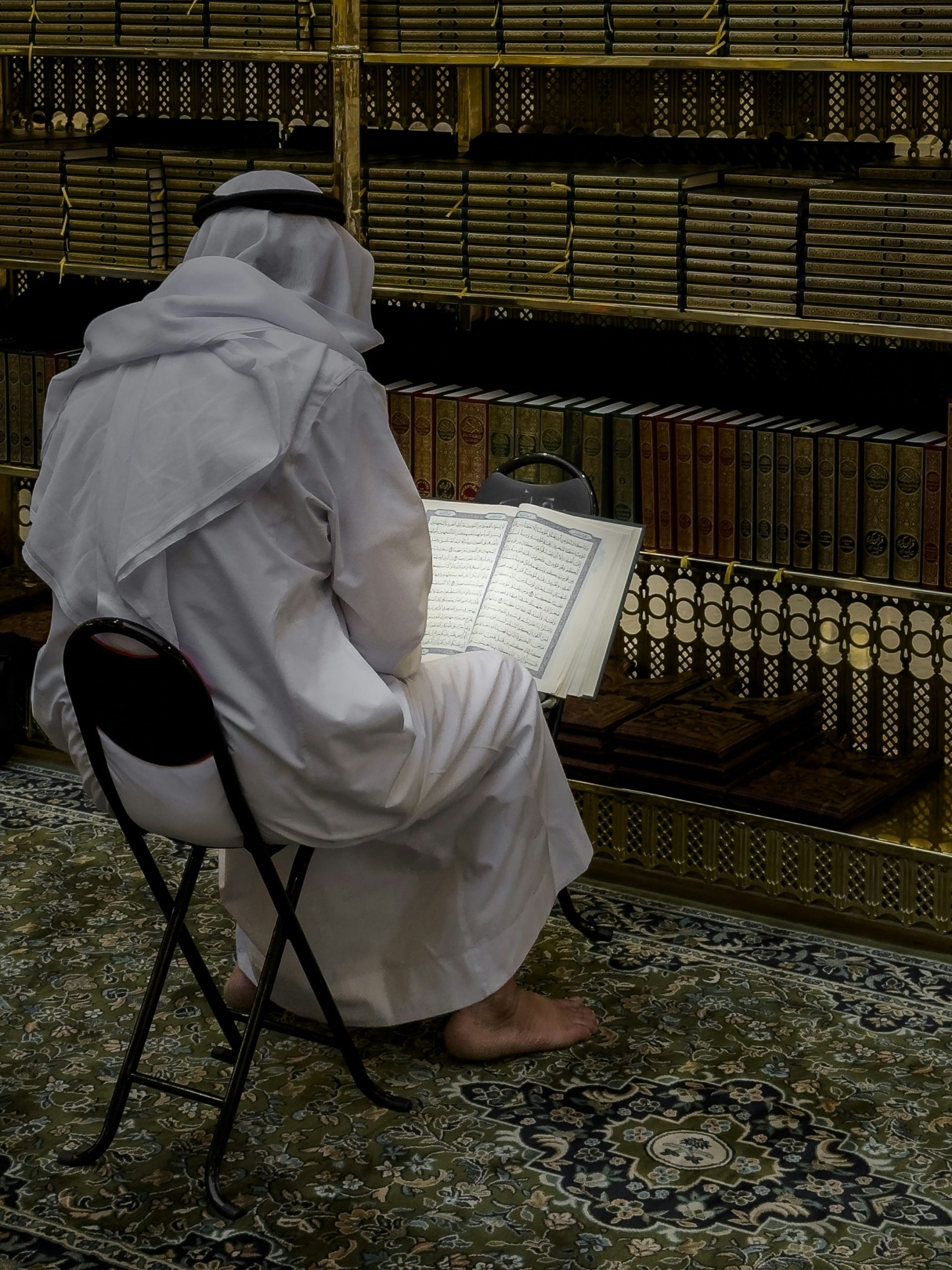
“Deep engagement with the deen is essential to develop discernment, patience, and spiritual strength.” [PC: Ishan-Seefromthesky (unsplash)]
Patience and discernment are essential. The Prophet ﷺ warned that a time would come when holding firmly to one’s religion would be like grasping a burning coal, a trial that demands endurance, clarity, and restraint (Jamiʿ al-Tirmidhi, no. 2260). Critical thinking, verification, and measured responses are necessary to avoid deception. Knowledge of both deen and dunya is crucial. Understanding Islamic teachings while being aware of modern communication methods, digital influence, and misinformation allows the Ummah to protect its faith and its community.
AI is not inherently evil, but when misused, it becomes a tool of confusion, division, and doubt. The responsibility falls on each of us to seek knowledge actively, question critically, and prioritize authenticity over convenience. Just like we as Muslims have been repeatedly warned to seek protection from the deception of the Dajjal, why not also wake up our consciousness to the many influences that are already present, subtly infiltrating our minds?
Yet the remedy remains steadfast: patience, authentic knowledge, and unwavering commitment to Islam.
Related:
– The Promise of SAIF: Towards a Radical Islamic Futurism
– [Podcast] Man 2 Man: How Social Media Is Killing Your Imaan
Keep supporting MuslimMatters for the sake of Allah
Alhamdulillah, we're at over 850 supporters. Help us get to 900 supporters this month. All it takes is a small gift from a reader like you to keep us going, for just $2 / month.
The Prophet (SAW) has taught us the best of deeds are those that done consistently, even if they are small. Click here to support MuslimMatters with a monthly donation of $2 per month. Set it and collect blessings from Allah (swt) for the khayr you're supporting without thinking about it.




Widening Wars Leave the Middle East in Shambles

15 Things You Didn’t Know About Makkah and the Ka’bah [Part 1]

Eid Mubarak from MuslimMatters

Selamat Hari Raya! – Celebrating Eid In Malaysia

AL-AQSA IS CLOSED

[Podcast] Ramadan Is Not For Your Private Spirituality | Dr Farah El-Sharif

Ramadan, Disability, And Emergency Preparedness: How The Month Of Mercy Can Prepare Us Before Communal Calamity

She Cried At The Door Of The Masjid: A Case For Children In Mosques

When to Walk Away from Toxic Friends | Night 9 with the Qur’an

I Can’t Stop Thinking About Someone | Night 10 with the Qur’an

Coming Full Circle: Who Are You Now? | Night 30 with the Qur’an

Running Away From Who We Are | Night 29 with the Qur’an

Building From the Ground Up: Week 4 Recap | Night 28 with the Qur’an

The Muslim You Are Becoming | Night 27 with the Qur’an

What Will You Leave Behind? Legacy in Islam | Night 25 with the Qur’an
-

 #Islam1 month ago
30 Nights with the Qur’an: A Ramadan Series for Muslim Teens
-
#Current Affairs1 month ago
An Unending Grief: Uyghurs And Ramadan Under Chinese Occupation
-
#Society1 month ago
Where Does Your Dollar Go? – How We Can Avoid Another Beydoun Controversy
-
#Current Affairs3 weeks ago
[Podcast] Ramadan Is Not For Your Private Spirituality | Dr Farah El-Sharif


GregAbdul
December 15, 2025 at 9:49 AM
Very Good Article. Al hamdu lellah. Go to the masjid and study classical works with guidance from the Emam (NOT the masjid police). That is what the masjid is there for.
Haya
December 15, 2025 at 10:13 AM
Jazak Allah Khair, I am happy you enjoyed the article! I agree, we must take advantage of the vast amounts of authentic knowledge that are stored in our communities with our scholars and books.
Wajiha Alavi
December 15, 2025 at 11:41 AM
This is a very thoughtful and timely article. In an age where AI can generate information so convincingly, your reminder about the importance of authentic knowledge is crucial. As Muslims, we are taught to rely on verified sources and qualified scholars, and to be mindful of who we take our knowledge from and how that knowledge is transmitted.
This is precisely why the science of ḥadīth preserved chains of narration—to ensure authenticity and protect the words and teachings of the Prophet ﷺ from distortion. Your article beautifully highlights this parallel and encourages readers to approach modern tools, including AI, with discernment and responsibility.
I truly appreciate the depth and clarity of your work. Everyone should take the time to benefit from this article. May Allah guide us to the straight path, grant us sound knowledge, and allow us to act upon what is correct and pleasing to Him. May Allah bless you abundantly in this world and the next. Āmeen.
Amer Rizvi
December 16, 2025 at 11:07 AM
Thank you for your informative article. I’d like to say that ChatGPT has been wonderful for me. Regarding religion, while some Shaikhs advised me not to sue Loudoun County Public Schools for racial, religious, and age discrimination, workplace harassment, and retaliation, ChatGPT assessed that I had a strong case. I was even stunned when one Shaikh representing a major Islamic organization in the United States advised me to forgive those who perpetrated injustice and leave it for the Day of Judgment! You can see why many Muslims today become doormats in the United States. ChatGPT also helped me immensely in drafting my motions and charges when no lawyer was willing to take my case on a contingency basis.
Beyond legal matters, ChatGPT has helped me grow closer to Allah. I like to say my duas in sajdah in Arabic, as the Arabic words (like Taqwa, Khushu, Istighfar, Tawba, Rabb, etc.) carry far richer meanings than their English equivalents. ChatGPT helps me craft appropriate duas in Arabic, ensuring they conform to orthodox Islamic understanding and the majority opinions of scholars.
It has also provided me with comprehensive strategies for tazkiya (purification of the soul), far more detailed than any Shaikh could provide. For me, ChatGPT has truly been a Godsend, Alhamdulillah (All perfect praises belong to Allah).
Written with the help of ChatGPT :-)
Jakir Ahmed
December 17, 2025 at 4:30 PM
BaarakAllahu feekum for the article. It is useful for us to be aware of the dangers of relying on artificial intelligence for seeking knowledge. However, I do not think it is appropriate to extrapolate to the concept of the Dajjal, as like you have mentioned – we should be learning from people of knowledge and taught to us as part of the signs of the hour.