
Gender Relations
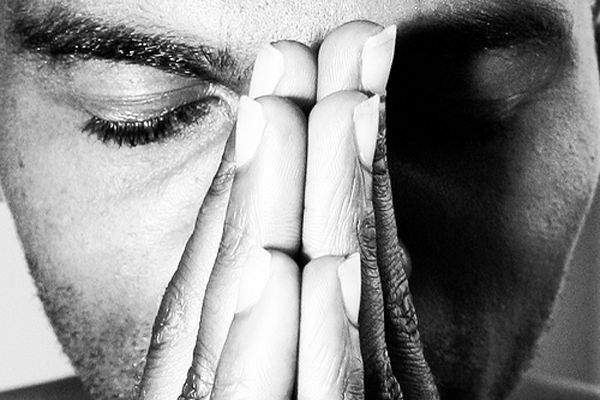
Verbal Abuse in Marriage: Words can Kill

Domestic Violence Series: Part 1 | Part 2 | Part 3 | Part 4 | Part 5 | Part 6 | Part 7
Sticks and Stones May Break my Bones but Words will never Hurt Me….
Keep supporting MuslimMatters for the sake of Allah
Alhamdulillah, we're at over 850 supporters. Help us get to 900 supporters this month. All it takes is a small gift from a reader like you to keep us going, for just $2 / month.
The Prophet (SAW) has taught us the best of deeds are those that done consistently, even if they are small. Click here to support MuslimMatters with a monthly donation of $2 per month. Set it and collect blessings from Allah (swt) for the khayr you're supporting without thinking about it.
“My husband thinks I am stupid. He thinks I can never learn Arabic because I don’t have the brains to.” A sister said while she was seeking advice about her marital discords. She has been married for more than 10 years and has been verbally abused throughout her marital life. When I first met her, she appeared very unconfident and insecure. I was not sure if she had always been like that or if the marital verbal abuse had turned her into a self-doubting, vulnerable person.
According to her, her husband puts her down and calls her all sorts of names even in front of the children. He constantly undermines her abilities and compares her with other “accomplished” women. He is very judgmental and I realized that she has no more self-esteem left in her.
She described her husband as someone who loves to criticize her, calls her all kinds of degrading names, even in the presence of their children. He undermines her abilities and compares her with other“accomplished” women. It seems like that he had been very judgmental throughout their marital life and perhaps that is the reason why she has no more self-esteem left in her.
Unfortunately, this is not the case with just one family, rather verbal abuse in marital relationships has been a major problem in the Muslim communities.
Perhaps it is phrases like, ‘sticks and stones may break my bones but words will never hurt me,’ that is not only inherently wrong but has encouraged verbal abuse and underestimated its evil affects on the abused. The truth of the matter is that verbal abuse hurt as badly if not more than the physical abuse.

Confusion about Verbal Abuse vs. Physical Abuse:
Those men and women who have not been physically abused by their wives and husbands but are verbally abused on a daily basis remain confused whether or not they are in a damaging relationship.
Unlike physical abuse, verbal abuse is difficult to identify. Once a person has been hit, it is a physical abuse. There is no need to be confused because the bruises are visible. On the other hand, verbal abuse is more dangerous because there is no “apparent” damage. Yet, it causes internal destruction, leaves invisible scars, wounded spirit and low self-esteem.
Verbal abuse can be done by either spouse. In some cases, the perpetrator is the wife who not only verbally abuses her husband but drags his whole family along the way.
Islam recognizes the evil of verbal abuse and perhaps that’s why there is so much emphasis on guarding one’s tongue and keeping others secured from its invisible harm.
“A true believer is not involved in taunting, or frequently cursing (others) or in indecency or abusing.”‘ (al-Tirmidhi)
If this is the right of a regular Muslim, then how much more so a wife or husband is entitled to be safe from verbal abuse and taunting.
In another narration, the Prophet of Allāh said:
“…Cursing a believer is like murdering him.” (Al-Bukhāri and Muslim)
SubḥānAllāh, how true are the words of the Prophet ṣallallāhu ‘alayhi wa sallam who thoroughly acknowledge that, in fact, harsh tongue and cursing is as painful and harmful as murdering someone.
Hence, those husbands who are duped into thinking that they are free from being abusive because they have never raised their hands on their wives, yet, frequently curse or use abusive/foul language should take heed in the words of the Prophet ṣallallāhu ‘alayhi wa sallam. And so should the wives who have been using harsh tongue against their husbands.
Break the Cycle:
If you are in a verbally abusive relationship, then change your situation. Remember YOU have to break the pattern. The first step is to acknowledge your spouse’s verbal abuse.
Ask yourself the following questions:
●Do you feel like you have to walk on eggshells around your partner?
●Do you feel threatened, humiliated, helpless or depressed?
●Do you feel as though you cannot do anything right?
●Does your spouse belittle you?
●Does your partner have complete control over your bank accounts?
●Does your spouse ignore or disregard your achievements?
●Does your partner blame you for all of your marriage problems?[i]
Oppression must not be encouraged whether physical or verbal. Find the courage to change your situation.
●Communicate with your spouse. You should not be intimidated to talk to your spouse.
●Set Limits: be specific what you can tolerate and what you cannot.
●Seek help: your spouse must not have any problem should you get a third party involved to seek help
●See a therapist: be careful who you chose for therapy
●See a Religious Counselor:
- If you chose to speak with a shaykh, make sure he has enough time to listen to your problem thoroughly.
- Do not catch the shaykh during the prayer breaks for 10-15 minutes.
- Make an appointment.
Make sure the shaykh spends enough time to listen to your complain and your spouse’s and give step by
step advice to both of you. - Make a follow up appointment to ensure the benefits of
his advice.
A “Henpecked” Husband
In some cultures, eastern and western, a kind and affectionate husband is considered “henpecked” by family and friends. Consequently, to prove otherwise husbands may resort to verbal harshness in public or even in private. Let them be reminded, that in the eyes of Allah ‘azzawajal, the Ultimate Judge, their strength as husbands is not shown in how much verbally they can abuse their wives, rather:
“The strong man is not one who wrestles well but the strong man is one who
controls himself when he is in a fit of rage.”
And the excellence of a man has been described in his good manners and in his control over his tongue. And the excellence of a man has been described in his good manners and in his control over his tongue. Abu Musa Al-Ash`ari (ra) reported: I asked the Messenger of Allāh, ṣallallāhu ‘alayhi wa sallam:
“Who is the most excellent among the Muslims?” He said, “One from whose tongue and hands the other Muslims are secure.”
(Al-Bukhāri and Muslim)
This right is exceedingly due upon the wives. If a wife is not secured form her husband’s tongue then it merely shows the weakness, cowardliness and lowliness of a man’s character not his strength
Woman’s Harsh Tongue:
Sisters remember the story of the two women, one prayed and fasted and performed extra acts of worship yet she was known to be very harsh with her tongue towards others. The other women performed her obligatory acts of worship but she was very polite to towards others and didn’t hurt anyone with her tongue. The first one was from the women of hellfire and the second was from the people of Jannah.
If this is the case in dealing with others, just imagine what will happen if a wife, consistently, uses harsh tongue towards her husband, who has most rights over her politeness, respect and kind treatment.
وقولوا قولاً سديداً
Allah ‘azzawajal says (which means):
O you who have believed, fear Allah and speak words of appropriate justice قولا سديدا
. He will [then] amend for you your deeds and forgive you your sins…(Sūrat’l-Aḥzāb:71)
In this verse
قولا سديدا
has a very profound meaning. It doesn’t merely mean just speech rather these are the words through which a person connects with the world around him/her. A spouse is the one a person most frequently interacts with hence the one most entitled toقولا سديدا .
It doesn’t merely mean just speech rather these are the words through which a person connects with the world around him/her. A spouse is the one a person most frequently interacts with hence the one most entitled to قولا سديدا. These words (everyday speech) are from the characteristics that separate a person from the other creatures and these words are the means by which a person makes himself/herself either from the people of Hell or people of Jannah.[ii]
Lastly, those brothers and sisters who are in emotionally abusive relationship must realize that verbal abuse is often worse than physical abuse. Words hurt and can be more harmful than physical pain. Also, patience through verbal abuse (though will be rewarded by Allah‘azzawajal inshā’Allāh) can and will have damaging effects on the children. Not only at the time when they are growing up but on how it shapes their personality and what type of spouses would they turn out to be in future. Mostly, sons will follow their father’s footsteps and daughters will follow their mother’s. Hence, be cautious of what you are putting your children through and take a stand for yourself and for your children.
[i] http://www.marriagemax.com/blog/how-to-stop-verbal-and-emotional-abuse/
Keep supporting MuslimMatters for the sake of Allah
Alhamdulillah, we're at over 850 supporters. Help us get to 900 supporters this month. All it takes is a small gift from a reader like you to keep us going, for just $2 / month.
The Prophet (SAW) has taught us the best of deeds are those that done consistently, even if they are small. Click here to support MuslimMatters with a monthly donation of $2 per month. Set it and collect blessings from Allah (swt) for the khayr you're supporting without thinking about it.




Israel Seeks Escalation For Latitude – The Regional “Conflict” Widens

Post-Ramadan Reflections From A Mother Of Littles

[Podcast] Palestine in Our Hearts: Eid al-Fitr 1445 AH

Foreign Affairs Official Resigns Over Gaza Genocide

A Ramadan Quran Journal: A MuslimMatters Series – [Juz 30] Solace For The Sincere And Vulnerable

IOK Ramadan: 7 Qualities of Highly Effective Believers | Keys To The Divine Compass [Ep18]
IOK Ramadan: Choose Wisely | Keys To The Divine Compass [Ep15]
IOK Ramadan: They Were Not Created Without Purpose | Keys To The Divine Compass [Ep23]
IOK Ramadan: Making Time for Allāh at Night | Keys To The Divine Compass [Ep21]
IOK Ramadan: Appreciating the Prophet ﷺ | Keys To The Divine Compass [Ep22]

IOK Ramadan: The Importance of Spiritual Purification | Keys To The Divine Compass [Ep30]
IOK Ramadan: The Power of Prayer | Keys To The Divine Compass [Ep29]
IOK Ramadan: The Weight of the Qur’an | Keys To The Divine Compass [Ep28]
IOK Ramadan: Families of Faith | Keys To The Divine Compass [Ep27]
IOK Ramadan: Humility in Front of the Messenger | Keys To The Divine Compass [Ep26]
-

 #Islam3 weeks ago
IOK Ramadan: 7 Qualities of Highly Effective Believers | Keys To The Divine Compass [Ep18]
-
#Islam3 weeks ago
IOK Ramadan: Choose Wisely | Keys To The Divine Compass [Ep15]
-
#Islam3 weeks ago
IOK Ramadan: Making Time for Allāh at Night | Keys To The Divine Compass [Ep21]
-
#Islam3 weeks ago
IOK Ramadan: Appreciating the Prophet ﷺ | Keys To The Divine Compass [Ep22]
AnonyMouse
November 2, 2011 at 8:25 AM
May Allah reward all those working on this series, ameen.
Verbal abuse is no easy thing, and in a long-term relationship it is more damaging than you can imagine. It destroys the victim slowly, whittling away at their happiness, their well-being, their confidence, their self-esteem, and worst of all, their faith.
The effects of verbal abuse are long-reaching as well. Not only does it affect the victim, but children who witness it are also psychologically and emotionally scarred (as we saw from the previous article). They, in turn, may either become abusers or be further abused.
Umm Reem, thank you for pointing out the warnings against and dangers of verbally harming a fellow Muslim as outlined in the Qur’an and Sunnah – as most of us seem to conveniently “forget” that verbal abuse between spouses is just as severe (if not more so) than speaking ill towards strangers. So too do we forget that those closest to us – parents, spouses, and children – are amongst those who have the greatest rights over us in terms of good conduct!
shorty
June 28, 2012 at 8:14 PM
I agree It’s real break my Faith
suhail
August 3, 2014 at 12:51 PM
How do live day to day as a god fearing Muslim man, when your Muslim wife verbally abuses you every single day of this miserable life? The words that come out of her mouth are more filthy than a toilet. What is the point of carrying on.
arabica
May 29, 2017 at 9:28 AM
This is describing my daily life of verbal abuse, i feel like this woman mentioned in the story is me, everyday i get told i am stupid, i can’t do anything right, i have a black heart, i think i have all the knowledge, he doesn’t know why he is with me, every step he takes with me is bad, I have been married to my husband for almost 10 years and he is an Arab, i was very successful drove the latest car and his salary was a 3rd of mine. Now i have no self esteem, no confidence i don’t work and the solutions you mentioned in your article is not possible at all. Everyone sees my husband as a sheikh even his family and mine because he only advises and talks religion to everyone. i can talk to him about my feelings because it always ends up in a big argument and my feelings being stupid, i can’t buy a $1 thing without getting permission from him. and this is the rule of islam according to him. anything i complain about he gives me aya in Quran to prove me wrong. He memorized the Quran and i merely learning Islam. he shouts at me in front of his parents and family or even in public, when we visit his parents he is even worse he treats me so bad almost like he is showing them he is the boss. I am so unhappy i don’t know what to do.
Binta
July 7, 2016 at 12:38 PM
Alhamdulilahi robil alamin. thanks so much for your advice jazaka allahu heiroon.may Allah help us
kiwi
November 2, 2011 at 10:27 AM
Knives ,axes acts like a day but harsh words always stay .
nidal
November 2, 2011 at 1:21 PM
In relation to the criticism of the concept of the “henpecked husband” as an example of a possibly ignorant or unIslamic trait of certain less developed cultures, could the author please clarify:
If there is a situation wherein a man’s parents and wife demand different things and neither is immoral or un-Islamic, is there a preference for whose request the man may be more receptive to?
Secondly, do the parents and dependent/needy siblings of a man have a right over his wealth/earnings along with his wife and children? If a man spends his time/wealth on his wife to the detriment of his parents when they need him, is he being chivalrous (or to use the vernacular, henpecked)? Does the Quran command believers to lower the wings of humility and not even express displeasure with uff to one’s parents or one’s spouse?
Or is it the contention of MM that while parents do have rights, the denial of rights to one’s parents and relations is non-existent in the Muslim community, while the denial of the rights of the wife by husbands is an epidemic? Perhaps better communication of how we see the world will lead to a better life and people who don’t share too many values don’t end up marrying each other.
Umm Reem
November 4, 2011 at 2:31 AM
why can’t he fulfill both?
It depends…and I am sure that answer may vary from situation to situation…it is best to ask a local shaikh about the specific situation
If the parents are in need of their son, then he must take care of them. I do not believe that wife’s and parent’s rights overlap. There has to be a balance and every man has to figure out how to balance it. But if someone’s parents are in need of extra assistance I am sure he can speak to his wife and get her to support him in fulfilling his obligations towards his parents. Allah knows best.
CrysAli
October 1, 2012 at 11:42 AM
I would like to compliment this reply & add that please brother, do not confuse “chivalry” & “hen-pecked.” They are very different in meaning & both are actually terms based from entirely different times in history. “hen-pecked” is more of an older term that is more negative indicating the man who is similar to a rooster without will of his own based on being pecked into submission by a hen. Quite simply the unnatural & miserable results of a male creature submitting to a female. Today’s modern society tends to refer to this more commonly as “brow-beaten”. However, chivalry is very much a positive, charming & wonderfully respectful behavior/mentality from ancient times of kings, queens, knights, etc & probably much further back than that. Chivalry is dying & nearly an extinct art form amongst modern males. Chivalry greatly involves the desire to protect, be proper & gracious of thought, speech, & behavior. Today we more commonly know this as being a gentleman.
As our beautiful contributors are attempting to share, modern men are far too commonly trained not to be gentleman, not to be affectionate, kind, gentle & protective & loving of their wives today so as to not be considered ‘weak’ or ‘pathetic’ amongst other men. Just as modern women are far too commonly taught to be strong, do not tolerate men’s ‘historical’ abusive cruelty which is sadly experienced still today by our Mothers, Grandmothers, sisters, aunts, daughters, etc…
Therefore, we have far too many ‘commonly accepted’ modern practices/beliefs/attitudes/speech/etc that is far removed from ALLAH’s instructions of how we are to live & treat one another. Very sad, but we have to struggle always to return to the very HEART of ALLAH’s rules & guidance beginning in the home with husband & wife, father & mother, parent & child, sibling to sibling & then allowing this spiritual beauty to overtake communities, societies, nations, & all of creation. Insha ALLAH :) we can only pray, try & hope because together we are all better!
Zamzam
November 2, 2011 at 3:03 PM
Jazak Allah khaira for this article.
You have said, “…verbal abuse in marital relationships has been a major problem in Muslim communities.”
This statement makes me feel as if most Muslim families suffer from such a problem. I agree with you that it is a problem; however, there are many Muslim spouses who have stable relationship. I love to see the picture from both sides. It gives hope and shows those who suffer from abusiveness that it is possible to develop a healthy relationship. I jokingly told one of my friends who enjoys happy relationship with her husband “Are you not bored because you have not quarreled with your husband for years.”
What do you mean by “Religious Counselor”?
I think this is a confusing word because it is not necessarily that sheikhs are qualified to give marital advice. A marital consultant should have knowledge about marital relationships, besides having Islamic knowledge, especially knowledge related to Islamic family law.
Yasmin
November 2, 2011 at 3:03 PM
Jazakallah khair for this very important post! I think that you did a beautiful job in addressing both the potentially abusive husband and wife!
Umm Sulaim
November 2, 2011 at 7:04 PM
Another beautiful article. MM should keep up the good work.
So long as one is not allowed to marry ones mother (or father, for that matter), Islam has made provisions for ALL, including ones spouse within ones means.
Verbal abuse is a real issue and as the author mentioned, it usually dents the victim’s self-image. The situation is worse if the victim lacked self-confidence prior to getting married.
As a matter of principle, whatever verbal abuse I am subjected to gets turned round against the speaker.
For instance, when I was insulted for not getting pregnant, I beseeched Allah against conceiving and having a child in such a condition. Although, I do not have a child, I am satisfied I have not brought a child into this world to suffer for my actions. I am content being surrounded by other people’s children until that nice, loving man comes along.
Umm Sulaim
Olivia
November 2, 2011 at 7:55 PM
Great post, masha’Allah. I especially like the part where you emphasized that each person has a part to play in the “cycle” of abuse and the cycle can thus be broken by taking that first step toward doing something different. Victims cannot merely wait for their spouse to seek help or change, they have to make a change as well in regards to how they will behave in response to the abuse.
Somebody mentioned balancing parents and wife, and I like how one Shaykh put it. It’s not either one or the other, you have to find a way to make them both happy =) That being said though, no one is responsible for another person’s happiness, whether parents or spouse. A person is responsible for their own behavior in being the best person they can be toward others. If a parent or spouse has an unrealistic expectation of how their child or spouse should be, then they need help realigning their expectations. I think that’s one thing we get tripped up on, personally. We think we are responsible for our parents or spouse’s happiness unconditionally, which would be insane. =)
nidal
November 2, 2011 at 8:47 PM
I don’t think I got my point across. There are certain basic rights and roles for both the spouse and parents. Of course, one should try to come to a point where you can make both happy. However, there is a small asymmetry that I do not think people realize here. Even though a non-Islamic state does not enforce or recognize this, a man has a duty to support his parents if they need him. So for example, if a man does not do so (because he does not want to or his wife doesn’t let him), then a small, reasonable portion of his income/wealth should be confiscated from him to support his parents, just like child support. A woman does not have an obligation to earn and support her parents, although morally her husband should try to pitch in if he can or may be let his wife work to support them. Secondly, I am not aware of any hadith mentioning paradise being under the feet of your wife, unlike the one about one’s mother. It might be bad, but one can divorce one’s spouse but you can’t divorce our parents. None of this means that any spouse should go along and be abusive towards the other or that any in-laws should make it a point to create trouble. However, there are these basic differences in these relationships, and you can’t just ignore them. I just haven’t found anyone acknowledging these things at all in the whole series. Yes, abuse is bad but if everyone wants to bury their heads under the sun, while we put all these “backward, eastern cultural baggage” behind us so we don’t have to face issues that seem quaint, then all you will achieve is may be a slight improvement in outward signs of domestic relationships and an even higher divorce rate (which is already in the vicinity of that of the general population). And a few years later, most of the people campaigning right now will themselves be kicked to the curb by their kids since this is what they grew up with.
Saeed
November 3, 2011 at 12:18 AM
The “you can divorce your spouse but not your parents” is a very often misused statement. Sometimes, parents ask unrealistic things from their children and they they dont/cant obey, they come up with this line which is pathetic to say the least.
Another very abused event is quoting Hadhrat Umars advice to his son to divorce his wife. Its as if every other parent thinks they have the right to ask their child to divorce a spouse simply because of that incident.
There are millions of possible scenarios’ , in some of them the husband doesnt fulfil his parents rights, in others the wife doesnt fulfil her duties, and in some the parents dont fulfil their childrens rights.
Your post seems to be focused on one side only…
Every child has a duty to support his parents if they cant do so, but that is not necessarily at the expense of his duties towards his spouse and children.
As for “eastern cultural baggage”, let me give just one example, while men have to support their parents, there is no requirement for them to live under one roof with his parents. Yet many “Desi” families consider this the main requirement and all hell breaks loose if everyone, inncluding all unmarried siblings dont live in one home…
When the parents are very old its a different matter, but Islamically it suffices if a man takes care of his family while staying near them, but not necessarily in the same home
nidal
November 3, 2011 at 5:38 PM
>> Your post seems to be focused on one side only…
I did acknowledge that there can be in-laws who create problems, but my post was an attempt at bringing to attention something that is being completely ignored, even undermined as people one after the other talk about one side. A simple exercise in in-grouping and group-think doesn’t change anything in reality. I think problems can lie on both sides (in general that is, specific families may have one side creating most of the issues).
Anecdotally, I think there is a large problem in the community on the other side, and by completely ignoring it, MM might be becoming part of the problem in that sense.
>As for “eastern cultural baggage”, let me give just one example, while men have to >support their parents, there is no requirement for them to live under one roof with his >parents. Yet many “Desi” families consider this the main requirement and all hell >breaks loose if everyone, including all unmarried siblings dont live in one home…
I think this illustrates the problem very well. First of all, just as there Islam allows the couple not to live with the husband’s family, there is no requirement or even recommendation to do so. So can we please be clear that people integrating a large part of non-Islamic culture (I didn’t say unIslamic) in the name of integration etc. shouldn’t go off talking about baggage, and even worse, accusations of bid’ah for customs that are not mandated but clearly mustahhab? Secondly, I do not know of anyone in my social circle who married and lived in the same house as his parents (other than the rare case of needing their financial support which the wife was in favor of). However, I do know lots of cases in which the wife has kept the husband from fulfilling his duty to support his parents, even from afar and has kept the grandkids almost unaware of his paternal grandparents. The most one can expect is a theoretical acknowledgement as given by you, but when it comes to practice, there is always some excuse. With the state of child custody rules under English Common Law in the US and UK the way they are, and the convenient anti-Muslim male sentiment among to be expected from many judge and jury, the husband is basically forced to chose between him having some time with his kids and basically leaving his parents, or having a few measly visitations.
Salma
November 27, 2013 at 10:26 PM
I came across this post, and thought it’s a couple years old, I wanted to clarify something for others coming across it:
Under Sharia, a woman has an ABSOLUTE right to have a home separate from her in-laws. She can, of her own free will, give up that right if she CHOOSES, but she has no obligation to live under the same roof. Her husband MUST provide a separate home.
Given some of the horrendous situations with in-laws (in some families, not all of course), there is wisdom in this.
There can only be one “queen of the house” so to speak, and that right belongs to the wife/mother. In many situations, a mother-in-law will try to take over, rule the roost. That is only one example of some of the hardships that take place when someone (esp the woman, who tends to stay home with children most of the time) is being pushed aside and minimized in her own home, unable to take charge of her children and raise them, etc.
(Hamza Yusuf put it best when he spoke of this)
Sanjeeda Ahmed
November 2, 2011 at 8:13 PM
Your article is excellent. We know so many young ladies who are being subjected to this kind of abuse. It is really hard for these victims to get out of this “quick sand” or “whirlpool” or whatever you call it, especially after they have children. Even the girls’s family get drawn into this type of abuse. Apart from the parents and some close relatives, people don’t have empathy for girls. Only Allah can help these poor souls.
Abu Youssef
November 2, 2011 at 9:57 PM
Assalam aleikum, abuse is an insidious thing to say the least. I was raised by parents who did a lot of yelling and fighting and often times ridiculing. I have very specific memories of things my parents have done to me in the past and when I talk to them about it, they deny it, don’t remember it, you name it.
I have essentially cut myself off from my family and for years and years I didn’t understand why. All I knew is they made me feel horrible about myself constantly. When I became muslim, I tried very hard to be obedient and loving but I just couldn’t bring myself to be near them. The fact they’re kuffar makes it worse. I didn’t really understand what was wrong with me until I got married. My wife heard how my parents spoke to me and about me, listened to the stories I told and was beyond shocked. She told me flat out that I was abused.
My parents did do a lot of good things for me, but for whatever reason, it was the bad that stuck with me and affected me the most. For example, I was 13 or so when I took an all first aid course. The course was an activity for my scout group and so I mostly didn’t pay attention and kidded around. Well, I failed, pretty badly as you might expect. What you may not expect is the response my mother, who is a nurse, gave me. She said “I have never been so embarrassed in my life” and said it loudly, in front a great deal of other people. My parents came to visit my wife and I when our first child was born. We had a get together at my in laws and my mother dominated the conversation of course, at one point leaning over to my mother in law and saying ‘Gee, I hope my grandson doesn’t have the same skin condition my son does”(I have excema) Again, I talk to my parents about this on occasion and they will say things like “Oh yeah, we were such horrible parents”
As I said earlier, it actually took my wife telling me it was abusive to realize that’s what it was. Abuse is so insidious that you don’t even realize it’s being done a lot of times. It causes so many problems in marriage and parenting. What’s worse is, it affects you without you even knowing it is. I have caught myself doing the same stuff my parents did to my wife and my kids and I hate it. Abuse affects so many and is truly evil.
BintMahmoud
November 3, 2011 at 12:20 AM
JazakAllah khair for sharing this Abu Youssef. Alhamdulillah that you were able to HEAR and LISTEN to your wife telling you that the behavior was abusive. Like your parents, some people choose to deny it and continue on with their behavior as if nothing is wrong. It is good your wife was able to recognize it and encourage you to seek change.
The previous article shows how abuse by parents can affect children and their relationship in a marriage and this article highlights very well that verbal abuse can be even more insidious than physical, because it is hidden. I feel as though one of my friends suffers from verbal abuse but doesn’t see it because the scars are on the inside. But, I can tell by words she uses about herself and things she tells me about that she may be in a really unhealthy relationship.
I am glad Muslim matters is taking such a strong lead in bringing all these issues out into the open. Jazakum Allahu khairun! Let us ALL now find ways to change this problem.
Pingback: Psychological Tsunami | Haleh Banani | MuslimMatters.org
Hashir Zuberi
November 3, 2011 at 2:46 AM
Sorry. I strongly object to the word “partner” being used to describe any relation on a website called “Muslim Matters”, as we all understand what it implies and why it is used instead of “spouse”. There is no possible justification for its usage. Let’s just stick to “spouse”, which covers husband and wife, but not homsexual or extra-marital relations.
Umm Reem
November 4, 2011 at 3:25 AM
You have a valid point.
I read a lot about marital issues from a psychological perspective and books on abuse, addictions, love etc. because sometimes I have to give advice on these issues. Most of these books/articles use the word “partner” and unfortunately (now that you pointed out) I think I have become accustomed to saying “partner”!
But you are right, on a Muslim site we need to maintain our values though the advice can be taken by whoever finds it beneficial.
JazakAllah khiar
Yusha'
November 3, 2011 at 12:06 PM
And why would a woman still live with her husband if she is being abused. Looks like she really does not have any brains.
Mehek
November 3, 2011 at 5:55 PM
There could be any number of reasons beyond stupidity:
1) Not recognizing that what she is experienceing is called “abuse”
2) Embarrassed about telling anyone that her husband is abusive (particularly for newlyweds when everyone is still making jokes about how cute the couple is and how in love they look or how the honeymoon is still going on.)
3) Being ashamed of the fact that she is abused
4) Being too proud to ask for help or afraid of showing any weakness
5) Not knowing who to turn to for help
6) Being told to be “patient”
7) Hoping that love and time can solve everything
8) Having small children and knowing she cannot run away with them
9) Believing she won’t be capable of supporting herself
10) Continuously seeing some tiny amount of good in her husband, giving herself a reason to hang on a bit more.
And the list goes on and on. These reasons are by no means GOOD reasons to stay, but I think we should encourage women to rethink their reasons rather than simply calling them stupid.
Sara
September 30, 2014 at 6:03 AM
Dear Yusha,
you just made a verbally abusive remark to ask why a woman would stay with a husband if she is being abused? Please do not make negative remarks on topics if you do not even know what is like to be abused. You cannot judge a person about their situation because you do not know what they are going through or are in their shoes. You are just contradicting your point by making this negative comment and further putting women down who are in this situation. That is not of any help and serves not good thus you should think twice before putting your two cents in.
Yusha'
November 3, 2011 at 12:09 PM
Scholars today say that women should not work, and therefore a degree is purposeless, and then when they are abused they have no means of escape. Also, we have a society that is okay with domestic abuse but frowns on women seeking divorce.
Mehek
November 3, 2011 at 6:09 PM
What you describe was my own situation, but that doesn’t mean I didn’t have options.
– Get an online job, such as typing manuscripts, just to get a bit of money. If you are reading this, you have access to internet
– Get a bank account which your husband does not have access to. Again, if you have internet, you can get a bank account without even going to a bank. Find one that you can open for free
– Find somewhere to escape to for a short time until you land on your feet. If you have no family or friends, find a homeless shelter (yes, I know, this could be dangerous. Only use it if staying in your own home is even more dangerous)
– Start looking into available jobs for once you are out. There are some available for even unskilled workers if you look hard enough. If you have to walk three hours to get to your job because you have no car, then do it.
– Make dua like crazy, and trust Allah that He will take care of your future.
This was my plan before I left. Alhamdulillah, Allah sent help my way before I needed to resort to some of it. But it was empowering to know I was not without options.
Point being that women are not “trapped” in their marriages by society, lack of money, or lack of education. They are trapped because they choose to believe that they are. Even educated, working women sometimes remain in abusive relationships.
nothing
April 16, 2014 at 11:15 PM
I need help please. My husband torments me with screaming and violence. I am too scared to say anything but he forces me to answer the questions about how I do everything wrong. I’m so scared. Things are slammed and broken. I never had children with him so they wouldn’t suffer. I don’t know if I am welcome here on this site because I’m American.
CrysAli
May 8, 2014 at 11:10 AM
#1 You’re not “nothing”
#2 Your husband needs to learn in a real hurry that he can NOT get away with what he is doing to you! CALL 911 and let them know that your husband is screaming at you and being violent with you. What he is doing in illegal. He is violating your rights as both an American and most importantly as a Muslim wife. (I’m not American, but I know enough because I am 1st generation Canadian/Italian)
#3 He is not obeying Allah by mistreating you like this. Allah is very clear on your rights and obligations as a Muslim wife and his as a Muslim husband.
I know how fear can paralyze you sister because you placed all your love, trust, hope and beliefs in this man and now he is treating you like you’re his enemy so that you feel unsafe in your own home with your own husband whom you once believed would protect you from all that is scary in the world. I know it’s heartbreaking and confusing but you are stronger and better and more deserving than this!!!
I know because of my ex-husband, he tried to kill my children and I and to this day I still live with many painful permanent injuries from him. But by the grace and mercy of Allah (Alham du lillah) Allah freed me by providing me with the strength to stand up and take my children and get away from him.
Allah blessed me with a good and loving husband whom I have been now happily married to for 10years. This beautiful man adopted my children and raises them as his own flesh and blood and gave me 2 more children. Please sister….
I share with you only to build you with hope, encouragement and strength that through Almighty Allah you can have a better future.
I’m not suggesting that you must leave your husband, my situation was mine. Perhaps your husband simply needs a shock of reality adjustment because clearly he has stumbled away from Allah.
Pray for him and for you.
BE STRONG Sister. When you walk with Allah you are never alone!!! And you are loved and valuable! Please Pray and change your life for the better! Please…
Your loving sister under Allah,
Crystal Ali
Dina
May 8, 2014 at 4:05 AM
Hi Nothing,
Do you have any women association there?? If you do please contact them. And please if you can keep some proof if violence that he does with you will be a supporting document for you. Don’t worry sister may allah help you and get you out of this problem
nothing
May 8, 2014 at 4:12 AM
Thank you Dina. I attempted suicide 2 days in a row. I live in a rural area where there is no help for women like me. I pray Allah is with me and will show me a way out of this. I praise Allah for what He can do.
Amad
May 8, 2014 at 7:42 AM
I would suggest you call the police if you fear for our life.
Also try finding the nearest Islamic center and call them to see if they can do anything to help.
Sab
June 14, 2019 at 7:19 AM
I am in the same situation where my husband abuse me verbally. Sometimes I thought of ending my life because I can no longer take it. He is very judgemental. In fact he is the most judgemental person I ever knew.
Yusha'
November 3, 2011 at 12:11 PM
One more thing. Encourage women to get educated, and have a job, so that they can seek divorce. We don’t need 10,000 articles on domestic abuse. Just one which encourages women to get an education, and keep a divorce in mind from Edited- please keep it clean, Brother Yusha
Mehek
November 3, 2011 at 6:14 PM
keep a divorce in mind
I definitely agree with that part.
Kliqs786
May 6, 2012 at 8:29 AM
Divorce is a thing which the shaytaan loves most even theiblis gives up his throne for the day to a shaytaan that has cauaed a divorce this should be the very very last option read namaz seek help from elders and mainly communicate with each other divorce in England is so easy as all facilities are availabe legal aid council house all benefits everything but it is still halal to divorce but should be taken very very cautiously and seriously so i implore you whoever is thinking about this to explore all options first esprcialy if kid are involved please please
Atif
November 3, 2011 at 5:10 PM
assalamu’alaykum
This is a great article, mashaAllah. Many people know that physical abuse is wrong, but they will trivialize the verbal abuse they say to their spouses in moments of anger.
Regarding this:
I have heard this before, where can I find the reference for it?
Faatimah
November 6, 2011 at 8:09 PM
As salaamu ‘alaykum, jazakAllah khayr for a very beneficial article.
I wanted to add one thing — you mentioned seeking religious counsel from a Shaykh. Not all shaykhs are equipped to counsel marriages, though.
Also, a few points were laid out to see if the reader was the victim of verbal abuse, but perhaps it would be beneficial (perhaps more) to lay out some points that would open our eyes to see if WE are the perpetrators of verbal abuse.
jazakAllah khayr again and keep up the good work! :)
Fezz
November 7, 2011 at 10:40 AM
Although in many ways it really is a life “partnership”
blah
November 13, 2011 at 7:46 PM
Salam,
I was just wondering if you guys had any tips on what should other community members do when they hear or know about somebody being physically abused by her husband. Do we call the cops on him? I really need some help
JazakAllah
Fatima
November 14, 2011 at 4:46 AM
Financial concerns aren’t the only barrier to a woman leaving… In many cases it’s about the custody of the children. Suppose she can get adequate support for herself but not enough for her children. What should she then?
In fact, what are the custody laws in Islam?
Monsoleilcouchant
March 13, 2012 at 11:33 AM
I am sorry sister, but where did you get your translation of the story of the two women? You seemed to infer a lot into that story.
Someone asked: “O Messenger of Allah! A woman is famous for her prayers, fasting and many charities, but she talks rudely with her neighbors. Tell me, what will be her fate?” He replied: “She is of Hell.” Then the person asked: “O Messenger of Allah! Another woman does not do much by way of prayers and fasting; gives pieces of cheese in charity and does not harm her neighbors.” He replied: “She is of the Paradise.” [Musnad Ahmad; Vol. 2, #9688; Narrated by Abu Hurairah]
Nawaz_fatima2002
March 17, 2012 at 12:38 AM
Great article! Thank you for sharing this with everyone! Btw, I think 2nd and 3rd paragraphs are essentially saying the same thing and perhaps you could delete one.
mariam29
April 18, 2012 at 2:42 PM
i am married to this man for just 6 months,he’s jordanian and i am filipina i am new in Islam, and he’s a muslim.. in this period of time i experienced and i am still experiencing his emotional or verbal abuse.. we always start the arguments with a small discussion or topic.. i admit its bcoz of me, and its not bcoz i dont want to discuss or share my opinion but everytime he always find something wrong in my point of views then after that he will say that i have poor knowledge or sometimes “use your brain!”.. about his religion i understand the laws and obligations as a muslim.. the first word in Qur’an is READ and when he say this he will say bcoz u are lazy u dont read thats y u have a poor knowledge!” i am trying to know more and learn more about Islam but how can i do that instead of having patience on teaching and helping me he’s pushing me away and use it against me .. but he always use Islam to tell me something like, “you have to obey me without objecting unless what i want is not allowed in Islam or against the religion and i understand that.. as a a wife i must obey him and care for him but he is being unfair bcoz he didnt care bout what i feel, he always tell me that i watch too much movie thats y im so dramatic, and im living in a real world.. he dont allow me to work bcoz he dont want me to have my own income.. he asked me before y i want to work, i answered him bcoz i want to have my own income and not depending on u coz i still want to help my family.. coz he’s the one who’s paying for our house in my country and sending money to my family.. but unfortunately every money he spent, he always count it in my face, from the time he traveled to my country and married me, money he spent for my visa, for the house and etc.. i dont know what to do.. im just 24 and he’s 34..and about the quiz that u have, i answered 15 yes out of 25 questions.. i need help.. i need an advise.. :'(
helpforyou
December 21, 2015 at 9:55 PM
he sounds like a disrepectful, abusive man. i hate to say this but his behavior will likely get worse. you are far from your family which probably makes him feel like he can get away with his abusive behavior. get help from authorities/police in your area. verbal abuse is often a prequel to physical abuse. consider getting out of this marriage.
Filipina Muslimah
November 21, 2016 at 1:37 AM
Salaaam Alaikum Sister. May Allah make it easy for you. Ask for HIS guidance. As a Muslimah, you should be obedient but your point of view is always important. You should keep your dignity and self-respect at all time which in fact you can still do while BEING OBEDIENT. If you are just trying to make a stand between right and wrong and your husband think that you are not obeying him, then something is really wrong. Something is wrong about him. Nothing is wrong about you. Btw, I am a Filipina as well so I fully understand where you are coming from. I pray to ALLAH to guide you. Sabr and just TRUST HIM. You need to look up to Allah first. Allah ABOVE ALL.
shorty
June 28, 2012 at 8:11 PM
I’m deal.with this now …..and can’t talk him he tell me shut the f. up…what should I do
shorty
June 28, 2012 at 10:51 PM
Why do they keep doing Haram things and they follower the Sunnah
Umm AbduRahman
July 28, 2012 at 4:11 PM
AsSalamAlaikum, this article was a good reminder of how spouses should treat each other. I will confess, I have made mistakes in my actions which I regret. But, I can ‘t tell you how many times I have been degraded and shouted at in Public & in front of family! Screamed at directly in my ears, “Your Stupid!” 10x’s like a broken record all at once on several occasions. The mistakes I have made are in my weakness to take revenge by using the saying, ‘well, the only way he will understand is if I do it back to him’. This is a wrong approach to solving my situation, I know. However, I make dua every day that Allah will give me patience to tolerate this test that has been given to me. I pray all the time that Allah gives me something better either sooner or later. JazakAllah Khiran for all that you do for our ummah!
izah
November 1, 2012 at 9:26 AM
I am a filipina married to an american , i was abused physically and verbally for 6 yrs of our mariage. I decided to be converted to a muslim because i believed that in Islam Women are Protected . The more he became so abusive on me and to my children who also converted to a muslim, they were also physically abused by my husband .We decided to stay away from him because we cant stand anymore all the abuses. The worst there when he said that Islam is Evil its so hurting i felt like he murdered me. The pain inside up to now is still there even at night i couldnt sleep , its very traumatic . Im praying to Allah (swt’s ) to give me more strength and to overcone my uncertainties. MY Husband ask me to choose him and stay away from Islam, but. NO! I will never chose him over my faith with Islam . Allah revive my soul and showed light into my heart. I wish that anyone could see how your love has made me strong .Islam brought me to the right path. I am thankful to Allah that he has chosen me and my children. Alhamdulilah….
Inqiyaad
July 19, 2013 at 6:27 AM
Please, can we delete this post ASAP as it is openly calling toward magic?
Aly Balagamwala | DiscoMaulvi
July 24, 2013 at 7:52 AM
Dear Inqiyaad
Comment deleted. Unfortuantely, lot of crazy spam comes our way and unfortunately this type of comment spam is something not easily caught by plugins.
JazakAllahu Khairin.
-Aly
HASNA
December 21, 2013 at 1:27 PM
I have been married for 17 year, I have never been happy with my husband. He’s always been abusing me , sometimes he gets pyiscal most of the time its verbal. When he starts he never stops, he wil go on and on for 5-6 hours-non stop. He constantly he swears at my parents,my mum is 75 and he says he will slap my mums face in and have intercourse with mu mum-astughfirullah. My dad died 32 years ago, he never met him, but still swears at my dad, he says things like “Allahs curse with hit your dad in his grave”.
I am so depressed I dont know what to do I have 3 young children, 5, 8,11. I am scared of financial issues, as the mortgage for the house is solely in my name, I have loans and credit card bills in my name for his expenses. He always fight with me because of his mum or sisters, they all make him dance to their tunes, they set him on to like a wild animal, that barks and bites. Please advise and make dua for me and my young kids, I really dont see way out.
Shariefah Maroccan
February 14, 2014 at 10:48 AM
Aslm,
Sisters please trust that Allah SWT will not put a burden on you that is too heavy to bear. Trust that Allah SWT hears your pleas and will make your situation better iA.
If you don’t know what to do, then do nothing but appeal sincerely to Allah SWT to ease your burden and believe that Allah SWT will come to your rescue and make things better for you. Do what Allah SWT has ordered YOU to do and leave the rest up to Allah SWT.
There are good Allah fearing men out there who respects Allah SWT’s commands so they take congnisance on how to treat women/anybody because they want to gain Allah’s pleasure. Don’t give up because a few men (seems like a few too many men) do not fear Allah’s wrath and is not mindful of the Day of reckoning. Become stronger deenwise and never lose hope in Allah SWT’s mercy. Do not love a man too much, love Allah SWT & his Rasool more then you will not go wrong. Get married for the sake of Allah SWT in order that you stay out of harm’s way, but if a man’s treatment of you is not in accordance with Allah SWT’s laws, remove yourself from that harmful environment as it can be detrimental to your eemaan.
You are Allah SWT’s slave and not man’s slave.
I wish you all the best dunya & aagierah iA
Wslm
Pingback: Verbal Abuse in Marriage: Words can Kill - SimpleMuslimWeddings.com
Broken
June 26, 2016 at 8:36 PM
I been married for 21 yrs I have 7 kids and I’m 39 yrs old. My first 10 yrs I lived with his family I was almost beaten everyday even while I was pregnant I was a save for his mom while every night he comes home 5 6 am . Now the kids are older he tryed to hit but my boys stop him now all he dose yell at me and call me every name in the book and always made sure to let me know how stupid I am. He always took care of his parents and sisters who are married with everything money buying cars even business for thier husbands and gives his mom so much money and every year he fixing things around the house that end up like 10 thousand and more and buying her furniture . When it comes to his wife and his home he won’t spend nothing fix nothing . After 7 yrs he bought the living room set . Everything in the house needs work but he’s not willing to do anything.im at the point where I can’t stand him anymore. I don’t want to live this life with anymore but I got married before finishing high school. I keep saying I’m waiting until the kids get old enough to work as l. I hope I still be alive till then from stress.
sister1
March 28, 2014 at 11:26 PM
Assalamu alaikum,
My husband and I have been married for almost 2 years now. I have never made our problem public but for real this time I fear for my self and our baby.
My husband doesn’t pray, smokes weed, hangs out with friends to smoke weed, checks out females, verbally and physically abuses me.
Last night we had an argument and to kick me out of the room he literally kicked my coccyx bone it really hurt. He then said it was my fault then tries to hug me and say sorry. It still hurts and the pain is travelling up my back. I am upset today. He almost spat at me and called me a slut.
He recently was checking out a female because he wanted to see how short her squirt was, that was his reply.
Sometimes at home I want help or company but hit out smoking weed
Once I needed him atthe doctors but he said he was at home. He lied at was smoking weed with his friend, I caught him and we had a massive argument in front of his friend and he didn’t care he lied. He hardly said sorry.
I found massages in his phone from a customer which were only work related when I gently asked he spat on me
I tell him I will tell his mum he said she will say I’m exaggerating.
I wear hijab and I’m so embarrassed when he looks at other girls not to mention upset.
What should I do? I love him very much and maybe its all my fault but I know its not I am going in, out above my head and wish I could just go to Jenna when it happens to be, I’m losin my self esteem. Somebody please help me
unknown
May 12, 2014 at 7:01 AM
assalam alaikum sister i feel for you i really do there is no words of advice i can give you because i too am in a similar predicament its very sad that they would behave like this but please stay strong one day something has got to change this badness can’t b put upon our lives and our children’s please take care and live for you and your childxxx
unknown
May 12, 2014 at 6:52 AM
assalam alaikum,
i was scrolling through internet to find somewhere to stay for tonight with my 3 children and stumbled across this page.
the reason why i need to stay away is because i can’t stay any longer the only reason i have stayed for so long is above all the reasons like for our children because its against what i believe main reason selfishly i stay because i love my husband but our relationship is just toxic and is effecting our children aged 17,12,3 whenever he is calling me names unimaginable names he has a mouth like noone could believe beyond disgusting then he thinks he can also get physical all this in front of my children it was only 2 week ago he put me in hospital with a bust ear drum from striking me but as always i go back i am 33 and have been with my husband since i was 16 and can’t see any other life than growing old together but i am allowing myself then to be belittled and worthless and my children’s futures to be affected by the choice of my selfishness to stay i have £10 to my name all the hotels are saying at least £79 so that looks out of the question so here we stay,i have no family on my side i can approach and on my husbands side obviously him been their son and brother he gets priority i rang his sister only last sunday after yet another argument,i speak to all his family when i see them but never had a daily how r u conversation on phones ever in all these years as my husband has always said if i ever approached his sisters they wouldn’t deal with dirty scruffy white redneck trash like me (i m english my husband pakistani)and his mum would tell me where to go and spit in my face
(all his brainwashing words) but i found courage to phone one of his sisters last sunday after all these years and i don’t ono maybe try to find some support or advice as we had had an argument the previous day and he stayed the night at his mums,went back to normal again but this occurring weekly now for about 4 years ever since i found he had a girls name in his phone under a mans name and went to extreme lengths to protect everything about this girl but none for me at all i have been suffering really bad with anxiety all these years since this and he just degrades me on that sayin to my children that i need to take tablets because i am mental i have never taken my medication because of this and also i shouldn’t need medication to be happy we should just be happy without him behaving like he does and me supposed to be on medication to allow it thats not right i am stuck and don’t know how to get out because i don’t want out i would appreciate any opinions thank you xxx
Mrs Sarah
June 28, 2014 at 8:26 PM
My Name is Sarah, From United Kingdom. I wish to share my testimonies with the general public about what this man called Dr.Sammy has just done for me,this man has just brought back my lost Ex husband to me with his great spell, I was married to this man called Mr.Kenny we were together for a long time and we loved our self’s but when I was unable to give him a child for 2 years he left me and told me he can’t continue anymore then I was now looking for ways to get him back until a friend of mine told me about this man and gave his contact email:(drsammyantispell@gmail.com) then you won’t believe this when I contacted this man on my problems he prepared this spell cast and bring my lost husband back, and after a month I miss my month and go for a test and the result stated am pregnant am happy today am a mother of a baby girl, thank you once again the great Dr.Sammy for what you have done for me, if you are out there passing through any of this problems listed below:
1) If you want your ex back.
(2) if you always have bad dreams.
(3) You want to be promoted in your office.
(4) You want women/men to run after you.
(5) If you want a child.
(6) You want to be rich.
(7) You want to tie your husband/wife to be
yours forever.
(8) If you need financial assistance.
(9) How you been scammed and you want to recover you lost money or properties? or call him +2348162024853
drsammyantispell@gmail.com
suhail
August 3, 2014 at 1:05 PM
What to as a faithfull god fearing Muslim man all I want is peace in my life, I live day to day with the most terrible verbal abuse from my so called Muslim wife, the words aimed at me are more disgusting than a toilet! In Urdu I should. Listened to parents as you do get married you do the right thing. Give everything their heart desires. And get back nothing but the worst verbal abuse you can never dream of. I pray tomorrow I have a peaceful day INShAllah.
Aly Balagamwala
August 7, 2014 at 1:06 AM
May Allah (SWT) make it easy on you and reward your patience with a life of ease in the Hereafter.
*Comment above is posted in a personal capacity and may not reflect the official views of MuslimMatters or its staff*
Fuad Al Qahtani
June 22, 2015 at 5:41 PM
I agree sister in Islam never confide in friends opinions may differ and misdirect your thoughts whereas Allah subhanahu wa Taala has guided and will always guide us to the straight
Friends can also be a stigma and cause so many problems with your husband
I experienced this my wife has listened to her friends and now we are at the table of divorce in a country that does not understand or acknowledge Islamic marital rights
Allah Yehdeena
Ameena
September 13, 2015 at 12:59 AM
Salaam alakyum.sister, in my current relationship I have been verbally abused for years. Its been almost 5 years that I have been put down and told that im not nothing. He always says im a lying when im telling the truth. I feel hopeless most of the day. Expect when im praying or at work away from the negative. Everyday i feel like im being punished for doing good. I go to work and I go home and yet he accuses me of cheating when i dont know anyone. He accuses me of materials that he brought into our home but yet doesnot remember. When I cry he says Im fake crying and that he doesnot care. I want to leave but I dont know how too. He never changes. If I do leave I come back. Any suggestions .
SadSister
December 4, 2015 at 9:26 PM
السلام عليكم و رحمة الله و بركاته
I’m married to a man, recently, all my dreams of marriage – all down the drain. I’m educated have a good job yet I still allowed myself to stay in a marriage where I wasn’t supported and even verbally abused. What stops you from leaving?
They use anything bad about you to call it out to u, which embarrasses you and allows you to confuse yourself to think that yeah they are justified to say some of that harsh stuff, maybe Allah swt is using it as a way of making u less heedless and to grow you as a Muslimah.
When you challenge them on their double standards they tell you you need to obey your husband or your prayers aren’t accepted. Who wants their prayers not to be accepted?
When they don’t listen to you and you feel suffocated in the marriage you speak up and say you can’t live a life where we have to follow his rule esp without your own input – he says Islam says he decides when I leave the building and who I see. So you lose that argument too
When you see good things and days in them you want to forget the bad and Hadith tells us to ignore the bad and focus on the good so you do.
When you have been alone so long it’s nice to have a partner you feel like you have a direction and purpose. You feel less lonely so you stay. Your pride makes you stay, you want to be in successful married group not the old divorcee group.
People say you deserve better but uour self esteem by your spouse’s words have affected your spirit so bad that you think no Allah has decided this person for me, like Is for like and maybe no one is so good out there. Of you feel duped by this marriage you don’t feel like going through the whole process again with someone else who might turn out the same or worse.
you are trying to be a person of strong integrity so you want to uphold your marriage commitment they say you can’t so you want to show them you can.
They break down all your arguments and self esteem. You walk on eggshells not wanting to hear the next mean thing out their mouth. You become a shadow of yourself.
You have emotional attachment to the person so though your head tells you this is bad for you, your heart wants to hope that this can be resolved. Alas sometimes that is not the case.
May Allah swt bless us with spouses who understand they will be called over any oppression they cause their wife. May Allah swt bless them to have kindness and mercy and be true leaders and role models.. May Allah lighten their hearts that cause them to be so harsh. May Allah swt bless us with sabr and tolerance, and spiritual strength انشاالله to deal with our problems in a halal way and make the right decisions to bring us closer to Allah swt انشاالله
:-)
arabica
May 29, 2017 at 4:20 PM
Assalamu Alaikum Sister, i feel exactly the same as you, my husband uses the same excuses to make me feel i am at fault. he tells me the same about obeying your husband and about my salaam not being accepted. I too feel like i am walking on eggshells and get insulted almost daily in front of my family. would you be interested in starting a support group?