
Politics
How the U.S. ought to Have Responded to the Palestinian Statehood Bid


Although the United States has failed and will indeed continue to fail to conduct its foreign policy in a humane and morally consistent manner, the fact remains that America, with its tremendous wealth, power, and influence, is in a unique position to affect the lives of those whose livelihood has been undermined by legacies of the Colonial Era. Nevertheless, the United States will probably always favor the aggressor over the dispossessed. That is, the United States will, no matter what, remain involved in the Middle East in the following way: as long as the unprecedentedly strong US alliance with Israel stands, the US will continue to support Israel unconditionally. This is due to the ironic nature of the American liberal democratic system, which allows political coalitions with enough money and power (AIPAC[1] and the so-called “Armageddon Lobby”[2]) to considerably undermine both the liberality and the democracy of the system. Because this inordinate bias exists, policy experts and, indeed, ordinary voters should remain vigilant to ensure that the US at least does something for Palestine too.
Obama as a Leader
In a recent Foreign Policy article, Aaron David Miller argues that the Israel-Palestine issue is a “lose-lose” situation in which Obama is better off not getting involved. His position has the appearance of cogency; after all, isn’t the real aim of every president to get reelected? How can Obama be expected to desire anything else? “There’s no deal now t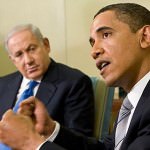 hat anyone can broker,” Miller remarks with resignation, “The president is right to protect his political flanks. This isn’t cheap or dirty politics: it’s smart.”[3] Cynically concluding that “Obama should veto [any proposed bid for Palestinian membership in the U.N.] and sleep well that night,” Miller aggressively— and inexplicably— supports the status quo of American politics as if it represented some value that is now under threat and must be protected. His whole argument devolves, predictably, upon this vanity when it is revealed that the reason for him taking this stance is his belief that “reelecting Obama next year [in order to avert a Republican victory]…should be the primary goal.” All the other reasons for supporting the veto — such as protection of “interests” or the ultimate inefficacy of the UN membership bid — are just platitudes. He gives no evidence that clearing the way for Palestine’s unilateral ambitions will harm US interests, and he seems not to recognize the fact that everyone is already aware that the US will veto the bid — Obama has promised it. The point of the Palestinian bid is to send a message, to oppose the status-quo.
Keep supporting MuslimMatters for the sake of Allah
Alhamdulillah, we're at over 850 supporters. Help us get to 900 supporters this month. All it takes is a small gift from a reader like you to keep us going, for just $2 / month.
The Prophet (SAW) has taught us the best of deeds are those that done consistently, even if they are small. Click here to support MuslimMatters with a monthly donation of $2 per month. Set it and collect blessings from Allah (swt) for the khayr you're supporting without thinking about it.
Miller’s argument that the Palestinians are not fit to declare statehood because they lack unity around a single political party forces the Palestinians into a catch-22 scenario. They cannot declare statehood unless they are unified around a single political party, yet a (successful) declaration of statehood is the one thing that would truly bring Palestinians together. Miller’s assertion that “no Israeli government will be willing to make a deal with a partner thatdoesn’t control and silence all the guns of Palestine” reveals the degree to which the American consciousness is warped into thinking that Palestine is required to accept the partnership (read: overlordship) of Israel in navigating its path to statehood. Moreover, expecting a stateless people to be perfectly unified is unprecedented and unfair. Not only do the Palestinians occupy widely divergent geographical areas, but they also profess two different religions. Such is the ridiculous presumption of those who want either to prevent the State of Palestine from ever coming into existence or to prevent it from being anything more than a permanent ward of Israel and the West, only half real and devoid of dignity.
Miller is right to criticize Obama for inciting false hope in Palestinians, Israelis, and Americans alike. Much of Obama’s positions and rhetoric have proven to be as fragile and as empty as a balloon. This is precisely the reason why influential policy experts ought not to go as far as Miller would have them go to make sure Obama gets reelected. Even if Obama is the lesser of two evils in comparison to most of the potential Republican candidates, subordinating the  Palestine question to partisan politics obscures the urgency of the real human tragedy taking place. Palestinians are trying to claim a right that was stolen from them sixty years ago, and all policy experts can talk about is “national interests,” which is, more often than not, just code for “Israeli [expansionist] interests.” But for those who are genuinely concerned about real, tangible US interests (to which maintaining a permanent alliance with Israel has absolutely nothing to offer[4]), a reversal of terms may provide a fitting admonishment: If the US were to aggressively pursue the creation of a Palestinian state, wouldn’t popular anti-Americanism in the Middle East all but disappear, thus easing relations with trade partners far more lucrative than Israel, a country deficient of oil? If the US loses an ally in Israel, won’t it gain one in Palestine?
The so-called “Do-Nothing Strategy” might be described with exactly the same wording Miller denies: cheap and dirty politics. Its cheapness lay in the fact that it prioritizes the exigencies of party politics over real human concerns. Whether or not Obama gets reelected next term should take a back seat to such a pressing humanitarian concern as reversing West Bank settlement and clearing the path toward Palestinian statehood. The office of the president no longer has independent significance anyway. The president frequently serves as a scapegoat for the country’s problems, but he has very little power or initiative to act independently to change the status-quo. There will never be another “great president” like those of the 18th and 19th centuries because each one, as soon as he enters office, is pressed with the necessity to conform to the demands of the most powerful lobbies. If Obama were a great president, he would be brave enough to act on the dictates of morality rather than in the interest of self-perpetuation. If he were a great president, he would, with his own hands, permanently ruin his chances of being reelected, and he would do so with zeal. George Washington, that first and greatest American president, established the honorable democratic tradition of term limits when he refused to run for a third reelection, despite the fact that his extraordinary level of popularity would have enabled him to crown himself king if he wished. He subordinated his own ambitions to a higher moral principle.
Obscurantism and cynicism are what allow the Israel-Palestine land dispute to continue — Obscurantism that diverts focus away from the Palestinian tragedy by focusing on nebulous phrases like “national interests” and “helping our allies.” The resignation inherent in the “Do Nothing Strategy” resembles the attitude taken by David Ben-Gurion, a Zionist ideologue and one of Israel’s founders:
Everybody sees the problem in the relations between the Jews and the [Palestinian] Arabs. But not everybody sees that there’s no solution to it. There is no solution! . . . The conflict between the interests of the Jews and the interests of the [Palestinian] Arabs in Palestine cannot be resolved by sophisms. I don’t know any Arabs who would agree to Palestine being ours—even if we learn Arabic . . .and I have no need to learn Arabic. On the other hand, I don’t see why ‘Mustafa’ should learn Hebrew. . . . There’s a national question here. We want the country to be ours. The Arabs want the country to be theirs.[5]
Resignation to the interminability of the dilemma of Israel and Palestine only buys time for the further expansion of settlements, and thus further diminishes the likelihood that the problem will ever be solved. Palestine deserves the right to make a unilateral bid for statehood. Israel hadn’t obtained bilateral agreement when it seized Palestinian land in 1948, so Israel is groundless in trying to make the Palestinians do so, especially considering that the Palestinians are just trying to take back what is rightfully theirs.
[1] Thus, in John J. Mearsheimer and Stephen M. Walt, “The Israel Lobby and US Foreign Policy,” London Review of Books 28 (2006):45, “AIPAC’s success is due to its ability to reward legislators and congressional candidates who support its agenda, and to punish those who challenge it. … AIPAC makes sure that its friends get strong financial support from the myriad pro-Israel PACs. Those seen as hostile to Israel, on the other hand, can be sure that AIPAC will direct campaign contributions to their political opponents. … The bottom line is that AIPAC, which is a de facto agent for a foreign government, has a stranglehold on the US Congress. Open debate about US policy towards Israel does not occur there, even though that policy has important consequences for the entire world.”
[2] See Rammy M. Haija, “The Armageddon Lobby: Dispensationalist Christian Zionism and the Shaping of US Policy Towards Israel-Palestine,” Holy Land Studies 5.1 (2006): 75-95. Haija briefly narrates the history of Christian Zionism and measures the impact of this movement on US policy relating to Israel-Palestine. He finds that despite the Armageddon Lobby’s success as a pro-Israel lobby, its influence is actually detrimental to the long-term peace and security of Israel because of its “policy of deterring the procession of negotiations” (75).
[3] Aaron David Miller, “The Do-Nothing Strategy,” ForeignPolicy.com, last modified September 22, 2011, http://www.foreignpolicy.com/articles/2011/09/22/the_do_nothing_strategy.
[4] John J. Mearsheimer and Stephen M. Walt, “The Israel Lobby and US Foreign Policy,” 6.
[5] Tom Segev, One Palestine, Complete: Jews and Arabs Under the British Mandate (New York: Picador Press, 2001), 116.
Keep supporting MuslimMatters for the sake of Allah
Alhamdulillah, we're at over 850 supporters. Help us get to 900 supporters this month. All it takes is a small gift from a reader like you to keep us going, for just $2 / month.
The Prophet (SAW) has taught us the best of deeds are those that done consistently, even if they are small. Click here to support MuslimMatters with a monthly donation of $2 per month. Set it and collect blessings from Allah (swt) for the khayr you're supporting without thinking about it.






Israel Seeks Escalation For Latitude – The Regional “Conflict” Widens

Post-Ramadan Reflections From A Mother Of Littles

[Podcast] Palestine in Our Hearts: Eid al-Fitr 1445 AH

Foreign Affairs Official Resigns Over Gaza Genocide

A Ramadan Quran Journal: A MuslimMatters Series – [Juz 30] Solace For The Sincere And Vulnerable

IOK Ramadan: 7 Qualities of Highly Effective Believers | Keys To The Divine Compass [Ep18]
IOK Ramadan: Choose Wisely | Keys To The Divine Compass [Ep15]
IOK Ramadan: Making Time for Allāh at Night | Keys To The Divine Compass [Ep21]
IOK Ramadan: Appreciating the Prophet ﷺ | Keys To The Divine Compass [Ep22]
IOK Ramadan: They Were Not Created Without Purpose | Keys To The Divine Compass [Ep23]

IOK Ramadan: The Importance of Spiritual Purification | Keys To The Divine Compass [Ep30]
IOK Ramadan: The Power of Prayer | Keys To The Divine Compass [Ep29]
IOK Ramadan: The Weight of the Qur’an | Keys To The Divine Compass [Ep28]
IOK Ramadan: Families of Faith | Keys To The Divine Compass [Ep27]
IOK Ramadan: Humility in Front of the Messenger | Keys To The Divine Compass [Ep26]
-

 #Islam3 weeks ago
IOK Ramadan: 7 Qualities of Highly Effective Believers | Keys To The Divine Compass [Ep18]
-
#Islam3 weeks ago
IOK Ramadan: Choose Wisely | Keys To The Divine Compass [Ep15]
-
#Islam2 weeks ago
IOK Ramadan: They Were Not Created Without Purpose | Keys To The Divine Compass [Ep23]
-
#Islam3 weeks ago
IOK Ramadan: Making Time for Allāh at Night | Keys To The Divine Compass [Ep21]

Hassan
November 1, 2011 at 9:57 AM
UNESCO has admitted Palestine as a state, and Nobel Peace Prize winner Obama administration has stopped UNESCO funding.
Tareq
November 2, 2011 at 2:31 AM
Assalamu ‘alaikum,
brother i’m copying it….
Brother
November 3, 2011 at 8:07 PM
Seems like Obama won the Nobel Peace Prize prematurely, but I may be wrong. Does anyone know any place where he helped establish peace?
Mansoor Ansari
November 1, 2011 at 10:06 AM
Those amongst the countries that voted NO should be held accountable especially those who talk spreading about democracy & human rights around the world and are waging war to do so.
Aka : USA, Australia, Canada, Germany, Netherlands and Sweden.
Shahzad
November 1, 2011 at 10:13 PM
It’s a do-nothing strategy while Israel continues to build settlements in the West Bank. How can a viable Palestinian state be formed from a patch work swiss cheese array of lands?
Raja Touseef
November 2, 2011 at 2:19 AM
Israel and hence the US Govt. is offended cos there is a possibility that now questions will be raised more often than not about the settlements. The settlements are in itself a spider web capturing Palestinians and the spider eats its prey as soon as its hungry or nobody is watching. I hope UN acknowledges Palestine next. Now they have disowned UNESCO, what are they going to do with the countries which voted for Palestine. Clearly they contradict with US methodology!
Pingback: The Palestinian refugees: The real victims of Arab politics – Jerusalem Post | Live Newsline
Cartoon Muslim
November 4, 2011 at 1:00 PM
I Almost forgot about that. How sad.
Carlos
November 4, 2011 at 11:22 PM
Why won’t everyone just agree to return to the 1967 borders? The Palestinian Authority is already a state, so why keep pretending that it is not? If the Palestinian Authority has been undermined, it is primarily because the Gazans have thrown their support to Hamas, a group that will not accept peace with Israel.
Dave the Christian
November 27, 2011 at 9:20 PM
“United States will probably always favor the aggressor over the dispossessed”.
Oh really? Interesting perspective. Before Israel was a state, the Jews were dispossessed. They lived in Kibbutzes and were under attack by hostil neighbors. The LOYAL American people remember the day of 9/11 and who stood by us versus doing the “LaLaLaLa” thing in the streets and dancing. A picture is worth a thousand words.
Radical Islamists love to hide behind the Israel/Palestinian issue. If Israel simply vanished, the radicals would still wage war against the U.S. because it is not an Islamic state. So, why should the U.S. abandon a friend to people who would commit another holocaust and then continue to wage was against it?
The muslims should purge the radicals from their midst to gain credibility. Until then, they cannot be trusted.
Andrew Howie
November 28, 2011 at 9:52 PM
Do note that both sides (Israeli and Palestinian) have used “terrorist” tactics against civilians (for an Israeli example, cf. Baruch Goldstein and the 1994 mosque shooting) as well as “state-sponsored” violence against civilians (however you delineate these two concepts is up to you; the differences between the two are superficial–in any event, both are worthy of condemnation).
If you would like to check out the balance of aggression, I recommend you take a look at this website:
http://www.ifamericansknew.org/
The Palestinian community in the Levant before the creation of the state of Israel welcomed the immigration of Jews from Europe–that is, until they saw how the world powers were working to undermine Palestinian rights by supporting a massive influx of European Jews that would displace the local population, while providing no guarantee that the Palestinians would be protected, and to allow the creation of a Jewish state on land that Arabs had called home for more than a millennium.
“If Israel simply vanished, the radicals would still wage war against the U.S. because it is not an Islamic state.”
If you read the writings and view the public pronouncements of radical Islamists, you will find that that this isn’t the case. No Islamist of any stripe has ever talked about turning the U.S. into an Islamic state. What they drag up time and time again is the U.S.’s foreign policy in places like Palestine, Saudi Arabia, and Pakistan. They want to stop villages from being bombed and children from being starved by UN sanctions, and stirred up by anger and passion they incorrectly reckon that violent activity against civilians is the right way forward. Their methods are what the mainstream Muslim community disagrees with. Hence, all properly educated scholars of Islam have condemned the 9/11 attack (and all other instances of the killing of innocent civilians).
There’s actually a published edition of the pronouncements of Osama bin Laden called Messages to the World: The Statements of Osama bin Laden translated by Bruce Lawrence. The Muslim world
Dave the Christian
November 28, 2011 at 12:48 PM
Muslim Censor,
You are a coward for removing my remarks. I should not be suprised – I see this pattern on other Muslim sites where I post to offer a counterpoint to typical anti-Western and anti-Christian dogma. You and your radical friends have fun in your Dark-ages fantasyland. Maybe, someday, a reformation will hit Islam and you will be brought into the 21st century…
Andrew Howie
November 28, 2011 at 9:13 PM
Dear Dave,
Welcome to the Muslim Matters blog.
All comments go through an approval process before they are posted. No one had gotten around to approving your comments yet–they were not deleted. There’s no reason to get so upset. Also, the MM rules prohibit name-calling, so kindly refrain from it in the future. Thank you!
Carlos
December 26, 2012 at 10:59 PM
Dear Andrew:
I just wanted to let you know that I finally finished reading the book you recommended, Kierkegaard’s “Fear and Trembling.” I have numerous criticisms about it, but my main criticism is that Kierkegaard appears to be a very intelligent person whose mind is trapped by trying to make sense out of what is senseless. Thank you for taking the time to read Dawkins’ “The God Delusion.” Happy New Year. I wish you the best.
Carlos