
Inspiration and Spirituality
Hajj Reflections: In Arafah with Allah

Hajj Reflections: Part 1 | Part 2 | Part 3 | Part 4 | Part 5
When preparing for my Hajj journey, my focus was on Arafah. Especially after watching Shaykh Muhammad Alshareef’s Hajj Coach series, it was during the video entitled “Massive Dua List” that I realized the importance of the day of Arafah. This is the day about which the Prophet (pbuh) said, “There is no day in which more souls are freed from the hellfire than on the Day of Arafah, on this day Allah draws near to the earth, and while exhibiting His pride to the angels, He says, “What is it that they desire?” (Sahih Muslim)
This hadith was enough to get me excited about Hajj. The idea that from after dhuhr until sunset on the day of Arafah, Allah will be near us and willing to answer our every dua made me prepare for this day like no other. I had written my massive dua list, split between my personal duas, my wife’s dua list and a dua list for everybody else who asked me to make dua for them, and I eagerly awaited what could be the most important day of my life.
Keep supporting MuslimMatters for the sake of Allah
Alhamdulillah, we're at over 850 supporters. Help us get to 900 supporters this month. All it takes is a small gift from a reader like you to keep us going, for just $2 / month.
The Prophet (SAW) has taught us the best of deeds are those that done consistently, even if they are small. Click here to support MuslimMatters with a monthly donation of $2 per month. Set it and collect blessings from Allah (swt) for the khayr you're supporting without thinking about it.
Lunch at Arafah
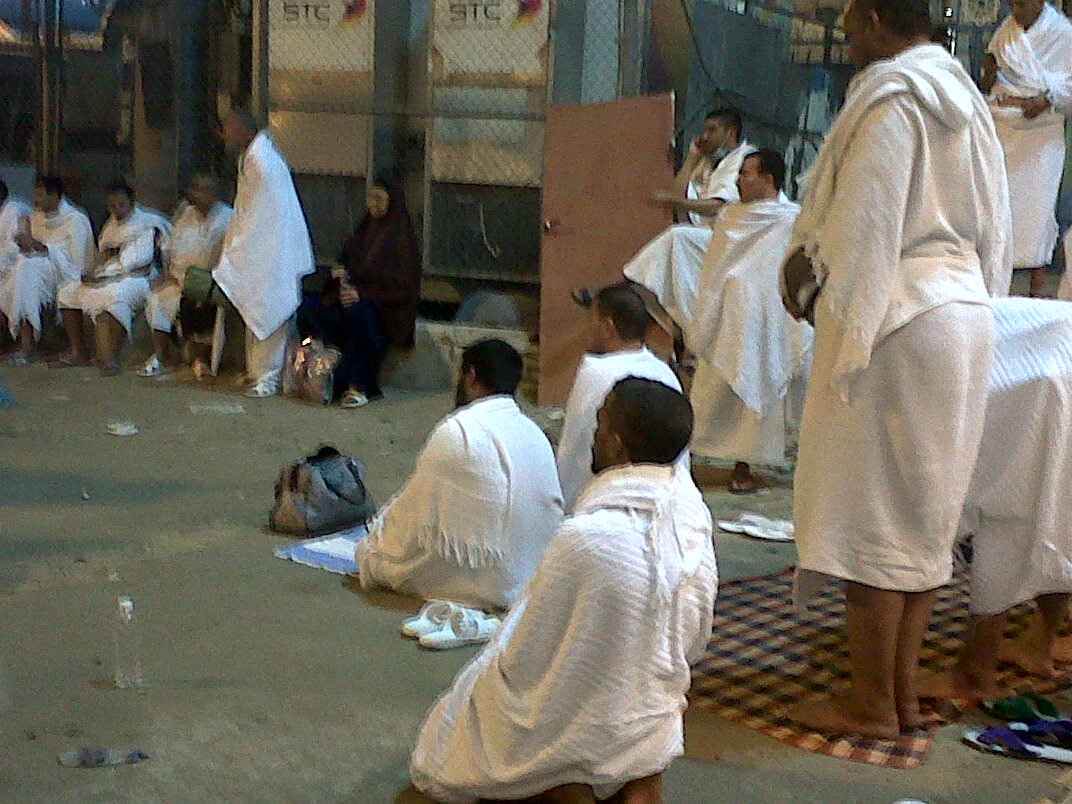
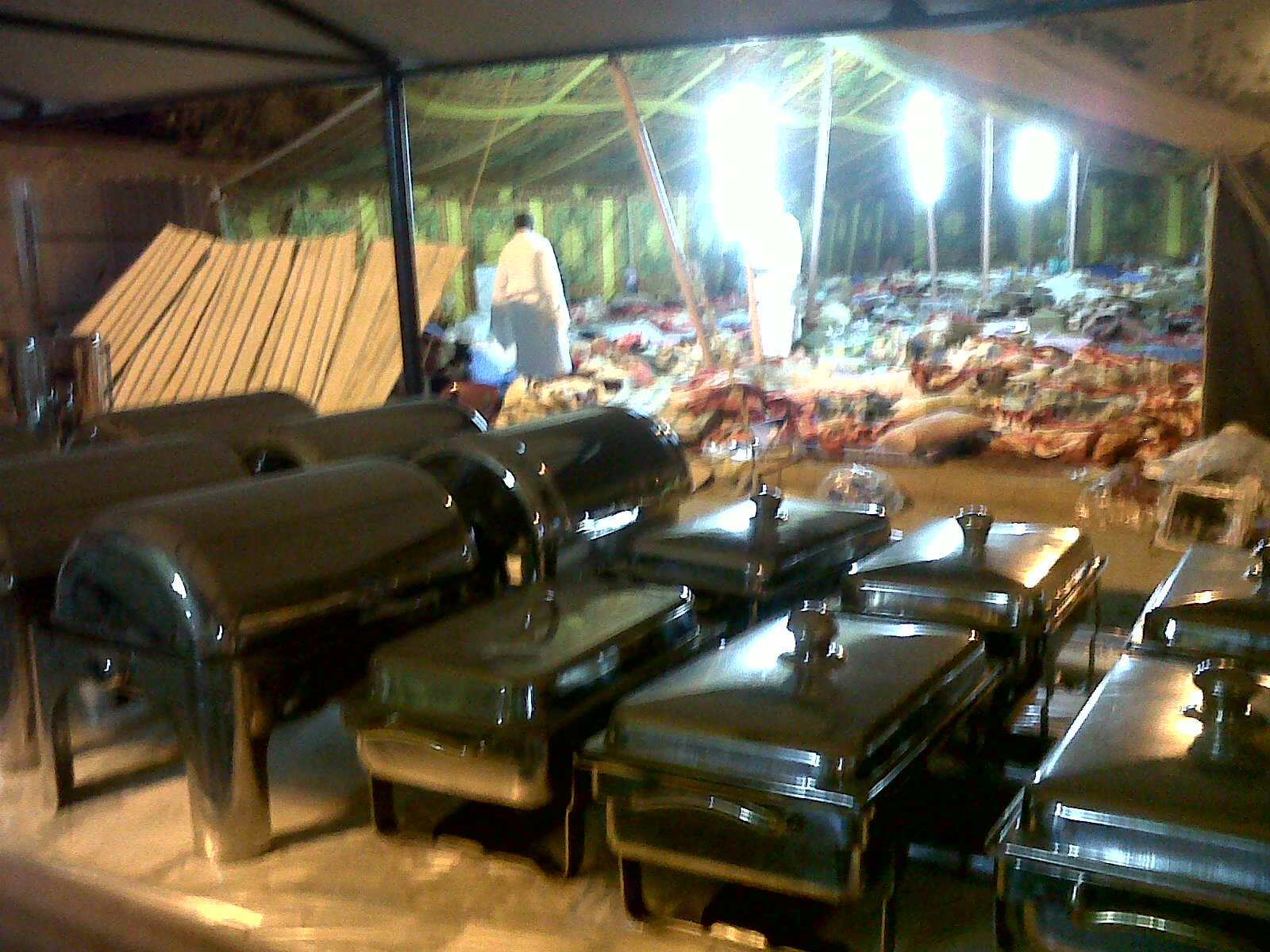
The day of Arafah arrived and with it came a different kind of test. As soon as dhuhr salah was over, we as guests of Saudi Arabia were served a massive buffet lunch which looked absolutely delicious. The majority of people rushed to enjoy the Arab cuisine, but I saw a few people in each camp ignoring it or taking only a little and settling down to make dua instead. I weighed the situation, this was probably the only chance in my life to have all of my dua answered and this meal would take up a lot of my time and then make me feel bloated and lazy, which was definitely not conducive to making dua. So I did someting I had never done before or after, I skipped lunch, despite being offered a free buffet, and settled down with three cans of Pepsi (to keep me from dehydration and running low on energy) to make dua.
However, something at Arafah irritated me, many of the people with me, most of whom were ulema and du’at did not really have the same interest in Arafah as I did. A moulana told me, “I can only make dua for ten or fifteen minutes then my mind drifts away,” so he did that much dua after lunch then went to chat with his friends, who were also scholars.
A young da’ee from Somalia was sleeping during this time so I asked him why he was not taking advantage of this opportunity. He replied, “I made the dua, ‘O Allah, grant us the best of this world and the next world, and save us from the Hellfire’ so that includes everything so what more must I do?” Then he went back to sleep.
This statement had me reflecting and thinking. If all Allah wanted from us on this occasion was to make that one thirty-second dua, why would He make the dua time in Arafah four-five hours long? I came to the conclusion that Arafah was not about what we asked, we were being tested as to how we asked and how seriously we treated this matter. I watched a Somali shaykh make nonstop dua for the entire duration while the Somali da’ee slept, he too could have just have made that short dua but instead he went into full dua mode for the entire period. I thought to myself, “Which of these two would Allah be more pleased with? Which of them had taken Arafah seriously and given it its full worth?”
As I socialized with more people on the way to Muzdalifah, I realized that most people did not make dua for more than half an hour, many only making five to ten minutes of dua. I could not understand why this was the case as our group was mostly du’at, scholars and students of knowledge. After deeper discussions, I realized the following:
1. There were those who did not realize the importance of Arafah. They were doing the Hajj ritually and so they were only concerned with the rituals which included staying in Arafah during that period, and making dua was an optional ritual during this stay.
2. Some had not learned the etiquette of dua and qualities that lead to the acceptance of a dua. There are a variety of things one can do to increase the chance of a dua being accepted, to learn more on his topic, I recommend the book “Dua: The Weapon of the Believer” by Shaykh Yasir Qadhi.
3. Some just did not take this occasion seriously. From discussions with many people, it was clear that some people were there enjoying a holiday and were not really interested in the spiritual benefits of the Hajj. Free meals and fun were given preference over optional rituals. I also noticed this during the other days of the Hajj as mentioned in a previous article.
4. There exist a large number of Muslims who do not take hadith pertaining to the matters of the unseen very seriously. Hadith dealing with Allah descending or being close to mankind, or saying something (Hadith Qudsi) are often taken lightly by many people. They hear it, memorize it but its reality does not really sink in, that this is something real that is really happening. This does not just apply to Arafah but to any occasion which is based on such hadith.
In this manner, I believe such hadith and occasions test our belief in the unseen. Is it just a claim or do we literally believe in all that was revealed to us about the unseen. If we do believe, how can we sleep knowing that Allah has descended and is near to us asking us for whatever we want?
So my advice to all future hujjaj is too make the dua of Arafah a priority on your agenda. Do not take this day lightly, it is the one day when we have a chance of having all our dua answered and all of our dreams come true. It is the day in which we are closest to Allah and it is the day regarding which the Prophet (pbuh) said, “The Hajj is Arafah!”
Keep supporting MuslimMatters for the sake of Allah
Alhamdulillah, we're at over 850 supporters. Help us get to 900 supporters this month. All it takes is a small gift from a reader like you to keep us going, for just $2 / month.
The Prophet (SAW) has taught us the best of deeds are those that done consistently, even if they are small. Click here to support MuslimMatters with a monthly donation of $2 per month. Set it and collect blessings from Allah (swt) for the khayr you're supporting without thinking about it.






Israel Seeks Escalation For Latitude – The Regional “Conflict” Widens

Post-Ramadan Reflections From A Mother Of Littles

[Podcast] Palestine in Our Hearts: Eid al-Fitr 1445 AH

Foreign Affairs Official Resigns Over Gaza Genocide

A Ramadan Quran Journal: A MuslimMatters Series – [Juz 30] Solace For The Sincere And Vulnerable

IOK Ramadan: 7 Qualities of Highly Effective Believers | Keys To The Divine Compass [Ep18]
IOK Ramadan: Choose Wisely | Keys To The Divine Compass [Ep15]
IOK Ramadan: Making Time for Allāh at Night | Keys To The Divine Compass [Ep21]
IOK Ramadan: Appreciating the Prophet ﷺ | Keys To The Divine Compass [Ep22]
IOK Ramadan: They Were Not Created Without Purpose | Keys To The Divine Compass [Ep23]

IOK Ramadan: The Importance of Spiritual Purification | Keys To The Divine Compass [Ep30]
IOK Ramadan: The Power of Prayer | Keys To The Divine Compass [Ep29]
IOK Ramadan: The Weight of the Qur’an | Keys To The Divine Compass [Ep28]
IOK Ramadan: Families of Faith | Keys To The Divine Compass [Ep27]
IOK Ramadan: Humility in Front of the Messenger | Keys To The Divine Compass [Ep26]
MuslimMatters NewsLetter in Your Inbox

Sign up below to get started
-

 #Islam3 weeks ago
IOK Ramadan: 7 Qualities of Highly Effective Believers | Keys To The Divine Compass [Ep18]
-
#Islam3 weeks ago
IOK Ramadan: Choose Wisely | Keys To The Divine Compass [Ep15]
-
#Islam2 weeks ago
IOK Ramadan: Making Time for Allāh at Night | Keys To The Divine Compass [Ep21]
-
#Islam2 weeks ago
IOK Ramadan: Appreciating the Prophet ﷺ | Keys To The Divine Compass [Ep22]
Sister
January 10, 2011 at 12:37 PM
Mashaallah..Excellent reminder.Allah often reminds us in Quraan to run towards Allah`s forgiveness..
وَسَارÙعÙواْ Ø¥ÙÙ„ÙŽÙ‰ مَغْÙÙرَة٠مّÙÙ† رَّبّÙÙƒÙمْ..Who will run towards forgiveness?The one who is constantly reminded of his/her sins and the one who knows Allah`s maarifaa.May Allah give us towfeeq to utilize each and every moment in our life to win his pleasure.
Mariam E.
January 10, 2011 at 12:41 PM
Asalamu Alikum
Great article, jazak Allah khayr. It’s a great reminder that we are in need of making du’aa for success to properly worship Allah. So, every person going on hajj, should ask Allah to grant them success in the Hajj generally and success in making du’aa on the Day of ‘Arafah in particular. This reminds us that any tawfeeq to do good is from Him; we would never be able to do good without His Help.
Pingback: Hajj Reflections: Hardship and Ease | MuslimMatters.org
Ameera Khan
January 10, 2011 at 1:04 PM
JazaakAllah khayr… I felt as if you were talking to me directly.
Whenw e did our Hajj, our travel towards Arafah from Mina was fraught with considerable confusion, such that we just managed to get there in time. But for that, we had hours of waiting, walking from this road to that waiting for our buses. We’d slept little that night, eaten a light breakfast after Fajr at our camp so by the time we got to Arafah and then found our way to the assigned tents there by 1 pm, hunger and exhaustion overtook us and we lay down to rest.
I remember I was so hungry and tired that I kept thinking I’d do proper Ibadah after lunch. When lunch finally came around 3 pm, we ate but then food added to the tiredness. I felt so guilty that I wasn’t standing making constant dua like our South Indian sisters in the neighboring tent. They’d had better, smoother facilities and organization so they’d got there early, had snacks and lunch packs to keep them going and they were constantly standing and praying. I also noticed a lot of the ladies in where own Pakistani tent were engaged in chatting and whiling away the time. The contrast between the two groups was pretty clear.
Looking back, that’s the part of Hajj I want to revisit. I did make duas at Arafah but I know I could have done many more so InshaAllah, praying to Allah(swt) that I get a chance to return – and worship Him and make dua with Ihsan!
UmmZayn
January 10, 2011 at 1:15 PM
may Allah SWT bring us all back to Arafat again and again, help us to make the most of it and accept it from us, Ameen!!!!
bint islam
January 12, 2011 at 4:54 PM
AMEEN ya Rabb.
Atif
January 10, 2011 at 1:44 PM
Jazaak Allah Khayran, Br. Ismail. I really benefited from this series and I like how you “tell it like it is”, especially the “Sacrificing for Knowledge” post.
You are right about people not taking seriously moments like ‘Arafah. We see it in Ramadan and I’tikaaf as well, unfortunately. I think it’s because general people aren’t used to immersing themselves in dhikr and ‘ibaadah for long periods of time; they are just not conditioned/used to it. May Allah help us in that.
Question:
I understand that eating too much would be a hindrance, but it seems to me that three cans of pepsi is kind of the opposite extreme (not to mention that much sugar can’t be good for you). Wouldn’t it have been better to follow the sunnah of 3rds?
Ismail Kamdar
January 11, 2011 at 12:40 AM
I was sitting in the hot desert sun for four hours without having had lunch, a can an hour (and a bottle of water) kept me hydrated and the sugar in it kept my energy levels high enough to keep going.
I get sick very quickly in hot weather and need a lot of liquid to keep going.
Ameera Khan
January 11, 2011 at 4:06 AM
Haha, I never thought you’d be questioned on the three can, Br Ismail! :) Anyone who’s been to the Hajj knows how any food you eat or beverage you drink seems to just disappear and you’re hungry again very soon. It’s because of the demanding nature of Hajj… walking, climbing, getting through the thick crowds… and especially – losing your way multiple times, needing to walk even more. Alhumdulillahi ala kulli haal. My suggestion to all is to always keep extra snacks with you – never know you might need them when the blood sugar suddenly goes low.
Ismail Kamdar
January 11, 2011 at 5:38 AM
I did not expect this question either. :)
Jazakallah Khair Doctor, for explaining that. When you on Hajj, three cans of Pepsi does not fill one third of your stomach, thanks to the amount of physical activity coupled with the heat.
Atif
January 11, 2011 at 11:42 AM
I’ve never been to Hajj, so I was just trying to understand why someone wouldn’t want to eat. Baarakallahu feek. :)
Ameera Khan
January 11, 2011 at 1:57 PM
In reply to your comment below, no problem. :) Just some light-hearted stuff. Hope you go to the Hajj very soon, Insha’Allah. Ameen.
Leo
January 10, 2011 at 4:15 PM
I have heard of the merits of dua on the day of arafah. Does this only apply to the hujjajj or can it also apply to the people at home?
Mirza Shahebaz Baig
January 10, 2011 at 8:47 PM
not about what we asked, we were being tested as to how we asked and how seriously we treated this matter. That’s the key. Its not how loudly we say ‘Ameen’ after imam completes the faatiha, its how ikhlas’full our ‘ameen really is, inshallah matters before Allaah. Jazak Allah khayr for the article.
TARIQ
January 11, 2011 at 2:12 AM
Brother Ismail, truly a beautiful reminder to all
abu Rumay-s.a.
January 11, 2011 at 4:49 AM
masha`Allah excellent reminder…this reminded me of our hajj back in 2001 when I went with my mom and in-laws.. our group was joined by the most simplest people from Guyana in N.Y., mostly elderly, subhanAllah, they kept us (American group) thankful throughout the hajj, some of them passed away shortly after (may Allah accept them)..ameen..
that hajj package was so simple, it did not include meals…i do not recall seeing any food in our tents in Arafah (on the asphalt and tent was just a sheet to cover the sides)… the only food I remember was the free stuff that they were giving out (like yogurt and water)… i found that without the distraction of food and too much comfort, most people were trying to engage in du`aa throughout the day…
i’d also advise that if you are able, to take a modest hajj package (even though you can afford more), so that your primary focus is on eebadah…off course, at the same time, we should not try to overdue it and make it harder upon ourselves unnecessarily.
wallahu A`lam..
Ismail Kamdar
January 12, 2011 at 2:24 AM
Jazakallah Khair, this is excellent advice.
In fact, I think our five star treatment as guests of Saudi was a big test that often distracted us from the essence of Hajj.
Shawon Muhammad Shahriar
January 11, 2011 at 7:19 AM
This series in general and this article in particular reminds me of my Hajj experiences this year. It grieved me that most of the Hujjaj concentrate more on the ritual parts of Hajj instead of spiritual aspects and following the Sunnah of the Prophet.
Let me give you an example. Most pilgrims concentrate on where to stay for how long during the days of Hajj, like staying in Mina, Arafat, Muzdalifah etc. but they forget the following etiquette of Hajj as stated in the Qur’an (interpretation of the meaning):
“… so whoever has made Hajj obligatory upon himself therein [by entering the state of Ihram], there is [to be for him] no sexual relations and no disobedience and no disputing during Hajj.” [Al Qur’an 2:197]
I observed many Hujjaj spending time in gossiping, backbiting and indulging in non-beneficial conversations. Even the “Ulama” are no exception!
On the day of Arafah, we could not make Du’a with proper etiquette as it should be, because our team leader made us ride the bus as 4 PM and wait inside bus till sunset! Entire spiritual mode of Arafah spoiled for the remaining part of the day (we missed more than two and half hours to make Du’a with proper attention)!
May be our Hajj are correct from Fiqh perspectives, but a lot needs to be done to revive the spirit of Hajj as shown by our beloved Prophet. May Allah forgive us for our intentional and unintentional mistakes and errors. There is none but Allah who can accept my Hajj and our Hajj despite these massive shortcomings.
In my humble understanding, some of the reasons behind these shortcomings are:
1. Too much concentration on Fiqh (literal following) without much consideration on the essence of the rituals
2. Not knowing the Sunnah of the Prophet with a correct perspective
3. Pure business mentality of most tour operators and guides, devoid of the proper Islamic etiquettes
4. Poor preparedness by most Hujjaj before embarking on the journey
Please correct me if I am wrong.
Despite all these bitter experiences, Hajj is the most memorable, pleasant and enjoyable journey of my lifetime which helped me to change my life a lot after the journey, Alhamdulillah. Don’t forget me in your Du’a so that I may remain steadfast on this fresh and life changing journey.
One final comment, if you have not performed Hajj and you are able to do it, don’t delay! Believe me, it’s a life changing journey despite all the odds I mentioned.
Muhib
January 11, 2011 at 11:11 AM
Is there a relation between dua duration and dua acceptance? My read on the buffet is that it is a blessing. Perhaps there were people in the crowd who definitely needed a good meal so hunger would not be a distraction when they got down to making dua. Let’s assume the best of all the hujjaj who were there. Perhaps the people, whose sincerity you are doubting, secretly made dua for you.
Ismail Kamdar
January 12, 2011 at 2:23 AM
I think you misunderstood the purpose of this article. It was not judging any individual’s intentions, rather it is to point out common mistakes that we make during Hajj so that we may all learn from them and not do so in future. Only Allah knows what is in people’s hearts.
Regarding the buffets, as I mentioned in a previous part of this series, our group received buffets three times a day since we arrived in Makkah so I doubt anybody was starving at Arafah as they had just enjoyed a buffet for breakfast and for all their meals in the days leading up to this. (Plus fridges stocked up with free snacks)
I am pointing out a common problem I saw of people spending the Arafah dua time indulging in a huge meal while chatting away then feeling too full and lazy (as overeating makes a person) to take full advantage of this opportunity and engage in deep dua.
Allah knows best.
Ahmed
January 12, 2011 at 1:51 PM
Wonderful and insightful piece. It is disappointing to hear that so many would short-change such a wonderful opportunity! I myself have not been to Hajj yet and when the Day of Arafah approaches and I imagine all those who are gathering, preparing to offer du’a, I never imagined that they would just take a few minutes or less (!). It is after all, a practice run for the Yawm al-Qiyaamah, so I would think at the test run for that day, we would bring our best and most humble selves at that moment.
I do hope that I myself will be prepared to fully take on the Blessing and Power of that day if Allah Wills. Ameen.
mohammed
May 25, 2011 at 9:52 AM
shukran;just wondering if some comments were actually advising against the bus mode of transport?
Pingback: Hajj Reflections: Sacrificing for Knowledge - MuslimMatters.org
Pingback: Hajj Reflections - Whoever Allah Calls - MuslimMatters.org
Mariam tai
August 20, 2018 at 6:11 AM
I too was very surprise at how many people on the day of Arafat wasted the day. I remember clearly, a lot of people looked stuffed out, lazy and idle, rolling around in the tent chit chattImg. I was so frustrated for them that they had come so far and their journey was probably not easy getting here and the most important day of their hajj rites they let it slip by the waste side.
I plucked up the courage to speak to a group leader of another tent saying “please tell your group to stand and make lots of duas”. And his reply was “ we are from the Hanafi”. I guess what he meant was that the Hanafi’s do it differently but I am too Hanafi.
My thoughts that day was that a lot of hujjaj are ignorant of the etiquette of the day of Arafat, I believe they don’t know that it would serve them better if on that day they stood up and made constant duas to Allah seeking his forgiveness and mercy, sobbing your eyes out to Him and beseeching Him in desperation and need and that no other can help us except Him.
But you see many people see hajj as a rite of passage, a compulsory pillar of Islam and not much more. Whereas it should be an opportunity to bring us closer to Him and to be in awe of His Majesty. And to know with true conviction that He is the Truth.