
Opinion
Tariq Ramadan at Cooper Union: Too Much Hype, Too Little Substance

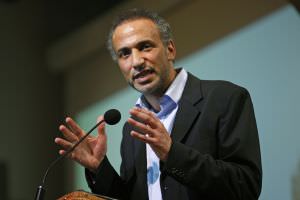
Setting the stage
Tariq Ramadan is a big draw wherever he speaks, whatever the topic. It’s not surprising, then, that his first ever speaking engagement on U.S. soil drew wide media attention and packed the Great Hall at The Cooper Union. In hindsight, too, it’s no surprise that the event simply didn’t live up to its billing.
Keep supporting MuslimMatters for the sake of Allah
Alhamdulillah, we're at over 850 supporters. Help us get to 900 supporters this month. All it takes is a small gift from a reader like you to keep us going, for just $2 / month.
The Prophet (SAW) has taught us the best of deeds are those that done consistently, even if they are small. Click here to support MuslimMatters with a monthly donation of $2 per month. Set it and collect blessings from Allah (swt) for the khayr you're supporting without thinking about it.
The program felt disjointed from the outset. First, the impossibly broad topic of “Secularism, Islam, & Democracy: Muslims in Europe and the West” all but assured an evening’s worth of simplistic generalizations and platitudes. Second, Dr. Ramadan’s own opening remarks foreshadowed how his legal battles and polarizing persona would later color, dilute and, at times, derail the subsequent panel discussion. Last, and fatally, instead of letting Dr. Ramadan lecture from the podium (which would have been the best option given the hall’s layout), or engage in a one-on-one interview (which could have worked with a proper interlocutor), the program organizers inexplicably decided to stick Dr. Ramadan in the middle of a multi-speaker setup that was bound to stifle any meaningful dialogue.
What are we talking about again?
Simply put, the way this event unfolded was a case study in the failure of panel discussions. The format really didn’t allow for a cohesive exchange of ideas – a feature that a program of this intellectual magnitude truly deserved. Dalia Mogahed and Joan Wallach Scott, for example, both offered relevant academic insights during their allotted time, yet their remarks felt blunted due to time constraints and, to be honest, poor moderating.
The latter circumstance was most evident when Jacob Weisberg, the evening’s host, passed the baton to Dr. Scott, who wrote The Politics of the Veil, with this gem of an intro: “Orthodox Islam has to be one of the most powerful forces for the oppression of women in the world today…” While Mr. Weisberg has every right to ask about the role of women in Islam, it seems a bit counterproductive to frame a question in the rhetorical mold of “When did you stop beating your wife?”
Any hope that the discussion would somehow coalesce around the stated objective went out the window once George Packer, a staff writer at the New Yorker, took the microphone. Acting more like an instigator than inquisitor, Mr. Packer accused Dr. Ramadan of whitewashing his grandfather’s supposed ties to Nazi sympathizers. The subsequent back and forth hijacked much of the evening, to the audience’s great frustration. Whatever the merits of this debate, it was simply out of place and highlighted the event’s overall lack of focus.
When fair becomes the enemy of meaningful
In reasoning why the organizers decided on such an obviously flawed format, I can only assume they did so out of a misguided sense of fairness. By letting Dr. Ramadan speak in such a public forum, perhaps they felt that they needed others to challenge his views or, seemingly in the case of Sr. Mogahed and Dr. Scott, to corroborate them from a different perspective. As a result, none of the speakers had a chance to gain any intellectual traction, to the detriment of those in attendance.
Perhaps my expectations were too high. Perhaps my recent positive experiences at lectures with similar topics (one of which I document here) colored my perception of “what works.” More likely, the organizers at Cooper Union simply missed a golden opportunity to showcase a historic speech from a world renowned speaker. Not like they have any experience doing JUST THAT, or anything.
Keep supporting MuslimMatters for the sake of Allah
Alhamdulillah, we're at over 850 supporters. Help us get to 900 supporters this month. All it takes is a small gift from a reader like you to keep us going, for just $2 / month.
The Prophet (SAW) has taught us the best of deeds are those that done consistently, even if they are small. Click here to support MuslimMatters with a monthly donation of $2 per month. Set it and collect blessings from Allah (swt) for the khayr you're supporting without thinking about it.







[Podcast] Palestine in Our Hearts: Eid al-Fitr 1445 AH

Foreign Affairs Official Resigns Over Gaza Genocide

A Ramadan Quran Journal: A MuslimMatters Series – [Juz 30] Solace For The Sincere And Vulnerable

IOK Ramadan: The Importance of Spiritual Purification | Keys To The Divine Compass [Ep30]
IOK Ramadan: The Power of Prayer | Keys To The Divine Compass [Ep29]

IOK Ramadan: 7 Qualities of Highly Effective Believers | Keys To The Divine Compass [Ep18]
IOK Ramadan: Choose Wisely | Keys To The Divine Compass [Ep15]
IOK Ramadan: Shake the Trunk of the Tree | Keys To The Divine Compass [Ep16]
IOK Ramadan: They Were Not Created Without Purpose | Keys To The Divine Compass [Ep23]
IOK Ramadan: Appreciating the Prophet ﷺ | Keys To The Divine Compass [Ep22]
IOK Ramadan: The Importance of Spiritual Purification | Keys To The Divine Compass [Ep30]
IOK Ramadan: The Power of Prayer | Keys To The Divine Compass [Ep29]
IOK Ramadan: The Weight of the Qur’an | Keys To The Divine Compass [Ep28]
IOK Ramadan: Families of Faith | Keys To The Divine Compass [Ep27]
IOK Ramadan: Humility in Front of the Messenger | Keys To The Divine Compass [Ep26]
-

 #Islam2 weeks ago
IOK Ramadan: 7 Qualities of Highly Effective Believers | Keys To The Divine Compass [Ep18]
-
#Islam2 weeks ago
IOK Ramadan: Choose Wisely | Keys To The Divine Compass [Ep15]
-
#Islam2 weeks ago
IOK Ramadan: Shake the Trunk of the Tree | Keys To The Divine Compass [Ep16]
-
#Islam2 weeks ago
IOK Ramadan: They Were Not Created Without Purpose | Keys To The Divine Compass [Ep23]
amad
April 16, 2010 at 5:49 AM
salam
seems that the israel lobby has its hands in this in some ways, just like they had their hands in his ban from US. I almost think the event was deliberately sabotaged to make Ramadan look bad, and hence, in some Machiavellian way, justify his banning from this country. NY Times is keeping up with its reputation of being Israel’s bit**, apologize for the colorful language.
What this highlights is for Dr. Tariq Ramadan’s team to properly vet the event, organizers and speakers in advance before accepting invitations.
Youssef Chouhoud
April 16, 2010 at 8:10 AM
W/Salam,
I can’t imagine the organizers set out to sabotage the event – after all, the institutions and individuals who fought on behalf of Dr. Ramadan sponsored the evening. It was probably a classic case of overreach.
Between the night’s topic and Dr. Ramadan’s legal battles and controversial opinions, any discussion was going to be pulled in at least three directions. Adding more variables (in the form of speakers who brought their own baggage) to an already stretched agenda was just poor management.
They needed your MBA skills, Amad :)
Amad
April 16, 2010 at 9:26 AM
I don’t think the organizers were behind the sabotage… rather some minions of the Lobby.
also, mistake on the NY Times comment… you said New Yorker, not NY Times… so my reference doesn’t apply.
Wael - IslamicAnswers.com
April 16, 2010 at 1:18 PM
It sounds like a real mess. I would think that Dr. Ramadan would be experienced enough by now to recognize a format that’s not productive. I imagine a straight speech from the podium, followed by extensive questions and answers, with a moderator to put a stop to nonproductive arguments, would work better.
But there will be plenty of time for him to do better, Insha’Allah.
Youssef Chouhoud
April 17, 2010 at 10:55 AM
W/Salam,
I thought a straight podium talk would probably work best, too. I have to admit tho, Dr. Ramadan’s opening remarks were not as hard-hitting and relevant as I’d hoped. Ironically, George Packer put it best in his followup piece on the event when he opined that Dr. Ramadan seemed wrong-footed.
I’m sure other speaking engagements will make up for this one, inshAllah, but it’s just a shame that his first one fell so flat.
Yahya
April 16, 2010 at 4:35 PM
I listened t0 his talk and I thought it was excellent!!!!
Youssef Chouhoud
April 17, 2010 at 10:56 AM
Did anyone attend the other stops on the TR tour? I’d love to hear what they were like.
PakistaniMD
April 17, 2010 at 3:54 PM
TR will be speaking at the annual Center for the Study of Islam and Democracy Conference in D.C. @ the end of this month. He will be speaking alongside Reza Aslan for the Keynote lunch seminar/talk. Hopefully, he will ‘shine’ a bit more brightly in that engagement.
As for his other speaking engagements, they seem to follow the same theme/topic, so I don’t expect anything different yet.
PakistaniMD
April 17, 2010 at 3:50 PM
Hopefully, TR’s keynote lunch speech @ the Annual CSID conference will be better than what the author has described. Tariq Ramadan will be speaking alongside the more liberal Reza Aslan, so it will be interesting how the two will share the spotlight on the main topic (Islam and Democracy? Hope someone is there to videotape it!).
Also, if one reads the account of the Cooper Union speech by George Parker (panel participant) one finds some of the flaws in TR’s speech. Since I personally did not attend his speech, it seems to me that his focal point was on “numerous identities” and “political engagement”. I am not trying to sound ‘obnoxious’, but we as American Muslims are far better educated and financially well off than our brothers + sisters in Western Europe. TR should realize this in his talks here in the US. I believe there is a wide difference between Muslims in America and Muslims in Western Europe (particularly in France, Britain).
Youssef Chouhoud
April 17, 2010 at 9:03 PM
Yeah, I know what you mean about the Euro-American divide. I was a little disappointed that TR didn’t EQ his speech. I mean, it seems simple enough to compare and contrast ( I remember doing that for my third grade book reports :P ).
So, to be fair, the event’s derailment was not all due to organizational faults.
If you attend the CSID conference, let us know how it goes :)
Dawud Israel
April 17, 2010 at 10:01 PM
I think you bring up a good point br. Youssef/Amad.
With the game they are playing with Islam, I think our speakers/leaders should realize they are not going to be dealing with intellectuals- no matter how innocent it may seem. There is more often than not, some hustle going on behind the scenes- intentional or unintentional. I think maybe TR just isn’t familiar with the hustle in the States, than he is in Europe (which has much more vibrant intellectual activity, and therefore, less hustle?)
Street smarts is key. Edward Said and Malcolm X had this quick-draw mental edge to them- ready and always making courageous leaps of thought, out-front, in the open and on the spot. They always had their own bold agenda pre-planned, so each talk or appearance was a win-win situation for them.
In any case, this is not the first time we’ve seen this hustle…they did it with Sh YQ on BBC and I know it happens in India too.
P.S. You ask me, I think TR is going to be assassinated soon- especially if he gains ground in the USA. Last few trans-atlantic Muslims thinkers ended up the same way (Ismail Faruqi, Malcolm)
Youssef Chouhoud
April 19, 2010 at 11:41 AM
W/Salam Br. Dawud,
You’re spot on with your point about Malcolm and Edward Said. Their penchant for improvisation really separated them from the pack.
I’m not sure I agree that TR is any any danger, though. He has a wide audience, but his aims are far from revolutionary. And as far as enemies go, I”d argue that Noam Chomsky and N. Finkelstein have amassed many more dangerous opponents than TR.
abu Rumay-s.a.
April 18, 2010 at 2:11 AM
For those who are earnestly concerned about this topic, would it be possible to compose a brief letter to TR
highlighting his positive points and kindly drawing attention to the other ones and providing some further ideas for his next engagement….
I’m sure brother Yusuf, with his eminent writing style, could take the comments from this thread and sum it up and in a letter and also share it as a follow post?
Youssef Chouhoud
April 19, 2010 at 11:45 AM
Salam Brother,
Unfortunately I think any such effort would fall on deaf ears. The format of TR’s speaking engagements during this whirlwind tour are undoubtedly set in stone. Hopefully, next time around Dr. Ramadan asks to see the agenda beforehand, or the organizers themselves simply see to maximizing TR’s impact.
Asim K
April 21, 2010 at 1:53 AM
My friend in Chicago attended his speech at the CAIR-Chicago Dinner and said it was one of the best speeches he’s ever heard.
Pingback: Top Five Intellectually Stimulating Podcasts | TheAlexandrian | Youssef Chouhoud
Omid
June 25, 2010 at 7:40 AM
I heard him, and he is absolutly fabulous.
One of the most clear and brilliant speech i have ever heard and i heard a lot.