
Quran and Sunnah
Ramadan Reflections: A Daily Journey Through the Qur’an Juz 1

For all articles up to and including this one, click “Ramadan Reflections: The Daily Journey”
Ramadan Reflections: A Daily Journey Through the Qur’an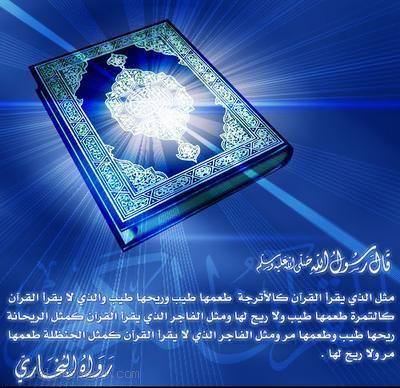
Alhamdulillah that Allah has allowed us to reach another blessed month of Ramadan, a month in which the gates of Paradise are opened wide and the gates of the Hellfire are shut, a month wherein we get closer to Him by fasting through the day and praying in the night, a month which contains a night more virtuous than a thousand months, a month whose good is such that the one who is deprived of its blessings is truly deprived. Alhamdulillah for the Qur’an, a magnificent recital which was revealed to our beloved Messenger Muhammad (saas) in this excellent month so that we might read and ponder the words of our Lord Most High. And in honor of this great month we devote more time to His message to human-kind by reading it and practicing the Sunnah of completing at least one full reading within the month. Yet, although so many Muslims are anxious to complete the entire recital of the Qur’an in this month, they in turn also neglect one of the most important aspects of the Qur’an – to reflect and ponder upon its meanings so that our hearts, manners, statements and actions fall in line with the pleasure of Allah. As Allah has stated in His Book:
وَقَالَ الرَّسُولُ يَا رَبِّ إِنَّ قَوْمِي اتَّخَذُوا هَذَا الْقُرْآنَ مَهْجُورًا
Keep supporting MuslimMatters for the sake of Allah
Alhamdulillah, we're at over 850 supporters. Help us get to 900 supporters this month. All it takes is a small gift from a reader like you to keep us going, for just $2 / month.
The Prophet (SAW) has taught us the best of deeds are those that done consistently, even if they are small. Click here to support MuslimMatters with a monthly donation of $2 per month. Set it and collect blessings from Allah (swt) for the khayr you're supporting without thinking about it.
Then the Messenger will say: “O my Lord! Truly my people deserted this Qur’ân (neither listened to it, nor acted on its laws and orders). [25:30]
And elsewhere,
أَفَلَا يَتَدَبَّرُونَ الْقُرْآنَ أَمْ عَلَى قُلُوبٍ أَقْفَالُهَا
Do they not then earnestly seek to understand the Qur’an, or are their hearts locked up by them? [47:24]
In an effort to ensure that this Ramadan doesn’t pass us by without us acting upon the command of Allah to understand and consequently implement the Qur’an in our lives, a series will be written everyday reflecting upon the meanings and applications of the Qur’an – a small, concisely written daily reminder one juz’ (1/30th of the Qur’an) at a time to help us come away from this Ramadan with real and lasting changes in our relationship with Allah and His Book. They will be written so as to be read in a few minutes and thus cannot be so comprehensive, but insha’Allah using only what will drive home the point in the easiest and most efficient manner so as to allow Muslims to read them daily and act upon them insha’Allah. The major difficulty in this endeavor shall be what selection to use – how to select one or two ayaat from every juz’ to discuss, but with Allah is all success and insha’Allah each selection will provide its benefit. May Allah bring benefit and guidance from this effort and allow our hearts to come back to the beauty, wisdom and light of His words so that we become from among His righteous slaves and those who will inherit the highest Gardens on the Day when we meet Him – ameen.
Part One – Surat al-Fatihah and Baqarah
Building on the message in the introduction to this series, Allah makes mention of the matter of who truly benefits from the Qur’an in the opening to surat al-Baqarah, saying:
ذَلِكَ الْكِتَابُ لاَ رَيْبَ فِيهِ هُدًى لِّلْمُتَّقِينَ
This is the Book; in it there is no doubt, it is guidance to those who have taqwa; [2:2]
Commentators on the Qur’an have understood the meaning of His statement, the Book, to mean that this is the Book the way that someone today would say, “This is the real deal.” This is no ordinary book, not a book you casually gloss over while lounging on the couch or waiting for the doctor. This book is a serious matter because its matter is guidance – it deals with that which will save you on the Day of Judgment and will bring you eternal bliss.
To that end, Allah issues one of many challenges found in the Qur’an, and in fact often pertaining to the Qur’an itself – there is no doubt in it. A bold statement for sure, but a challenge nonetheless for those who wish to sift through it ayat by ayat, word by word, letter by letter – there is no doubt in it and thus you can be secure. It is no coincidence that the word Imaan – often loosely translated as faith or belief – comes from the Arabic root word amana which means to be secure. Thus true “faith” in Islam is founded upon security and certainty and can never be a “blind faith”. This leads us to the final words in this glorious ayah – it is guidance to those who have taqwa.
So we have a wondrous book, unlike any other. In its pages you will find no doubt, but instead it leads to true security of the soul. And this book is guidance; but not to anyone – only to those who have taqwa. The root meaning of taqwa is to avoid what one dislikes, or to shield yourself from that which you fear. Its usage in Islam means to protect or shield yourself from the punishment of Allah. The illustrious Companion and scholar Ibn ‘Abbaas explained that those who have taqwa as being, “They are the believers who avoid associating partners with Allah and who obey Him and His commandments.” Ibn `Abbaas also said that they are, “Those who fear Allah’s punishment, which would result if they abandoned the true guidance that they recognize and know. They also hope in Allah’s mercy by believing in what He revealed.”
In this clear description, Ibn ‘Abbaas illustrates for us a very important concept regarding the state of taqwa: it is always linked to worship (‘ibaadah) in the Qur’an. Worship can be defined as, doing what Allah has commanded and avoiding what He has prohibited. Worship has also been defined including all actions that Allah loves and approves of, whether they are actions of the heart, the tongue or the body.
Thus, benefiting from the Qur’an requires sincerity and determination from the Muslim. Once again, it is not any book and cannot be read as you read any book. It must be read in a way similar to the way a person reads a map when he is lost and on the verge of death. Such a person will throw all of his focus into reading the map before him in hopes of rescuing himself from disaster, and in the same way we approach the Qur’an with seriousness to avoid falling into heedlessness and consequently misguidance which leads to Hell. One must then approach the Qur’an with a heart ready to understand and ready to implement the guidance it discovers – otherwise what would separate this reading from any other? Certainly a beautiful and melodic voice is not the distinction that is needed, but the attitude is the real key. To that end, we find another ayah building on this issue:
إِنَّ فِي ذَلِكَ لَذِكْرَى لِمَن كَانَ لَهُ قَلْبٌ أَوْ أَلْقَى السَّمْعَ وَهُوَ شَهِيدٌ
Verily in this is a Message for any that has a heart and understanding or who gives ear and earnestly witnesses (the truth). [50:37]
This ayah emphasizes the above mentioned meanings by informing the reader that only with comprehension and attentiveness does a person benefit from the Qur’an. Ad-Dahhak, one of the great scholars of Qur’anic tafsir, commented on this ayah, “The Arabs would say that someone has given ear when he hears with his ears, while his heart is present and not absent.” And Ibn Qutaibah said: “Listen to the book of Allah whilst your heart and mind is attentive, not neglectful nor distant.” Yet many will recite verses with their hearts distant, such that their eyes fall upon verses of punishment yet they are not affected or stopped, whereas the Companions would follow the Sunnah of our beloved Messenger Muhammad (saas) by pausing at these verse – sometimes to weep, other times to ask Allah for His protection and forgiveness, but always to ponder their meanings and consider their own actions in this light.
So we end this selection from the first day of Ramadan by remembering the practice of the Companions of the Prophet regarding their approach to the Qur’an.
Abu `Abd al-Rahmaan al-Sulamee states that whenever the people who taught them (them – the Successors/Tabi’een) the Qur’an like `Uthmaan ibn Affaan, `Abdullaah ibn Mas`ood and others (rA) that they learned ten verses of the Qur’an from the Prophet (saas) and they did not proceed further unless they had understood these verses with what they contained of regulations and injunctions. They used to say: “We learned the text of the Qur’an and studied its ideas and injunctions all together.” This explains why they spent such a long time in learning a chapter (surah). Anas (rA) has said: “We used to hold in great esteem the one who learned the two surahs of the Qur’an: al-Baqarah and Aali-‘Imraan”.
Ibn `Umar (rA) spent many years, and according to Maalik, a complete eight years, in learning these surahs (Usool at-Tafseer by Ibn Taimiyyah) when today some students memorize them (of course without understanding) in a few months. Hence, their serious and sincere approach to the Qur’an – seeking its guidance as Allah intended – caused them to take the Qur’an in a manner different from us today.
The take-home point today then is that our approach to this magnificent book must change, our attitude must fundamentally change if we are to become among the people of taqwa and thus those who will benefit from the Qur’an. We should return to the manners of our predecessors by remembering that this Qur’an is the word of Allah spoken and sent down to us from above the seven heavens so that we can attain guidance. Our attitude when reading it must be one in which the goal is not finishing the page or the juz’ as much as it is understanding what we read with the sincere intention of acting upon it – implementing it if it is a command and avoiding it if it is a prohibition. If this limits us to only a few ayat per day then remember that we are not better than the Companions who also took a similarly long time yet benefited and were guided so much more than us. Let us end by remembering the wise words of al-Khateeb al-Baghdaadi who said,
“Do not be pleased with knowledge that has no action to accompany it, nor with action that has no knowledge to guide it; but instead marry the two together by acting upon knowledge even if the result of that is that you attain less of them both.”
May Allah accept our fasting and help us to become among the people of the Qur’an, those described by the Prophet (saas) in the authentic hadith as those who act upon the Qur’an – ameen.
See Also: MM’s Ramadan Coverage
Keep supporting MuslimMatters for the sake of Allah
Alhamdulillah, we're at over 850 supporters. Help us get to 900 supporters this month. All it takes is a small gift from a reader like you to keep us going, for just $2 / month.
The Prophet (SAW) has taught us the best of deeds are those that done consistently, even if they are small. Click here to support MuslimMatters with a monthly donation of $2 per month. Set it and collect blessings from Allah (swt) for the khayr you're supporting without thinking about it.



[Podcast] Palestine in Our Hearts: Eid al-Fitr 1445 AH

Foreign Affairs Official Resigns Over Gaza Genocide

A Ramadan Quran Journal: A MuslimMatters Series – [Juz 30] Solace For The Sincere And Vulnerable

IOK Ramadan: The Importance of Spiritual Purification | Keys To The Divine Compass [Ep30]
IOK Ramadan: The Power of Prayer | Keys To The Divine Compass [Ep29]

IOK Ramadan: 7 Qualities of Highly Effective Believers | Keys To The Divine Compass [Ep18]
IOK Ramadan: Choose Wisely | Keys To The Divine Compass [Ep15]
IOK Ramadan: Shake the Trunk of the Tree | Keys To The Divine Compass [Ep16]
IOK Ramadan: Good and Bad are Tests from Allah | Keys To The Divine Compass [Ep17]
IOK Ramadan: They Were Not Created Without Purpose | Keys To The Divine Compass [Ep23]
IOK Ramadan: The Importance of Spiritual Purification | Keys To The Divine Compass [Ep30]
IOK Ramadan: The Power of Prayer | Keys To The Divine Compass [Ep29]
IOK Ramadan: The Weight of the Qur’an | Keys To The Divine Compass [Ep28]
IOK Ramadan: Families of Faith | Keys To The Divine Compass [Ep27]
IOK Ramadan: Humility in Front of the Messenger | Keys To The Divine Compass [Ep26]
-

 #Islam2 weeks ago
IOK Ramadan: 7 Qualities of Highly Effective Believers | Keys To The Divine Compass [Ep18]
-
#Islam2 weeks ago
IOK Ramadan: Choose Wisely | Keys To The Divine Compass [Ep15]
-
#Islam2 weeks ago
IOK Ramadan: Shake the Trunk of the Tree | Keys To The Divine Compass [Ep16]
-
#Islam2 weeks ago
IOK Ramadan: Good and Bad are Tests from Allah | Keys To The Divine Compass [Ep17]
Amaar
September 2, 2008 at 5:00 AM
Asalaamu alaikum, jazakum’Allahu khairan Dr. Ali for the excellent article. Your analogy of the Qur’an to a map studied intensely by a dying person is especially relevant, as we tend not to give the Qur’an its right and the attention it deserves. Subhan’Allah it is also true that very often we do read the verses of punishment without reflecting and pausing; I was not aware that this was the practice of the Prophet (SAW) and Companions.
May Allah accept your effort, and we look forward to reading the articles to follow bi’idnillah.
Servant
September 2, 2008 at 6:37 AM
As’salam Alaykum Wa’Rahmat Allah,
May Allah azza wajall bring our hearts closer to His book. And allow us to read with understanding and inculcate the Qur’an in our daily lives, in and outside of Ramadan, Ameen. Ramadan Mubarak – Taqqabal Allahu mina wa meenkum.
Tunde
September 2, 2008 at 7:56 AM
Asalaam aleikum Ali,
Great reminders, thank you. I am sure everyone will benefit from it. May Allah reward you justly for what you do…… ameen
Pingback: Hadrat Abu Bakr As-Siddeeq (RA) - The Inspirational Leader « Thoughts Unthought.
AnonyMouse
September 2, 2008 at 1:30 PM
Masha’Allah, a wonderful article – jazaakAllahu khairan for the time and effort you’re putting into these series!
I have a couple questions, however, regarding completing the reading of the Qur’an in Ramadhaan and memorization of the Qur’an throughout the year.
1) For those of us who don’t understand Arabic, or are not fluent in it, can it be considered as disliked to read the whole Qur’an cover-to-cover during this month, yet not be able to spend all that time in also looking up and studying its meanings? I say this because on one hand we’re told that we should be reading as much as possible; on the other hand we feel bad that we’re not able to give it the proper time and understanding due to it…
2) What of those who encourage us to memorize the Qur’an as much and as soon as possible, and leave studying its deeper meanings for a later time? Is either approach (that of the Sahaabah, and that which is common now) okay, as long as your intention is sincere and you truly do try and make the effort to study it? A huge problem that I have, and which I think others also have, is that it’s easy to memorize on your own – but studying the Qur’an deeply often requires a qualified teacher, which we don’t all have at our disposal.
Once again, jazaakAllahu khairan and I look forward to tomorrow’s episode!
Amad
September 2, 2008 at 5:00 PM
salam
this is going to be AMAZING… a little dose from each juz every day!! Mashallah!
sisterindeen
September 2, 2008 at 5:12 PM
JazakAllahu khairan. This is an excellent idea and I’ve benefited from today’s post a lot.
zfnd
September 2, 2008 at 7:45 PM
alhamdulilah!
Exactly what I was looking for.
Ali Shehata
September 2, 2008 at 10:48 PM
As-salaam alaikum everyone and thank you for the encouraging comments.
Alhamdulillah, AnonyMouse asked a very good and relevant question regarding the issue of finishing the recital of the Qur’an vs studying its meanings in depth during Ramadan as well as outside of Ramadan. Certainly this has become a dilemma for us in recent ages with the loss of the Arabic language among many Muslims, but alhamdulillah the matter is not restrictive and many approaches are valid.
1) It is a Sunnah to complete the recital of the entire Qur’an in Ramadan since we know the Prophet (saas) used to do this with Jibreel. As I had mentioned in another post, to complete the whole Qur’an in Ramadan would require one to read about 25 pages per day which is not difficult if a person plans their day out in advance. This still leaves time for us to add some time for understanding selections of the Qur’an.
Knowing that Companions and Ulamaa’ like Abdullah ibn ‘Umar finished al-Baqarah and aali-‘Imraan in eight years due to their depth of study in it does not mean that all the Companions did that. There is of course a difference between an elite ‘aalim like ibn Umar and others. For the majority of us, selecting portions from our daily reading of the Qur’an everyday to better understand will be sufficient because it is not reasonable to expect that a person will be able to really study and implement such huge portions in such a short time. Instead, Ramadan should be the time when we establish these habits for the rest of the year insha’Allah.
2) Regarding the issue of memorization, again there are many roads to success in this matter and Allah has made it easy for us alhamdulillah. Among the Companions are those who studied deeply and took time with memorization not wanting to memorize without full understanding, and there were also other illustrious Companions who memorized with less understanding. We know of the large number of hufaath (people having completed the memorization of the whole Qur’an) who died in the Battle of al-Yamaamah and they were not scholars in Tafseer. So as you have said masha’Allah, memorizing the Qur’an with a good intention (becoming proficient at its recitation, so that it can raise your degrees in Jannah, so that it will be a base for future study, etc., etc.) – and then studying it at a slower pace after memorization is also acceptable alhamdulillah provided the sincerity of the deed for Allah alone.
As a note, it was standard among the earlier generations, as in the time of Maalik and Shaafi’ee, to not accept students into halaqas of advanced study if they had not completed the memorization of the Qur’an. So the matter is expansive alhamdulillah and the real issue is making sure that the reason you are memorizing the Qur’an is for Allah and not to be praised by people (riyaa) and so forth and then to have the continued sincerity to study its meanings and applications later.
And Allah knows best.
muslim
September 4, 2008 at 12:15 PM
JazakAllah Khair!
shabbeer
November 6, 2008 at 7:54 AM
my question is why is there a christian propogation link under”KORAN PROPHESY”