
Aqeedah and Fiqh
The Role of Atomism in the Groups of Kalam

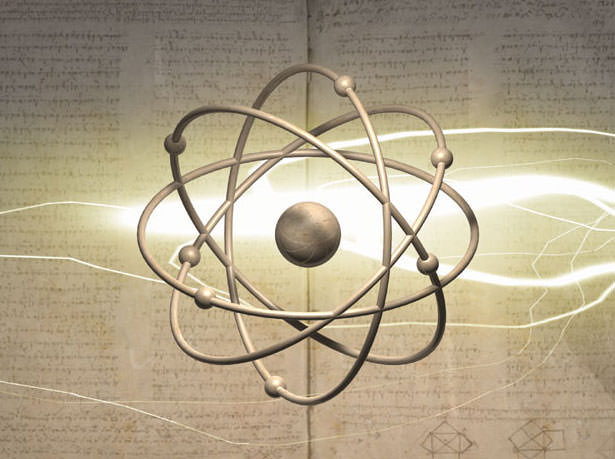 Note: This is a short essay that I wrote during my Comprehensive Exams as part of the requirements of the PhD at Yale. The question was with regards to atomism and the role that it had on the groups of kalām, in particular the Ash’arites. I’ve decided to post it here, as is.
The article demonstrates, inter alia, the reason why orthodox scholars of the past (viz., the Ahl’l- Ḥadīth and those who followed them) disapproved of kalām. The obvious Hellenistic roots of kalām, the cosmological premises that it posited, and the theological positions that were derived from such roots and premises, do not have any basis in the Sacred Texts, and in fact in most instances contradict them.
Additionally, it is simply preposterous to presume that the Companions themselves, or even the Prophet  , knew of these concepts or based their theology on them (and even the Ash’arites do not claim this). And surely, if the Prophet and Companions were not using such tools, then there is no need to use them, especially since they lead to positions that appear to contradict the Qurʾān and Sunnah.
Keep supporting MuslimMatters for the sake of Allah
Alhamdulillah, we're at over 850 supporters. Help us get to 900 supporters this month. All it takes is a small gift from a reader like you to keep us going, for just $2 / month.
The Prophet (SAW) has taught us the best of deeds are those that done consistently, even if they are small. Click here to support MuslimMatters with a monthly donation of $2 per month. Set it and collect blessings from Allah (swt) for the khayr you're supporting without thinking about it.
Introduction of the Concept
The concept of all matter being composed of small, indivisible particles called atoms most likely goes back to the fifth century B.C., when a young contemporary of Socrates, known as Democritus, first formally introduced the idea (most likely under the influence of his teacher Leucippus). He claimed that if one continually kept dividing matter, eventually a particle would be reached that could not be divided anymore: an a-tom, i.e., ‘not divisible’. He also posited the existence of empty spaces between these atoms within which they could move – a pure ‘void’. He believed that all of the workings of the universe were the result of the vibrations of these atoms through voids and their collisions with one another.
Plato, and in particular his student Aristotle, strongly disagreed. The latter, in his Physics, wrote quite extensively against the existence of both the ‘atom’ and the ‘void’, claiming that not only were Democritus’ evidences lacking, but also that the existence of atoms and voids violated physical principles. In turn, Plato posited the ‘four natural elements’ theory: fire, air, earth and water form the basis of all else.[1]
These Greek philosophers – both the atomists and antiatomists – were attempting to explain natural occurrences and daily phenomenon without the need of resorting to supernatural explanations and believing in heavenly (or earthly) deities.[2] It is, therefore, rather ironic that this tool was then adopted by a faction of a monotheistic faith (i.e., the mutakallimīn) in their attempt to prove the all encompassing efficacy of an omnipotent God.[3] However, in their adoption of this cosmological view, they ensured that they sufficiently modified it so as to conform with and eventually support their theological positions.[4]
Kalām Atomism
From its earliest inception in the second century of the hijra, kalām has always been fascinated with the theory of atoms. A cursory look at the relevant sections in al-Ash’ari’s (d. 324/935) Maqālāt shows the center stage this issue took.[5] And although the mutakallimīn disagreed about certain secondary issues regarding atomism (such as the minimum quantity of atoms required for a ‘body’, the quantity of atoms that a single atom is allowed to touch, and so forth), the broad theory was generally upheld by both the Mu’tazilites and Ash’arites.[6]
The mutakallimīn posited that all matter is composed of identical, miniscule, indivisible particles (i.e., atoms), that are devoid of any quantitative or qualitative properties. They only acquire quantitative properties of width, height, and breadth when two or more of them unite (at which point it becomes a ‘body’), and they only acquire qualitative properties when an ‘accident’ is created within it. An accident is something that exists above and beyond the actual body. It is an accident that gives each atom (and, thereby, each body) its specific qualities that separates it from other atoms (and bodies); qualities such as color, temperature, speed or rest, life, knowledge, power, and so forth. Such accidents must reside in the atom itself, in fact by definition an accident cannot exist except within an atom.
Broadly speaking, the Mu’tazilites and Ash’arites were in agreement with regards to the affirmation of atomism, the most prominent exception being the eccentric al-NaẓẓÄm (d. 230/845), who was influenced by Aristotle’s denial of atomism. Due to this view, al-NaẓẓÄm was forced to invent the concept of the ‘leap’ (á¹ufrah).[7] Also, in contrast to the Greek philosophers (and also the falāsifa), the mutakallimīn strongly affirmed the belief that both atoms and accidents were created, and that matter was not eternal.[8]
One of the most profound and unique contributions of the Ash’arites to the atomism debate was their proposition that ‘No accident can last two successive instances of time.'[9] In other words, as soon as an accident is created, it immediately ceases to exist. There is no continuity or connection between one moment in time and another. This means that if an object were to, say, remain in a state of rest, the accident of ‘rest’ must be continually created and re-created at each successive instant in time for the object to remain so. And, of course, it is only God who could create each and every accident on each and every body in each and every instance of time. The entire universe and all that transpires in it, according to the Ash’arites, must be directly controlled by God at each specific instance.
Another philosophical (albeit not original) contribution was the idea that time itself is composed of discrete and successive units, a type of ‘atomic-time’. This was derived not only from Aristotle’s notion that space, time and movement are all existentially equivalent, but also from the problem of trying to solve Zeno’s paradox as applied to time.[10]
These two positions necessarily leads to a denial of causality, meaning that the Ash’arites completely negated a cause-and-effect relationship between any two occurrences. Everything that occurred was disconnected, time and space, from anything preceding or following it. Even a body that remained a certain color did so because God continually re-created the accident of color in all of its atoms, at each instance in time (i.e., at each ‘atomic-time’ unit). A rock thrown at a window could not cause the window to shatter; an arm lifting a cup was not the cause of its lifting; the ingestion of food was not the cause of satiation; the proximity of fire to wool did not cause the wool to alight; and so forth.
With such a radical view of the world, the Ash’arites were then forced to explain not only the continuity of the universe around us (materials did not typically vanish, or transform into another substance, or change color, or inexplicably move from one instance to the next), but also the very clear causal connections upon which the livelihood of men rests. It is only because man eats that he does not starve to death, it is only because a fire is lit that food can be cooked, and so forth. Pressed with such factual realities, the Ash’arites (and in particular al-Ghazāli) developed the theory of ‘God’s habitual character’ or ‘Ädah, meaning that God had ordained upon Himself to act within certain norms.[11] Thus, an object that is at rest is recreated by God at the second instance still at rest, an object that is brought close to fire and is flammable shall be set alight by God not due to the fire, but because God’s custom dictates so, and so on..
This theory safeguarded the permanent order of the universe, and also explained the apparent ‘causal’ relationship in daily life. What man perceives as ‘permanent’ is merely God’s habit (‘Ädah) manifesting itself, at each successive instant. Contingent events, which man perceives as having been subject to natural physical causes, are in fact the direct result of God’s constant intervention.
Other Theological Implications of Atomism
The concept of atomism was deployed by the Ash’arites in many different fields. In what can only be described as a pun on ideas, it is true to state that the concept of atomism itself became the fundamental building block of all other aspects of Ash’arite theology.
So, for example, based upon this cosmological view, the Ash’arites formalized more than one elaborate proof for the existence of God, the most common one being the ‘dalÄ«l al-‘a’rÄḠwa ḥudÅ«th al-ajsÄm’, or the ‘Proof from accidents and temporality of bodies.’ This proof relies upon the fact that (i) existence is divided into bodies (composed of multiple atoms), and accidents; (ii) bodies are inherently composed of temporal accidents and cannot exist without them, and so: (iii) ‘that which is composed of temporal elements and does not precede it must also be temporal.’ Some of the Ash’arites sought to prove this method from the story of Abraham as he ‘searched’ for God via the celestial objects (Q. 6:71-79). They claimed that Abraham understood that the star, moon and Sun could not be gods because they were moving, and movement was an accident, hence Abraham realized that any body that carried within it an accident must be created and not a God.[12]
Furthermore, based upon this atomic conception, they proved that God is One, and cannot be more than one. This proof is known as dalÄ«l al-tamÄnu’, or the ‘Proof from mutual exclusion’. A summary of this is as follows: suppose that the universe had two gods, and one of them wished to create the accident of motion within an atom, while the other wished to create the accident of rest. Logically, there are only three possibilities: (i) both of them fail; (ii) both are successful; (iii) one of them is successful while the other fails. The first two logical possibilities are actually impossible, as the two are mutually exclusive, and the object has to be characterized with one of these opposing accidents. This only leaves the third option. And by definition, the one whose will is overpowering all else must be a God, and the one whose will was overpowered cannot be a god.
The Ash’arites and Mu’tazilites also propounded a theory of understanding God’s Attributes based upon their respective understandings of atomism. The primary issue at stake for them was that God could not be a place (maḥall) where accidents exist, as that would imply that He was a body composed of atoms (since accidents by definition need atoms to subside in), and hence created. So, for the Ash’arites, who defined an ‘accident’ as that which cannot last two successive instances, to posit any ‘change’ in God or from God would constitute an accident. And since all accidents must by definition reside in bodies, any accident posited of God would imply that God was a body. It was based upon this definition of ‘accidents’ that the Ash’arites could affirm God’s never-changing attributes of Life, Power, Knowledge, Hearing, Seeing, Will, and Speech, and interpret other Attributes figuratively, especially those that implied any type of motion (such as istiwā and nuzÅ«l).
For the Mu’tazilites, on the other hand, an ‘accident’ was defined as ‘that which is superfluous to the essence (dhāt) of a substance.'[13] For them, any meaning that was not inherent to a being and extraneous to its essence (zā‘id ‘ala al-dhāt) constituted an accident. Al-QÄá¸Ä« ‘Abd al-Jabbār expounded on this when he said that if God actually had power, this would imply that He were a body, as power can only be potentialized when it resides in a body.[14] Hence, to affirm any characteristic to God would imply that an accident resided within God, which would necessitate God being a body, which would in turn entail that God was created. This helps explain why Mu’tazilite doctrine concerned itself with how best to phrase some of God’s capabilities, (e.g., ‘God knows with His essence’, or ‘God knows with a knowing that is Himself’, or ‘God’s knowing implies that He is not ignorant’, and so forth) as they could not explicitly affirm any meaning within God, yet at the same time could not deny that God, for example, knows everything.[15]
Yet another theological tangent that atomism provided a basis for was that of predestination. In particular, the Ash’arite understanding of qadar was directly linked to their conceptualization of matter.
Atomism and Predestination
The Ash’arite position on predestination is that God creates the actions of the servant directly without the servant himself causing that act, and that the servant then ‘acquires’ the reward or punishment of that deed. Hence, there is only an illusion of free-will, for in the end all actions are a direct result of God’s will and action. This theory, propounded by al-Ash’ari himself, is known as the theory of ‘acquisition’, or kasb. It is, of course, based directly on Ash’arite belief of God re-creating accidents within atoms at each and every second. Man, being merely the agency upon which these accidents are created, cannot actually be the cause of any of his own ‘actions’.[16] Hence, atomism was the key factor that led Ash’arites to deny both natural causality and human free-will.
This understanding led to another ethical dilemma, and that was the accusation of God doing something evil.[17] How was it possible, the Mu’tazilites charged, that God would Himself create the actions of His servant and then punish them for it? This was the essence of evil.
In response to this charge, or perhaps pre-empting it, al-Ash’ari developed his doctrine of what constitutes ‘evil’. For al-Ash’ari, evil was merely what God had prohibited, and good was what He had commanded.[18] Therefore, according to him, no act is inherently judged as good or evil – human intellect and rationality play no role in this regard. Later Ash’arite authorities concurred.[19] Hence, for the Ash’arites, unless God explicitly states so, there is nothing that is ‘good’ or ‘evil’ in the first place! God does not punish or reward based upon a deed – God’s rewards are a gift from him, and His punishment an indication of his Justice, and nothing is required or obligatory on God.[20]
Therefore, for the Ash’arites, based on their definition of evil, the charge that it is evil to deprive man of free-will and then subsequently punish him for actions which God created holds no weight. Man does not have the capacity, or even right, to say what is evil and what is good.
The Mu’tazilites took the exact opposite view. Before explaining their position on free-will, it is interesting to note that, unlike the Ash’arites, the Mu’tazilites did not reduce the concept of causality to a simple and wholly unequivocal scheme, hence it is rather difficult to piece together the relationship between their version of atomism and their position on qadar; for this response, some general observations will be made.[21]
The Mu’tazilites were, of course strong proponents of free-will, hence they denied that God created man’s actions. Instead, they supported the doctrine that man created his own actions with the power that God had given him.[22]
This led to a detailed discussion of the concept of tawallud amongst them: whether (and to what extent) a human action could cause other actions. As an example, suppose a man shoots an arrow, and another person diverts it, and an innocent person is killed, who is morally responsible for his death?[23] Despite the differences that the Mu’tazilite had amongst themselves, as a whole they affirmed causality and believed that substances posses properties that have the capacity to affect other properties.
In contrast to the Ash’arites, they viewed that it was rationally possible to judge actions as evil or good (the issue of al-tahsÄ«n al-‘aqlÄ«). This basic premise played a profound role in their understanding of qadar. For the Mu’tazilites, if God were to directly create man’s actions and then punish him for those actions, while man himself has been deprived of free-will, this would be the height of tyranny and injustice. Therefore, God cannot be the creator of man’s deeds. For the Mu’tazilites, the Sacred Law only confirms what the intellect has already judged; it does not play any extra role in this decision.[24]
Conclusion:
Atomism was accepted by all factions of kalām and incorporated into their theological models. Even though it was the Mu’tazilites who began the discussion, it was the Ash’arites who took it to a whole new level, and relied upon it even more than the Mu’tazilites.
For the Ash’arites, the only perpetual object is the atom. The atom itself is created at a specific point in time, but after that time, it remains in creation until God wills otherwise. Everything else in the world besides the atom is ‘accidental,’ meaning something that lasts for only a fleeting instant. And time itself is composed of discrete, successive units that are not directly connected to each other. It is God who must create and re-create each accident, on each atom, at each instance of time. Based upon this understanding, they extracted proofs for God’s existence, His Unity, His Attributes, and His all-encompassing power (i.e., predestination). Additionally, they denied natural causality.
For the Mu’tazilites, although they did use their understanding of atomism to derive similar proofs for God’s existence, since they defined ‘accidents’ in a manner different to that of the Ash’arites, their understanding of God’s attributes differed as well. Additionally, they did not elaborate upon the relationship of atomism with free-will as much as the Ash’arites did.
Other issues, not directly related to atomism, also played a role in conceptualizing their respective positions on predestination versus free-will. For the Mu’tazilites, if God demanded obedience from man yet simultaneously created his actions and deprived him of any free-will, it would be the height if injustice and contradict Divine Wisdom. All of this is clear and incontrovertible, according to them, because the intellect is capable of deciding what is praiseworthy and what is not. For the Ash’arites, since the intellect plays no role in deciding good from evil, it was not possible to judge any of God’s actions. Therefore, if God requires us to do something and, at the same time, does not grant us an independent will to execute it, that is permissible, for God can commit no injustice, and we cannot judge the actions of God.
Postscript
The debate of whether this elusive ‘smallest indivisible object’ actually exists remains alive up until today. The belief in such objects survived, even as it adapted and modified itself through many controversies, via medieval Christianity, Jewish philosophy, and the Renaissance. Finally, in the post-Enlightenment period, John Dalton (d. 1844) formulated his concept of the atomic theory, which was then developed and held sway for much of the 19th and early 20th century. For the first time, atoms were discovered to be of different types, and molecules to be combinations of atoms. Daltonian physics still considered the atom to be the smallest indivisible unit, but claimed (unlike kalām) that atoms of different substances were different from one another. From the early part of the 20th century, physicists, starting with Rutherford (d. 1937), discovered smaller sub-atomic particles from which atoms were made, namely, electrons, protons and neutrons. This then gave way (largely due to the efforts of Max Planck (d. 1947) and Albert Einstein (d. 1955)) to quantum mechanics, and later to the discovery of even smaller sub-atomic particles, such as quarks and leptons, which are currently believed to combine in specific ways to form protons and neutrons. Research is still being done in this field, and daily discoveries and experiments continue to shape and challenge current theories.
For those theologians who based aspects of their theology on atomism, it is interesting to posit how these new scientific discoveries might possibly affect their theological models and positions.
[1] See: John McDonnell, The Concept of an Atom from Democritus to John Dalton (New York: 1991) p. 1-4, 21-25.
[2] Bernard Pullman, The Atom in the History of Human Thought (Oxford University Press: 1998), p. 17.
[3] Wolfson, Philosophy of the Kalām, p. 468.
[4] It should be noted that there is a very strong possibility of Indian atomism heavily influencing the mutakallimūn as well, as Pines (p. 117) and Wolfson (p. 473) show.
[5] Al-Ash’ari, Maqālāt, p. 314-321.
[6] Much has been written on this. The standard introduction is that of Shlomo Pines, Studies in Islamic Atomism (Jerusalem: 1997). Also see Richard M. Frank, “Bodies and Atoms: The Ash’arite Analysis;” Bernard Pullman, The History of the Atom, p. 107-114; Wolfson, The Philosophy of the Kalām, p. 466-518; EI2, s.v., ‘Djuz’. It is interesting to note that the most accessible and elaborate explanation of kalām atomism has been written by the Jewish philosopher Maimonides, in his Guide to the Perplexed. D. Macdonald has translated and analyzed these passages in his article “Continuous Recreation and Atomic Time,” Isis, v. 9 (1927).
[7] Wolfson, Philosophy, p. 495. The á¹ufrah is the belief that an object has the capacity to move from point A to point C without traveling through the intermediate point B but rather ‘leaping’ over it. This belief was needed in order to explain how a body could traverse from point A to point C when, according to al-NaẓẓÄm, there were an infinite amount of points between them.
[8] Ibid, p. 471.
[9] See, for example, al-Ash’ari, Maqālāt, p. 358; al-Baghdādi, Uṣūl al-DÄ«n, p. 50, al-Ghazāli, TahÄfut, p. 88.
[10] Macdonald, ‘Continuous Re-Creation,’ p. 320.
[11] See al-Ghazāli’s Seventeenth Discussion in his Incoherence (tr. Marmura), p.171-3.
[12] Al-BÄqillÄni, al-Iná¹£Äf, p. 44. I have written a paper on this specific issue elsewhere. Also see: Wolfson, The Philosophy of the KalÄm, p. 386-390; Herbert Davidson, Proofs for eternity, creation, and the existence of God in medieval Islamic and Jewish philosophy.
[13] Al-Ash’ari, Maqālāt, p. 369; Frank, “Bodies and Atoms,” p. 42.
[14] Sharḥ Uṣūl al-Khamsah, p. 162.
[15] It goes without saying that both the Ash’arites and Mu’tazilites had other concerns as well, all of which led them to formulate their respective doctrines regarding the Attributes of God; the point here is to stress how their theory of atomism directly affected their conceptualization of God’s Attributes.
[16] Watt, The Formative Period, p. 315.
[17] It also led them to develop a unique understanding of God’s justice: for the Ash’arites, God was never unjust, not because He chose not do show injustice (the Mu’tazilite position), but rather because whatever He did was always just. Hence, if He rewarded a sinner or punished a just man, that recompense in and of itself would constitute Justice on God’s part. This of course solved the conundrum of how God could (from the Mu’tazilite perspective) ‘force’ someone to do something and then punish him for it.
[18] Al-Ash’ari, RisÄlah Ä«lÄ Ahl al-Thaghr, p. 74.
[19] See, for example, ‘Abd al-QÄhir al-BahdÄdÄ«, Uṣūl al-DÄ«n, p. 149; ‘Aá¸ad al-DÄ«n al-ĪjÄ«, al-MawÄqif, p. 323.
[20] See, for example, al-BÄqillÄnÄ«’s description of this in his al-Iná¹£Äf p. 48.
[21] See Pines discussion of this in his Studies, p. 32-34. I believe this issue certainly warrants further study.
[22] al-QÄá¸Ä« Abd al-Jabbār, al-Mughni, v 2, p. 340.
[23] Pines, p. 37-8; al-Ash’ari, Maqālāt, p. 408-10.
[24] See al-QÄá¸Ä« Abd al-Jabbār, al-Mughni, v. 6, p. 26, 30 – 34. Also, it should be borne in mind that the Mu’tazilite authorities differed amongst themselves on some of the finer details of this issue. In particular, is an act inherently good or evil, or is it due to external consequences that such a description can be made? The former view is held by the Baghdadian authorities, while the Basrians held the latter view.
Keep supporting MuslimMatters for the sake of Allah
Alhamdulillah, we're at over 850 supporters. Help us get to 900 supporters this month. All it takes is a small gift from a reader like you to keep us going, for just $2 / month.
The Prophet (SAW) has taught us the best of deeds are those that done consistently, even if they are small. Click here to support MuslimMatters with a monthly donation of $2 per month. Set it and collect blessings from Allah (swt) for the khayr you're supporting without thinking about it.









Israel Seeks Escalation For Latitude – The Regional “Conflict” Widens

Post-Ramadan Reflections From A Mother Of Littles

[Podcast] Palestine in Our Hearts: Eid al-Fitr 1445 AH

Foreign Affairs Official Resigns Over Gaza Genocide

A Ramadan Quran Journal: A MuslimMatters Series – [Juz 30] Solace For The Sincere And Vulnerable

IOK Ramadan: 7 Qualities of Highly Effective Believers | Keys To The Divine Compass [Ep18]
IOK Ramadan: Choose Wisely | Keys To The Divine Compass [Ep15]
IOK Ramadan: Making Time for Allāh at Night | Keys To The Divine Compass [Ep21]
IOK Ramadan: Appreciating the Prophet ﷺ | Keys To The Divine Compass [Ep22]
IOK Ramadan: They Were Not Created Without Purpose | Keys To The Divine Compass [Ep23]

IOK Ramadan: The Importance of Spiritual Purification | Keys To The Divine Compass [Ep30]
IOK Ramadan: The Power of Prayer | Keys To The Divine Compass [Ep29]
IOK Ramadan: The Weight of the Qur’an | Keys To The Divine Compass [Ep28]
IOK Ramadan: Families of Faith | Keys To The Divine Compass [Ep27]
IOK Ramadan: Humility in Front of the Messenger | Keys To The Divine Compass [Ep26]
-

 #Islam3 weeks ago
IOK Ramadan: 7 Qualities of Highly Effective Believers | Keys To The Divine Compass [Ep18]
-
#Islam3 weeks ago
IOK Ramadan: Choose Wisely | Keys To The Divine Compass [Ep15]
-
#Islam2 weeks ago
IOK Ramadan: Making Time for Allāh at Night | Keys To The Divine Compass [Ep21]
-
#Islam2 weeks ago
IOK Ramadan: Appreciating the Prophet ﷺ | Keys To The Divine Compass [Ep22]
Omer
April 9, 2008 at 10:25 AM
Amazing article Shaikh Yasir!!! Jazzakallahu khair!! It is always interesting to know about the history of these ideas and how they affected the ummah.
I wanted to know if this article violates the Sunni Pledge that was signed a few months back even though it doesn’t mention any contemporary duaat who follow and teach the Ashari or Maturidi Aqeedah?
Yasir Qadhi
April 9, 2008 at 10:32 AM
Salaam Alaikum
Jazak Allah for the comment and question.
Actually many people have mistakenly presumed that the ‘Pledge’ precludes any discussion of theology, and this is completely unfounded. What the Pledge seeks to do is to ensure that theological differences are spoken of with the proper etiquette, and without any ad hominen attacks on specific individuals. I believe the article fully conforms to the spirit and letter of the Pledge.
Yasir
AA
April 9, 2008 at 11:08 AM
Salam,
Being a supporter of the pledge who admires the scholars who signed it, I have to say, I found this article enlightening and informative. It does not attack or blame anyone. It is simply an academic discussion which does not aim to cause jidaal amongst people. I had to read it a couple times though :) It does not discuss anyone’s salvation or lack thereof but simply comments upon a historical and academic theological discussion within Islam. I wish that more articles and ideas took this tone.
jazakAllah khair Sh. Yasir,
AA
Brother
April 9, 2008 at 11:16 AM
That was a really juicy article…jazak Allah khayr Shaykh!
One thing I think (IMHO) the article lacked- since it’s written at Yale, obviously certain statements wouldn’t have been proper, for example, ‘this belief is contrary to Islam’ etc. I really would have liked to see the sunni position (not to exclude the Asha’ira from being ‘sunni’) on these issues, especially Occasionalism and the justice of Allah. I once read that the Ash’ariyya believe that Allah’s af’al don’t necessarily proceed from wisdom or something like that- is that true (do they believe that and, what is the sunni belief on the issue)?
I have so many questions I’d like to ask you…what’s it like, how is Yale different? Has it changed you as a person? What’s the difference between Muslims and ‘Western’ lands in terms of the way they approach issues? Is the latter more ‘sophisticated’ or is it just a different angle?
Hassan
April 9, 2008 at 11:26 AM
Wow.
Dawud Israel
April 9, 2008 at 11:38 AM
Cool stuff shaykh. Alhamdulillah, I got shaykh Yasir Qadhi to blame for my dislike of kalam…although by nature I think it lends itself to that
:D
So I wrote this a while back testing what I learned in the AlMaghrib Light upon Light class and adding to it. Might be of interest, shaykh…
http://muslimology.wordpress.com/2008/02/21/kalam-and-trinity/
Uthman Effendi
April 9, 2008 at 11:45 AM
Assalaamu ‘alaykum,
A great article, especially since I have for a long time been interested in the debate about atomism and it’s philosophical opposite, the position of “infinite divisibility“. It seems that contemporary philosopher agree that the debate is deadlocked, and I honestly fail to see how such debate could end up differently. The fact that human reason is unable to penetrate the essence of the created world is immensely important, because it undermines the very foundations of every rationalistic approach to theology. If reason cannot fully explain and understand the created world, how can we expect it to understand the Creator? Wassalaam.
Uthman Effendi
April 9, 2008 at 12:04 PM
I might be wrong, but there seems to be something wrong with the title of the article….
SaabTurbo
April 9, 2008 at 12:15 PM
Assalaamu ‘alaykum,
Jazaak Allaah khayr for a well written article. Could someone explain to me what the Matrudi position is in regard to this and why its not discussed as prolifically as the Ash’ari position? Is it because they’re virtually the same?
Jazaak Allaah khayr,
ibrahim
Gohar
April 9, 2008 at 12:16 PM
Salaam
I have to say i really liked the way they argued for the oneness of God. it really helps to understand 21:22 and 23:91, even without having to accept the philosophy that led them to their argument.
«”If there were, in the heavens and the earth, other gods besides Allah, there would have been confusion in both! But glory to Allah, The Lord of the Throne: (High is He) above what they attribute to Him!” »[Al-Qur’an 21:22]
«”No son did Allah beget, nor is there any god along with Him: (if there were many gods), behold, each god would have taken away what he had created, and some would have lorded it over others! Glory to Allah! (He is free)from the (sort of) things yhey attribute to Him!” »[Al-Qur’an 23:91]
Siraaj Muhammad
April 9, 2008 at 12:24 PM
Hmmm, looks like a number of groups dealing in kalaam started with atomism, created a paradigm for understanding God and the universe, and with said paradigm went searching back into the Qur’aan and Sunnah for whatever confirmed that paradigm.
What caused them to turn to atomism to build this model of thinking?
Siraaj
Pingback: Seekersdigest.org » Blog Archive » The Role of Atomism in the Groups of Kalam | MuslimMatters.org
ibnabeeomar
April 9, 2008 at 1:43 PM
Shaykh Yasir, regarding this part of the article
How do Ash’aris define causal relationships? For example, I have heard some mention things like supplicating to the dead is ‘taking the means’
How do they differentiate what is a legitimate “means” with a cause and effect? I.e. how can fire not burn, Allah burns, but at the same time asking the dead to supplicate for you is a proven cause somehow. Is it conjecture or are there other evidences?
-To put it more simply: How can they seemingly deny cause-effect and then say something like asking the dead is taking a means?
jazakAllahu khayr for a great article!
AnonyMouse
April 9, 2008 at 2:07 PM
My brain hurts now :)
Hassan
April 9, 2008 at 2:53 PM
ibnabeeomar, the point where sufis and asharis intersect.
Kamran
April 9, 2008 at 7:23 PM
I can see the Matrix now…indeed I can :) Jazak Allah Khair for Sh Yasir, it really clarified some of the lingering questions I had from LUL
Ibrahim Long in Sacramento
April 9, 2008 at 8:46 PM
Shaykh Yasir Jazak Allaahu Khairan for making available for us this essay.
You are probably familiar with how Philosophy of Religion classes address mostly Christian assertions in theology and it is interesting to read how they too have accepted or responded. These philosophers, and unfortunately those who follow them of any faith, give too much credit to that which has also been created (their minds) while Allaah swt and the Qur’aan are eternal.
If possible shaykh I would love to read more on the history of theologies as it adds so much to the cautious awareness of my own and is so fascinating. Should I just stay tuned to this website or is it possible to recieve an email when you publish something in a journal or on a website?
wasalaam,
Ibrahim
Yasir Qadhi
April 9, 2008 at 10:34 PM
Salaam Alaikum
Jazak Allah for all the positive comments. To respond to some queries:
– Yes of course its confusing!! Very confusing, actually. And that’s the whole point: the religion of Allah, and in particular the Names and Attributes of Allah, are meant to be simple and to the point, words and phrases that increase one’s Iman and lift one’s spirit. Contrast such philosophical discussions and what they do to your Iman with the Quran and Sunnah, and what it does to your Iman.
– Why did they adopt atomism? We can only theorize… I subscribe to the view that the early Mu`taziilites, as they were exposed to the works of philosophy, started answering its questions (is there an atom? what defines a body? etc.) Then, as the Ash`arites came and basically took over where the Mu`tazilites left off (in the guise of refuting them) they in fact took these questions to a whole new level. It is amazing that the Ash`arites in fact have a more sophisticated theology surrounding atomism than do the Mu`tazilites.
– The Ash`aris do indeed state that Allah’s actions are not done for a purpose, nor can they be characterized with ‘wisdom’. They deny what is called ‘al-Hikma wa al-Ta`lil’, whereas the Mu`tazila unconditionally affirm it. As is typical, the Ahl al-Sunnah are in the middle. But that is the discussion of another article!!
– The Maturidi position is identical to that of the Ash`arites, for most of the points raised in this article. The main difference of opinion between the two movements is related to Qadr; Ash`arites are almost Jabariyyah whereas Mu`tazilites are almost Qadariyyah. Again, as usual, Ahl al-Sunnah is in the middle between them, with the pure Jabariyyah on the far right and the Mu`tazilah on the far left (and a few other groups scattered over the spectrum).
– The Quranic proof for there not being more than one God is not the same as the Ash`arite one; again that is the topic of another paper. The Qur`anic proof is basically the fact that the universe is orderly and systematic; had there been more than one God the heavens and earth would became chaotic and each of the gods would be battling the others. As for the Ash`arite claim that the Prophet Ibrahim was using the ‘Proof from Accidents’, I have already written a separate paper for Yale where I discussed this issue, and how Ibn Taymiyyah refuted them. Perhaps I’ll put that up as well later.
– The permissibility to make du`a to the dead is of course an import of (late) Sufism, and not pure Ash`ari thought; although of course in our times the two movements (which, once upon a time, were distinct and separate), are now one. I have written and am presently writing a number of papers on the merging of these two movements. Basically, this issue goes back to the Ash`ari definition of ilah, which, as al-Razi and others state, means ‘the one who can independently create’. Hence, if you don’t believe your dead Shaykh can create life or give you sustenance himself, but rather does so by a power given to him by Allah, this would not be shirk according to that definition. As we proved in our class ‘Light of Guidance’, the Arabs of old also believe their idols were given powers by Allah, and did not claim they had independent powers. Additionally, our definition of shirk is taken from the Quran, and is ‘to give the rights of Allah to other than Allah’, and du’a is a sole right of Allah. But all of this is a separate topic, meant for another article!!
– Yes I do plan to write more articles regarding such topics in the future; after all this is my passion and specialty! In fact I’m currently in the process of documenting the spread of the Ash`arite creed from the fourth century (when it really started) to the seventh (when it basically became the creed of the majority of scholars of the middle Mamluk state). Perhaps I’ll publish that when I finish…
Wa salaam
nuqtah
April 9, 2008 at 11:58 PM
Assalamu alaikum.
Awesome. One of the best things on here. It seems the fact that Asharites believed ‘atoms’ to be smallest indvisible particle makes their theorizations obsolete.
I think, all the elaborate theology and concepts aside, at the very basic level the only thing that sustains Ash’arite theology is the fact that Ash’arites believe what they believe is ‘logical’ and is derived through a logical process. However, just because they think something is logical does not discount the fact that some one else may think otherwise. Also, it is purely sepculative, as some of these ideas are already very much obsolete is proof enough.
One question that does come to my mind all the time; then why do Ash’arites still dominate? What are the historical reasons or otherwise that Ash’arites are still the majority of Muslim intelligentsia?
Anyway Jzak Allahu khair a lot Sh. Yasir Qadhi.
(oh and I wish some one translates Shaykh ul Islam’s Minhaj as sunnah!)
Kamran
April 10, 2008 at 12:51 AM
as salamu`alaykum wa rahmatullah Sh Yasir,
I guess I can perhaps understand that this theology is taught in the traditional schools few 100 years back but I just cannot imagine say our Deobendi Ulema of the subcontinent ever reading this stuff in their aqeedah courses. Do they actually teach this still in the Universities or do they just teach the final points derived from these theories and not the theories themselves?
Also, how many of the Ashari scholars and students of Knowledge today actually read and know this stuff? Is it only those who study Aqeedah as a specialty?
jazak Allahu khairan
Kamran
Anisa
April 10, 2008 at 1:16 AM
Asalaamu Alaiakum
“My brain hurts now”
Same here! Insha’ALLAH i’ll have to read this more than once Sheikh.
Good point about the fact that Allah SWT’s Names (and the religion of Al Islam) is supposed to be simple.
they complicate Islam with their ‘ideas’, theories…innovations.
SubhanALLAH all of these ideas of these sects were borrowed from pagan and athiest greek philosophers, May Allah guide us, ameen
I listened to a talk either on Usool as Sunnah, or on Bio of Imam Ahmed ibn Hanbal once. the Sheikh mentioned a debate he (Imam Ahmed) or one of his fellow shayookh had with a ruler’s advisor. He asked him simple questions like did the Prophet, SAW, ever conceal any of the knowledge given to him by Allah? and the wazir said no, so he said then did the Prophet SAW know about the Mu`tazilah notion of the Quran being a creation, and he said yes. Sheikh then asked then why would the Prophet, SAW conceal this? Why would he, SAW, not inform us about this in 23 years of Prophethood, why did the companions not ever mention it? Why did the tabieen not ever mention it? And the advisor he did not know what to say….
May Allah guide us, ameen
Look forward to re-reading, insha’ALLAH
Wa’alaykum Asalaam wa Rahmatullah
saqib
April 10, 2008 at 7:48 AM
Jazakallahu Khairan Shaikh for a very timely article.
The thing which i have found interesting in my own studies of the history of ideas is this. The claim of the early Asharites was to mitigate the excesses of the mutazalites by engaging with the basic philosophical ideas and concepts of the ancient Greeks. This supposedly led to the development of a more sophisticated theology, one which would give Muslims the ability to penetrate the principles governing the natural world and make scientific advances, which in turn would improve Muslim society, and retain Muslim power at a global level.
Yet, according to the Ghazzalian view which you mentioned, namely ” that the Ash’arites completely negated a cause-and-effect relationship between any two occurrences” a different picture emerges. This view is considered, in the philosophical works that i have encountered, to contrast against the very grain of the late 16th Century scientific revolution, wherein causality was a factor in both discovering and linking phenomena in the natural world. Hence, the Asharite view was, in this sense a hindrance, not a help to the scientific advancement in the West, and indeed in our own times. (conversely, the muatalizites are considered more influential, the very movement who the Asharites were meant to challenge!).
If these premises are indeed correct, (and this is partly, in itself a question?) could it then be argued that the Asharite theology, despite proving influential from the medieval period, actually failed to address the really big questions regarding the acquisition and production of earthly knowledge?
SaqibSaab
April 10, 2008 at 8:20 AM
Hey cool, another Saqib. Assalaamu alaykum bro, nice name. :)
Totally agree. The Pledge basically regulates the method of discussing these issues from hateful to sensible and respectful.
saqib
April 10, 2008 at 10:04 AM
Wa alaikum assalam brother Saqib…yes, not many of us around…I am sure you can share the constant experience of having our names spelt with a ‘u’ and being mispronounced.
Masha’Allah great blog
Ibn Adam
April 10, 2008 at 12:59 PM
Assalamu alaykum,
JazakAllah khayr Shaykh Yasir Qadhi!
Sidi Saqib: I think it would be very difficult to argue that the Ash’ari view is a hindrance to scientific progress. Whether a researcher is studying physical laws that Allah put in place at the beginning of time or His “habitual character”, the end result is basically the same. In fact, the latter can make the researcher feel closer to Allah. The central error that modern scientists have made is that they took the concept of physical laws to the extreme, denying their Creator. In opposition to that, a paradigm based on Allah’s habit is a safer way of establishing science.
La hawla wala quwwata illa billah
Ibn Adam
Asim
April 10, 2008 at 1:05 PM
Bismillah ArRahman ArRaheem
Dear Shaykh Yasir,
Could you please explain exactly how the Maturidiyyah are close to being Qadariyyah? Is this error present in “Sharah Al-Aqaid An-Nasafiyyah” by Saad-ud-Deen Taftazani as well? (I am asking about this particular book because it is a widely used text in the religious seminaries following this school of theology). I read through a very small portion of a translation of this book, and the thing that leapt out (even at an utter layman like me) was its apparently odd position on the createdness of the wordings of the Holy Qur’an.
Wassalam
AbuAbdAllah
April 10, 2008 at 1:36 PM
bismillah. jazak Allah khayr, shaykh yasir. light upon light was pivotal for me in learning about my deen, and for determining the course of my further studies in Islam. and i enjoyed reading this article.
when you look at the influence of outside philosophies on Muslim scholars, do you find that they influenced Muslims in their conception of the infinite, as well? i once read the book the mystery of the aleph: mathematics, the kabbalah, and the search for infinity. it chronicles the quest for fully understanding infinity by a few mathematicians, and one theme of the book was that understanding the concept of infinity would unlock an understanding of the Creator… the toll of that quest on the mathematicians was an especially interesting part of the book.
since Muslims were advancing the study of mathematics at about the same time as they (or other Muslims) delved into philosophy, i wonder whether the study of the work of non-Muslim mathematicians also impacted their theology? if not infinity, then maybe even the invention of the zero could have influenced men who did not base their Aqeedah solely on the Quran and Sunnah.
nuqtah — thank you. i had to smile when i read the name “nuqtah” in a thread about atoms — you wrote: “It seems the fact that asharites believed ‘atoms’ to be smallest indvisible particle makes their theorizations obsolete.” be careful not to confuse the atoms we studied in physics and chemistry with the atoms of the ashari. even the parts of an atom (of science) are detectable — right? — that alone makes science-atoms different from ashari-atoms. ashari-atoms cannot be detected because they have no attributes, no size, no weight, no gravity, no nothing, until enough of them join to form a body. and then, too, the attributes belong to the body itself.
but maybe i am splitting hairs… er atoms. lwh (laughing with hayaa)
WM
April 10, 2008 at 1:48 PM
“It seems the fact that Asharites believed ‘atoms’ to be smallest indvisible particle makes their theorizations obsolete”
Not necessarily; ‘atomism’ is simply the belief that there is such thing as an indivisible particle out of which every material thing is constituted, whatever its name might be (quark, lepton etc). This belief was only associated with atoms because of the etymology of that word, as Sh Yasir has mentioned.
WM
April 10, 2008 at 1:54 PM
“The Ash`aris do indeed state that Allah’s actions are not done for a purpose, nor can they be characterized with ‘wisdom’.”
That is so weird, how could a sufi openly say something like, ‘oh murid, the actions of Allah don’t proceed from His wisdom!’ Of course, you are right, though, since they state this in their books. Am I right in thiking that the Mu`tazilah took the (correct) belief (in Allah’s wisdom) to the extreme, to deny that our actions are created by Allah (based on their reasoning that Allah is just)? So the belief of Ahlus-sunnah would then be that there is a wisdom behind all of Allah’s actions, and behind qadr (a sort of theodicy, right)? The god of the Asha’ira (not making takfir, please don’t misunderstand me) seems like the god of the Deists.
“They deny what is called ‘al-Hikma wa al-Ta`lil’, whereas the Mu`tazila unconditionally affirm it. As is typical, the Ahl al-Sunnah are in the middle.”
Shaykh, what is “ta`lil”?
nuqtah
April 10, 2008 at 6:32 PM
[quote]Not necessarily; ‘atomism’ is simply the belief that there is such thing as an indivisible particle out of which every material thing is constituted, whatever its name might be (quark, lepton etc). This belief was only associated with atoms because of the etymology of that word, as Sh Yasir has mentioned.
[/quote]
[quote]nuqtah — thank you. i had to smile when i read the name “nuqtah” in a thread about atoms — you wrote: “It seems the fact that asharites believed ‘atoms’ to be smallest indvisible particle makes their theorizations obsolete.” be careful not to confuse the atoms we studied in physics and chemistry with the atoms of the ashari. even the parts of an atom (of science) are detectable — right? — that alone makes science-atoms different from ashari-atoms. ashari-atoms cannot be detected because they have no attributes, no size, no weight, no gravity, no nothing, until enough of them join to form a body. and then, too, the attributes belong to the body itself.
but maybe i am splitting hairs… er atoms. lwh (laughing with hayaa)[/quote]
:)
Interesting. I think this definition of asharite-atom leads to a few more problems. Really if it has no attributes, weight etc…how is it defined as being ‘real’? I mean if enough of such atoms come together to form a body, how can it suddenly have attribute(s)?
Also, physcists talk about something called the Higg’s particle (also known as god particle), they now believe that all particles and their constituent particles came from this Higg’s particle. That means atom actually has an origin, how can it be attributeless?
And also if asharite atom is something different than the atom we talk about, doesn’t that make it something abstract? Why should we even believe that such a particle comes together with other such particles to form a body? I mean it doesn’t make sense. (I don’t know if I’m making sense :/ )
Ibrahim
April 10, 2008 at 8:31 PM
Yes I do plan to write more articles regarding such topics in the future; after all this is my passion and specialty! In fact I’m currently in the process of documenting the spread of the Ash`arite creed from the fourth century (when it really started) to the seventh (when it basically became the creed of the majority of scholars of the middle Mamluk state). Perhaps I’ll publish that when I finish…
Shaykh Yasir, can you add something about the spread of Maturidi aqida as well if and when you end up putting up this paper you mentioned?
iMuslim
April 10, 2008 at 9:33 PM
assalamu ‘alaykum wa rahmatullah
Oh my. When I read about philosophy, I suddenly appreciate the relative simplicity of the scientific process as I have experienced it. That is: propose a hypothesis; test the hypothesis using experimentation; reject, accept or modify the original hypothesis based on the accumulated data. It’s not always so simple in practice, but much easier to get to grips with than such philosophical musings, that seem to me best answered with a simple: Allahu ‘alam!
I admire those who have patience for philosophy as I really do not! :)
Gill
April 10, 2008 at 10:03 PM
Maturidis are more like a middle-path between Asharis and Mutazila. Mostly due to Imam Abu Mansur Al-Maturidi (ra) not having to deal with the distraction of constantly battling/refuting the Mutazila so his views were a bit more balanced.
Maturidi and Ashari schools of ‘aqidah are the creed for Ahlus Sunnah wal Jamaat.
Nobody here has mentioned string theory, it’s quite compatible with the Ashari theology. All the “accidents” could be manifested through the multiple dimensions acting on each and every string, altering its shape and the way it vibrates, and the resulting particle it forms.
Gill
April 10, 2008 at 10:05 PM
iMuslim: How do you think Muslims derived the scientific method? From philosophies of sorts. :) Philosophy formed all the “proto-sciences” from which their modern successors evolved.
Gill
April 10, 2008 at 10:12 PM
I don’t know how they approach it in their curriculum (re: Deobandis), but the students pursuing the graduate level degrees at least (8-10 year programs, of which a person in my family is one) know it (Kalam, Theology) quite well. It’s not that complicated to begin with, it’s just complicated to follow its history and developments through all the scholars/authors and who said what to whom, but it’s what they do as well.
Pingback: The Role of Atomism in the Groups of Kalam: Dr. Yasir Qadhi (h) « Ahl al-Hadith: Iman =Speech & Action
Abul-Hussein
April 11, 2008 at 3:58 AM
Shaikh Yasir Qadhi (h) begins to raise an important question in regards to da’wah and the aqeeda in a Western context. What can be said to be grasped from his inquiry on atomism is of great significance for the specialist and the scholar alike. The question of import which we can derive from this abstract is what is the status of ilm al kalam in the face of Western science and philosophy, how will the arguments fair and further what are the implications involved in answering these questions? This what we have to be prepared for and this is the importance of introducing the Qur’an as the basis of da’wah and to understand the critique of Ibn Taymiyah on logic and how he managed to build an alternative system which drew from reason but subjugated reason to the text. This is important to deal not only with the coming crisis but also with those who have taken to the school of Mohammad Arkoun and Nasr Abu Zayd, Ghamdi and other post modernists (qirat mu’asarra) who seek to apply the philosophy of hermeneutics to the Qur’an a school originally founded upon the thought of Heidegger (card carrying Nazi) and Biblical criticism which too originated in Germany.
The predication of belief upon an Aristotlean foundation for metaphysics presents series challenges for the system of kalam challenges which will cause a shift in belief or a crisis and a demand for resolution. This same crisis was faced by the Catholic Church in the face of modernity and because the Church relied on theological dogma (based on Aristotle) more than on the Bible and the tradition of the Early Church Fathers it plunged into a crisis and for many in meant a crisis of faith and for others it entailed what is said in Islam to be “Kufr.” The intellectuals (muslims in the West) who promote ilm al kalam have yet to deal with these issues and their front against modernity and post modernity has been to rely on the arguments of Perennialism against modernity to safeguard against a direct attack from Western intellectuals. A discussion on atomism is none other than a discussion on the foundations for physics and metaphysics (in ilm al kalam) and philosophical sufism (Ibn Arabi). Revelation is what gives balance to reason and guides correct inquiry when we looked into Allah’s dhat (swt) we left science and were left with intellectual debate of which now we are challenged to see how they hold up to time and change and place and innovation (scientific).
It is without doubt that ilm al kalam as a school had great intellects the question now remains what great intellects can stave off the crisis of a world that left behind Aristotle for Boole and others. Ibn Taymiyah (r) did not destroy logic he put it in its proper place and illustrated that it is a tool not a means to truth and with this position indeed he safeguarded creed and made way for science informed by Iman and Iman informed by science but not dependent upon nor disprovable by science nor reason, he made way for Revelation in the face of kufr.
Allahu Al’am
Muadh Khan
April 11, 2008 at 5:24 AM
Asslamo Allaikum Shaykh,
May Allah (SWT) reward you for your efforts.
I would like to understand a few things which are connected to your Essay, i.e.:
1) It is scientifically proven that Atoms are divisible but what about Sub-Atomic particles like Leptons etc.; what I am trying to say is that there may be a particle (eventually) which is indivisble although it may not be an Atom but sub-atomic in nature.
2) There is a strong probability that Casuality may be violated as Quantum Physics progresses forward. Feinberg reinterpretation principle for this very reason (not to violate Casuality) interprets negative-energy tachyon as positive-energy tachyon. The key word here is “Interpret” because as you well know it is all Theoritical
All in all lets hang fire on Casuality and let Quantum Physics take its course :)
3) You have tried to link Atomism to Ta’weel of Attributes of Allah (SWT) whereas the primary reasons of Asharees/Maturedees doing Ta’weel is not due to Atomism but in trying to avoid Tashbeeh to human qualities. This is clearly born out of the following answer of Mufti Nawalur-Rahman (Chicago) in Urdu:
http://www.shariahboard.org/viewfatwa.aspx?Question_ID=375
Since you know Urdu you can understand it clearly for those who don’t the Shaykh says:
a) Verse about the Hands of Allah (SWT) are from Mutashebehaat and the meanings are done (to the best considering the Maesty and Garndeur of Allah (SWT))
b) The Ta’weel (i.e. Allah’s Hands to Allah’s Power) is Muhtamil (i.e. from the possibilities) and to say that it is definitely the meaning is WRONG!
c) The reason for assigning a hypothetical meaning is to prevent the minds (of humans) from wondering and assigning meanings which are contrary.
Point (3) is proven from the books of Asharee/Maturedee Aqeedah as they never mention Atomism as the reasons for Ta’weel.
I whole-heartedly agree with the general premise of your article that reliance should be placed on Qur’aan & Sunnah and not Science as Science is a moving Goal-Post.
Jazakullah Khairun
Muadh Khan
April 11, 2008 at 5:26 AM
Asslamo Allaikum All,
It is not my intention to start a Ta’weel or not to Ta’weel debate as that has been done to death and can be done on other forums which kick the dead-horse day & night.
Jazakullah Khairun
inexplicabletimelessness
April 11, 2008 at 9:34 AM
“He believed that all of the workings of the universe were the result of the vibrations of these atoms through voids and their collisions with one another.”
Kind of a tangent (for a Shaykh who likes tangents : ) ) but I had the same thought as Gill regarding string theory and the Islamic perspective on it. It’s strange because many people who go into physics also study philosophy and nowadays with the popularity of string theory in academic circles and the position that string theory posits that “we are all connected; the universe is connected,” eastern religions like Hinduism and Buddhism are gaining popularity. However, there is major Shirk of al Asmaa was Sifaat in these religions because they believe ‘there is a bit of God in everyone’ authu billah.
My thoughts on this: Allahu ‘alam! Reason is a tool, not a divine source in and of itself and is prone to error. At the end of the day, kalaam and philosophy brings us no where closer to Allah (swt).
p4rv3zkh4n
December 22, 2014 at 4:24 PM
problem with the mutakallmun is that they have used greek philosophy in interteing the Quran and the Attributes of Allah.
But The Attributes of Allah are real and not metaphorical. It’s not appropriate that the fundamentals of faith such as Attributes of Allah be revealed in vague language. But rather it is essential that these fundamentals of faith be revealed in clear and explicit manner since the Quran is the book of guidance and in clear Arabic.
The Attributes of Allah cannot be metaphorical because there can be no analogical relationship between the Attributes of Allah and His creation.
the asharis use of speculative philosophy have made them to invent new dogmas that contradict the Quran! The asharis invented a dogma that Allah’s Speech has no letters or sound!
‘Abd Allah said: I asked my father (Ahmed ibn Hanbal) about a people who say: When Allah spoke to Musa, He did not speak with a sound. My father replied: In fact, your Lord spoke with a sound, for we narrate these Ahadeeth as they have reached us.
My father said: the Jahmiyya deny this fact. (al-Sunnah 70-271)
Abu Ya’la said: Imam Ahmad explicitly stated in narrations collected by a group of his students that Allah speaks with a sound (Ibtal al-Ta’wilat)
The Ash’aris and the Maturidis believe that Allah speaks without sound and letters.
If Allah does not Speak with letters, who said Alif-Laam-Meem?
The ’sound and letter’ controversy only began at the time of Imam Ahmad b. Hanbal. This is why Imam Ahmad categorically refuted Ibn Kullab and declared him a heretic.
Ibn al-Jawzi says in al-Muntadham of al-Ash’ari:
“The people never differed that this audible Qur’an is Allah’s Speech, and that Gabriel descended with it upon the Prophet – Allah’s peace and blessings be upon him. The reliable imams declared that the Quran is eternal, while the Mu’tazila claimed that it is created. Al-Ash’ari then agreed with the Mu’tazila that the Quran is created and said: ‘This is not Allah’s Speech. Rather, Allah’s Speech is an Attribute subsisting in Allah’s Essence. It did not descend on the Prophet, nor is it audible.’
Ibn Jawzi then mentions at length, the arguments for the orthodox approach towards the Quran, and commends Imam Ahmad b. Hanbal for his rigid stance on the issue, which united the Muslims on one belief: the Quran, which is contained in the Mushaf, is the uncreated Speech of Allah. He then denigrates al-Ash’ari, saying: “Then, people did not differ in this issue, until there appeared ‘Ali b. Isma’il al-Ash’ari, who at first, held the beliefs of the Mu’tazilites. It then occurred to him, as he claimed, that Allah’s Speech subsists in the Divine Essence (sifah qa’imah bil-that). His claim, therefore, necessitated that the Quran we have is created.”
Ibn al-Jawzi would often say on the pulpit:
“The heretics (the Ash’aris) claim; i) there is none in the Heavens, ii) neither is there Qur’an in the Mushaf, and iii) nor is there a Prophet in the grave; ‘your three shameful facets’” (al-Dhayl)
Ibn Jawzi stated; Nothings harms the Muslims’ belief more than Mutakallimin (practitioners of greek philosophy) and the sufis (mystics). The former group ruins people’s creed, and the latter group ruins people’s deeds and reli¬gious laws.
[Talbis Iblis page 504]
Ibn Masud
December 27, 2014 at 4:58 AM
Bismillahi Rahman al Raheem
I understand your argument based of the History your read, but you a seriously mistaken and make the same mistakes as Yasir Qadhi. You have to know the actual history to see how you are wrong. To Begin with Imam Ahsari was a Mutazili originally, his uncle was one of their famous scholar’s, at the age of 40 he saw the prophet (saws) in a dream who ordered him to leave them and defend the Aqeedah of Ahl al Sunnah wal Jammaah, he did so and wrote his Ashari Aqeedah as a refutation of the Mutazila and Greek Philosophy. His work was responsible for ending the Mutazili fitnah that was plaguing Islamic lands, they where the one’s who introduced greek philosophy into Islam not Imam Ashari. Imam Ashari had to quote what they said in order to refute it, that included their greek philosophy which he did then dismantled and showed it was all wrong from the Quran and Sunnah.
Now the people in our time who don’t have a traditional education of our history make wild blanket statements that he was using the greeks which is wrong, how can you refute greek philosophy without quoting it, this is the quotes of the greeks they find in his works and don’t understand why it is their.
The other point is the substance of the arguments he refuted, these argument’s are essentially over Physics and the nature of the universe, most of that has been answered by modern physic’s and scientific investigation and these question’s have long been settled and are no longer philosophy, so people are just picking up old books and blindly rehashing argument no longer relevant because of science.
The work “Who was al Khidr” (in the link below) is about human consciousness and the Quantum Universe, in the second half of the book the origins of Islamic intellectual thought is discussed along with this argument between the Ashari’s and Maturidi’s, you will see it is simply over physics but it’s been labeled philosophy because they had not scientific instruments to establish and settle the matter, in reality our scholars where very close in describing this universe and it is in fact in line with modern physics as the work shows.
http://sunnahmuakada.com/2014/08/29/who-was-al-khidr/
Regarding Ibn Jawzi and tablees Iblis which is said to be his masterpiece, i remember scholars discussing this and the Imam relied on a work that was fabricated in the Name of Imam Ashari, so i wouldn’t rely on this work to learn about Ahsari Aqeedah, you should rather rely on Ashari works to explain themselves. If he says Imam Ashari agreed with the Mutazili on something this can only be sourced from this fabricated work or anything he wrote in the first 40 years of his life when he was one.
Ibn Jawzi’s teacher Ibn Taymiya died on the Ashari creed as reported by his student Imam Dahabi in his biography on Imam Ashari, he converted to it later in his life and this was mass witnessed along with a signed declaration, but not many report this. The work al Fiqh al Akbar: an accurate translation (in the link below) discusses the history of these Imam’s and provides the quotes from the scholars with the references.
http://sunnahmuakada.com/2014/06/29/al-fiqh-al-akbar-an-accurate-translation/
If the links don’t work see http://sunnahmuakada.com under books.
ibn Masud
December 27, 2014 at 7:53 PM
Imam al Ashari was a descendant of the companion Abu Musa al Ashari (r.a) and both where from the people of Yemen.
Upon accepting Islam Rasul Allah sent Abu Musa (r.a) him and his companions to Yemen and instructed him to guide the People their and teach them islam. He returned from Yemen ten years later, Abu Musa did not come alone, He came with
more than fifty persons from the Yemen all of whom had accepted Islam. Among them were his two brothers, Abu Ruhm and Abu Burdah. The Prophet referred to the whole group as the “Asharis”. In fact he sometimes referred to all Yemenis as Asharis after Abu Musa al-Ashari. He often praised the group for their soft and tender-hearted nature and held them up to the rest of
his companions as a high example of good behavior.
Umar, may god be pleased with him, often summoned Abu Musa and asked him to recite from the Book of God, saying: “Create in us a yearning for our Lord, O Abu Musa.” As a mark of his dedication to the Qur’an, Abu Musa was one of the few companions who had prepared a mushaf a written collection of the revelations.
The Ashari Aqeedah is one of the Two major Aqeedah’s adopted by the Ullumah in Islams history, in the Hadith of Jibril recorded by both Imam Bukhari and Muslim, the topic of Aqeedah comes under Iman while Fiqh comes under Islam.
Considering that the Prophet (saws) referred to himself as a Yemeni and the Dua He (saws) made for the people of Yemen regarding Iman, we can understand how a descendant of Abu Musa al Ashari would be the founder of one of Islam’s major Madhhabs on Aqeedah.
He (saws) said:
1. Imam al-Bukhari relates from Abu Mas’ud that the Messenger of Allah (Allah bless him & give him peace) gestured with his hands towards Yemen and said: “Belief (iman) is there….” (Sahih al-Bukhari, no: 4126 & Sahih Muslim, no: 81)
2. Sayyiduna Abu Hurayra (Allah be pleased with him) narrates that the Messenger of Allah (Allah bless him & give him peace) said: “The people of Yemen have come to you and they are extremely gentle and soft-hearted. Belief (iman) is that of the Yemenis and wisdom (hikma) is that of the Yemenis. Pride and haughtiness are the characters of the owners of camels, and calmness and solemnity are the qualities of the owners of sheep.” (Sahih al-Bukhari, no: 4127)
3. Sayyiduna Zayd ibn Thabit (Allah be pleased with him) narrates that the Messenger of Allah (Allah bless him & give him peace) looked towards Yemen and said: “O Allah! Turn their hearts (towards Iman)…” (Sunan Tirmidhi, no: 3934)
4. Sayyiduna Jubayr ibn Mut’im (Allah be pleased with him) narrates that once the Messenger of Allah (Allah bless him & give him peace) looked up towards the heavens and said: “The people of Yemen have come to you like the pieces of
clouds. They are the best of people on the face of the earth.” A Companion asked: “O Messenger of Allah! Are they even better than us?” The Messenger of Allah (Allah bless him & give him peace) replied: “Except you.” (Musnad of Imam
Ahamd, Musnad Bazzar and Musnad Abu Ya’la. See: Majma’ al-Zawa’id, 10/54)
5. Sayyiduna Amr ibn Abasa (Allah be pleased with him) relates that Uyayna ibn Hisn al-Fazari once remarked in the presence of the Messenger of Allah (Allah bless him & give him peace) that the best of men are ….the people of Najd.
The Messenger of Allah (Allah bless him & give him peace) replied: “You have lied! Rather, the best of men are the people of Yemen. Belief/faith (iman) is Yemeni and I am also a Yemeni.” (Tabrani and Ahmad, with all the narrators in the chain authentic (thiqat). See: Majma’ al-Zawa’id, 10/44)
6. In another narration, the Messenger of Allah (Allah bless him & give him peace) is reported to have said: “Faith is of the Yemenis, and they (the people of Yemen) are from me and their direction is towards me, even if they are far from me
in distance. It will be very soon that they come to you as helpers (ansar); hence I command you to be good with them.” (Tabrani with a sound [Hasan] chain. See: Majma’ al-Zawa’id, 10/55)
When we see the Dua Rasul Allah (saws) made on multiple occasions, and only some of which we have mentioned, He (saws) said Iman and hence Aqeedah are a Yemeni, referring to the Aqeedah of Imam Ash’ari that the Ummah would come to adopt, “Faith (Iman and Aqeedah) is of the Yemenis, and they (the people of Yemen) are from me and their direction is towards me (referring to their future), it is the only Aqeedah to receive such a dua and blessing. Allah speaks about the future generations of the Ashari’s in the Quran and number of narration’s, “al-Qushayri said that they bore not only the external meaning of the tribe of the Companion Abu Musa al-Ash`ari, but also the additional meaning of the followers of his descendent Abu al-Hasan al-Ash`ari, meaning the Ash`ari school”. Among these narrations:
“O you who believe! Whoever among you turns back from his Religion, know that in his stead Allah will bring a people whom He loves and who love Him, humble toward believers, stern toward disbelievers, striving in the way of Allah, and fearing not the blame of any blamer. Such is the grace of Allah which He gives to whom He will. Allah is All-Embracing, AllKnowing.” (5:54)
When Allah revealed this verse, the Prophet pointed to Abu Musa al-Ash’ari and said: “They are that man’s People.”[Narrated from `Iyad by Ibn Abi Shayba and al-Hakim who said it is saheeh by Imam Muslim’s criterion, and by Imam al-Tabarani with a sound chain as stated by al-Haythami.]
The Prophet (saws) said, ‘They are people like him’, and he pointed to Abu Musa al-Ash‘ari, as reported by al-Hakim [alNaysaburi] in his Sahih…That, description mentioned, is God’s bounty; He gives it to whom He will; and God is Embracing,
of abundant bounty, Knowing, of those who deserve it.( Imam Suyuti in Tafsir al Jalalayn, 5:54)
“after the death of Muhammad (pbuh) (Allah will bring a people) i.e. the people of Yemen (whom He loveth and who love Him, humble) compassionate and benevolent (towards believers, stern towards) hard on (disbelievers, striving in the way of Allah) attached to Allah’s obedience (and fearing not the blame of any blamer. Such) that which I have mentioned of love, command, etc. (is the grace of Allah which He giveth unto whom He will) He gives to whoever is fit for it. (Allah is AllEmbracing) Allah is Generous in His gift, (All-Knowing) to whom He gives.”.(Tanwir al Miqbas min Tafsir Ibn Abbas, 5:54)
Imam Abu al-Qasim al-Qushayri said: “Therefore, the followers of Abu al-Hasan al-Ash`ari are also among his (Abu Musa’s) People. For in every place that a people are affiliated to a Prophet, what is meant is the followers of that Prophet.”(Tafsir alQurtubi verse 5:54)
This is also the position of Imam Ibn Asakir, Imam al-Bayhaqi and Imam al-Subki. (Tabyin Kadhib al-Muftari and Tabaqat alShafi`iyya al-Kubra (3:362-363))
The Prophet (saws) said “‘Tomorrow shall come to you a people more sensitive in their hearts towards Islam than you.’ Then the Ash`aris came, among them Abu Musa al-Ash`ari. As they approached Madina they sang poetry, saying: ‘Tomorrow we meet our beloved ones, Muhammad and his group!’ When they arrived they began to shake hands with the people, and they
were the first to innovate hand-shaking.”(Ahmad, Sahih) The Prophet (saws) said “The people of Yemen have come to you, most sensitive in their souls, softest of hearts! Belief is from Yemen, wisdom is from Yemen! Pride and arrogance are found among the camel-owners; tranquility and dignity among the sheep-owners.”(Bukhari and Muslim)
“I went in to see the Prophet after tying my camel at the gate. People from the Banu Tamim came in to see him. He said: ‘Accept the glad tidings, O Banu Tamim!’ They said: ‘You gave us glad tidings; now give us something tangible.’ This exchange took place twice. Then some from the people of Yemen came in to see him. He said: ‘Accept the glad tidings, O people of Yemen! for the Banu Tamim did not accept them.’ They said: ‘We accept, O Messenger of Allah!’ Then they said:
‘We came to ask you of this Great Matter.’ He said: ‘Allah was when nothing was other than Him. His Throne stood over the water. He wrote all things in the Remembrance. He created the heavens and the earth.’…Then someone (suddenly) called out:
‘Your camel has fled, O Ibn al-Husayn!’ I darted out and between me and my camel I could see a mirage. By Allah! How I wish that I had left it alone.”(Bukhari)
Al-Subki said: “Our scholars have said that the Prophet did not speak to anyone of the foundations of the Religion (usul alDeen) in such a way as he has spoken to the Ash`aris in this hadith.”(Al-Subki, Tabaqat al-Shafi`iyya al-Kubra (3:364))
The Prophet (saws) said, “They (the Asharis) are part of me and I am part of them.”(Bukhari and Muslim)
The Prophet (saws) said, “The Asharis among people are like a precious parcel containing musk.”(Hadith of the Prophet narrated from Hasan al-Basri in the mode of mursal (missing the Companion link) by Ibn Shihab al-Zuhri in Ibn Sa`d’s Tabaqat.)
Many prominent scholars understood that the Ash`aris mentioned in the hadith included specific reference to the Ash`ari scholars who would came latter on, they included Imam Abu al-Qasim, Imam al-Qushayri, Imam al-Subki, and Imam Ibn Asakir.
The Scholars that Allah sent as he promised in verse 5:54 where among is lams greatest, they included, Shaykh al-Islam Ahmad ibn Hajar ‘Asqalani, Imam Nawawi, Imam Qurtubi, Shaykh al-Islam ibn Hajar Haytami, Imam Abu Bakr Baqillani, Imam Asqalani; Imam Nasafi, Imam Shirbini and The proof of Islam (hujatul Islam) Imam al Ghazali, some where considered the mujadid of their era.
Yasir Qadhi
April 11, 2008 at 10:26 AM
Salaam Alaikum
To answer the latest round of questions:
– Do ‘average’ Deobandis know this material? No, not at all. Most of those who subscribe to Asharite theology would also be unaware of these things, for most of them simplistic issues suffice. However, any standard work of Asharite theology, and in particular the ‘classical’ works of the 7th to 9th centuries, are overloaded with such material. A cursory look at al-Iji’s Mawaqif and its many shuruh demonstrate this point. And so, any Asharite who actually specializes in theology will, in fact, be aware of this material.
– Abul-Hussein (Shaukani?); great point, thanks for explicitly stating what the whole intent of writing the article was. Ilm al-Kalam is an outdated science whose cosmological premises have been totally shattered by modern developments. In order to be consistent, those who subscribe to it should actually update their theological beliefs that were built upon such cosmological premises. And this, of course, would mean changing their theologies. For me, understanding Allah’s Attributes should not change day to day based upon ‘discoveries’ at CERN, for example. And that was the basic critique of Ibn Taymiyyah to kalam: What you perceive to be ‘burhan’ (indubitable proof) is simply NOT ‘burhan’ but rather ‘dhann’. And the Quran and Sunnah is the only clear burhan.
As a side point, I remember that, in the course of a private conversation with the leading ‘face’ of kalam in North America, he actually mentioned that he subscribes to this view, viz., that with the advent of quantum mechanics and string theory, we should re-examine our theological beliefs so that they are in sync with them. Although I was initially shocked at the blase manner in which he suggested this, later I realized that he was sticking to his principles and, in fact, should be applauded for his ‘courage’ at upholding the foundations of kalam!!
– Regarding all questions of string theory/quantum physics, while I am *extremely* interested in these sciences on a personal level (and they were my favorite subjects waaaaay back as an undergrad in engineering), I must confess this is not my specialty, hence I can’t really comment too much on it. In fact, what’s ironic is that even if I were the world’s leading expert on sub-atomic particles, what I would say would merely be an *opinion* which in all likelihood would become outdated, if not in the time it takes a tachyon to be emitted, then at least within a few months or years! Hence, I firmly believe that understanding Allah’s Divine Nature should not , in any way, fashion or form, be linked to our current understanding of sub-atomic matter, in contrast to those who subscribe to ilm al-kalam.
– Regarding the question of ‘tawil’, I encourage you (if you’re in the US) to take the second Aqeedah class that I teach at AlMaghrib Institute, where I talk about this issue in detail. I simply cannot summarize it here effectively; suffice to state that tawil is a tool whose use is required because of the issues mentioned in this article. The definition of ‘accidents’ and ‘bodies’ is crucial to this issue. Why is it, for example, that that the Asharis/Maturidis have no qualms (unlike the Mutazilites) in affirming Allah’s attribute of Life (hayat), or Knowledge (ilm), which, in the world that we live in and experience, ONLY exist in created, animate ‘anthropomorphic’ bodies, yet claim that attributing descent (nuzool) to Allah would automatically necessitate God being a created body (tajsim)? And why did the Mutazilites disagree with this and even deny ‘Life’ and ‘Knowlege’ as separate attributes, and make tawil of them as well? All of this goes back to their respective understanding of ‘accidents’ and ‘bodies’. Again I strongly encourage you to attend the class if you can; I am not aware of any material in English that discusses this issue to the level of detail that is required.
– Re the spread of Asharism, as I mentioned earlier that is the current project I am writing up these days, as part of my dissertation prospectus. I pray that eventually (insha Allah) it will be ready to be published. In the meantime I can post some other papers I’ve written for Yale regarding other theological topics. I have, however, written a brief (and admittedly simplistic) outline on the causes of the spread of Asharite theology on the forums of al-Maghrib.
Yasir
Nathan
April 11, 2008 at 11:02 AM
Peace be upon you all
Some argue that Quantum physics is a means to disprove God. They argue that Quantum physics is indeterministic i.e things really do happen randomly, furthermore there are many things which which happen by pure cance, such as an atom just decaying on one go.
My questions are:
1.What is the reply to the atheists who say the universe arose by pure chance, just like an atom suddenly decaying for no reason?
2. Many Muslims and the like say that God caused the big bang, my question is, why does it take direct intervention at this point of if the big bang and not direct interveion anywhere else?
3. How does the Muslim beleif also coincide with many theoritical models arguing against the finite picture of the classical big bang model, such as the multiverse, enpyrotic model…some models are also claiming the universe to be infinite….how can God be beleived in an infinite universe?
4 We are one insignificant spec in the universe, despite the obvious design of humans, some would argue that to ask who designed is pointless because the whole universe seems very random in the fact that their are pointless stars and dead planets with moons flotaing about….surely, there are so many planets that one had to have life to evolve on them. It is said that asking why there is design on an insignificant planet in a aparantly random universe is meaningless………although I’m willing to read counter arguments. Maybe there is much design in these rabdom plkanets and dead moons, maybe they do have a purpose.
5. How can Muslims prove that God can be argued via rational pointers when the Qunatum physis shows a universe that operates out of the bound of our rational understandings
(I used the word ‘evolve’ that doesnt contardict design or Islaam http://www.islamtoday.com/showme2.cfm?cat_id=29&sub_cat_id=792 )
Thanks and I hope I can have some good answers from you good peeps from the Blessed Religion of Islam.
Yasir Qadhi
April 11, 2008 at 11:24 AM
Salaam Alaikum
I received an e-mail from my respected brother Abdullah b. Hamid Ali, one of the teachers at Zaytuna and an expert in Asharite theology. Since the e-mail deals directly and solely with the article, I am posting it unedited as is (with his permission). The author shows that ‘a glass is half-full and half-empty’, meaning that the two groups have different ways of looking at the same thing.
I very much appreciated the brotherliness and manners displayed in the e-mail. It is my sincere desire that further discussions between our two groups follow such patterns. I hope I too am able to conform to the proper adaab…
Below is the e-mail (begin quote – until the end of this entry):
As Salamu ‘alaykum wa rahmatullah, Shaykh Yasir
This is your brother, Abdullah bin Hamid Ali. How are things? I’d like to congratulate you on your excellently worded article related to the matter of atomism and its relationship to Ash’ari and Mutazili doctrine. I really enjoyed reading it. But, as you can expect I do have a couple of questions that I’d like for you to clarify for me. Before that, I’d like to first state as you would expect that I do not agree that you were able to prove your thesis that the Ash’ari doctrine of the attributes originate primarily from Hellenistic thought and philosophy. Rather, it is primarily originated from the Qur’an itself by inference, of course. If it then agrees with many aspects of Hellenistic thought, that should not be a problem, but of course you are free to hold whatever view that you like. Secondly, what puzzles me is that you do not see the rational origins of your own thought or even the rational origins of Ahl al-Hadith thought in doctrine generally speaking. All of us are making inferences from the sources, so why should the Ash’aris be implicated as those who have departed from the text? Furthermore, Ash’ari doctrine of the attributes is rooted in the language of the Arabs as understood during the time of the Salaf. My other question relates to this statement you made,
“The Ash`aris do indeed state that Allah’s actions are not done for a purpose, nor can they be characterized with ‘wisdom’. They deny what is called ‘al-Hikma wa al-Ta`lil'”
I think it would be good to rephrase this to give the Ash’aris more justice on this matter. The way that you phrase it makes it sound like the Ash’aris hold that Allah’s actions are nothing more than ‘abath’ as the Qur’an clearly denies. Do deny that would be tantamount to apostasy for it would be an outright denial of Allah’s explicit words. This is not the Ash’ari view, and your words can be seen as distorting the true understanding they intend to convey. What Ash’aris negate from Allah’s actions is the “obligation” of being explained by what is known as العلة الغائية . An example of this is a door. The door has been given a henge in order to make it swing open and not simply fall down were a person to push it. This means that the door’s designer had a objective reason in making the henge. It was to ensure that it worked this way. This is all the Ash’aris mean when they say this about Allah and His actions. That is, Allah does not always need a reason or particular objective in doing something. The Ash’ari view also takes into account that many of Allah’s actions do have this termed “العلة الغائية”. What they negate from His actions is that He be “obliged” to have العلة الغائية in all that He does. This needs to be understood. As for the matter of wisdom, this is completely untrue that Ash’aris negate wisdom from Allah’s actions. You have to remember that most Ash’aris if not all are people of Usul al-Din and Usul al-Fiqh. And anyone with a firm grasp on Usul al-Fiqh knowns that it is standard and accepted doctrine that Allah legislates with علة and حكمة . As a matter of fact, every “hukm” has an ‘illa and hikma. The ‘illa is its ratio legis, which may be known at times and at other times it may not be known. As for its hikma, it is summed up as either جلب المنفعة أو درء المفسدة . However, the specifically intended “hikma” is never known to the human being. Only Allah knows. In qiyas also, a thing is not fit for being used as the basis of an analogy unless we know its “‘illa” and “hikma.” If not, it is said to be غير معقول المعنى , and unfit for qiyas. In light of this, Shaykh, I think it would be prudent for you to make this clarification to readers to help us all get beyond the حمية الأحزاب as noted in the comments of some of your readers. Instead of simply appreciating your scholarship, many people will take your words as further support for whatever personal vendetta he/she has against certain Muslim factions, while the greater concerns of our community will continue to go neglected. We need to do our best to make sure that people don’t waste too much time on chat rooms and blogs going back and forth about matters they do not completely understand. May Allah make you a light for others out of darkness.
Was Salam
Your brother
Abdullah bin Hamid Ali
iMuslim
April 11, 2008 at 12:05 PM
Gill, I much prefer the modern successors. :)
Muadh Khan
April 11, 2008 at 12:41 PM
Asslamo Allaikum Dear Beloved Shaykh Yasir,
The premise of my argument wasn’t as to whether the Average Deobandi knows about Atomism or not, rather I was trying to ask/say that:
a) The indivisibility of Atom has simply moved to indivisibility of sub-atomic particles according to Modern Physics and I was asking the implications of this on your Essay.
b) Causality Principle is still being hotly debated and contested and to withhold the causality principle Physicists have made a lot of suppositions (see my earlier post)
c) The Asharees don’t base Ta’weel about Atomism, although my clumsily made point is rather eloquently stated by Shaykh Abdullah bin Hamid Ali. As far as Ta’weel is concerned Imam Ibn Katheer (RA), Imam Qurtubi (RA) & Tabari (RA) all three clearly make it and also in Tafseer Jalalain for 51:47 (i.e. Yad of Allah (SWT) is interpreted as Power).
http://quran.al-islam.com/Tafseer/DispTafsser.asp?l=arb&taf=TABARY&nType=1&nSora=51&nAya=47
http://quran.al-islam.com/Tafseer/DispTafsser.asp?l=arb&taf=KORTOBY&nType=1&nSora=51&nAya=47
http://quran.al-islam.com/Tafseer/DispTafsser.asp?l=arb&taf=KATHEER&nType=1&nSora=51&nAya=47
http://quran.al-islam.com/Tafseer/DispTafsser.asp?l=arb&taf=GALALEEN&nType=1&nSora=51&nAya=47
The difference is that Asharees/Maturedees plainly call it Ta’weel but the Atharees call it clarifying the meaning (or preferring one meaning to another) as Shaykh Bin Baaz (RA) stated in his talks on Aqeedah; so its six in one hand half a dozen in the other :) :) :)
Personally speaking I don’t make Ta’weel but I don’t regard the Ulama who made it or continue to make it upon error and Allah (SWT) knows best. Any ways don’t want to get side-tracked.
P.S.: Aqeedah courses? I looked at the prices of Al-Kauthar Courses and simply shuddered :) :) :) If the Mrs finds out I have spent that sort of money I’ll be in the Dog-House Shaykh ;and I am sure you will understand that :) .
Siraaj Muhammad
April 11, 2008 at 1:31 PM
“The Ash`aris do indeed state that Allah’s actions are not done for a purpose, nor can they be characterized with ‘wisdom’. They deny what is called ‘al-Hikma wa al-Ta`lil’”
“That is, Allah does not always need a reason or particular objective in doing something.”
This is a rather interesting point here, because the words have to be parsed carefully on both ends. If one says, “Allah does not ALWAYS NEED (emphasis mine) a reason or particular objective in doing something”, is it possible to say that He SOMETIMES NEEDS a reason or particular objective to do something? How does that square with Allah subhaana wa ta’aala being free of all needs (or is the wording in this assumption incorrect?). Does the Shaykh mean to say He NEVER NEEDS a reason?
And if that’s the case, is it more accurate to say HE ALWAYS HAS a reason, wisdom, and / or purpose behind His Actions?
If I said anything wrong here, please correct my understanding, jazakallaah khayr :)
Siraaj
Abul-Hussein
April 11, 2008 at 10:20 PM
AS
“Indeed Action Is By Intention”
Shaikh Yasir, there was an interesting point made here regarding talil al ahkam. From what I know to be the case (ala adh dhahir) the Ashari school does support some degree of talil but not for Allah’s (swt) actions and this is the madhab of Imam Fakhr ad Din ar Razi (r). A study of this issue was undertaken by Dr. Ahmad Raysuni (h) in his thesis on Imam Shatibi And The Objectives Of The Shar’iah published by IIIT in both English and Arabic.
Interesting enough he states:
” …Taj ad Deen as Subki (r) says: The most widely held view among the scholastic theologians is that the bases and purposes of divine precepts cannotbe identified -in other words, that ta’lil is neither possible nor valid -whereas the most widely accepted opinion among the jurisprudents is to the contrary, namely talil is both possible and valid.
He then states:
“Now for al Razi (r) to have rejected talil inhis writing on scholastic theology based on the philosophical understanding thereof is one thing. After all this is the stance which was taken by most Asharites in their confrontation with the philosophers and Mutazilites and in this there is nothing surprising. What is surprising however is for this rejection to be attributes to al Razi alone since he as not alone among the Asharites in taking this stance. On the contrary when he defended the rejection of talil -as related to Allah’s (swt) actions, but not in relation to Allah’s precepts. Thus for example, in explaining Allah’s (swt) declaration that “He it is who has created for you all that is on earth (Qur’an 2:29) , al Razi writes:
Our companions [Asharis] maintain that Allah (swt) performs no action with an objective (li gharad) for if this were the case it would mean that He sought completion through fulfillment of said objective,and whosoever seeks completion through something other than himself is incomplete in himself which is unthinkable of Allah (swt). pg 198″
In any case, without running the course of jadal we still are in need to understand what Ashari school Ustadh Abdullah is representing as there is no such thing as the Ashari school but rather there are the Ashari schools. So who are we referring to when we say Ashari school are we speaking of Baqilani, Imam Ashari himself or are we speaking of Iji or are we speaking of Imam Fakhr are we speaking of Farouk or Laqanni?
As regards tawil of the names of Allah (swt) we still have to see what is the proof that allows us to break the Usuli principle which says the asl is the literal meaning until a dalil comes to justify the use of majaz. What dalil is there to justify the use of majaz in the Names and Attributes other than a rational claim that there must be transcendence. This implies that one interpreted the Names and Attributes of Allah (swt) and in one’s primary interpretation violated the golden rule “there is no simile to Allah” so then another interpretation was called upon to remove oneself from tashbih (masking the Name of Attribute similar)
Imam Malik (r) had no problem with hadith such as that of the Nuzul nor with ayaat such as that of the istawa in fact he did not even make ta’wil but he understood the meaning for he said it is known (maloum).
I am still looking for the proof that justifies violating the usuli principle on majaz and literal meaning. As of now we have no justification other than a rational claim to need to make tawil to make tanzih and that in itself is a dawah bi la dalil for Allah is unlike anything as a rule there is no need to rationally establish that the Qur’an already did so.
Did I miss something?
Haitham Hamdan
April 12, 2008 at 12:25 AM
Assalamu ‘Alykum.
I ask Allah SWT to reward brother Amad for sending me the link to this beneficial essay.
I find this essay especially beneficial because it contains English translations of Arabic terms used by people of Kalam. I’ve always struggled with finding the correct English terms while teaching ‘Aqeedah at the AIU. May Allah SWT reward Shaikh Yasir Qadhi; in this life and hereafter.
“The Ash`aris do indeed state that Allah’s actions are not done for a purpose, nor can they be characterized with ‘wisdom’.”
This statement could be misunderstood. But not for the reason mentioned by Shaikh Abdullah bin Hamid Ali. In fact the Shaikh went against the Ash’ari creed.
Ash’aris believe that Allah SWT’s actions are neither based nor motivated by a divine wisdom. They believe that expecting Allah SWT’s decree to adhere to a wisdom would be restrictive to Him SWT, and hence contradictory to ‘Tanzeeh’. It also conflicts with the Ash’ari view of how Holy attributes relate with each other.
Obviously, this belief is erroneous.
However, to be fair, Ash’aris believe that once Allah SWT’s actions occur they result in wisdom. This is how they understand the many Quranic verses which describe Allah SWT to be wise.
Shaikh Mustafa Sabri said in his book (موقف العقل والعلم والعالم من رب العالمين) volume 3, page 4: “The benefit (فائدة) and objective (غاية) could exist as a consequence of the action, without them being a goal or a (علة غائية) that came to the mind of the actor and motivated him to act, this is the case regarding Allah’s actions.“
Imams Bajoori and Marghini have made similar statements. Ash’aris do believe Allah SWT’s actions to be wise, but not motivated by a divine wisdom.
I would like to add that such discussions do not only demonstrate the wide gap between us and the people of Kalaam in matters of ‘Aqeedah. They are proof of a notion repeated by many of their contemporary scholars, and that is that they have a different view of the entire universe than us! … no حمية الأحزاب or personal vendetta intended.
Wallahu A’lam.
Abdullah bin Hamid Ali
April 12, 2008 at 2:17 AM
As Salamu ‘alaykum wa rahmatullah, to all
I usual don’t spend much time on chat rooms, etc. So, I’ll just say that you shouldn’t hold your breath with me in an attempt see me play tit for tat with anyone on these matters. I only respond to some of your inquiries, since my “email” response that I did allow Shaykh Yasir to post was submitted with the best of intentions and in the spirit of brotherhood, tolerance, and understanding. I am aware that some of you will naturally try to comb through anything I say with a fine tooth comb due to an apparent addiction to disputation and a desire to show those of lesser knowledge how much smarter than I am you maybe. And perhaps you all are more intelligent with me. I have no problems with that. If I am ever wrong about something, those who know me know that I am quick to correct any mistaken view that I have. All of this naturally leads me to the following:
– As for your inquiry Brother Siraj, “,,,is it possible to say that He SOMETIMES NEEDS a reason or particular objective to do something? How does that square with Allah subhaana wa ta’aala being free of all needs (or is the wording in this assumption incorrect?). Does the Shaykh mean to say He NEVER NEEDS a reason?”;
Yes, this is exactly what I meant to say. Thank you for the correction. Sometimes you write things assuming that you have properly worded them. Thank you for the correction. Allah never “needs” anything, never “needs” to do anything, and never “needs to do anything for any given reason.”
– As for Brother Abul-Hussein, the answer to your statement “…In any case, without running the course of jadal we still are in need to understand what Ashari school Ustadh Abdullah is representing as there is no such thing as the Ashari school but rather there are the Ashari schools. So who are we referring to when we say Ashari school are we speaking of Baqilani, Imam Ashari himself or are we speaking of Iji or are we speaking of Imam Fakhr are we speaking of Farouk or Laqanni?”
without even responding specifically about whose school this is or not, know that my view is a mainstream Ash’ari view and even if we presume that I am mistaken, my response is completely appropriate in its proper place, since it was a response to Shaykh Yasir’s statement that ““The Ash`aris do indeed state that Allah’s actions are not done for a purpose, nor can they be characterized with ‘wisdom’. They deny what is called ‘al-Hikma wa al-Ta`lil’” I gave a generalized answer to a generalized claim, so if there is more than one “Ash’ari” opinion on this, according to your logic it would have been appropriate that you alert Shaykh Yasir to that fact turning your ax on me once again. Truly, deeds are by intentions.
As for the discussion of ta’wil and its proof, all one has to do is read my book “The Attributes of God” to see the proof for this ta’wil. But, I imagine that many of you have not and refuse to do so. That being the case, I don’t see any reason to waste my time trying to convince you of the reality that ta’wil is a necessary consequence of majaz. If majaz is in the language, ta’wil naturally is in the language before and after the advent of the Prophet – may Allah bless and grant him peace. Such a reality is vividly apparent for any fair-minded person who knows better. In short the dalil for ta’wil is Allah’s dissimilarity to creation. That is sufficient of a dalil which itself is established by the Qur’an and Sunna. Otherwise, as Ibn al-Jawzi states, we would be bound to accept that Allah has a “ruh” (soul) based on his saying “…and when I have blown into Him from my soul, fall to him prostrate.” But there is a consensus that Allah has no soul. Rather, He is the Creator and owner of it. The same applies to the “house” of Allah, “the she-camel” of Allah, etc. He doesn’t live in the house, nor doe he ride on the camel. Beyond that, you should read the book. If not, why waste everybody’s time?
– As for Brother Haithim’s comment, “In fact the Shaikh went against the Ash’ari creed.” Well, according to Abul-Hussein I’ve taken the view of “some” Ash’aris. If I am incorrect about that assumption, then I still haven’t seen how I have gone against the Ash’ari creed. I just think you are misunderstanding what is meant by “ta’lil” and are perhaps confusing it with “hikma.” Otherwise, I don’t think it would be appropriate for you to say, “Ash’aris believe that Allah SWT’s actions are neither based nor motivated by a divine wisdom.” and then to say “Imams Bajoori and Marghini have made similar statements. Ash’aris do believe Allah SWT’s actions to be wise, but not motivated by a divine wisdom.” I don’t see where I have said anything different from this. When a person has a sensor placed on a door to detect movement so that the door opens every time a person wants to enter, this is an example of ta’lil. Why the sensor? To detect the person who’s about to enter the door. What is the wisdom of that? Perhaps, it’s to remove the burden of having to push or pull the door open, thus lightening the burden of the people. Or perhaps the wisdom is for one to simply develop an admiration and appreciation for the creator of the door with the sensor and to feel amazement for one who could do such a thing. I hope that I am clear about what the difference is between “‘illah gha’iyya” and “hikma ilahiyya.” As for the first thing “ta’til”, Allah’s actions are free from being bound by such motivations, while ever action of the Creator is characterized by wisdom. This is the Ash’ari view. To actually study that with an Ash’ari rather than read about it may be at the root of misunderstandings. Harshness with people many times results from autodidacts and their independent studies of the rational and legal sciences. This is one thing that Imam Shatibi in his Al-Muwafaqat considered to be the reason for Ibn Hazm’s harshness toward the ‘ulama. Perhaps you need to read what I wrote again for the sake of fairness. However, if your intention is to merely make this a tit for tat exchange, don’t hold your breath. This is only a one shot deal for me. My time and work is too valuable for such a waste of time. I just thought that I would reach out in the hopes that I have found “brothers” who I am able to “reason” with. Beyond that, those of you who may seek only disputation can go right ahead and argue with my corpse (metaphorically “or not”).
Shaykh Yasir, may Allah grant you light upon light. I thank you for the opportunity to have people see my words.
Take care, brother
Was Salamu ‘alaykum wa rahmatullah
Abdullah
Abul-Hussein
April 12, 2008 at 6:18 AM
AS
Ya Ustadh Abdullah believe it or not I love you for Allah (swt). Look I will be honest with you akhi I was not taken the ax to you this is why I aimed to commit to the rules of adab al bath wa al munadhara and aimed not to run the course of jadal (arguing to win debate) but rather the course of munadhara (discussing to learn and seek truth). The point of talil is a fine point and it takes on various forms. It is discussed in aqeeda one way in usul another in fiqh another and in fiqh another although they feed off each other. In the world of Usul and Aqeeda it is known the Imam in this is Imam Ibn al Qayyim (r) in Shifa al Ileel. If you looked carefully to what was quoted from Allamah Ahmad Raysuni’s (h) you will catch a fine point by and that is that the Ashari’s in general accept talil in the ahkam and this is natural or else they would fall with the school of Imam Ibn Hazm (r) and that is deny qiyas for without talil there is no qiyas. What you said Habibi is not the position of the Ashari school for we have to keep in mind that there is a separation between Ahkam and the acts of Allah (swt).
Although I disagree with your methods at times I consider you an integral part of my life and community -if you hurt I hurt. Your my brother akhi despite the fact we never met in person. I do not want to take the ax to you and did not if we disagree we disagree but for truth. We are discussing positions and the intent is not to destroy you akhi. I am familiar with Ibn Jauzi’s work in Arabic and Imam Kauthari’s approach in commenting on it. Let me ask, what is the problem with making Imam Tahawi’s creed the standard what is the issue of you introduced as Asharis Hafidh Ibn Hajr and Nawawi and lessen the gap between us? Why is kalaam not keep within the confines of scholarly circles as Imam Ghazali advised in the Ijam al Awaam An Ilm al Kalaam?
It is clear we do not agree in how to teach Aqeeda in the West (although I thought there was an agreement on Imam Tahawi by the Ummah).
Mashaikh most our people can not read the Qur’an correctly in Salah and even more do not understand it. The people are embroiled in life problems and da’wah is primarily directed at the educated and middle class now and focuses on controversial issues. Aside from the correctness of, the Halal Haram discussion on Kalaam and whether it is bi’dah or was the way of the Salaf etc. where is aqeeda that is removed from technicalities that only specialist understand the aqeeda that leads to correct one’s life, to action and love of Allah (swt) and His Prophet (saw)?
The first thing Imam Abu Hanifa required of the student was to memorize the Qur’an although it is said that he learned the way of debate firstly maybe we should follow Imam Abu Hanifa in his dealing with students. Students are suffering in the West and many are confused and some are breaking mentally and others are leaving the Deen. People want to belong to the community they need a place and need to learn how to deal with others and difference. This is what people need most are not interesting in technicalities.
Truthfully, people do not have the tools to engage. As a community we have not set clear parameters for da’wah and education. We have not one fiqh council composed us Muslims who were born in America and immigrants working together that is English speaking and respected.
What is wrong or haram or makruh or bidee about the principle that if we disagree let us not only excuse each other let us accept advice let us look at evidence, return to the Book and Sunnah and scholarly principles in that we differ in with good opinion of the other and enrich the people in adab and ilm? 10 years ago people were dying to deal with Muslims excited let us not loose this now that more knowledge is coming into the community lest we be like Bani Israil who differed after the Haq came to them whilst they were only ordered to worship Allah (swt), with sincerity and to establish salah and pay zakat. We can follow the Christian way in America –the Protestants who divide and create a new church with fancy or we can get our act together and be an Ummah.
Aside from differences of opinion as a community we have treated each other in less that what is demanded by Islam in the US. In some cases people have demonstrated physical violence or emotional and intellectual violence to prove not their school but to push ego. Few speak about how this has torn the community apart and split hearts.
Allah (swt) said: Indeed the believers are brothers…
Terje A. Tonsberg
April 12, 2008 at 10:33 AM
Regarding the indivisible element one either believes it exists, or not. I did not see any proof of it not existing in the above, but if Yaser says it does not exist, then his view will be of Greek origin – that of Aristotales – as he himself states. At least the Ashˆariys disagreed with the Greeks…. I don’t see how he is going to get out of this without ending up with an even “Greeker” origin than the Ashˆariys, or agreeing with them.
Moreover, Yasir seems to have the belief that the Creator is something that moves around in space. This is also a greeko-pagan belief, i.e. of Greek origin. Like riding in chariots etc. At least the Ashˆariys disagreed with the Greeks on this also, while Yaser takes their side.
I can’t help but feel that Yaser is much more similar to the greeks than the Ashˆariys, which makes the underlying theme of the article, namely “greek origin is bad” look rather odd.
Terje
Sharif
April 12, 2008 at 12:21 PM
Nathan,
I don’t know if this will provide an answer to any of your questions, but here is a link I found:
http://www.islamreligion.com/articles/487/viewall/
Also, you may want to check out the articles (starting with ‘The Big Questions’) by Dr. Laurence Brown MD at http://www.leveltruth.com. You may also want to purchase his book, The First and Final Commandment, available on Amazon.
Being only in my mid-teens, I don’t feel that I possess the intellectual maturity to properly answer your questions, so I think someone else on this blog who is more capable should answer them. I am also looking forward to a response, as these are legitimate, common, and often unanswered questions that I feel deserve a satisfying response from an intellectual and Islamic point of view.
One thing I would like to mention, however, is that in Islam, we do not believe that the Big Bang was the only event where direct intervention occurs, per se. Rather, our belief is that everything occurs only through the Will and Permission and Power of God, and that everything that occurs or will occur until the Last Day is encompassed by God’s knowledge and has been written in a record.
The Qur’an says:
“Have not those who disbelieved known that the heavens and the earth were one connected entity, and then we separated them and made every living thing from water? Will they not then believe?” (21:30)
“Then He turned to the Heavens when it was smoke…” (41:11)
“The Heaven, We have built it with Power Verily, We are expanding it.” (51:47)
(The use of the pronoun “We”, a grammatical device in the Arabic language, is to denote respect and authority to God, not plurality.)
Sharif
April 12, 2008 at 12:24 PM
Sorry, one of my links isn’t working. It’s http://www.leveltruth.com
Charles
April 12, 2008 at 12:26 PM
Abdullah b. Hamid Ali is right that playing “tit for tat” can, and often is, a waste of time, especially if the “intention” is not to learn. Yet, I would like to add that I appreciate it when I can see knowledgeable brothers respectfully disagree because it is often in the areas of difference that issues are clarified and misunderstandings are corrected. So, my thanks to those who have helped me learn more about this topic.
Haitham Hamdan
April 12, 2008 at 1:13 PM
Brother Abdullah bin Hamid Ali,
Please relax. No one is playing tit for tat, and no one seems to have an addiction to disputation.
Just so that the readers don’t think that I have wronged you by saying that you: “went against the Ash’ari creed.”, let me demonstrate.
You said: “the specifically intended “hikma” is never known to the human being.”
Brother, do Ash’aris believe in an intended wisdom to Allah SWT’s actions?!
The answer is: no. They believe that the wisdom results from the action, not intended previous to it.
You claimed that this intended Hikmah is summed up as to bring forth benefit and repel harm. Please compare this to what Sanoosi said: “It is impossible for Allah SWT to be described of having objectives behind His actions or rulings. Objectives are the motive to bring forth benefit, and to repel harm. This is impossible for Allah.”
Just because His actions result in wisdom, this does not mean that this wisdom is intended. This is according to Ash’aris. Unlike what you said.
As for the relationship between harshness and the study under a Shaikh of the opposing sect. I guess I understand now the harshness presented by a certain Philadelphian towards Salafis for many years past. All of us in the Delaware Valley wish he had studied the proper ‘Aqeedah under a Salafi Shaikh.
Wassalam.
Siraaj
April 12, 2008 at 2:34 PM
Interesting – this discussion on wisdom just brought to light for me a particular point Dr. Salih al-Fawzaan mentioned in his commentary in Kitab at-Tawheed when talking about lessons drawn from adh-Dhaariyaat:56
– “The Qur’aanic verse expounds the wisdom behind the creation of the jinn and mankind.”
– “The Qur’aanic verse, further, proves that Allah is All-Wise in His Actions.”
I always wondered why the Shaykh brought up the second point when discussing this ayaah, and perhaps this discussion has shed some light on that. Jazakallaah khayr to all :)
Siraaj
Hassan
April 12, 2008 at 3:39 PM
I do not get brother Abdullah bin Hamid Ali ‘s attitude. Why he was so defensive to start with? It seemed that he was saying, “I believe in what I believe and do not bother refuting as he would not change his mind”. I would have appreciated and learned more his point of view if he had not condemned the responses of people that were not even posted yet. And this is not chat room. This is more sophisticated and controlled environment. The discussion was so academic from all sides of issues.
MT.Akbar
April 12, 2008 at 3:42 PM
As’salaamu ‘alaykum,
Sh. Yasir this was a very important essay for me to read as I have been pondering over these subjects for quite a while now spurred originally by the critique of the early 20th century philosopher Franz Rosenzweig in his book The Star of Redemption. In it, based on his cursory knowledge he believed Islam to be nothing more than a monistic paganism. One of his acolytes, a certain internet columnist who has taken on the pseudonym of Spengler says in relation to the argument of ‘adah: Muslim theology “presumes that Allah creates every isolated thing at every moment. Providence thus is shattered into infinitely many individual acts of creation, with no connection to each other, each of which has the importance of the entire creation. That has been the doctrine of the ruling orthodox philosophy in Islam. Every individual thing is created from scratch at every moment. Islam cannot be salvaged from this frightful providence of Allah … despite its vehement, haughty insistence upon the idea of the God’s unity, Islam slips back into a kind of monistic paganism, if you will permit the expression. God competes with God at every moment, as if it were the colorfully contending heavenful of gods of polytheism.” What do you think of such a claim? Is the ‘ashari view as propounded by Ghazzali(r) and others really a type of Monistic paganism, is there anything that could save our ash’ari brothers from such a claim.
On the issue of Divine Wisdom, then it seems particularly remarkable to me in the light of verses such as 3:190-191, 44:38-39, 21:18, 38: 27 and the plethora of times that Allah describes Himself as Al-Hakim that there can be an argument that states that God’s action/will have no purpose or objective behind them. I am interested in a forthcoming article that can extrapolate the position of the Atharis, as you stated in the comment that unlike the Mu’tazilah they do not unconditionally affirm it al-hikma wa al-ta’lil. What are the conditions?
JAK,
MT
The statement of Ghazzali (r): “No act of any individual, even though it is done purely for his benefit is independent of the will of Allah for its existence; and there does not occur in either in physical or extra terrestrial world the wink of an eye, the hint of a thought, or the most sudden glance, except by the decree of Allah…of His power, desire and will. This includes evil and good, benefit and hurt, success and failure, sin and righteousness, obedience and disobedience, and polytheism or belief.”
AbuAbdAllah
April 13, 2008 at 12:34 AM
bismillah. ustadh and brother Abdullah bin Hamid Ali. mashaAllah, you recognize the respect with which our shaykh, Yasir Qadhi, posted your e-mail to him.
in every class i have taken with him, Shaykh Yasir has always made an effort to insure that his students will act in a responsible manner with their knowledge. his good adab is an example for us, and not just his ‘ilm. since we seek knowledge to draw nearer to Allah subhanahu wata ala, it behooves us to treat each other, our teachers and you with the utmost respect. in that, i pray that Allah will guide us all, forgive us, and be merciful to us.
Abul-Hussein
April 13, 2008 at 1:19 AM
AS
There is an important issue that seems to fall to the side on occasion when we engage these sort of inquiries and that issue we need to keep in mind. The methodology of the Prophets (a) was not the method of the Philosophers and the Method of science is not that of the two methods mentioned although they may overlap at times and on occasion. The fact that the relationship between science, philosophy and prophecy has been rocky in Western scholarship and civilization to the point that atheism and secularism in its late phase rose against any religious sentiment is very telling of the effects of mixing methods and belief and belief and superstition. I do not recall that the Prophet (saw) brought metaphysics as a code of belief nor am I familiar with a theory of physics being sacrosanct –ever in the history of humanity. The result of the scientific method is not about truth it is about paradigm and efficacy and this is the crux herein that must be held before us. Although what is true for science is its method they employ not research conclusions for those are fallible and changing.
I am still trying to understand what makes cosmological doctrines that change and evolve built on research and philosophy a necessary part of Aqeeda. I studied to be a priest for two and a half years and this very type of issue is what plunged the Catholic Church into a theological crisis in front of modernity because they predicated belief upon Greek thought –thought that was collapsed by modernity.
Aside from agreeing or disagreeing with the Ashari school even Shaikh al Islam Mustafa Sabri saw the need to engage the age and the same with Said Nursi. Are we really to believe that a world predicated on a different cosmological premises is authoritative today. Science and technology transformed the world. Our struggle is not with primarily with reason as Muslims our struggle is with maintaining values in a world in crisis. We have Muslims doing science but if their science informed by the Qur’an or is it predicated on Darwin and his offspring? Even in Turkey a base for science in the Muslim world they are not dealing with the validity of cosmological arguments we inherited from ilm al kalaam they are much more sophisticated than that. This problem of science and aqeeda was spoken of by Imam Said Nursi he say that ilm al Kalaam was insufficient to deal with the age so the madrasa needed a change.
When we look to the issue of atoms the issue with atoms is not whether they exist or not but the argument is about what power do they have. In the theological scheme of cause and effect Allah is the First and Only cause. So causality is metaphorically attributed to the created sphere. We know about Allah what the texts say about Allah to assume that if we say Allah is upon the throne is to assign a place to Allah (swt) and that if Allah has a place he has (swt) a body (subhanAllah) and if he has a body (subhanAllah) he is located in time this order of debate is not the way of the Qur’an it is the way of the Greeks. Nor was it the way of the Jews before they became Hellenized and lost their ability to speak Hebrew and read Hebrew but it is the same order of reasoning that plunged both the Christian and Jews to break with Greek thought and once they did they progressed a bit in relation to science.
For the sake of argument let us say that we agree on ilm al kalaam in its old form and we are all Ashari. Let me ask who is qualified to deal with the problems of physics and science and philosophy in the West? Who will address the doubts from among us when they arise as they are beginning to arise and who will be at the forefront in preserving the faith via theological speculation? This is not slippery slope reasoning this is a valid question for the rules of fiqh say it is fard kifayah to have a specialist in ilm al kalam qualified to engage.
At this point we run into the problem of Islamization of knowledge and it will be clear to us that scientific knowledge is changing and Islamic values and revelation are constant. The relationship between revelation and reason has parameters not only so that values are dominant but so that reason does not fall prey to baseless inquiry not superstition. The Qur’an provides the proper parameters for science and inquiry and yet we speak of the Greeks! Where are Plato’s and Aristotle’s writing today both of which I have studied in with teachers? We are not even sure of what they said given that they arrived to us via translation. What of the Qur’an? Over a 100, 000 copies were gathered in Germany to prove its inconsistency and they found no differences other than minor print errors not textual errors not to mention we take the Quran orally and textually. Wa Allahi we speak about these matters but where are those who are so versed in Arabic that they are familiar with the Miracles of the Qur’an lingusitically not to mention where are those who speak of the Qur’an and science.
Let us be for science, yes but let us be Muslims -think for ourselves.
Abu Adam
April 13, 2008 at 5:47 AM
Mr. MT Akbar,
Spengler’s statement makes no sense, what does he mean that God competes with himself according to him? What is competing against what in his view? The Ashˆariy view is simply that every existing thing (or action) at every point in time and every instance is created by God, and that there are therefore no true causes, because nothing happens except according to His Knowledge, Will and Power. In other words, contact with fire only burns if He has willed it to, and not because fire has an independent power to burn. That is why Prophet Ibrahim was not harmed by the fire he was put in. Moreover, a body, or its characteristics, such as color, will only be in any future instance if God has willed it to be so. Nothing can exist at any point in time without God having specified it. That is, if a red ball exists at a moment in time, it will only exist in the next moment if God has specified this for it. A Muslim cannot disagree with any of this, because it would necessarily entail attributing creative powers to other than God, or independence from His Power. Contrary to what is being claimed here, this is all according to the Qur’aan:
“وَخَلَقَ كُلَّ شَيْءٍ وَهُوَ بِكُلِّ شَيْءٍ عَلِيمٌ”
Meaning: “Aļļaah created everything, and He knows everything.” (Al-‘Anˆaam, 101)
“وما تشاءون إلا أن يشاء الله”
Meaning: “You do not will anything unless Aļļaah has willed it.” (Al-Insaan, 30)
“وَخَلَقَ كُلَّ شَيْءٍ فَقَدَّرَهُ تَقْدِيرًا”
Meaning: “And He created everything and predestined it.” (Al-Furqaan, 2)
“وَكَانَ أَمْرُ اللَّهِ قَدَرًا مَقْدُورًا”
Meaning: “All created beings are predestined by Aļļaah.” (Al-‘Aĥzaab, 38)
“وَاللَّهُ خَلَقَكُمْ وَمَا تَعْمَلُونَ”
Meaning: “Aļļaah created you and what you do.” (Aş-Şaaffaat. 96)
Abu Adam
Kalam
April 13, 2008 at 6:29 AM
Imam Subki on Attributes (PDF)
Edited to point to link that is relevant.
Abu Adam
April 13, 2008 at 7:04 AM
Haitham Hamdan said: “Just because His actions result in wisdom, this does not mean that this wisdom is intended. This is according to Ash’aris.”
This is completely untrue, and such a claim would be considered kufr by the Asħˆariyys. Asħˆariyys all claim that Aļļaah has complete knowledge of all things; future, past and present. They also believe that everything happens by His Will. What they do say is that Aļļaah Himself does not need anything, and therefore that His actions cannot be explained in terms of benefits or preventing harm. Human action can be explained in such terms, but His cannot, because He has no needs. Or put it in another way, nothing could possibly harm or benefit Him, because He is attributed with absolute and complete perfection. So while human wisdom is related to avoiding harm and achieving benefits, Aļļaah’s wisdom is not, because nothing can harm or benefit Him. That is why Aļļaah’s wisdom must have a different meaning that human wisdom, as is true for all Aļļaah’s attributes – ليس كمثله شيء nothing resembles Him. Saying that Aļļaah is wise means rather, as stated by Al-Aşbahaaniy in Mufradaatu-l-Qur’aan, that He is attributed with perfect knowledge and absolute perfection in His actions – He never misses or fails.
Abu Adam
Siraaj Muhammad
April 13, 2008 at 11:52 AM
Salaam alaykum Abu Adam,
You seem well-versed in ‘Ashar’i creed, a thought came to mind, and I hope you could help me with it – the following was written in the previous post:
“What they do say is that Aļļaah Himself does not need anything, and therefore that His actions cannot be explained in terms of benefits or preventing harm.”
The respected shaykh and Ash’arite expert above, Abdullah ibn Hamid ‘Ali, wrote the following:
“The Ash’ari view also takes into account that many of Allah’s actions do have this termed “العلة الغائية”. What they negate from His actions is that He be “obliged” to have العلة الغائية in all that He does. This needs to be understood. As for the matter of wisdom, this is completely untrue that Ash’aris negate wisdom from Allah’s actions. You have to remember that most Ash’aris if not all are people of Usul al-Din and Usul al-Fiqh. And anyone with a firm grasp on Usul al-Fiqh knowns that it is standard and accepted doctrine that Allah legislates with علة and حكمة . As a matter of fact, every “hukm” has an ‘illa and hikma. The ‘illa is its ratio legis, which may be known at times and at other times it may not be known. As for its hikma, it is summed up as either جلب المنفعة أو درء المفسدة . However, the specifically intended “hikma” is never known to the human being. Only Allah knows. In qiyas also, a thing is not fit for being used as the basis of an analogy unless we know its “‘illa” and “hikma.” If not, it is said to be غير معقول المعنى , and unfit for qiyas.”
Is there difference in understanding between the last post and Shaykh ‘Abdullah’s post, or are the positions identical? If they are identical, I would be grateful if you could explain it in more detail.
Jazakallaah khayr =)
Siraaj
Abu AbdAllah
April 13, 2008 at 3:42 PM
as-salamu `alaikum
Sidi Terje said:
“Regarding the indivisible element one either believes it exists, or not. I did not see any proof of it not existing in the above, but if Yaser says it does not exist, then his view will be of Greek origin – that of Aristotales – as he himself states. At least the Ashˆariys disagreed with the Greeks…. I don’t see how he is going to get out of this without ending up with an even “Greeker” origin than the Ashˆariys, or agreeing with them.
Moreover, Yasir seems to have the belief that the Creator is something that moves around in space. This is also a greeko-pagan belief, i.e. of Greek origin. Like riding in chariots etc. At least the Ashˆariys disagreed with the Greeks on this also, while Yaser takes their side.
I can’t help but feel that Yaser is much more similar to the greeks than the Ashˆariys, which makes the underlying theme of the article, namely “greek origin is bad” look rather odd.”
This reminded me of shaykh Ibn Taymiyya and his view on the eternity of created things….. greek origin perhaps?
Pingback: The Role of Atomism on the Groups of Kalam | saheefah.org
Abul-Hussein
April 14, 2008 at 12:49 AM
AS
Ya Ikwani some of you brothers are crossing the lines, going beyond your station in knowledge and being a bit uncouth. Gathering quotes from here and there without having read in the tradition or trying to rationally pick at what was said without providing evidence indicates a deficiency i.e., lack of familiarity with the arguments and debates as they took place among the Ulema. Relax, do research and present a paper if there is serious commitment to this effort. I challenge you brothers to make this scholarly and not tit for tat (jadal). Set a date and submit papers with arguments and evidence enough with the small talk let us deal with these matters with seriousness and respect and according to the rules of adab al bahath wa al munaadhira
Why do we not make papers on:
1.) the origin of ilm al kalam
2.) ta’wil and the names and attributes of Allah
3.) the methodology of ahl al hadith
4.) metaphor in the arabic language and its application
5.) the role of reason in aqeeda
6.)the use of mutawatir and ahad hadith in aqeeda
7.) the notion of qat’i and dhanni in aqeeda
Abu Adam
April 14, 2008 at 1:08 AM
Siraaj Muhammad said: “Is there difference in understanding between the last post and Shaykh ‘Abdullah’s post, or are the positions identical? If they are identical, I would be grateful if you could explain it in more detail.”
Assalaamu^alaykum,
I don’t want to get too far off topic, but what Abdullah ibn Hamid ‘Ali mentions is something different. What he is saying is that there is a benefit for human kind in the sħariiˆah rules. Sometimes this benefit is known, sometimes it isn’t. What I am saying, on the other hand, is that Aļļaah is not obliged to give such rules, as Abdullah ibn Hamid ‘Ali would surely agree.
The only thing that is essential about all this is that Allaah does not have needs and does not have obligations and is not required to do anything. In other words, Aļļaah was perfect before the world existed and did not benefit from its existence more perfection:
فَإِنَّ ٱلله غَنِيٌّ عَنِ ٱلْعَٰلَمِينَ
Meaning: Verily Aļļaah has absolutely no need for the worlds. (Aal ˆImraan, 97)
This is all the Ashˆariyys are aiming at when they say that He does not have Agħraađ, sometimes translated as “motives” or “purposes”. They don’t mean that created things do not have a role or purpose pertaining to other creations. Maybe it would be less misleading in English to say that “Aļļaah is not driven by personal motives.”
Abu Adam
Abu AbdAllah
April 14, 2008 at 2:29 AM
assalamu alahykum
I would like to take the opportunity to thank Sidi Abu Adam for his useful contribution to this discussion. JazakumAllahu Khayran.
Abul-Hussein
April 14, 2008 at 3:49 AM
Shaikh Mukhtar Shinqiti al Maliki al Usuli On Metaphor
Regarding The Existence Of Metaphor In The Arabic Language
The sound position regarding metaphor is that it is exists in language of the Arabs. This it itself is a general statement that is governed by a qualification. Metaphor exists in the language of the Arabs but it is not to be applied to the names and attributes of Allah (swt). The scholars of Usul al-Fiqh have treated this topic under the section of Usul al- Fiqh entitled: Contradicitions Between Literal And Metaphorical Meaning
The Rule Of Thumb Regarding Metaphor:
When a conflict arises between the metaphorical and literal meaning and usage of a word then preference is given to the literal meaning and usage. This is the norm unless there is proof that justifies the employing the metaphor usage of a word to the exclusion of the literal meaning and usage. What the scholars of Ilm al-Kalam (Theology) have suggested is that the use of metaphor is to be given preference when dealing with the Names and Attributes of Allah (swt). This position is predicted on reason (rational proof) rather than linguistic proof. Therefore, the position of the Scholars Of Kalam is not consistent with the principle we mentioned that governs the usage of metaphor as treated in Usul al-Fiqh. The evidence (dalil) of the Scholars of Kalam is not grounded in the well established principle (qa’ida) that governs the usage of metaphor. Rather, the Scholars of Kalam turn to reason they treat their use of reason (intellect) as a legitimization of employing metaphor in the Names And Attributes. Reason in itself, is not a proof weighty enough to justify abandoning the literal usage of a term in the absence of linguistic proof that legitimizes the use of metaphor.
The Rule Applying To The Names And Attributes Of Allah
There is nothing similar or equal to Allah (swt). Allah (swt) can not be compared to anything for none knows the Essence of Allah (swt). Comparison between things means knowledge of likes, knowledge of the two things that are two be compared. Nothing that comes to mind is like Allah (swt) Allah (swt) is unlike all of creation. The principle of the scholars of Usul al-Fiqh for interpreting the Book and the Sunnah is that the literal meaning of a word is given the preference unless there is valid linguistic evidence to justify recourse to metaphor in its stead. What the Scholars Of Kalam offer as a justification for recourse to metaphor in the Names And Attributes Of Allah (swt) is not substantial enough as it does not coincide with the principle that governs the use metaphor in the place of the literal meaning of the Names and Attributes of Allah (swt).
Shaikh Muhammad Mukhatar ash Shinqiti al Usuli al Maliki (h)
Comment Of Abul-Hussein:
A Balanced Approach In Dealing With The Topic Of Metaphor
This position of Shaikh Muhammad Mukhtar Shinqiti (h) on how to deal with metaphor is also the position of Shaikh Sadiq Hasan Khan (r) and others. This is a balanced position as it decreases conflict between various schools of Aqeeda. Also this position is rooted in principles and supported by proof. As regards the position of Imam Ibn Taymiyah (r) towards metaphor i.e., the absence of metaphor in the Arabic language this is not a new position. The position of Ibn Taymiyah (r) on metaphor is often misrepresented partly because it is misunderstood. Ibn Taymiyah (r) does not employ the same terminology to treat the topic of metaphor that we find common among those who follow the ideas of Imam Sakaaki (scholar of rhetoric). There is a point wherein Ibn Taymiyah agrees with the majority of scholars in the issue of metaphor but he gives it a different name and their is a part wherein he disagrees. What confuses the issue greatly is that Imam Ibn Taymiyah (r) does not use the same terminology to deal with aqeeda or rhetoric that is common among other scholars. He has his own terminology that is divested of close association with Greek philosophy. In fact, Ibn Taymiyah aimed to use terminology that has a ground in the Book, Sunnah or Arabic language. Our other Imams, did not take this position they utilized the logic of the Greeks and the basics of the rationale of Greek philosophy to construct terminology and standardize it. So that they developed a technical language that was shared and common and utilized in Islamic sciences. Imam Ibn Taymiyah (r) constructed a system and rationale for the construction of terminology that was grounded directly in the Qur’an or Sunnah and Arabic. The idea that Ibn Taymiyah argues for is that there has been a misuse of metaphor in the Arabic language and that there are some uses that came to be popular in later scholarship that emerged with schools of rhetoric influenced by Greek thought.
Imams In The Madhab That Claim There Is No Metaphor In The Arabic Language
The position that there is no metaphor in the Arabic language was also the position of Muhammad Abu Bakr, Asfour Daud adh Dhahiri, Abi Ishaq as Safraa’ienni, Saeed Bin Mundhir and the scholars of Usul al Fiqh leaned in their direction. Imam Suyuti and Imam Zarkashi before him chronciled the differences of the Ulema regarding metaphor in the Arabic language. In recent times al-Allamah Amin Shinqiti al Maliki al Mufasir (r) took the position that metaphor does not exist in the Arabic language.
Closing Words Regarding The Matter Of Metaphor
The use of metaphor has great implication in the way Aqeeda is treated. This subject is technical and is truly an area that requires great patience, tolerance and learning. It is not facile to rightly declare those who reject metaphor to be incorrect without understanding their reasoning the source of their position and without first having gained depth in the Arabic language.
In order to gain a position in this topic that affords one the ability to critically judge one must be familiar with the Imams of Arabic and be intimate with the Imams of Rhetoric and knowledgeable of the schools and opinions therein. Also one is required to understand how these schools developed and the contours of the debates that took place among the Imams of language. Like, fiqh language studies also were characterized by madhabs.
Because this topic requires a degree of study it is best to suspend judgment or take a position by following an Imam without engaging debate. To debate this matter without a background is a mark of great ignorance. This issue requires much more than listening to a position and refutation it also entails understanding how various schools of thought in Arabic have an impact on Usul al fiqh and Aqeeda. So it is best left alone. We are not obliged to follow Ibn Taymiyah (r) but it is silly to think that he is easily refuted by the shallow claim that he was wrong and that is it. In any case, the balanced approach for the Athari in this matter is that metaphor exists in the Arabic language but it does not apply to the Names and Attributes of Allah (swt) and the rules when dealing with the Names and Attributes Of Allah (swt) is that Allah is disimilar to all creation and thought.
References:
1.) Explanation of Zad al Mustaqna By Muhammad Mukhtar Shinqiti (h)
2.) Metaphor Between those who stand by it and those who reject it volume three by Doctor Abdul Adheem Ibrahim Muhammad al Mu’tee printed by Maktaba Wahba
3.) Jaame Li Ahkam Wa Usul al Fiqh by Sadiq Hasan Khan
Yasir Qadhi
April 14, 2008 at 9:04 AM
Salaam Alaikum
@ MT. Akbar: As much as I disagree with the Asharite view, at the same time I cannot agree that it is a manifestation of monistic paganism. For the Asharites there is only One God who is controlling and re-creating each and every accident, hence He would not be ‘fighting against Himself’ but rather co-ordinating everything at His will.
@Abu Abdullah: I find it amazing that you resort to such cheap claims. Read any work of kalam and you will see the clear philosophical influence on them (and a dearth of Scriptural evidences); read any work of Ahl al-Hadith/Hanbalite theology and you will see its total reliance on Quran/Sunnah and complete dissociation from philosophy. The Sacred Texts simply do not mention, explicitly or implicitly, the cosmological world view posited by the Asharites. It is clearly taken from external sources. On the other hand, each and every attribute that the Ahl al-Hadith affirm (no matter how repugnant the people of kalaam might find it) is actually taken from the Sacred Texts, not from Greek sources. Generally speaking the Ahl al-Hadith were quite ignorant (and proudly so) of Hellenistic thought, hence it is impossible that such thought had any influence on them. The same, however, cannot be said of any of the groups of kalam.
@ Terje: Do ‘atoms’ in the Asharite sense exist or not? I don’t know, and – even more importantly – my religion is not based on it. My whole issue with this debate is that it should not be found in works of theology; believe me if Muslim scientists had discussed this issue and debated it, without taking it into the realm of theology, I would have been very proud that our heritage produced such ideas, even if they are proven to be outdated and ridiculous in our times (as they indeed have been). But to find these discussions occurring in works of theology, and then, even worse, to extrapolate them to try to understand the nature of the Divine, is simply unfathomable and, to me at least, inexcusable. Regardless of whether modern science proves or disproves the existence of the smallest particle, it will not affect the Names and Attributes of Allah or my understanding of them. It was because of this that Ibn Taymiyyah, amongst others, claimed that the real anthropomorphists are the practitioners of kalam, as they first posit a purely anthropomorhpic understanding of the Attributes (based upon ‘accidents’ and ‘bodies’), then claim that God cannot be a body, then deny the Attribute.
For the Ahl al-Hadith, the question arises as to *why* affirming a Scriptural Attribute should have anything to do with a cosmological world view of accidents and bodies? Why subjugate the Divine Himself to this cosmological view, when, as you oft quote and is indeed true, ‘There is nothing like Him’? Since He is beyond our understanding, we accept any description that He gives of Himself and do not base it or compare it with any created being.
Ibn Taymiyyah’s position about the eternality of creation is not what you have posited above; it is quite clear that you have not read his writings directly and merely base your understanding on the claims of his opponents, such as al-Subki. And since when does any fair judge take the statements of an opponent in drawing conclusions about an individual? Rather, his belief is quite different from this and one that is very profound. If you are not capable of reading the original Arabic then there is an academic paper in English by Jon Hoover in which he does a semi-decent job explaining Ibn Taymiyyah’s position.
Regarding all of the discussions about al-hikma wa al-talil, I do have a paper I wrote two years ago about this and other issues; insha Allah I’ll brush it up and post it here in a few weeks.
And Allah knows best…
Yasir
sophister
April 14, 2008 at 9:56 AM
It is interesting how lay-people become empowered when they hear their scholars entering into discussions of theology, as if they have co-opted their scholars knowledge, and now have justification for assuming the falsity of their opposition. So easy it then becomes to say, how ridiculous and out-dated these peoples theology is! The fact of the matter is that it takes a specialist to respond to a specialist. Maybe these discussions are best left off, in the spirit of not creating disputes.
sophister
April 14, 2008 at 9:59 AM
“Best left off in this medium”, i meant to say.
Nathan
April 14, 2008 at 1:05 PM
Salaam, any Muslim repleis to my previous post?
———————–
Peace be upon you all
Some argue that Quantum physics is a means to disprove God. They argue that Quantum physics is indeterministic i.e things really do happen randomly, furthermore there are many things which which happen by pure cance, such as an atom just decaying on one go.
My questions are:
1.What is the reply to the atheists who say the universe arose by pure chance, just like an atom suddenly decaying for no reason?
2. Many Muslims and the like say that God caused the big bang, my question is, why does it take direct intervention at this point of if the big bang and not direct interveion anywhere else?
3. How does the Muslim beleif also coincide with many theoritical models arguing against the finite picture of the classical big bang model, such as the multiverse, enpyrotic model…some models are also claiming the universe to be infinite….how can God be beleived in an infinite universe?
4 We are one insignificant spec in the universe, despite the obvious design of humans, some would argue that to ask who designed is pointless because the whole universe seems very random in the fact that their are pointless stars and dead planets with moons flotaing about….surely, there are so many planets that one had to have life to evolve on them. It is said that asking why there is design on an insignificant planet in a aparantly random universe is meaningless………although I’m willing to read counter arguments. Maybe there is much design in these rabdom plkanets and dead moons, maybe they do have a purpose.
5. How can Muslims prove that God can be argued via rational pointers when the Qunatum physis shows a universe that operates out of the bound of our rational understandings
(I used the word ‘evolve’ that doesnt contardict design or Islaam http://www.islamtoday.com/showme2.cfm?cat_id=29&sub_cat_id=792 )
Thanks and I hope I can have some good answers from you good peeps from the Blessed Religion of Islam.
Abu AbdAllah
April 14, 2008 at 1:58 PM
assalamu alaykum,
I would recommend the following article for a more balanced view of Ash’ari Kalam:
http://www.ilhamkanku.com.my/?cat=12
see also:
http://www.thefreelibrary.com/_/print/PrintArticle.aspx?id=157034131
.
ibnabeeomar
April 14, 2008 at 2:14 PM
Nathan –
1. “Were they created of nothing, or were they themselves the creators? Or did they create the heavens and the earth? Nay they have not firm belief.” (Toor 52:35-36)
“Those who remember Allah (always, and in prayers) standing, sitting, and lying down on their sides, and think deeply about the creation of the heavens and the earth, (saying): “Our Lord! You have not created (all) this without purpose, glory to You! (Exalted be You above all that they associate with You as partners). Give us salvation from the torment of the Fire.” (3:191)
2. “Have not those who disbelieve known that the heavens and the earth were joined together as one united piece, then We parted them? And We have made from water every living thing. Will they not then believe?” (21:30)
3. I’m not sure I fully understand this point, but I do not see any issue with God creating a finite universe in which we operate. God is separate from the creation and not incarnate inside of it.
4. Just because you can’t necessarily identify the wisdom doesn’t make it a proof that there is now no wisdom or reason. One such reason is simply to show us the Might and Power of God, and to show us the wonders of what He created. Additionally, it shows us the insignificance of the human, that even within the creation we are literally an insignificant spec – not great enough to directly question our Lord :)
5. I’m not sure I properly understand this question, can you reword it so I make sure i am not misunderstanding it?
WM
April 14, 2008 at 2:17 PM
“…If you are not capable of reading the original Arabic then there is an academic paper in English by Jon Hoover in which he does a semi-decent job explaining Ibn Taymiyyah’s position.”
http://jis.oxfordjournals.org/cgi/content/abstract/15/3/287?ck=nck
Sh Yasir, above is the link to the paper. I wondered, what are your objections to it?
Sharif
April 14, 2008 at 4:16 PM
Nathan –
I hope you have read my response as well…
Abul-Hussein
April 14, 2008 at 6:01 PM
AS
Regarding cosmological doctrines intelligent design is being routed for by Turkish scientists, thinkers and scholars. But here is a little on the angle they are taking on atoms:
Atoms And The Foundation Of Matter
By CAKMAK, Osman
IF EVERYTHING AROUND US CONSISTS OF ATOMS, MOST OF WHICH ARE MADE UP OF EMPTINESS, AND IF THE ACTUAL PHYSICAL STRUCTURES THAT COMPOSE OUR BODIES ARE SO FEW, THEN WHAT MAKES MATTER SO SOLID AND DURABLE?
When speaking of a huge emptiness in between the elementary particles, the French philosopher Jean Guitton (1901–1999) gives the following example:
Think of the proton of the oxygen nucleus as the size of a pinhead; then the rotating electron would draw a circle that traverses the Netherlands, Germany and Spain (assuming that the center of this orbit was France, as Guitton lived there). Therefore, if all the atoms that make up my body were close enough to touch one another, you wouldn’t be able to see me at all. [I] would be a particle of dust, just one thousandth of a millimeter.
Rest of the article : 1 2 3
http://www.fountainmagazine.com/articles.php?SIN=c8bcaff8f7&k=795&258979124&show=part1
Edited for length; click on the link to read the whole article.
Abu Abdul
April 15, 2008 at 2:19 AM
Nathan,
No. 3, God is infinite and the whole universe is finite. He says, “Everything will perish, except the face of your Lord, full of Majesty, Bounty and Honour” Q55:26-27.
It is important to note that scientific theories sometimes do change over time, hence can not be used to counter revelation. Moreso, the fact that a group of scientists even counter the theory of the infinitiness of the universe shows more that the theory is debatable and cannot be used to counter scriptual or revelation evidences.
No. 2: Further to ibnabeeomar’s response above, i’ll like to note that the assertions that the whole universe was a one piece, before it was cleft apart by Allah, was made by Allaah close to 1400 years ago whereas the bing bang theory was postulated just some decades ago or the last century. Hence, It is not the qur’an trying to align with the scientific theories but the other way round. So, if tomorrow, the scientists come around to say that the origin of earth has nothing to do with a big bang, the scriptual evidence still stays.
Nathan, it seems you are a non-muslim, my dear, have you considered being a muslim? May the blessings of God be with you.
AbuAbdAllah
April 15, 2008 at 6:05 AM
bismillah. as salamu alaykum. i would like to clarify that AbuAbdAllah (me) is not Abu Abdullah (another person, and entitled to his own views, such as they are).
AbdulHasib
April 15, 2008 at 9:12 AM
subhanAllah so ironic..
Abu Adam you mentioned
“That is why Aļļaah’s wisdom must have a different meaning that human wisdom, as is true for all Aļļaah’s attributes – ليس كمثله شيء nothing resembles Him. Saying that Aļļaah is wise means rather, as stated by Al-Aşbahaaniy in Mufradaatu-l-Qur’aan, that He is attributed with perfect knowledge and absolute perfection in His actions – He never misses or fails.
Abu Adam”
If Allah’s WISDOM must have a different meaning than HUMAN wisdom,
WHY do you not apply this principle with ALL of His Attributes? You rather pick and choose which attributes and quote what you wish of Asha’irah to ‘prove your points.’
Allahu Akbar indeed.
For me, personally, after hearing a proponent of Ahl Al Kalaam and famous group in the US, saying if it takes you more than 10 minutes to explain the basis of ‘aqeedah then there is a problem.
SubhanAllah he then says that these are just tools (the schools of Asha’riyyah and Maaturidiyyah) to understanding God, and not for the lay.
In my view if it’s taking THIS much typing
THIS much rhetoric
THIS much quelling and 10-dollar-words to understand the nature of God.
No wonder Kalam was named Kalam (just some talk).
Allah did not send the Qur’an to be this complicated, nor Muhammad salAllahu ‘alaihee wa sallam a requisite to understanding Quantum physics, nor the Companions to use Greek Philosophy to refute false ideologies.
Al Awza’ee rahimahullah said, the sunnah and the companions. What sufficed them will suffice you. So Stop where they stopped.
Not applying ‘laisa ka mithlihee shayy’ on whatever their own intellects would like, and rejecting the rest as ‘anthropomorphism’ and ‘tajseem.’
La ilaha illAllah MUHAMMADur-rasoolAllah
not La Ilaha illAllah my INTELLECT is rasoolAllah.
Abu Adam
April 16, 2008 at 5:51 AM
AbdulHasib, you said: If Allah’s WISDOM must have a different meaning than HUMAN wisdom, WHY do you not apply this principle with ALL of His Attributes?
I do no know your source for this statement. Actually, we DO apply this principle with all His attributes. I believe all I said was that Aļļaah’s wisdom does not have the meaning of need, or achieving benefit, or avoiding harm, because He has no needs and nothing can harm or benefit Him. This is firmly based on the scriptures, as I pointed out. Are you blaming me for that?
What Asħˆariyys say about the basics of belief is firmly based on the scriptures, as is very clear to anyone reading their books. Asħˆariyys also do not consider the mind to be above the scriptures, but as a tool for knowledge. This is also not against the scriptures, because Aļļaah blames those who do not use their minds. In more than ten places in the Qur’aan it is stated:
“أَفَلا تَعْقِلُونَ”
Meaning: “Do you not use your minds?” In fact, similar phrases encouraging the use of the mind are around 40 or so in the Qur’aan. You cannot understand the scriptures properly without using your mind intensely, because many phrases in the Qur’aan can have more than one meaning, and you need to choose the one that is most suitable according to other aayahs and ĥadiitħs. If you do not, you will surely end up with contradictions.
Abu Adam
Abu Adam
April 16, 2008 at 8:08 AM
Yaser said: Read any work of kalaam and you will see the clear philosophical influence on them (and a dearth of Scriptural evidences)
Abu Adam’s response: In many points of beliefs the Asħˆariyys disagree with the philosophers. They read philosophy to defeat them, not to follow them, and they did. Al-Għazaaliy for one wrote his book “The Downfall of the Philosophers.” Why don’t you be more specific, after all, the only reason why you are attacking Asħˆariyys is the fact that they deny that Aļļaah is a body, or that he changes. The fact that some philosophers say this, does not prove that Asħˆariyys followed them.
Moreover, the Asħˆariyys wrote books and you will find some focusing more on logical proofs while others focus more on scriptural evidences. An example of the latter is Al-Bayhaqiyy’s “Al-Asmaa’ Wa-ş-Şifaat”, where he says, “…what is stated in this Ĥadiitħ points to the fact that Aļļaah is not in a place…””. Al-Bayhaqiyy’s sheikħ, Ibn Fuurak also has his “Musħkilu-l-Ĥadiitħ”, and there are many, many others that combine both. The reason for the high focus on logical proofs in many works, is that the most dangerous deviants affecting sunnis have been the philosophers and the muˆtazilites, and since they argued with logic, they were more effectively defeated on their own turf – with logic.
Yaser said: Read any work of Ahl al-Hadith/Hanbalite theology and you will see its total reliance on Quran/Sunnah and complete dissociation from philosophy.
Abu Adam’s response: That is certainly not true with regards to Ibn Taymiyyah. He read philosophy and used arguments of their kind, and he is your imam that you cannot do without.
Yaser said: The Sacred Texts simply do not mention, explicitly or implicitly, the cosmological world view posited by the Asharites. It is clearly taken from external sources.
Abu Adam’s response: The cosmological view of the Asħˆariyys is that The Creator exists, is One, and that everything else is His creation. That is, everything else has a beginning. This is the essence of it, and everything beyond that are details that confirm with this view. To support this view against atheists and other deviants, however, it is necessary to get into some obvious conclusions about the nature of creation as premises. First of all, it is clear that the world is filled with parts and structures that fill space, such as creatures, the Earth and the sky. These are generally referred to as bodies. Then there are things that happen to bodies and their characteristics, such as color and shape. To keep things short, these are called “ˆarađ”, which is what you translated as “accidents”. A better translation would be “incidental characteristics.” This is merely technical jargon to be able to speak concisely about what is obvious and observable to all. Aļļaah encourages us to seek proof in bodies and their characteristics:
{ أَفَلاَ يَنظُرُونَ إِلَى ٱلإِبْلِ كَيْفَ خُلِقَتْ }
Meaning: What, do they not consider how the camel was created?
{ وَإِلَى ٱلسَّمَآءِ كَيْفَ رُفِعَتْ }
how heaven was lifted up,
{ وَإِلَىٰ ٱلْجِبَالِ كَيْفَ نُصِبَتْ }
how the mountains were hoisted,
{ وَإِلَى ٱلأَرْضِ كَيْفَ سُطِحَتْ }
how the earth was outstretched?
These proofs are about bodies, and their characteristics, and using them to prove that Aļļaah exists, has Power and Will, and that He is One is therefore clearly Quranic. The assertion that the bodies and attributes are not infinitely divisible is simply an extension of the observation that bodies are divisible, as hinted to in:
{ أَفَلاَ يَنظُرُونَ إِلَى ٱلإِبْلِ كَيْفَ خُلِقَتْ }
Meaning: “What, do they not consider how the camel was created?” Certainly part of this how is the parts it is made of. The assertion that they are not infinitely divisible is to refute the idea that the world is eternal or that there is something infinite other than Aļļaah. None of this has been proven wrong in science, and all of it is compliant with the Qur’aan.
Yaser said: On the other hand, each and every attribute that the Ahl al-Hadith affirm (no matter how repugnant the people of kalaam might find it) is actually taken from the Sacred Texts, not from Greek sources.
Abu Adam’s response: The main proofs of the Asħˆariyys are from the texts, we do not deny any attributes affirmed by the Qur’aan or famous ĥadiitħs. The question is how one understands them. Some people affirm physical meanings and then try to fool others by saying “but we don’t know how.” This is no more than sophistry.
We, on the other hand, have nothing to hide. We do not believe that Aļļaah has physical or temporal attributes at all, because this is the nature of the world around us, and He is not like it. We Asħˆariyys do not deny any attribute mentioned in the scriptures. What we are opposed to is to understand them as being physical in meaning.
Yaser said: Generally speaking the Ahl al-Hadith were quite ignorant (and proudly so) of Hellenistic thought, hence it is impossible that such thought had any influence on them. The same, however, cannot be said of any of the groups of kalam.
Abu Adam’s response: The Asħˆariyys, on the other hand, studied the arguments of the philosophers, defeated them devastatingly on their own turf (logical arguments), and thereby protected people from their deviances. They did this just as the companions and taabiˆiyn studied the views of the Khawaarijite and Qadariyah sects and defeated them. This is simply part of Jihad. Moreover, since Islam is the only true religion, it can be defended by the mind, as the mind is the tool for knowing truth from falsehood.
Yaser said: @ Terje: Do ‘atoms’ in the Asharite sense exist or not? I don’t know, and – even more importantly – my religion is not based on it. My whole issue with this debate is that it should not be found in works of theology; believe me if Muslim scientists had discussed this issue and debated it, without taking it into the realm of theology, I would have been very proud that our heritage produced such ideas, even if they are proven to be outdated and ridiculous in our times (as they indeed have been).
Abu Adam’s response: First you say that you do not know if the Asħˆariyy view, which is that there is an element of bodies that is indivisible, is correct. Then you say that it has been proven “to be outdated and ridiculous”. I find this problematic. As Al-Urmawiyy said to Ibn Taymiyyah when he debated him: “You are a sparrow flying here and there.” By the way, if you believe that creation is finite, then you must believe that created things are not infinitely divisible.
As for the claim that Asħˆariyys base their religion on the existence of indivisible elements of bodies. This is a wild exaggeration. Asħˆariyy do not even say that this is something all Muslims must know about. You can find many books by them that do not even mention it, or merely mention it briefly. The reason why they speak of this matter is that most philosophers claim that bodies are infinitely divisible, and this is part of the structure of their argument that the world has no beginning. This is why the Asħˆariyys found it absolutely necessary to speak of this matter and shut this door for them.
Yaser said: But to find these discussions occurring in works of theology, and then, even worse, to extrapolate them to try to understand the nature of the Divine, is simply unfathomable and, to me at least, inexcusable.
Abu Adam’s response: First of all, to say that Aļļaah has a “nature” (ţabˆ) is blasphemy according to Asħˆariyys. Second, the Asħˆariyy did not learn their belief from philosophy. They take their creed from the Qur’aan and the Sunnah, but they defeat deviants also based on logical arguments. If you do not accept logical arguments you won’t be able to defeat philosophers, such as atheists and agnostics, because they do not accept the scriptures as proofs. This is the importance of logical arguments. To blame the Asħˆariyys for this is to tear down a defense-line for the belief in Islam. It is no wonder that I see so many of you here feeling that modern science is a threat to Islam; it is the work of your teachers.
Yaser said: Regardless of whether modern science proves or disproves the existence of the smallest particle.
Abu Adam’s response: You are contradicting yourself again. You said above that it has. BTW, the only way one could truly prove scientifically that a particle is infinitely divisible would be to divide it infinitely many times. This would take eternity. The Asħariyy proposition is therefore safe and sound from being disproved by science ever.
Yaser said: it will not affect the Names and Attributes of Allah or my understanding of them. It was because of this that Ibn Taymiyyah, amongst others, claimed that the real anthropomorphists are the practitioners of kalam, as they first posit a purely anthropomorhpic understanding of the Attributes (based upon ‘accidents’ and ‘bodies’), then claim that God cannot be a body, then deny the Attribute.
Abu Adam’s response: First, the Asħˆariyys do not posit an anthropomorphic understanding of the Attributes of Aļļaah. Second, they do say that Aļļaah is not a body, because a body has a structure, and a structure needs a Creator to specify and give it a structure. If you deny this, then you can no longer prove that Aļļaah exists based on the existence of structures in this world, because you are then saying that structures can exist without a creator. The teaching that Aļļaah is a body then, is to open the door for atheism, which is exactly what has happened in the west. The basis for saying that Aļļaah is not a body is in the Qur’aan, because Aļļaah said that He does not resemble anything, and all observable created things around us are bodies and their attributes; they all have this in common. Saying that Aļļaah is a body, whether explicitly by using the word “body”, or in meaning, is to refute the meaning of “Nothing resembles Him.”
Yaser said: For the Ahl al-Hadith, the question arises as to *why* affirming a Scriptural Attribute should have anything to do with a cosmological world view of accidents and bodies?
Abu Adam’s response: Let me translate your question to plain English, you asked: “why affirming a Scriptural Attribute should have anything to do with a cosmological world view of parts forming larger structures called bodies, and their characteristics?”
Because the Qur’aan encourages us to find proofs for His Attributes in the bodies of His creation, such as the camel:
{ أَفَلاَ يَنظُرُونَ إِلَى ٱلإِبْلِ كَيْفَ خُلِقَتْ }
Meaning: What, do they not consider how the camel was created? This was explained above. It is obvious that the world around us are bodies and their attributes, so Asħˆariyys point out the things about bodies that show that there must be a creator to defeat atheists, agnostics and other deviants.
Yaser said: Why subjugate the Divine Himself to this cosmological view, when, as you oft quote and is indeed true, ‘There is nothing like Him’?
Abu Adam’s response: I fail to understand how believing that Aļļaah created everything, and that creation consists of finite parts forming larger structures called bodies with various attributes is somehow in conflict with “‘There is nothing like Him.” Especially since we say that Aļļaah is not like bodies and His attributes are not like His attributes.
Yaser said: Since He is beyond our understanding, we accept any description that He gives of Himself and do not base it or compare it with any created being.
Abu Adam’s response: I hope this is true, the problem arises is someone believes that Aļļaah’s aboveness has a physical meaning involving size, or shape or any other limit, or that His Nuzuul has the meaning of movement. Size, shape, limit and movement is not beyond any sane persons understanding; it is what the study of elementary physics is all about.
Yaser said: Ibn Taymiyyah’s position about the eternality of creation is not what you have posited above…
Maybe you can make it simple for us, since, as you say, the belief should be simple. Did he believe that anything at all has eternal existence other than Aļļaah, yes or no? When it comes down to it, it is not more complicated than that, because this is the dividing line that Islam draws.
Abu Adam
AbdulHasib
April 16, 2008 at 9:01 AM
Then as we agree to use the intellect as a tool,
why not say.
Allah said يا موسى إنه أنا الله العزيز الحكيم
An Naml 27.9. “O Musa, indeed it is I – Allah , Al ‘Azzezul- Hakeem.”
He is the Most Wise, and His Wisdom is not like wisdom of the creation.
The Creator is All Wise in a manner that befits Him;
And this Wisdom is not like the creation’s, ليس كمثله شيء nothing resembles Him, and His mentioning that He has Wisdom is an attribute He affirmed to Himself, and we stop there?
What is the need for saying “Allah has perfect knowledge, and perfect action” and thus rejecting the attribute of wisdom?
THIS is Kalam, and taking the ‘intellect’ over the revelation.
Anyway as the shaykh mentioned earlier no need to go in for tit-for-tat, we’re going over the bounds of our discussion and this article.
barakAllahufeek
Amad
April 16, 2008 at 9:17 AM
Abu Adam, it is Yasir, not Yaser. And Shaykh Yasir. Showing respect to the people of knowledge, even in disagreement, is one of the first rules of engagement.
I would also like to take this opportunity to thank Shaykh Yasir, Shaykh Abul-Hussein, Shaykh Haitham and Shaykh Abdullah Bin Hamid for taking the time to share their opinions here. I appreciated the respectful exchange (which was the case for the most part).
Abu AbdAllah
April 16, 2008 at 9:19 AM
Do ash’aris only affirm 7 attributes?
http://qa.sunnipath.com/issue_view.asp?HD=7&ID=114&CATE=24
.
Abu AbdAllah
April 16, 2008 at 9:33 AM
btw mr. Amad,
Abu Adam is also a shaykh ;-) …. so let not get too hung up on titles and fake adab ay?
WM
April 16, 2008 at 11:21 AM
Abu Adam: sorry, it so ridiculous of you to claim that the Qur’an’s pointing to creation and its wonders has anything to do with ‘bodies’, ‘accidents’ or ‘contingencies’. That is plain silly. It isn’t a reference to complex philosophical atomism, but to the things that everyone sees every day.
Siraaj Muhammad
April 16, 2008 at 2:22 PM
Salaam alaykum all,
I do hope that this thread continues going and that responses continue as time permits for all involved. I’m finding this discussion thoroughly fascinating, and I have many of own questions to add later in the day (I hope those of you who are more knowledgable will humor me ;)
Siraaj
Hassan
April 16, 2008 at 2:25 PM
From the link posted above by Abu AbdAllah, “Do ash’aris only affirm 7 attributes?”, the answer says something like this:
“Mercy, for example, is either Allah’s willing good, which returns to Will, or His giving good, which returns to Power. His Might relates to His ability to do whatever He wills, or actually carrying it out; the first returns to Will, and the second to Power, and so on…”
Should not it be opposite? I mean, Allah is the Most Merciful, hence He (SWT) wills good and gives good? if we affirm only Will and Power to Allah, then Allah can will and give good or bad, but because He is the Most Merciful, He only wills and gives good.
Hassan
April 16, 2008 at 2:36 PM
What I understand the Ashari point of view is that they do not want to define or say anything that relates to physical attributes of Allah, because Allah says there is nothing like Him, so why think/give/talk about physical attributes of Allah. Is that my correct understanding of Ashari point of view?
To Sh Yasir, what is wrong with that? I mean if someone does not want to understand attributes (physical ones only) literally? I mean seeing/hearing is not physical, it is describing that Allah can see and hear. But if one to say Allah has eyes and ears, or hands, those are real physical attribute. So if Asharis deny them (based on sincerity not philosophy) then does it go against Quran and Sunnah?
p4rv3zkh4n
December 21, 2014 at 4:30 PM
Ibn Taymiyyah refutes the stance of the Mushabbihah (those who liken the creation with God: anthropomorphism) and those who deny, negate, and resort to allegorical/metaphorical interpretations of the Divine Names and Attributes. He contends that the methodology of the Salaf is to take the middle path between the extremes of anthropomorphism and negation/distortion. He further states that the Salaf affirmed (ithbaat)all the Names and Attributes of God without tashbih (establishing likeness), takyeef (speculating as to “how” they are manifested in the divine), taʿteel (negating/denying their apparent meaning) and without taʾweel (giving it secondary/symbolic meaning which is different from the apparent meaning). [Al-Aqidah Al-Waasitiyyah]
Imam al-Haafiz adh-Dhahabi said:
As Allah exists in a real sense, not metaphorically, His attributes cannot be taken as metaphorical, because in that case they could not be divine attributes, because the attributes are connected to the one who possesses those attributes. As He exists in a real sense, not in a metaphorical sense, His attributes cannot be metaphorical. As there is nothing equal or similar to Him, there can be nothing like His attributes.
[End quote from al-‘Uluw, p. 239, 250]
Ammar Diwan
April 16, 2008 at 3:11 PM
As-salaamu alaykum,
I’m looking for English books and articles that prove, via the Qur’an, sunna, and logic, that the use of philosophy in interpreting texts is prohibited in Islam.
Anyone is free to respond,
Wasalam
Ammar Diwan
April 16, 2008 at 3:18 PM
P.S. I feel the above article does not prove this. If so, this entire article is not enough to base an argument on.
What Shaykh Yasir is doing is:
The use of philosophy in interpreting texts is prohibited
Asharis use philosophy in interpreting texts
Therefore, Asharis are doing something forbidden
This entire discussion has mostly been about the second point, while no one has even challenged the first point.
So let me ask, IF Asharis are (And I’m not saying whether they are or not) using philosophy, what’s wrong with it? You need evidence that this is wrong, not just personal opinions.
Wasalam
p4rv3zkh4n
December 21, 2014 at 5:10 PM
The Quran and Sunnah are sufficient for Aqeedah.
The Companions believed in the Attributes of Allah mentioned in the Quran without negation, asking how, giving resemblance or giving contrary meaning.
The Companions never used philosophy to understand Allah’s Attributes.
The Ash’aris, jahmiyyah and the Mu’tazila have a mistaken notion that the texts of the Qur’an and Sunnah concerning Allah’s Attributes promote anthropomorphism. Al-Mu’tazilah, Al-Jahmiyyah, Ar-Rafidah, and Al-Khawaarij all deny the possibility of seeing Allah. Al-Asha’irah say that He is seen, but He will not be in any direction due to their denial of Allah being above His creation.
Ahl As-Sunnah wal-Jama’ah believe that Allah can be seen;
“Looking at their Lord (Allah).” [Quran 75:23]
Abu Hurairah said that the people asked the Prophet sallallahu alaihi wasallam, “Will we see Allah on the Day of Resurrection?” He replied, “Do you have any difficulty seeing the sky in the middle of a clear day?” They replied, “No, Messenger of Allah.” He then asked, “Do you have any difficulty seeing the moon in the middle of a clear night? They said, “No.” He then said, “You will see Him on the Day of Resurrection like that.” [Al-Bukhari and Muslim]
The above hadith clearly proves that Allah subhana wa ta’ala is above His creation and that the believers will see Him.
Imam al-Haafiz adh-Dhahabi said:
As Allah exists in a real sense, not metaphorically, His attributes cannot be taken as metaphorical, because in that case they could not be divine attributes, because the attributes are connected to the one who possesses those attributes. As He exists in a real sense, not in a metaphorical sense, His attributes cannot be metaphorical. As there is nothing equal or similar to Him, there can be nothing like His attributes.
[End quote from al-‘Uluw, p. 239, 250]
Abu Adam
April 16, 2008 at 4:59 PM
AbdulHasib said:
Then as we agree to use the intellect as a tool, why not say.
Allah said يا موسى إنه أنا الله العزيز الحكيم
An Naml 27.9. “O Musa, indeed it is I – Allah , Al ‘Azzezul- Hakeem.”
He is the Most Wise, and His Wisdom is not like wisdom of the creation.
The Creator is All Wise in a manner that befits Him;
And this Wisdom is not like the creation’s, ليس كمثله شيء nothing resembles Him, and His mentioning that He has Wisdom is an attribute He affirmed to Himself, and we stop there?
AbdulHasib, to tell you the truth, this is the first time in my life I have ever written or spoken about this, and what you are suggesting is exactly what I have done until this day, but when the Yasir re-enlivened muˆtalilite accusations to Ahlu-s-Sunnah, and said, among other things, “The Ash`aris do indeed state that Allah’s actions are not done for a purpose, nor can they be characterized with ‘wisdom’” I had to answer. Note that one cannot speak of Wisdom without knowing what it means, and the Qur’aan is in agreement with the Arabic language, so the word “ĥakiim”, will be in agreement with it, and I quoted a famous linguist. What I said is stated by a number of other linguists, and what Al-Bayhaqiy quoted of sayings in Al-Asmaa’ Wa-s-Şifaat regarding its meaning ranges from same to similar.
AbdulHasib said: What is the need for saying “Allah has perfect knowledge, and perfect action” and thus rejecting the attribute of wisdom?
How does having perfect knowledge and perfect action reject wisdom? Moreover, can there be perfect wisdom without perfect knowledge? Beware that Ibn Faaris states in Al-Mujmal: Al-ĥukm comes from the idea of prevention…. al-ĥikmah (wisdom) also comes from this, because it prevents ignorance….” So in Arabic ĥikmah is related to knowledge.
One thing that puzzles me is that you seem to think that the meaning of “Aļļaah is Ĥakiim” is not understandable, yet you translate it to english as “wise.” If you do not know the meaning of “ĥakiim,” why are you not afraid of translating it to English? How can you be sure that “ĥakiim” and “wise” has the same meaning?
AbuAdam
Hassan
April 16, 2008 at 5:47 PM
Brother Abu Adam, can you answer to what I posted above?
ibnabeeomar
April 16, 2008 at 5:54 PM
abu adam – i’m a bit confused, i don’t see the difference in saying Hakim is wise, and saying “illa an yashaa” as meaning “will” or ilm being knowledge… ie His “will” is obviously different from our ‘will’ and His Wisdom is different from ours, but we cannot say He doesn’t have “wisdom” or that we do not know what “hikmah” means (that would be like saying ‘hikmah’ is just like ‘alif laam meem’ if i properly understood what you said)
Siraaj Muhammad
April 16, 2008 at 6:18 PM
Salaam alaykum Ibn Adam,
I read your response to Shaykh Yasir’s post, and alhamdulillaah, I wanted to thank you for the response as it enabled to better understand the point of view of someone who (I assume) is Ash’ari in better depth =)
I had a few concerns which I wanted to throw your way, and I hope insha’Allah that, time permitting, you’ll be able to respond to them. Please don’t consider this a tit-for-tat kind of thing, for while I am openly “salafi” in my aqeedah, I’m less so emotional and more so the mathematician (as per my studies).
In the end, the goal of all of us is to seek the truth, properly understand it, and teach it to others to the best of their abilities. With that said, let’s begin insha’Allah:
1. The Place of Logic in Discussion and Debate
Throughout the post, I noticed the mention of “logic” as the means employed by the Asha’irah for defeating the Mu’tazila, the philosophers, atheists, etc. Is it your position that Ahlul Hadeeth do not use logic? If so, I believe this is a strawman – no one is saying that logic cannot be employed in the use of argumentation – I believe any of us can see the value in logic in the example of Ibrahim debating the king, asking him to bring the sun from the west.
I also do not believe Sh. Yasir has said that the Asha’irah held the same beliefs as the philosophers in totality – I believe he stated they were influenced by their works in forming their own understanding of the nature of the universe around them. I believe that his contention (and that of Ahlul Hadeeth generally) is that the Asha’irah start with a premise that bases itself in greek thought and follows a logical conclusion of its own to understand the names and attributes of Allah subhaana wa ta’aala that is not found in the texts, which brings me to the next point.
2. The Understanding of the Attributes of Allah subhaana wa ta’aala
I understand that the proof used by the asha’irah is that, “There is nothing like Him,” is then extrapolated to mean, in all ways possible, but as our good brother AbdulHasib pointed out, if you affirm that Allah subhaana wa ta’aala has Wisdom (yet not like our wisdom), then why can you not then affirm that He has a hand (but not like our hand), and likewise with all other attributes mentioned in the Qur’aan (and in response to your question, this is what he was blaming you for, not regarding the affirmation of wisdom).
I note that you considered the response, “We affirm the attribute, but we don’t or cannot explain its nature,” as sophistry (I consider it humility ;)). I read your discussion why this could not be – “because a body has a structure, and a structure needs a Creator to specify and give it a structure. If you deny this, then you can no longer prove that Aļļaah exists based on the existence of structures in this world, because you are then saying that structures can exist without a creator. The teaching that Aļļaah is a body then, is to open the door for atheism, which is exactly what has happened in the west.”
Yet I do not see a contradiction, on the one hand (no pun intended), in affirming that Allah subhaana wa ta’aala has a hand, and on the other hand (still no pun intended), saying it is unlike any hand, and on the third hand (if you like), affirming this hand which is unlike any other hand neither has to affirm a body (as defined by the Asha’irah), or a resemblance to anything in creation (thus fulfilling the condition of this verse, and other variants of the same meaning). If you could explain to why this cannot be the case, I’d be very grateful :D
3. Proving and Disproving Atomism
I found the following statement rather curious:
“the only way one could truly prove scientifically that a particle is infinitely divisible would be to divide it infinitely many times. This would take eternity. The Asħariyy proposition is therefore safe and sound from being disproved by science ever.”
So, assuming that the Ash’ari position is actually false (humor me on this), it can never be proven false because logically speaking, we can never really arrive at what is hypothetically the correct conclusion, even if the Ash’ari position was false – isn’t that truly a position of sophistry, especially when you consider that the target audience of such arguments were atheists, agnostics, philosophers, and such with whom you do not have a basic premise with which can be conclusively agreed upon to start the discussion (since neither position can truly be proved or disproved to the other)?
Jazakallaah khayr for your time, and I look forward to your response, insha’Allah =)
Siraaj
ibnabeeomar
April 16, 2008 at 6:19 PM
btw sh. yasir is teaching light upon light in new york the next 2 weekends where all these questions will be sufficiently addressed :) please take it if you havent yet
Ammar Diwan
April 16, 2008 at 6:55 PM
Also, I find the comparison of Asharis to mutazila quite unfair and ridiculuous
Wasalam
Abu Adam
April 17, 2008 at 8:36 AM
WM said: sorry, it so ridiculous of you to claim that the Qur’an’s pointing to creation and its wonders has anything to do with ‘bodies’, ‘accidents’ or ‘contingencies’. That is plain silly. It isn’t a reference to complex philosophical atomism, but to the things that everyone sees every day.
Abu Adam: It is not silly. What I said was that Aļļaah encourages us to seek proof in bodies and their characteristics:
{ أَفَلاَ يَنظُرُونَ إِلَى ٱلإِبْلِ كَيْفَ خُلِقَتْ }
Meaning: What, do they not consider how the camel was created?
{ وَإِلَى ٱلسَّمَآءِ كَيْفَ رُفِعَتْ }
how heaven was lifted up,
{ وَإِلَىٰ ٱلْجِبَالِ كَيْفَ نُصِبَتْ }
how the mountains were hoisted,
{ وَإِلَى ٱلأَرْضِ كَيْفَ سُطِحَتْ }
how the earth was outstretched?
These proofs are about bodies, and their characteristics, and using them to prove that Aļļaah exists, has Power and Will, and that He is One, is therefore clearly Quranic. When you want to exclude physics from “how the camel was created” you need to prove that physics is not part of the “how” of the camel, either by Arabic linguistics or by another scripture text. The reason for this is that the encouragement to look at the “how” of the camel is absolute in the aayah. You cannot restrict this absoluteness based on mere opinion and feeling. This is haram, so be careful.
In any case, there is no need to get into complex atomic physics in terms of proofs for the correctness of the Islamic belief, and no one says it is. You will not find this in the books of the Asħˆariyys either, unless it is a book meant to exhaustively answer all objections that the philosophers made, in terms of geometry etc.
What is important is that the camel is a structure of parts that fill space, and that it has characteristics, and that its parts are not infinitely divisible. The latter point is important, because one of the pillars of some philosophers argument for claiming that the world has no beginning is their claim that the parts of the world are infinitely divisible. The Asħˆariyys thus attacked this pillar, in order to destroy their argument and stop their doubt spreading activities among intellectuals and others. This is firmly footed in the scriptures, as I have pointed out below in my answers to Siraj.
Hassan said: What I understand the Ashari point of view is that they do not want to define or say anything that relates to physical attributes of Allah, because Allah says there is nothing like Him, so why think/give/talk about physical attributes of Allah. Is that my correct understanding of Ashari point of view?
Abu Adam: Absolutely, but more firmly; we say that Aļļaah does not have physical attributes. One cannot doubt this at all, because Aļļaah said that He does not resemble anything, and if you say that He does have physical attributes, then you are affirming resemblance.
Siraaj asked: Is it your position that Ahlul Hadeeth do not use logic?
Abu Adam: Ahlu-l-Ĥadiitħ to me are the Asħˆariyys and the Ĥanbaliys that do not affirm physical attributes to Aļļaah. As for the their opponents, they do use logic of course, but they make mistakes in their logic, and when they are put in the corner they shout “Greek Philosophy!”
So if I say, for example, that a camel is a body, as I explained earlier, and then set out to prove with logical arguments that it must therefore have a beginning, and therefore that it needs something to bring it into existence, and therefore that Aļļaah exists and is not a body, they call it Greek Philosophy because they think it contradicts the scriptures. The problem with this is that if you do not accept that a body needs a creator, or you believe the creator is a body (whether you say it, or just believe so in meaning), and all observable creation is nothing but bodies or their characteristics, you will have a very hard time proving to an atheist that Aļļaah exists, because he will say, “you are telling me that the design of the world needs a designer, and then you say that the designer has a design, then who designed the designer? This is no explanation at all!” And it isn’t, because it is a circular argument.
The belief that Aļļaah is physically above the throne then, is an insult to Islam, because when it is presented as part of it, atheists have a field day. The Asħˆariyys on the other hand, do not have this problem, because instead of taking the Quranic “istawa” to be literal in meaning, (e.g. involving direction and therefore at least one limit above the throne) , they took “He does not resemble anything” absolutely. You obviously cannot do both, you need to make a choice, and one of the reasons what the AsħˆAriyys say is better is that they are not threatened by atheists, philosophers, or other deviant intellectuals, or science. Consider what Abuu Manşuur Al-Bagħdaadiy, in his book Uşuulu-d-Diin, states about those who say that Aļļaah has a body, or that changes happen in Him or His attributes : “By claiming that Aļļaah has events happen to Him, they ruined for themselves the proof of the monotheists which holds that bodies are creations since they have events in them. Based on this principle of theirs, they cannot prove that the world has a beginning, and thus they have no way of knowing the Creator of the world.” (P. 337-338). In case anyone is wondering who Abū Mansūr is, Adħ-Dħahabiy (673-748 AH/ 1274-1348 AD) described him in his book Siyar ‘Aˆlaam Al-Nubalaa’ as: “the great, outstanding, and encyclopedic scholar” …. “He used to teach 17 different subjects and his brilliance became the source for proverbs.”
Siraaj asked: if you affirm that Allah subhaana wa ta’aala has Wisdom (yet not like our wisdom), then why can you not then affirm that He has a hand (but not like our hand)
Abu Adam: I affirm that Allaah is attributed with “yad”, but I deny “limb,” or any other physical meaning. Note that Abu Ĥanifah prohibited translating “yad” (which you translated as “hand”) to Persian, even if one added “without a how.” This is mentioned in “Al-Fiqh Al-Akbar”. The difference between wisdom and “yad” is that the former has a known meaning, while the latter does not. Another difference is that “yad” in its literal translation means “hand” and a hand is literally a body, except in expressions like “Its not in my hands.” That is why you find the scholars saying “yad without a how” and they will not usually find it necessary to add “without a how” after “wisdom,” because when a person hears the word wisdom he does not usually think of something physical.
Siraaj asked: I found the following statement rather curious: “the only way one could truly prove scientifically that a particle is infinitely divisible would be to divide it infinitely many times. This would take eternity. The Asħariyy proposition is therefore safe and sound from being disproved by science ever.”
Abu Adam: I was very careful to say “scientifically”, in the sense of experimental science, because that involves observation. I said this to counter Yasir’s (yes I do, no I don’t, yes I do) assertion that science has indeed ridiculed it. Since we are both Muslims, I can tell you that the Asħˆariyys, when they ventured to face the philosophers, knew they were right about the indivisible element from the Qur’an, because it says:
(وما من غائبة في السماء والأرض إلا في كتاب مبين)
Meaning: “there is nothing hidden to creation in the skies or earth that is not in a clear book.” (Suuratu-l-Naml, 75) As you know, the book is not inifinite in size, therefore, the created things in the sky and earth are limited in number, and not infinite. Another aayah:
(لا يعزب عنه مثقال ذرة في السماوات ولا في الأرض ولا أصغر من ذلك ولا أكبر إلا في كتاب مبين)
Meaning: “Nothing is hidden from Him, not what has the size of the smalles ant in the Skies or Earth, and nothing smaller or larger than that, and it is all recorded in a clear book.” (Suuratu Saba’, 3) This aayah tells you very clearly that everything smaller than the smallest ant is recorded, this means that it is not infinitely divisible, because the book is not infinite in size. Another aayah:
(وكل شيء أحصيناه كتابا)
Meaning: everything has been recorded in a book.
The Asħˆariyys did not use experimental science against the philosophers, rather, they took some common premises, or undeniable premises about the world around them, and then showed how these premises forces one to admit that bodies are not infinitely divisible.
This is the difference between Asħˆariyys and philosophers, they started with conclusions derived from the scriptures and set out to prove that Aļļaah exists, and that the world has a beginning, and that He has Knowledge, Will and Power, using logical arguments based on premises firmly founded in the physical world. That way they could defeat even someone who does not accept the scriptures and still show that the scriptures are right. The philosophers did the opposite. They started with the premises, and then said “Now what can I conclude based on these?” This is why they made mistakes, they did not have the Qur’aan to show them where they should end up.
ibnabeeomar, I am not sure I understand your question, but I never said that you cannot say “Aļļaah is wise”. You most certainly can.
I hope that helps,
Abu Adam
p4rv3zkh4n
December 21, 2014 at 4:41 PM
Allah is above His throne
Evidence from Quran
ʺThey fear their Lord above them.ʺ [Sooratun‐Nahl, 16:50]
الرَّحْمَنُ عَلَى الْعَرْشِ اسْتَوَى
ʺThe Most Merciful rose over the Throne.ʺ [Soorah Taa Haa, 20:5]
أَمِنتُم مَّن فِي السَّمَاء أَن يَخْسِفَ بِكُمُ الأَرْضَ فَإِذَا هِيَ تَمُورُ
“Do you feel secure that He who is above the heaven would not cause
the earth to swallow you?ʺ [Surah Al‐Mulk, 67:16]
Evidence from Hadith
Prophet Muhammad Sallallahu alahi wasallam said; ʺDo you not trust me while I am trusted by the One above the heaven?ʺ [bukhari]
al‐Khalaal in his book, as‐Sunnah, with an authentic chain of narration according to al‐Bukhaaree that Qataadah ibn an‐Nuʹmaan said: I heard Allah’s Messenger say,
“When Allaah finished with His creation, He Istawaa (rose over) His Throne.ʺ[Ibn al‐Qayyim mentioned it in Ijtimaaʹ al‐Juyoosh al‐lslaamiyyah (page 34). Adh‐Dhahabee said, ʺIts narrators are trustworthy.ʺ]
So we believe that Allah, may He be exalted, rose over the Throne in a real sense as befits His Majesty, in a manner that is not like this action on the part of human beings, but how that occurred is unknown to us. Hence we leave knowledge of how it occurred to Allah, as Imam Maalik and others said when asked about this rising over (istiwa’): The rising over is known but how is unknown.
Ibn Taymiyah (may Allah have mercy on him) said:
The words of Abdul Maalik, “The rising over (istiwa’) is not unknown, how cannot be comprehended and belief in it is obligatory”, are in accordance with the words of the others, “Let them pass as they came without discussing how.” They only stated that it is not possible to know the nature of the attribute; they did not deny the attribute itself.
Imam al-Haafiz adh-Dhahabi said:
As Allah exists in a real sense, not metaphorically, His attributes cannot be taken as metaphorical, because in that case they could not be divine attributes, because the attributes are connected to the one who possesses those attributes. As He exists in a real sense, not in a metaphorical sense, His attributes cannot be metaphorical. As there is nothing equal or similar to Him, there can be nothing like His attributes.
[End quote from al-‘Uluw]
To claim that God is not above His Throne because the belief “limits God”; would imply that the Quran is not clear and that either God is everywhere or nowhere!
Rubaiyat
April 17, 2008 at 8:38 AM
Assalamualaykum,
There has been some fascinating discussion here. But we should all take care not to loose focus that both Athari and Ashari/Maturidi worship the same God, and they are in full agreement on those things that would bring them closer to God and hence perhaps increase them in their God-Consciousness, namely, prayer, charity to poor and wayfarers, honouring ties of kinship, having love for each other in the heart, obligations toward family, neighbours and fellow Muslims, cleansing ones heart of evil thoughts and the list goes on, Alhamdulillah.
So much time is wasted on “academic interests and discussions” that we stop being practical religiously speaking. I am in no way above these criticisms, in fact these are primarily self-criticisms. I have practically spent hours on this page, over a number of days. And I just marvelled at how amazingly captivated and drawn I have been to this whole discussion which practically speaking is perhaps not going to help me at all in the Day of Judgement, for in reality reading the verses of the Quran and the Hadiths reveal much more about the nature of Allah than these somewhat distorted discussions about characteristics of an entity whose characteristics are really beyond us.
If Muslims were able to reinterpret foreign ideas which seemed to have some validity or bearing with reality according to their scriptures then what is so repulsive about it? How do we plan to interact with all these different people with all these different ideas without trying to ponder how these ideas fit in with the world view given to us by Allah. Is there any indication in the scripture that our experience of the works of Allah cannot be enriched by observations of the nature around us, both in its totality and in its minuteness?
If I were asked by a person who has certain observations about the natural world how would Islam accommodate his observations, would it be such a huge crime to bring his observations into the theological discussion to explore the possibilities through which, in the light of revelations and Prophetic knowledge and scholarly tradition, his views can fit in?
Well I don’t really want my questions answered here, for such questions, if justice is to be done to them, would take a lifetime of reverence, obedience and humble reflection upon His Signs, and due deference to the inheritors of His beloved (sallallahu alaihe wa sallam).
Both the sides have amazing goodness and purity in them, and both have their luminaries… I hope it doesn’t take us a lifetime to realize that.
WM
April 17, 2008 at 10:58 AM
Abu Adam said:’…Aļļaah encourages us to seek proof in bodies and their characteristics’
You misunderstood me.
(And at the earth, how it is outspread)
Ibn Kathir said:
“meaning, how it has been spread out, extended and made smooth. Thus, He directs the bedouin to consider what he himself witnesses. His camel that he rides upon, the sky that is above his head, the mountain that faces him, and the earth that is under him, all of this is proof of the power of the Creator and Maker of these things. These things should lead him to see that He is the Lord, the Most Great, the Creator, the Owner, and the Controller of everything. Therefore, He is the God other than Whom none deserves to be worshipped.”
What does any of this have to do with the divisibility of ‘bodies’? Isn’t it just about reflecting on creation in a way that people can do without Aristotle?
The point of Sh Yasir’s article is (IMHO) not whether or not atomism is a valid belief. It is this: Ash`arite atomism lead them to have wrong beliefs. Someone who rejects Allah’s ‘uluww for reasons of atomism is rejecting something from Islam based on his unqualified faith in Aristotle.
WM
April 17, 2008 at 11:16 AM
“The belief that Aļļaah is physically above the throne then, is an insult to Islam, because when it is presented as part of it, atheists have a field day.”
So your method is: anything that atheists find problematic is necessarily invalid. This is the problem with ash`arism; it is the rear-guard action fought by those who want to believe in Islam but didn’t find the Prophethood of Muhammad (sal Allahu alayhi wa sallam) sufficient. Ash`arism presupposes, historically and philosophically, the existence of philosophical atheism. This is why Sh Yasir is right: they invented a proof of Allah, an argument which no-one can claim is a part of Islam (and you can find fault with it rationally), and in order to keep this argument intact they rejected sunni beliefs that apparently invalidate it. Thus, Baghdadi says that one who believes in ‘uluww (bascially) destroys the basis for which the Asha`ira believe in Allah at all. They accept a priori, in these days, the arguments of Aristotle and reject, because they violate said arguments, sunni beliefs. In this view, ‘uluww is an invalid belief only because it does not conform to kalam atomism. The ayah ‘laysa ka mithlihi shay’ can be interpreted in many ways, some of which even the Asha`ira will acknowledge violate the religion.
Siraaj Muhammad
April 17, 2008 at 12:00 PM
Salaam alaykum Rubaiyat,
Jazakallaah khayr for the reminder. I understand where you’re coming from, that there is much going on the world for which there can be derived better practical benefit and we should avail ourselves of it.
I must admit that I too have spent some time on this thread, reading and enjoying the discussions among differing opinions, and I have to also admit, I am doing so for selfish reasons – I have found that one of the ways that my khushoo’ increases during salaah, a way that my spirituality increases throughout the day is through the study of matters related to Aqeedah.
Of course, this is provided one can discuss the issues and differences for the purpose of learning, and not for the purpose of radd and counter-radd and can as well put aside ascribing evil intentions to the one with an opinion that is at variance with your own. I find forum discussions and comment sections a great place to have such discussions, as one can sit down, read, digest, consider, and thoughtfully and carefully compose a response, insha’Allah.
Again, jazakallaah khayr for the naseeha, it is greatly appreciated :D
Siraaj
Abu AbdAllah
April 17, 2008 at 12:12 PM
Thank you Sheikh Abu Adam for some very useful and informative replies!
AbdulHasib
April 17, 2008 at 1:51 PM
Abu Adam, with all due respect, its a circular dance of ‘logic’ with terms of bodies and parts.
Said here
“The problem with this is that if you do not accept that a body needs a creator, or you believe the creator is a body (whether you say it, or just believe so in meaning), and all observable creation is nothing but bodies or their characteristics, you will have a very hard time proving to an atheist that Aļļaah exists, because he will say, “you are telling me that the design of the world needs a designer, and then you say that the designer has a design, then who designed the designer? This is no explanation at all!” And it isn’t, because it is a circular argument.”
Ya Akhil Kareem, the vast difference between Ahlus Sunnah and the Ashai’rah and other groups of kalam is in DARING to use this kind of rhetoric when speaking in regards to Allah ‘azza wa kal. It’s the same question of “can God make a rock so big He Himself cannot move it,” ‘authubillah.
The question (and in fact your logic itself) is invalid.
Under the guise of using logic to PROVE Allah ta’la’s existence (the central attribute of Allah the Asha’irah wish to focus on- what is Possible, not possible, exist, does not exist, etc. etc.), you’re using ‘logic,’ playing the field of the atheist (in fact to appease him, in my opinion) in saying, “very simple, God does not have have any of these physical attributes.’
I really am dumbfounded with this kind of reasoning.
How VOID is it from quotations of the Companions and their understanding? If you even look at the primers of understanding Ash’ari ‘aqeedah, ya akhi i swear by ALLAH, their texts are just that, kalam. Qeela wa qaalu; and devoid of quoting from the companions. But subhanAllah some of them they dare as far as to go and say “the way of the companions is the safe approach, and the way of khalaf is the smart approach.”
Your entire discussion with regards to ‘yad,’ if translated to an ARAB speaker would draw nothing but ridicule.
“Yad does not mean Yad. Yad biduwi kayf wal ma’na, etc”
So when Allah ta’la says
قَالَ يَا إِبْلِيسُ مَا مَنَعَكَ أَن تَسْجُدَ لِمَا خَلَقْتُ بِيَدَيَّ أَسْتَكْبَرْتَ أَمْ كُنتَ مِنَ الْعَالِينَ
Saad 38:75. [ Allah ] said, “O Iblees, what prevented you from prostrating to that which I created with (both) My hands? Were you arrogant [then], or were you [already] among the haughty?”
We don’t look at this through our “kalam” and “logic” lenses.
Rather akhi Ahlus Sunnah says take the glasses off, and view it from the companions and how they saw it.
What we meant earlier by applying the principle used in Asha’irah to understand the attributes (such as Yad, etc) by negating the literal meaning, we questioned as to WHY don’t you do it throughout all of the attributes?
For example,
– Hide quoted text –
He ‘azza wa kal also said: “made the angels, messengers with wings,- two, or three, or four (pairs): He adds to Creation as He pleases: for Allah has power over all things” [Fatir 35:1].
Shaykh Abur Rahman Naasir Al baraak mentioned something with regards to that, “It is understandable that the meaning of the word hand as mentioned for angels and humans indicates taking, giving, doing, grasping, and extending.
And that wings indicate flight.
It is not necessary from this that the hands of the angels are like the hands of humans and animals, nor that their wings are like the wings of birds. The meaning is known but the howness is unknown, in spite of the fact that all of these are created beings.
The attributes of the angels are indicated as having the same name as the attributes of the humans and animals, and the meanings are understood by the listener. As for Allah, the matter is greater than that. Everything which is attributed to Allah befits Him, and indeed Allah is not similar to anything from His creation, and nothing from His creation is similar to Him. In the same way are His attributes [dissimilar], nothing is like Him, neither with regards to His Self, His Attributes, or His actions.
The methodology of Ahlus Sunnah in this matter is the straight path. Everyone who is different from them has deviated from the straight path in varying levels. The methodology of Ahlus Sunnah is straight without any contradiction or confusion. Opposing methodologies are self-contradictory; they affirm something and deny its counterpart, and they deny something and affirm its counterpart.”
There’s a statement even in Pashto
“Lmara khu pa dwu guta na putuji”
You can’t block the sun with two fingers.
And this is what Ahl Al Kalam attempt to do in reality.
Rather some are even ’embarrassed’ in front of atheists and philosophers when it comes to understanding the attributes of Allah ta’la of Hands, a Face, Allah ta’la’s Laugh (in the hadith of the Prophet salAllahu ‘alaihee wa sallam EXPLICITLY being asked “Does Allah Laugh?” The Prophet salAllahu ‘alaihee wa sallam replying “NA’AM!. (YES!)”, etc.).
We don’t view the divine texts in this manner, and a totally wrong understanding of ‘applying your intellect and logic as a tool.’ Our limited minds don’t envision the Creator, rather we use what the Creator
1. Affirmed of what Allah has affirmed for Himself,
2. Denial of any similarity between Himself and His creation, and
3. Denial of any knowledge about the howness.
Based upon the understanding of the companions.
Akhi Abu Adam, where are your quotations from companions who were upon this ‘aqeedah?
This conundrum the Asha’irah have not been able to solve. We look at ALL the evidences and statements of the companions and the vast majority compared to the views of “bodies and parts” presented, were totally in contrast to that.
And on a final note..
In a recent post I read by sister Ruth Nasrullah,“One Special Moment of Mercy”
http://muslimmatters.org/2008/04/16/one-special-moment-of-mercy/
She wrote of her account of reading a book, and finding so much sakeena (tranquility) to the point that tears fell in recollecting how Allah ta’la guided her and others to Islam..
Out of His Mercy.
And she quoted this text,
“Those who choose Islam soon discover that, for the rest of their lives, they will have to face the following question repeatedly: “How did you become a Muslim?” They will formulate various partial explanations at different times according to the context in which it is asked. However, all of us who made that decision know that even we cannot fully comprehend it, for the wisdom and workings of God are often subtle and unfathomable. Perhaps the simplest and truest statement we can offer is this: At one special moment of our lives – a moment that we could never have foreseen when we were younger – God, in His infinite knowledge and kindness, had mercy on us. Maybe He saw in us a need so great, a pain so deep, or an emptiness so vast. And maybe, He also saw in us a readiness. However He made it come to be, to Him we are eternally thankful. Truly, all praise and thanks belong to God.”
God’s Infinite Knowledge, Kindness, and Mercy.
Attributes that human beings, upon the FITRAH can understand: Allah ‘azza wa jal’s Knowledge is not like Our knowledge, His subhaanahu wa ta’la’s Kindness is not like OUR Kindness, and Ar Rahman’s Mercy is not like our Mercy..
Fitrah.
Rather certain groups wish to retard that.
When Allah ‘azz wa jal says clearly…
فَاطِرُ السَّمَاوَاتِ وَالْأَرْضِ جَعَلَ لَكُم مِّنْ أَنفُسِكُمْ أَزْوَاجاً وَمِنَ الْأَنْعَامِ أَزْوَاجاً يَذْرَؤُكُمْ فِيهِ
Ash-Shura 42:11. [He is] Creator of the heavens and the earth. He has made for you from yourselves, mates, and among the cattle, mates; He multiplies you thereby.
لَيْسَ كَمِثْلِهِ شَيْءٌ وَهُوَ السَّمِيعُ البَصِيرُ
There is nothing like unto Him, and He is the All Hearing, the All Seeing.
12. لَهُ مَقَالِيدُ السَّمَاوَاتِ وَالْأَرْضِ يَبْسُطُ الرِّزْقَ لِمَن يَشَاءُ وَيَقْدِرُ إِنَّهُ بِكُلِّ شَيْءٍ عَلِيمٌ
To Him belong the keys of the heavens and the earth, He enlarges provision for whom He wills, and straitens (it for whom He wills). Verily! He is the All-Knower of everything.
Knowing Allah ta’la in his Perfect Names and Attributes, GIVES us that ‘practicality’ of drawing nearness, increasing in Iman and longing for Him.
May Allah ta’la guide us to see the truth as truth and act upon it, and see the falsehood as falsehood and stay away from it. and to be firm upon the Qur’an, and Sunnah upon the understanding of the companions. Ameen.
Siraaj Muhammad
April 17, 2008 at 1:58 PM
PS – One important benefit which was brought into focus (ironically) from Shaykh Muhammad Alshareef is that what we focus on, we will see – stop for a moment and just try to focus on everything red in the room, and you’ll see red everywhere :D
In discussions of disagreement, sometimes people only the see the disagreement, and they don’t see the positive – two groups of people who no doubt have opposing ideas, but in the end, it is really two groups of people discussing how best to glorify and worship Allah subhaana wa ta’aala, the ultimate purpose for which we were created as stated by Allah subhaana wa ta’aala in adh-Dhaariyaat:56.
Even as I find both premises and conclusions untenable and subject to criticism both from the perspective of the nonMuslim and the Muslim, I can also see the concern of Ibn Adam as well as that of others who followed and continue to follow the Ash’ari methodology in defending Allah subhaana wa ta’aala, and as he said, performing an intellectual jihaad.
I’ll have more questions later today, insha’Allah ;)
Siraaj
Hassan
April 17, 2008 at 2:24 PM
Few of my questions are still unanswered, one to Sheikh Abu Adam is:
From Sunnipath the answer states: “Mercy, for example, is either Allah’s willing good, which returns to Will, or His giving good, which returns to Power. His Might relates to His ability to do whatever He wills, or actually carrying it out; the first returns to Will, and the second to Power, and so on…”
My question is that one of the names of Allah (I do not think anyone denies it) is Ar-Rahman, the translation of the meanings of it is the Most Merciful. If Allah’s mercy is linked back to Allah’s Will or Allah’s Power, then still the question remains, why would Allah Wills good and Does (power) good, if He was not the Most Merciful. If Allah (naoodbillah) was opposite to what merciful is, then since He has Will and Power to do whatever He wants, He could have WIlled and Done bad.
See to me as a layman, and knowing other layman (who may come from Ashari/Maturidi culture), I am trying to make a distinction between a seemingly legitimate reservations about Allah’s name and attributes (like real tangible physical attributes like Hand, Face, Shin etc) to seemingly illegitimate reservations (denying Allah being the Most Merciful in of Himself). And even for istiwa I would put it in second category (as a layman), because Allah being above heavens does not remotely give any tashbeeh to creations. And all of my life, all scholars (either asharis/maturidis or atharis) talk about Isra’ wal Ma’iraj and how our beloved prophet Muhammad PBUH went up to heavens, where he met other messengers and then at very top (seventh heaven, or above it) Jibril lead him till sidra-tul-muntaha, and stopped there because only Muhammad (PBUH) was honored to go beyond that spot. So I do not understand how anyone can explain this event (or deny it).
Amad
April 17, 2008 at 2:54 PM
Can you pls identify yourself Br. Abu Adam– are you a student of knowledge? Or others who have referred to the brother as Shaykh? It is important that people of knowledge identify themselves to the people so that we know who we are talking to. There is a certain level of respect that people of knowledge, regardless of their methodology, deserve.
Yasir Qadhi
April 17, 2008 at 3:23 PM
Salaam Alaikum
I’m worried at how the comments are progressing. After a good start by our dear brother Abdullah bin Hamid, we seem to have degenerated into the ‘typical’ Salafi/Ashari debate…
It is for this reason that I feel disheartened getting involved, I’m seriously considering closing the comments down.
The post was meant to be discussing a very specific issue (atomism and its role in kalam), and not an all-out Salafi/Ashari bash. In the future, I feel that for such articles I will be forced to moderate every comment. I am trying to keep the debate specific and limited to particular issues; to bring in tawil/yad/majaz, etc., was not the point here.
Yasir
Nathan
April 17, 2008 at 4:10 PM
Ibnabeeomar
1. “Were they created of nothing, or were they themselves the creators? Or did they create the heavens and the earth? Nay they have not firm belief.” (Toor 52:35-36)
“Those who remember Allah (always, and in prayers) standing, sitting, and lying down on their sides, and think deeply about the creation of the heavens and the earth, (saying): “Our Lord! You have not created (all) this without purpose, glory to You! (Exalted be You above all that they associate with You as partners). Give us salvation from the torment of the Fire.” (3:191)
2. “Have not those who disbelieve known that the heavens and the earth were joined together as one united piece, then We parted them? And We have made from water every living thing. Will they not then believe?” (21:30)
Thanks for sharing these blessed verses. Although I’m not sure how these answer my questions. Especially if Muslims propagate Islam to the west because, many people here don’t believe in Islam or even in the Qu’ran, but the verses are something which requires deep reflections over.
How do you see the randomness in Quantum Physics then, why does a atom decaying for no reason not equate to the universe being random aswell?
3. I’m not sure I fully understand this point, but I do not see any issue with God creating a finite universe in which we operate. God is separate from the creation and not incarnate inside of it.
My point being that if the universe had no beginning, what purpose then for a creator? Since in an infinite model the universe sustains itself.
4. Just because you can’t necessarily identify the wisdom doesn’t make it a proof that there is now no wisdom or reason. One such reason is simply to show us the Might and Power of God, and to show us the wonders of what He created. Additionally, it shows us the insignificance of the human, that even within the creation we are literally an insignificant spec – not great enough to directly question our Lord
Your right, but some would maintain that if the universe is mostly random, having pointless moons and planes floating about……how would this fit in with he concep of God who does everythingf or a reason…..but hey who knows, maybe there is a reason, maybe its to show that our planet could have been like these dead planets.
5. I’m not sure I properly understand this question, can you reword it so I make sure i am not misunderstanding it?· Sure,
what I meant was that if the Quantum physics shows us that hings happen against our intuition, then how can any proof of God based upon our intuition be correct?
Abu Abdul·
No. 2: Further to ibnabeeomar’s response above, i’ll like to note that the assertions that the whole universe was a one piece, before it was cleft apart by Allah, was made by Allaah close to 1400 years ago whereas the bing bang theory was postulated just some decades ago or the last century. Hence, It is not the qur’an trying to align with the scientific theories but the other way round. So, if tomorrow, the scientists come around to say that the origin of earth has nothing to do with a big bang, the scriptual evidence still stays.
I understand what u mean, but am I no correct that the Qu’ran’s Arabic is rich in meaning. So nothing decisive can be said about the verse and modern science, since both can be interpreted .
Besides, how can Islam make any scientific assertions, surely science is only needed on maters that are falsifiable , but if you say Islaam makes statements about scientific phenomena, then you are saying that Islaam is falsifiable! ? Am I right or wrong?
AbdulHasib
April 17, 2008 at 4:44 PM
khair barakAllahufeek shaykhana..
Then i have a few questions to the Ash’ari students to fully understand their, line of reasoning.
1. What is the basis of using Atomism and the theory of bodies and parts (a Hellenistic origin – unless you want to argue that it came ORIGINALLY from Qur’an and Sunnah – which is our main problem, as far as i see it anyway) in order to explain God as a Creator to an atheist, agnostic, philosopher?
– (i’m re stating it as you seemed to have dodged Siraaj’s question).
Furthermore
Abu Adam said “This is the difference between Asħˆariyys and philosophers, they started with conclusions derived from the scriptures and set out to prove that Aļļaah exists, and that the world has a beginning, and that He has Knowledge, Will and Power, using logical arguments based on premises firmly founded in the physical world. That way they could defeat even someone who does not accept the scriptures and still show that the scriptures are right. The philosophers did the opposite. They started with the premises, and then said “Now what can I conclude based on these?” This is why they made mistakes, they did not have the Qur’aan to show them where they should end up.”
Then my follow up question would be, khair you used their line of reasoning (kalam) to defeat them at their own game.
2. Then what led Asha’irah, in refuting them, to not only stop there, but go on to assert
any attribute that is not “infinitely divisible” through bodies and accidents, or atomism; other than Knowledge, Will, Power, etc.
we do not take literally, and in reality it is a reverberation of those ‘ininitely divisible’ attributes (i.e. making ta’weel, and directing them to the Knowledge, Will, Power, etc.)?
If Allah ‘azza wa jal cannot be compared to the Creation. Then why are you contrasting Him to the creation?
The question is redundant but it simply is that clear: why subjugate theological discussion to mix it with a cosmological or quantum physics scientific view of the nature of the universe? And if you insist on not using a scientific approach, what leads one to draw difference from the Creator IN LIGHT OF the Creation?
3. What benefit is to argue with atheists, philosophers? And why in this manner?
I’m sorry i’m just dumbing down the question asked by shaykh Yasir and I felt was not answered properly.
If the questions are not clear insha’aAllah please let me know.
Ali
April 17, 2008 at 5:00 PM
Amad:
I believe Abu Adam’s bio can be found on p. 34 of this link:
http://www.marifah.net/articles/sanusicreed-abuadam.pdf
Ammar Diwan
April 17, 2008 at 6:10 PM
Amad: The person with the nick “Abu Adam” is the recognized scholar Shaykh Abu Adam al-Naruji from Kuwait
Wasalam
Adil Khan
April 17, 2008 at 7:00 PM
Masha Allah,
Bio of Abu Adam:
Shaykh Abū Ādam al-Narūjī converted from christianity to Islām while living in China. He has since studied and received Ijāzahs in various works of Hanafī fiqh and Ash’ari `Aqīdah from the mashāyikh of Damascus and Kuwait, including : Al-Shaykh Muhammad Tāhir Al-Afghānī (Abu Al-Hasan), Al-Shaykh Mustafā Chebaro (a student of Al-Shaykh `AbdurRazzāq Al-Halabī), Al-Shaykh Imād Nahlāwī, Al-Shaykh Ahmad Al-Shāmī (Shihāb Al-Dīn Abu `Amr), Al-Shaykh Ahmad Hajī Al-Kurdī and Shaykh Muhammad Jumu’ah (one of the prominent students of Mawlānā Al-Shaykh `AbdurRazzāq Al-Halabī). Shaykh Abū Ādam al-Narūjī currently resides and teaches in Kuwait.
Siraaj Muhammad
April 17, 2008 at 7:12 PM
Salaam alaykum Abu Adam,
Jazakallaah khayr again for contributing your time and writing up a response, it is truly appreciated. As usual, I have a few questions which I hope you can help with as time permits.
1. The Use of Logic
I’m glad that we are both agreed that both parties are using logic of some kind in making our arguments :D We may disagree with the conclusions and call them erroneous, but at least this is clear, alhamdulillaah.
2. Debate and Daw’ah
You may have noticed from some of the reactions to the previous post some felt the tools employed by the Asha’irah were a pyrrhic victory of sorts in that even if assume the Asha’irah did win the debate, it seems from the portrayal in the post above that the points themselves exist for the purpose of refuting opponents such as atheists rather than arriving as a consequence of studying the arguments and evidences found in the Qur’aan and Hadeeth.
In particular, I note this type of thinking was used to refute the question, “Who created the Creator?” I’m sure the Asha’irah were well intentioned in taking on this question, but there is also the advice of the Prophet sallallaahu alayhi wa sallim regarding this very question in Saheeh Muslim:
It is narrated on the authority of Abu Huraira that the Messenger of Allah may peace be upon him) observed, “The Satan comes to everyone of you and says, ‘Who created this and that?’ till he questions, ‘Who created your Lord?’ When he comes to that, one should seek refuge in Allah and keep away (from such idle thoughts).”
I’m sure Ash’ari scholars are well-aware of this hadeeth, and I’d be interested in knowing why they took the opposite view and tried to actually resolve the problem by postulating bodies, incidental properties (that are continuously recreated from one atomic moment to the next), and so forth? I say this because your concern was that, “The atheists will bring this point and that point,” and we have guidance for what happens when these shayaateen bring their points. I also say this because there was a concern on your part that others who do not employ this methodology may have insecurities when confronted by atheists.
I speak for myself when I say that is not the case. Allah subhaana wa ta’aala made it easy upon us:
52:35 – ” Were they created of nothing, or were they themselves the creators?”
Couple this with the numerous ayaat related to the wonders of creation, you can make a fairly strong argument against an atheist without making reference what we are calling atomism. I believe very strongly that one can take down either argument, one that says we came from nothing, or one that says matter is eternal.
3. The Atomic Definition and Its Implications
Before I continue on this point, Shaykh Yasir mentioned what he researched and considers the definition of “accidents” for Ash’aris, which was the following:
“So, for the Ash’arites, who defined an ‘accident’ as that which cannot last two successive instances, to posit any ‘change’ in God or from God would constitute an accident. And since all accidents must by definition reside in bodies, any accident posited of God would imply that God was a body. It was based upon this definition of ‘accidents’ that the Ash’arites could affirm God’s never-changing attributes of Life, Power, Knowledge, Hearing, Seeing, Will, and Speech, and interpret other Attributes figuratively, especially those that implied any type of motion (such as istiwā and nuzūl).”
Are you in agreement with this quote? If not, if you could please clarify it, I would greatly appreciate it, as it will impact my questions related to the atomic definition and its implications, insha’Allah.
Jazakallaah khayr again for your time and efforts, I look forward to your responses as time permits, insha’Allah =)
Siraaj
Siraaj Muhammad
April 17, 2008 at 7:14 PM
Salaam alaykum Abu Adam,
I just realized I kept writing Ibn Adam :D Sorry for that, no harm intended there =)
Siraaj
SaqibSaab
April 18, 2008 at 12:04 AM
JazakAllah khair to all those who exhibited adab and refused to act like junglis in these comments.
Navaid Aziz
April 18, 2008 at 12:13 AM
As salaam ‘alaikum,
Even though I had received several emails about this post just now did I get around to reading it. I’m actually quite glad it turned out as such, because as was alluded to above a lot of precious time would’ve been wasted in the polemics back and forth.
Two key points I would like to mention:
As Amad stated above I feel we owe much gratitude to our teachers and du’aat in partaking in such discussions, not only for enlightening us with their thoughts and knowledge, but also showing us the correct methodology of discussion; with those who agree with us and those that don’t. Jazaakum Allahu khairan.
And even though I cannot add anything new to this discussion I would like to suggest two books to brothers and sisters, who are proficient in Arabic, as they relate to methodology in Aqeedah and debate:
1- Manhaj Al-istidlaal ‘ala masaail al ‘itiqaad (masters thesis) by Uthman Ali Hassan. This book discusses how one goes about deriving the correct understanding of the texts (Quran, Sunnah, Statements of predecessors) especially those pertaining to Aqeedah. A must have for anyone who wishes to study ‘aqeedah. For the brothers and sisters who attended LUL, the principles Ustadh Yasir (Jazaahullahu khairan) mentions in the second weekend are a summarized version of the arabic.
2- Manhaj Al Jadal wal Munaadharah fee taqreer masaail al ‘itiqaad (doctoral thesis) by Uthman Ali Hassan. This book discusses the correct methodology in discussing issues of creed (with muslims and non-muslims). What makes this book particularly interesting is the recorded debates he quotes, as well as the lessons derived from them.
There are other books I would like to suggest directly relate to subject at hand, but perhaps at a later time insha Allah when the fumes have settled.
Baaraka Allahu feekum.
Fee Amaanillah
~Navaid
Abu Adam
April 18, 2008 at 4:56 PM
Greetings Nathan,
Since the posts are going in all sorts of directions, as Yasir said, and he is about to shut it down, I still hope there is room for an answer to answer to you, someone who has questions relevant to the topic of the article. As for all the other questions addressing me, I think I have provided sufficient answers already to those who are not into arguing for the sake of arguing.
Nathan said: How do you see the randomness in Quantum Physics then, why does a atom decaying for no reason not equate to the universe being random as well?
Abu Adam: The randomness spoken of in Quantum Physics does not contravene the fact that there is order, such as animals, plants, and the solar system, and developments over time. It also does not contravene the fact that the so called physical laws, even if they are incomplete, give the world around us a high degree of predictability. Events that happen for no apparent “reason,” could be because we do not know them. Even if we assumed they did not, however, this is not problematic in the Islamic Creed, as I will show you shortly.
In any case, let it be clear from the outset that the issue of cause is a metaphysical question, more than a physical question, because the assertion of cause is based on observed correlation, not that the cause itself can be observed. In short, if there is correlation, and there is an explanation for it, then it is called “cause.” So for example, if one finds that objects attract each other always, then one says that if a glass falls from the table, it is “caused” by gravity. Gravity itself, however, has no verifiable existence in itself, it is assumed to be there, because that bloody glass always falls when it is moved off the edge of the table. This is just an example, I am not saying that scientists all believe that gravity always holds true.
On the other hand, if the pattern of something is totally unpredictable, then people start saying it is “random.” This is what is meant when they say that the quark’s pattern (the element spoken of in Quantum Physics, which is supposedly the subpart of the electron, which is a subpart of the atom) is random. They mean that it’s pattern has no physical explanation; that there is no observed event or condition that somehow makes the quark’s pattern predictable.
Maybe physics, with its tools and methodologies, can prove the non-existence of cause, maybe it cannot, it is not important. The reason is that it can be proved not to exist by proving the existence of a creator, by whom nothing happens except by His Will. This proof is based merely on the existence of events, which is anything that has a beginning. It does not matter if they have apparent order or not, or whether they are contingent or not. I will get back to that when I address your next question.
Nathan said: My point being that if the universe had no beginning, what purpose then for a creator? Since in an infinite model the universe sustains itself.
Abu Adam: The universe absolutely must have a beginning, so this is not an issue. I will show you why:
Premise a – We exist here today.
Premise b – Before we existed there were a series of events, one after another, leading up to our existence today. (The passing of such a series of events is what we call time, and measure in minutes, days, weeks and years.)
If one accepts premise a, then one must also accept that the series of events in premise b must have a beginning. This must be, because if someone claims that an eternal amount of events had to be concluded before his existence, then he is saying that eternity came to an end, which is a contradiction in terms. It is like if someone said “this car will only get to its destination after its wheels have spun infinitely many times,” and then claimed that the car arrived at its destination. It is clear, however, that the car could never have gotten to its destination if an infinite number of spins was the condition for its arrival.
Those who claim that the world has no beginning are in fact saying that it is a prerequisite for tomorrow to arrive that an infinite number of events first take place. This is impossible, because infinity cannot end. Clearly then, the number of events that precedes our existence must have a limit.
In addition, since it is necessarily true that this series of events has a beginning, then it must also be that before this beginning there were no series of events (defined as anything with a beginning). If someone claimed otherwise, then they would end up with the same contradiction (saying that infinity came to an end). Accordingly, the claim that the world was created by random events is irrational.
Rather, there must be a Creator that gave the series of events existence – since it was nonexistent before it began. Moreover, since it is impossible for there to be any events before the existence of this series, then it must also be that the Creator is not attributed with events, i.e. with any attribute or action that has a beginning. This again means that the Creator does not resemble His creation, since all created attributes must have a beginning. Actually, having a beginning and being a creation is the same thing. This is because to create is to bring into existence, and everything with a beginning must have been brought into existence.
We know from the above, by mathematical precision and logical necessity, that the Creator exists and does not resemble His creation. From the fact that the world has a beginning, we have proven that it must have a creator. The name of this creator is Aļļaah in Arabic. If someone asks, “Who created Aļļaah?” we say Aļļaah does not have a creator, and does not need one as He has no beginning. If someone then asks, “how can you accept that Aļļaah has no beginning, while you do not accept that the world has no beginning?” The answer is that we have shown that the world has a beginning based on the fact that it changes (changes are events). We do not believe, however, that Aļļaah changes. Rather, we believe He is One, and doesn’t change and has no beginning.
From all this we can also safely conclude that Aļļaah has a will to specify events, and unlimited power to create them. We can also conclude that He must have knowledge, because specification without knowledge is impossible. It is now easy to see also, that no event can take place without Him willing it. This again means that there is no such thing as cause, only correlation, because if an event happens, it can only be by the Creator’s Will. All of this is according to the teachings of Islam, as is shown by the following statements in the Qur’aan:
“هُوَ الأَوَّلُ”,
“He is Al-Awwal.” (Al-Ĥadiid, 03).” If translated literally, it would be “He is the First.” I.e. He existed before everything else, and He was not preceded by non-existence or the existence of something else. It is a beginning-less and necessary existence, and is not affected by anything, since it is not preceded by anything.
“إِنَّ اللَّهَ عَلَى كُلِّ شَيْءٍ قَدِيرٌ”,
Meaning: “Verily Aļļaah is able to create anything.” (Al-Baqarah, 20)
“وَخَلَقَ كُلَّ شَيْءٍ وَهُوَ بِكُلِّ شَيْءٍ عَلِيمٌ”
Meaning: “Aļļaah created everything, and He knows everything.” (Al-‘Anˆaam, 101)
“وَخَلَقَ كُلَّ شَيْءٍ فَقَدَّرَهُ تَقْدِيرًا”
Meaning: “And He created everything and predestined it.” (Al-Furqaan, 2)
Based on the above, we can say that if the pattern of quarks truly have no observable correlating event that makes it predictable, and is thus labeled “random,” it is either because Aļļaah has not willed for it to have a correlating event, or because He has not willed for it to be discovered.
Nathan said: some would maintain that if the universe is mostly random, having pointless moons and planes floating about……how would this fit in with he concept of God who does everything or a reason…..
Abu Adam: The problem with this whole issue is that if someone asks “why did God do that?” then he is asking a question that implies a need. For, example, if I ask you Nathan, “Why did you do that?” Then your answer will always be in terms of getting some benefit or avoiding some harm. Since the Creator does not have needs, this question is irrelevant with respect to Him. That is why the Qur’aan teaches us not to ask this question:
لا يُسْأَلُ عَمَّا يَفْعَلُ وَهُمْ يُسْأَلُون
Meaning: “He is not asked about what He does to creation, but the creation is asked.” (Al-Anbiyaa’, 23). Aļļaah does, however, instruct us of our own decreed purpose:
وَمَا خَلَقْتُ الْجِنَّ وَالْإِنْسَ إِلَّا لِيَعْبُدُونِ
Meaning: “Aļļaah did not create humans or jinn except to worship Him.” This does not mean that He gets benefit from our worship, as also instructed in the Qur’aan:
فَإِنَّ ٱلله غَنِيٌّ عَنِ ٱلْعَٰلَمِينَ
Meaning: Verily Aļļaah has absolutely no need for the worlds. (Aal ˆImraan, 97)
Nathan said: if the Quantum physics shows us that things happen against our intuition, then how can any proof of God based upon our intuition be correct?
Intuition is not a source of certain knowledge according to Sunni Muslims, so we do not use such “proofs.” This is because it cannot be verified objectively. Rather, the sources of knowledge are our senses, true information, and the mind. The scriptures are the sources of religious knowledge, as they are perceived by the senses, judged as true by the mind, and understood by the mind.
Abu Abdullaah says to Nathan: So, if tomorrow, the scientists come around to say that the origin of earth has nothing to do with a big bang, the scriptural evidence still stays…
Abu Adam: You did good Abu Abullaah, in asserting that the scripture takes precedence over theory. However, I would be careful in claiming that the Big Bang is unequivocally recorded as an historical event in the Qur’aan. There is no need for that. It would suffice to say, “I do not know of anything that contradicts it.” After all, what you quoted does not entail more than that. That way you will not take a stand that you may need to defend in the future if the scientists should suddenly start saying “Oops! This new evidence contradicts the theory of the Big Bang!”
Nathan said: Besides, how can Islam make any scientific assertions, surely science is only needed on matters that are falsifiable , but if you say Islaam makes statements about scientific phenomena, then you are saying that Islaam is falsifiable! ? Am I right or wrong?
Abu Adam: It is interesting that you assert that scientific questions are falsifiable, in the tradition of Karl Popper I presume. This pleases me, because the theory of man’s evolution (not all aspects of evolution) thus becomes non-scientific. After all, claimed historical events cannot be tested in a controlled experiment to see if they happened.
As for your question; the Qur’aan contains statements that could be called “falsifiable,” and this is of utmost importance. Miracles, which are extraordinary events that happen in association with a claim of prophethood, are sometimes based on falsifiable assertions that are extraordinarily proven to be true. The importance of miracles is that once the existence of the Creator is proven, and that nothing can happen but by His Will, miracles prove that a prophet has the Creator’s support in his claim of prophethood. One example, is that the Qur’aan has been preserved to the last letter, without any perversions or alterations for some 1400 years. This in itself is an extraordinary event, because no other book has been preserved in this way in human history. It is a miracle also, because the Prophet Muĥammad affirmed by what was revealed to him that it would be preserved. Aļļaah said in the Qur’aan:
إِنَّا نَحْنُ نَزَّلْنَا الذِّكْرَ وَإِنَّا لَهُ لَحَافِظُونَ
Meaning: “Aļļaah has revealed this remembrance that is the Qur’aan, and He protects it.” (Al-Ĥijr, 9). This is a miracle then, because this confirmation of preservation associated with the Prophet, stated in the Qur’aan, matches this already extraordinary preservation of 1400 years.
Added to this preservation is the fact that the Qur’aan challenges anybody who opposes Prophet Muhammad’s claim to prophethood, to compose a Suurah like any of its 114 Suurahs. Aļļaah said (Al-Baqarah, 23):
وَإِنْ كُنْتُمْ فِي رَيْبٍ مِمَّا نَزَّلْنَا عَلَى عَبْدِنَا فَأْتُوا بِسُورَةٍ مِنْ مِثْلِهِ
Meaning: “If you are in doubt about what Aļļaah has revealed to the Prophet, then bring a Suurah like any of its Suurahs in eloquence, if you can, but you will not be able.”
This challenge came despite the fact that the shortest Suurah in the Qur’aan can be written on a single line on a piece of paper (Al-Kawtħar, 1-3):
إِنَّا أَعْطَيْنَاكَ الْكَوْثَرَ فَصَلِّ لِرَبِّكَ وَانْحَرْ إِنَّ شَانِئَكَ هُوَ الْأَبْتَرُ
Yet, nobody succeeded in meeting this challenge among the Arabs, despite the Arabs pride in eloquence at the time, and the widespread occurrence of poetry competitions between tribes and individuals. In fact, nobody during these 1400 years has met this challenge. Moreover, if the challenge had been met during his time, then Prophet Muĥammad would have lost his support. Add to that the fact that Prophet Muĥammad was unlettered and never took part in composing any poetry.
If you think about it, this miracle also proves that nothing happens except by Aļļaah’s Will.
In addition, the Qur’aan contains many statements about things the Prophet could not have known through ordinary means, such as the description of what would happen to the breathing of a person if lifted up into the atmosphere (Al-Anˆaam, 125):
فَمَنْ يُرِدِ اللَّهُ أَنْ يَهدِيَهُ يَشْرَحْ صَدْرَهُ لِلإِسْلامِ وَمَنْ يُرِدْ أَنْ يُضِلَّهُ يَجْعَلْ صَدْرَهُ ضَيِّقًا حَرَجًا كَأَنَّمَا يَصَّعَّدُ فِي السَّمَاءِ
Meaning: “Whoever Allah has willed to guide, He will open his heart to accept Islam, and whoever He has willed misguidance for, He will make his chest tight and narrow, as if he is ascending up in the sky.”
Hope that helps,
Abu Adam
Siraaj Muhammad
April 18, 2008 at 11:35 PM
Salaam alaykum Abu Adam,
I don’t disagree with the use of the fallacy of an infinite series of events regressing back in time, but there are some details which need some clarification. You said:
Rather, there must be a Creator that gave the series of events existence – since it was nonexistent before it began. Moreover, since it is impossible for there to be any events before the existence of this series, then it must also be that the Creator is not attributed with events, i.e. with any attribute or action that has a beginning.”
If an event can be defined as an action that has a beginning, and giving a series of events existence is an action with a beginning (and if it’s not, then what is it?), then how can one rationally conclude based on the logic presented above that the Creator is not attributed with events?
Siraaj
Rubaiyat
April 19, 2008 at 10:21 AM
Assalamualaykum brother Siraaj,
Just thought I would share a reflection:
giving a series of events existence is an an action with a beginning
– Is this necessarily true? For isn’t this act that you are referring to an act of Allah? Before everything, including time, was brought into existence, then what meaning does “beginning” have? Because beginning is understood in relation to something that came after it in time. So this act of Allah is an action without any beginning. So when he says “giving a series of events existence”, he refers to a Divine action, not action as he has defined later.
Basically actions of Allah are different (in fact more ultimate) than the action of created things, it doesn’t need anything to set it off or begin it. I think if this point is understood then his argument follows quite logically.
I want to apologize for commenting on what was directed to Shaykh Abu Adam. The intention was just to test whether my logical faculty is working properly. I’d be happy if somebody pointed out any lapse of logical steps, or problem with any premise that I have presented.
Abu Adam
April 19, 2008 at 11:29 AM
Siraaj: I don’t disagree with the use of the fallacy of an infinite series of events regressing back in time…
Abu Adam: Alĥamdulillaah, I am glad we agree, this is a gift from Aļļaah only, because obvious proofs do not cause acceptance. You know, I struggled with another version of this proof when I had first converted to Islam. I needed them, because I knew I would be facing a wave of mockery from my own people due to my conversion. I wanted proofs that were based on commonly accepted premises to fight back to show that I was right. I even thought that if I could prove my beliefs logically based on common premises, the whole world would quickly become Muslim, and that is why I was euphoric the first time I learned them. Now I know that humans are far from rational,
and the fact that the world didn’t become Muslim was a clear proof for me that no one believes unless Aļļaah has willed it:
“وَاللَّهُ خَلَقَكُمْ وَمَا تَعْمَلُونَ”
Meaning: “Aļļaah created you and what you do.” (Aş-Şaaffaat. 96) My experience makes it easy to accept that people like Abu Ţaalib or other idolaters like Abu Lahab, knowing the truth by having seen miracles in front of their eyes, still did not accept Islam. It is mentioned in tafsiir books that when this was revealed:
إِنْ هُوَ إِلا ذِكْرٌ لِلْعَالَمِينَ () لِمَنْ شَاءَ مِنْكُمْ أَنْ يَسْتَقِيمَ
Meaning: “Verily this is a warning to the worlds, so the one who wills will take the path of fearing and obeying Aļļaah” (Al-Kawtħar, 27-28).
Then the idolaters said, “so it is up to us, if we want, we will.” So Aļļaah revealed:
وَمَا تَشَاءُونَ إِلا أَنْ يَشَاءَ اللَّهُ رَبُّ الْعَالَمِينَ
Meaning: “You do not will anything unless Aļļaah has willed it.”
The first version I learned of this proof used simple math, and I ventured out to present it when challenged about my conversion. The problem was that I had not understood some of the underlying assumptions of that version and a mathematician had a field day with me due to my ignorance. Bruised and beaten, I set out to understand it properly, and to learn how to present it in a way that anybody can understand, and without having complicated ideas in the argument or underlying the argument.
I had my “revenge,” by the Grace of Aļļaah when I faced a hypocrite that used to attend my lessons pretending to be Muslim for marriage purposes. He had a degree in math and physics. One day I announced, “I can prove that Aļļaah exists, and that the Islamic belief in God is correct.” He said mockingly, “O really…, how so?” He was probably expecting an argument based on design, or contingency, and had his arsenal ready. When I explained to him the proof he made an attempt or two to throw me off, but because the argument is simple and clear, it was easy to silence him, by the Grace of Aļļaah. He stood up and said, “I will think about it, I take it as a challenge!” He never came back to my lessons, and avoided me like the plague after that. Subĥaanaļļaah, how can someone with a fragment of good in their heart be annoyed by a proof that shows that the Creator exists….
In another quite different instance I was teaching a person who had converted and was taking classes so that he could marry a Muslim girl. Whenever I receive converts I fear they might not be convinced, but just going along to “get the girl,” or some other reason, so if there is time I will present the above proof. One time I had a gentleman with a Master’s Degree in aeronautical engineering from a prestigious university. When I presented the proof he actually started crying, and even explaining it to others. For the most part however, whenever I use it on a non-Muslim I get a nodding, “yes you are right,” and then …. nothing. As if I had told them something very ordinary, that has no implications. That is why I see these proofs mainly as defense systems, not change agents, because most people change only for emotional reasons, not logical reasons.
Siraaj asked: If an event can be defined as an action that has a beginning and giving a series of events existence is an action with a beginning (and if it’s not, then what is it?), then how can one rationally conclude based on the logic presented above that the Creator is not attributed with events?
Abu Adam: I did not define events as actions having a beginning, but as “anything that has a beginning.” Actions may have a beginning, namely the actions of creation – as they all share this resemblance, or they may not, namely the actions of Aļļaah.
Aļļaah does not resemble His creation, so He is not an event or attributed with events. This is because to “create” is to “bring into existence,” and all events are therefore by definition created. As Aļļaah’s attributes are not creations, they are not events. As Aţ-Ţaĥaawiy said:
ما زال بصفاته قديما قبل خلقه
{He is now as He always was, eternally with His attributes, before His creation came into being.}
I hope that this clarifies it, but note that the actions of Aļļaah Himself are not describable, as they are actions not bounded by time. It is an action without a how (bilaa kayf). Our lack of understanding this is not a problem for the argument presented, because we have already shown, and we can definitively understand, that no action of Aļļaah has a beginning. Then we stop there, and do not delve on it, or say “how?” There are things in creation that are beyond our grasp, such as the pattern of the Quarks, so what about the Creator, who does not resemble anything?
Another example of something beyond our grasp:
وَجَعَلَ الظُّلُمَاتِ وَالنُّورَ
Meaning: “Aļļaah created darkness and light.”
Yet the scholars mention other things as the first creation of Aļļaah, such as water. Definitely water, or any other physical thing, without darkness or light is beyond our understanding, even beyond our imagination, but that does not make it untrue, as verified in this aayah and the fact that they are events that thus need a Creator, as was established earlier.
Last but not least, in attempt to confuse, or out of confusion some may ask:
“What if the world’s existence is cyclical?”
Answer: Cycles are still one cycle one after another, so they are events.
Some may also ask, as an introduction to an attack similar to the above:
“Before Aļļaah created this series of events, was He able to create another series or not?”
Answer: This is a nonsensical question, because what we established was that there must be an event that is first, regardless of the number of series. We also established that Aļļaah’s actions are not events, so they are not described with a “before.” The Prophet said:
اللهم أنت الْأَوَّلُ فَلَيْسَ قَبْلَكَ شَيْءٌ وَأَنْتَ الْآخِرُ فَلَيْسَ بَعْدَكَ شَيْءٌ
“O Aļļaah, You are the First, so there is nothing before you, and you are the Last so there is nothing after you.”
Hope that helps,
Abu Adam
WM
April 19, 2008 at 1:46 PM
Abu Adam: Jazak Allah khayr. I have three points/questions:
#1- These arguments are about the existence of God, they say nothing about His nature, hence, they can be used by Deists/Christians/Jews as well as Muslims, as they all were (historically). And the difference between all these and Islam is the difference between Jannah and Nar.
#2- Is there anything wrong with a person’s faith (in your opinion) if he doesn’t care much for these arguments? Because I’m a Muslim because of the Prophet (sal Allahu alayhi wa sallam) and the way he was, not because of these ‘rational’ reasons of yours.
#3- What happens if these arguments are undermined rationally? After all, these arguments were formulated by men, they are not part of Islam per se; we aren’t required to believe in their validity to be Muslims. I say this because, as you are perhaps aware, in the West these antiquated kalami arguments have basically been rejected (since the time of Kant); isn’t it therefore a terrible mistake for a person to base his faith on them? Surely akhi you would still be a Muslim even if these arguments were false, right?
Safi
April 19, 2008 at 5:14 PM
Brother Abu Adam,
Jazak Allahu khairan!
Your last few posts were amazing!
The points you presented were the same ones that I also rationalized, and Alhamdulillah this is exactly what we find in Islam!
I would love to hear more about your experiences that your previous comments hinted at (giving dawah, defending Islam, etc.).
Being active in the land of Dawah, I would find great benefit in what you have to share.
I am not sure if this is the medium to do so…. maybe by e-mail?
Your Brother in Islam,
-Safi
Sharif
April 19, 2008 at 7:58 PM
Nathan-
I’m not sure if you read my first post in response to your questions. It wrote…
——-
Also, I would like to quote the verse “Indeed, the creation of the heavens and the earth is greater than the creation of mankind, but most of mankind do not realize it.” (40:57).
Max Planck, the founder of quantum physics, said:
“Anybody who has been seriously engaged is scientific work of any kind realizes that over the entrance to the gates of the temple of science are written the words: ‘Ye must have faith.’ It is a quality which the scientist cannot dispense with.”
and
“All matter originates and exists only by virtue of a force… We must assume behind this force the existence of a conscious and intelligent Mind. This Mind is the matrix of all matter.”
I know that doesn’t completely answer your questions, but I hope it helps.
Abu Adam
April 20, 2008 at 6:26 AM
WM said:: #1- These arguments are about the existence of God, they say nothing about His nature, hence, they can be used by Deists/Christians/Jews as well as Muslims, as they all were (historically). And the difference between all these and Islam is the difference between Jannah and Nar.
Not quite, this argument has much wider implications than that. For example, when we have proven that Aļļaah’s attributes are not events, then we have also proven that Jesus is not god, because Jesus is an event. Please do not say “His nature”, this is a very dangerous term because the word “nature” is close to the word ţabˆ in Arabic. It is not mentioned in the scriptures with reference to Aļļaah, and strongly implies being driven to do things. That is why the scholars did not allow the use of the word ţabˆ when referring to Aļļaah. I know what you mean, but better safe than sorry…
WM said:: #2- Is there anything wrong with a person’s faith (in your opinion) if he doesn’t care much for these arguments? Because I’m a Muslim because of the Prophet (sal Allahu alayhi wa sallam) and the way he was, not because of these ‘rational’ reasons of yours.
No, absolutely not. You should have some idea of some argument so that your faith is not completely blind, that is all. Something like, “this world cannot exist without a creator” or “the sky and the earth proves that Aļļaah exists” would be enough. You already hinted to this for yourself when you said “because of the way the Prophet was.”
To some people these arguments are very important, however, not the least those who have already been exposed to philosophy. For me personally it was extremely important, as I have mentioned. For some, however, it might actually cause harm, such as an illiterate farmer in some place that knows Aļļaah and His messenger, and the fiqh that he needs to get by, and never watches TV. Why would he need something like this? Why make him think about something that has probably never entered his mind and he doesn’t need? At the end of the day, all we want is for him to have a correct belief and have no doubts. Unfortunately, such people are fewer and fewer these days where a university education and being exposed to all sorts of media is the norm. Even in primary school the poison of the philosophers is fed children on a piece-meal basis. And this is not a coincidence….
WM said:: #3- What happens if these arguments are undermined rationally? After all, these arguments were formulated by men, they are not part of Islam per se; we aren’t required to believe in their validity to be Muslims. I say this because, as you are perhaps aware, in the West these antiquated kalami arguments have basically been rejected (since the time of Kant); isn’t it therefore a terrible mistake for a person to base his faith on them? Surely akhi you would still be a Muslim even if these arguments were false, right?
The argument is not false, and it is not antiquated, and will never be undermined. Formulated by men yes, but solidly agreeing with the scriptures and sensory reality, because all it says is that anything with a beginning needs a Creator, simply based on the existence of events; the changes we see around us. It is a simple and logically sound argument based on premises that no reasonable person would deny. I can tell you that I know of philosophers in this day and age that have been silenced by these types of arguments. A friend of mine has a Phd in math from Berkley, for example, and he converted because some of his students presented such proofs.
Kant, the miserable kaafir, may Aļļaah give him what he deserves along with his ilk, did not bring anything new that the scholars had not already faced. In fact they have faced worse. What you are referring to are the philosophers who deny certainty of any knowledge, or certain types of knowledge. If they were right, then it would mean that scriptures also do not provide certainty of knowledge, so you cannot say that the Kant managed to prove his point without falling out of Islam – but you did not know that about Kant I am sure, so this is not an accusation. The scholars called these people the “I don’t Knowers” and the like. They are of several different kinds. They are very dangerous so please do not go down this path, or even dwell on it. Their sole purpose is to cause doubts, and they are very, very good at it. This is one of the reasons why the scholars considered it haram to read philosophy unless you were doing it to attack them and was highly qualified, and even for this purpose a rather significant number of scholars considered it haram.
You see, the philosophers were and are in general haughty, proud of their intelligence, and showing this was important to them, so they engaged in debates to win, even if it meant denying their own mother, and one of the ways to do that is to simply engage in producing doubts. As a general rule, a debate is won for many reasons, and sometimes the person being right actually loses a debate, because his debating skills were poorer, and fell in traps, or because he was not knowledgeable enough. There are ways to deal with “doubt strategists” like Kant, and I have personally dealt with them, but it is better not to raise this issue at all, because none of us here would want to open this can of worms, as it is an attack on knowledge of anything. That is why fighting them is important to all of us here, without exception.
I generally avoid anybody taking me on this ride by having them agree with me on every premise and every step of the argument as I present it. I do not continue unless they verbally express agreement. That way it will be much less tempting to employ a doubt-spreading strategy, as it will not benefit their personal image, since they will clearly be contradicting themselves. Instead you will find them simply keeping silent, or saying “I’ll think about it”, or even “you are right” (followed by no action) and then you never see them again. Which is a good thing.
If they have problems with the first premise which states, “we are here today.” Then you may start what I like to call “current event enlightenment therapy” by kicking the “patient” hard in the shin and see if you can’t have him admit that he was surely kicked in the shin. If you find him resisting the idea that events follow each other, you could apply “serial event enlightenment therapy” and kick him several times, but before you do all this you may need a government license, and make sure that he won’t be able, once enlightened to the existence of series of events, to apply one right back at you, like a lawsuit procedure.
Hope that helps,
Abu Adam
WM
April 20, 2008 at 2:22 PM
Akhi Abu Adam, by ‘nature’ I meant ‘attributes’, no more than that. I won’t use this expression in future, so Jazak Allah Khayr.
But you can’t answer the argument that Deists can use the same argument, and they are still kuffar, it does not benefit them in the least.
What I mean is, there are things we know about Allah- if He had not sent the Prophets we would never have known, and a lot of ‘Ilm ul-Ghayb is like this, right?
Do you have William Lane Craig in mind? Yes, this argument is valid, and it is strong masha Allah. But belief in Allah alone doesn’t make one a Muslim. Does that make sense?
I am not a Kantian, I was just repeating something I’ve heard before.
:D You’re such an interesting and cool brother. It would be so amazing to meet you- as long as you agreed not to treat me as a patient!
Nathan
April 20, 2008 at 2:31 PM
Abu Adam!
You have amazed me!
Thanks for those really good replies……
There is one point i would like to get back to you on, mainly on the infinite regress point….I do understand what u mean, but how comes all the scientists say otherwise on that issue? There is a way they overcome this argument, I will try and find out. Besides…………..how do you say what you said on infinite regress and affirm that Paradise while exist forever?
Your other points were fantastic.
Pingback: The Role of Ataa in Keema Paratha « AE
Sharif
April 20, 2008 at 3:59 PM
Assalamu Alaikum Shaikh Abu Adam,
I have some very important questions that I would prefer not to post here (it has very little to do with this topic), and I would really appreciate if I could perhaps achieve contact with you in some way, if your circumstances permit. Or, if it is convenient for you, perhaps you could contact me (my email address is msr_2007@hotmail.com). This would be greatly appreciated, if possible, as these problems have been deeply troubling me for some time, and I know of very few people who may be able to help.
Jazakallah Khair.
Abu Adam
April 20, 2008 at 5:39 PM
W.M. said: But you can’t answer the argument that Deists can use the same argument, and they are still kuffar, it does not benefit them in the least.
Again not quite, for what are idols other than events? Remember that we defined events as anything with a beginning. There are even more devastating ways to handle them through this same argument, but that gets a bit technical and it is a bit like building a supercomputer to calculate 2+2. There are easier ways. There are a few ideas in what I wrote about the Pope when he insulted the Islam and its Prophet.
Unreasonable cries the Pope,
for those on his path there is no hope.
He says that logic is the way to go,
but then that God is both one and three
so it simply does not show.
Yet what to expect from him and his ilk,
they are after all, like drag queens,
all dressed in silk.
His followers and admirers duped by lies in decoration,
that he now makes a claim to reason
is a mind numbing sensation.
As an unholy father of lies he has little competition,
only Lucifer and Pharaoh can reach his deprivation.
Jesus is God he says, in slander so absurd.
It makes you really wonder if in his head
he hears the singing of a bird.
Cuckoo-land or Vatican, it makes little difference to me.
In reason they are both the same
as you can so clearly see.
What makes the latter worse though,
is his endowment with accountability.
He had the potential to be clever.
His problem is he did not use it and for this
there is shame and punishment forever.
He claims that Adam made a sin
and that all mankind carry it
for they are of his kin.
But even if for Adam that was the case,
it certainly was not committed
by the entire human race.
Even God himself gets a papal utterance of this kind,
another plain example of his utter lack of mind.
For though he is right when saying there is a creator in his opinion,
stating, “there must be someone controlling this dominion!”
He also says that the humans are in God’s image,
with limited features,
and even relations that are carnage!
If the dominion is the proof of the Creator’s existence,
is it not exactly these features
that gives this evidence its brilliance?
Does he not see,
that the conclusion to his claim can only be,
there is a number of creators going back to eternity?
His arrogance of power made its full expression
when he said that God must only act
after human mind permission.
In his world of religion then,
the word “god” has no clear definition.
With such outrageous fumbling one wonders:
how did he reach to such a position?
As an example of claimed high stature,
he makes one lose faith in most humans’ nature.
A guiding light and inspiration his followers claim without tire.
Little do they realize that for them there is only Fire.
W.M. said: What I mean is, there are things we know about Allah- if He had not sent the Prophets we would never have known, and a lot of ‘Ilm ul-Ghayb is like this, right?
Absolutely, the minds main role is to distinguish truth from falsehood based on verifiable premises, avoid self contradiction, and weigh the strength of evidences.
W.M. said: Do you have William Lane Craig in mind? Yes, this argument is valid, and it is strong masha Allah. But belief in Allah alone doesn’t make one a Muslim. Does that make sense?
I think I know what you mean, but don’t you see how you can bring the issue of prophethood on that foundation as I did in my answer to Nathan? I also don’t affirm belief in Aļļaah unless the Prophet is accepted. Note that in suuratu-l-kaafiruun, the 109th Suurah in the Quran, Aļļaah says:
“قُلْ يَا أَيُّهَا الْكَافِرُونَ (1) لا أَعْبُدُ مَا تَعْبُدُونَ (2) وَلا أَنْتُمْ عَابِدُونَ مَا أَعْبُدُ (3)”,
which is an order to Prophet Muhammad to say: “O Blasphemers, I do not worship what you worship, and you do not worship what I worship.” This Suurah indicates that all blasphemers are in reality one big nation. The reason is that the statement “O Blasphemers!” addresses all non-Muslims. Then it states about them all: “You do not worship what I worship,” i.e. that non-Muslims do not worship what Muslims worship. The explanation is that non-Muslims disbelieve in at least one of the attributes of Allah that Muslims must know and admit, such as the fact that He sent Muhammad as a prophet.
In case you meant that knowing about Aļļaah is not enough to be a Muslim, this is also true. To have belief as defined in Islamic terminology, one must label as true in one’s heart what is necessarily known to be of the Prophet Muĥammad’s religion. This is not the only requirement for having the belief that Aļļaah requires for eternal pleasure in Paradise, however, otherwise Ibliis would be a believer. After all, Ibliis, the head of the devils, knows very well that Aļļaah is One and that Prophet Muĥammad is His messenger.
Accordingly, there are also other factors that by agreement of the Muslims must accompany the literal meaning of belief in the heart, and if they do not, then the belief is invalid. Among these are: having profound reverence for Aļļaah, His prophets, His books, His orders, His prohibitions, His treats, His promises, His punishment, His reward and all else that He has prescribed, such as the prophetic habits and etiquettes. One must also have reverence for what Aļļaah has honored, such as the Kaˆbah, and Paradise. One must further have profound reverence for the abandonment of bowing to idols and other blasphemous acts, such as throwing writings of the Qur’aan in the trash, or stepping on it. Moreover, one must revere obedience and submission to the rules of His religion. In other words, belief involves both the element of labeling as true in the heart, and an element of submission and reverence. Note that Islam means submission….
Nathan said: There is one point i would like to get back to you on, mainly on the infinite regress point….I do understand what u mean, but how comes all the scientists say otherwise on that issue? There is a way they overcome this argument, I will try and find out.
The scientists cannot say otherwise without getting Kantian…. Always beware of the the fallacy: He is really good at this, so he must be really good at that also. They are physicists, that is all. I once read an interview with Hawkins himself where he actually managed to say that He did not believe in God and that he did in a single paragraph. This is astonishing, yet it is not if you know the Prophet, for Al-Bukħaariy narrated as a commentary through Ibn ˆUmar that the Prophet said,
“وجُعِلَ الذِّلةُ والصَّغارُ على مَن خالفَ أمري ”
Meaning: “lowliness and humiliation was made for those who disobeyed me.”
Nathan said: Besides…………..how do you say what you said on infinite regress and affirm that Paradise while exist forever?
Because my existence today does not depend on their existence in the future. Paradise and Hell have beginning, they must have a beginning, but there is no reason why they must have an end. An infinite amount of events ending before I am here today is impossible, but for something to have a beginning and continue forever after that is not impossible, because it does not involve saying that infinity ends.
Hope that helps,
Abu Adam
Safi
April 21, 2008 at 2:31 AM
Assalamu alaikum Br. Abu Adam,
Once you have determined that Allah, our creator, MUST exist,
and that we MUST worship/obey Allah, our creator…
How do you show that the Qur’an is indeed the Verbatim revelation from Allah and is a MIRACLE?
(I am in a discussion with some “scholarly” christians, so any advice would be great)
Muadh Khan
April 21, 2008 at 6:53 AM
Asslamo Allaikum All,
It has been a fantastic discussion and I personally learnt a lot from it.
May Allah (SWT) reward everyone and in particular our Shuyukh and du’aat in this world and the Next (Ameen).
My only bone of contention from the beginning is that the primary reasons for Ta’weel have nothing to do with Atomism; as aptly demonstrated by Shaykh Abu Adam and as stated by Shaykh Yasir Qadhi that your average person doesn’t even know anything about it. Asharees set out to defeat the Mutazilla and save the Ummah from mass ideological apostasy (using the means and scientific knowledge of their time) and history is evident that object was achieved.
Sadly enough this article is already making its way through the web (on various forums and sites) and fuelling the Athari/Mutakelimeen Aqeedah debate; whether that was the desire or not but it will be used by certain quarters to hit the other over the head till all parties are blue in the face. :)
For over 1000 years Atharees & Ahsraees have been at each other (books upon books and detailed arguments and counter-arguments) & I hope that someday we can realise that here (in the West) when an Average Muslim is being confronted with vehement & vile Anti-Islamic arguments & propaganda which are shaking the very foundations of Faith in the hearts of minds of Muslims (young and old alike)….we can focus on survival, sustenance & growth of our weakened Muslim communities.
We have finite resources and lets use them appropriately, people like Shaykh Yasir Qadhi, Shaykh Hamza Yusuf, Shaykh Tawfeeq Chaudry & many others are like Gold-dust…
Jazakullah Khairun
ibnabeeomar
April 22, 2008 at 2:40 AM
Firstly, regardind ‘proving’ that a Creator exists. In the comments it has been mentioned,
This proof does, on face, sound quite sophisticated and logical, however, I do have a few issues with it. The first is that if this understanding of series and events is so essential to something so basic as the existence of Allah, then why is it not mentioned explicitly in the Quran?
The message of the Quran (and that of all the Prophets) is Tawheed – our belief in that only Allah alone has the right to be worshiped. The acknowledgment of a Creator is almost a given, because only the most arrogant or foolish would take this stance (not even Iblees is an atheist). In fact, one would be hard pressed to find even a few ayaat directly refuting those who disbelieve in the existence of Allah – it is those who take partners with Him that is the bigger issue.
Is there even a need for such a complicated philosophical proof, especially when the Quran does not use something so elaborate? Our belief in Allah is something pristine and easily comprehended. As a 5 year old child, my father was able to explain to me in no uncertain terms about the existence of Allah, that He was the Creator, All Powerful, and that He had no sons, or daughters or anything of that sort. The proof? Simple – (as it says in the Quran) – did we create ourselves, or were we created?
To force such a proof upon the people seems – again, to me – to serve nothing more than the creation of an intellectual dichotomy. Us simpletons who stick with the ‘basic’ proofs, and the more advanced ‘intellectuals’ who use the sophisticated cosmological and philosophical proofs. We do not find that the Prophet (saw) or his companions ever needing to explain to anyone, “you see, God exists, because it is impossible for there to be any events before the series ……..”
Rather, what we find in our heritage and traditions is the use of logic by our Imams and scholars by using simple and logical arguments that are easily understood, yet not easily refuted (see this story about Abu Hanifah for example).
Moreover, what is more troubling to me, is that mere discussion of this entire train of thought actually distracts from the methodology of the Quran itself. The focus of the Quran and Sunnah in regards to this issue is to appeal to a person’s intellect by asking them to reflect on the creation of Allah, and to appeal to their fitrah. I am sorry to say but I cannot possibly fathom that this whole discussion of an infinite regression of events or whatever is something appealing to a person’s fitrah. In fact, I find the fact that the examples of people swayed by this line of thinking were all advanced academics to be a proof against this type of logic.
The message of the Quran is for all of humanity, and the basic messages of tawheed are something grasped by everyone. I am sorry to say but to use this philosophical precept to establish a foundation like the very existence of Allah is the exact same as the Christians trying to ‘prove’ the Trinity.
This is a drastic departure from the lucidity of the Quran and it’s approach.
I find this statement that there is no such thing as a cause to be quite puzzling. Obviously, nothing happens except by the Will of Allah. There is no dispute over that. However, can we deny that Allah (swt) has put certain causes and effects which can be observed into different aspects of His creation as He wills?
Also, I believe this runs contrary to ayaat in the Quran which are quite clear such as,
“evil has befallen them because of what their own hands have earned” but perhaps I may be misunderstanding? I do understand that you are making a far more sophisticated point here than I am able to grasp, but my question remains – if this is so essential to understanding the nature of Allah, why do we not find it in the Quran and Sunnah, especially when so much of that has come to inform us about our Lord?
Also, I would ask then, what is the point of our doing good deeds or bad deeds? The statement above taken purely at face value basically says there is no need for good deeds, because good deeds do not bring about the mercy or forgiveness of Allah. He wills it, and it might just so happen that we did good (or bad). What is the need then for making dua or salah?
I am willing to concede 100% that I might be making a fool of myself by asking these questions above, but that is only due to a shortcoming in my understanding of these “scientific” proofs. However, I would reiterate here that if this was the correct methodology – for such an IMPORTANT issue that is central to our emaan – why is it not directly derived from the Quran? Why didn’t our classical scholars or mufasiroon or muhadithoon (in the first 3 centuries of Islam) derive this particular understanding of our core beliefs?
I believe that this is a completely unfair analogy. Watching TV is something that is an evil, but arguments establishing our creed are central to the success/failure of each and every person in the hereafter. The statement above almost says that a person can be misled about Tawheed/shirk, emaan/kufr if they are not advanced enough in their studies of philosophy!
I have to admit, that I was completely shocked at the audacity of this statement. Since when did fear of atheists become a principle in interpretation of the Quran?? That is like saying the ayaat in the Quran about the evils of zina are an insult to Islam because pornographers may find objection to them!! (Audhubillah!).
For all the scientific ‘knowledge’ that has preceded, it all seems to collapse with the arguments presented here.
1. It is very UN-scientific to take the ayah about Allah not resembling creation at face value and NOT take the ayah about istiwaa at face value. Why is one different from the other?? Both are referring to Attributes of Allah (swt). This is the most unprincipled and unscientific argument presented in the entire discussion.
2. Why are the Ash’aris so scared of the atheists and philosophers? I understand the historical reasons for delving into these issues at the time of the mu’tazilah, etc, hoewever – what about now? we can make an excuse for the scholars back then, but what are we afraid of now? and why should we succumb to their level when we have the Final Revelation of Allah preserved perfectly with the sunnah explaining it?
3. This is a slippery slope of an argument. IF you can say that we do not take the ayaat about Allah at their apparent meanings (and this is something essential to our religion), can we argue that the commandments and prohibitions are metaphorical in meaning (especially since they are lower on the hierarchy than our aqeedah)?
4. To not take istiwaa or the Throne at its apparent meaning is logically dishonest in relation to other texts, for example the hadiths about angels holding the throne, and people standing in the shade of the throne, and so on and so forth. What other meanings can you use that fit within all of those texts? When we find in the quran that there are ” ‘ayn ” flowing – don’t you say rivers? Why dont you say that there are “eyes” flowing? When you open up the door to deny one ayah about Allah – you lose the meaning of everything else which is less than that.
5. One other way that your logic is flawed here is that you pit the ayah of tashbeeh and the ayah of istiwaa against each other when in fact they are not mutually exclusive. Allah does not resemble the creation AND He rose over the Throne – in a manner that is different from anything in the creation. You therefore affirm what Allah said AND disassociate yourself from resembling the creation at the same time. we don’t know HOW He made istiwaa, but we affirm that He did without delving into how.
This is a far more logically and scientifically sound principle – not to mention consistent.
I would like to mention that what it boils down to for me is that it seems this line of thought limits the Attributes of Allah that He has described Himself with (Subhanahu wa Ta’ala). It is nothing more than using non-Quranic evidences to contradict the Quran.
Lastly, the entire purpose of studying the Names and Attributes of Allah, and learning the fundamentals of our belief is to increase in emaan. That only happens by studying these issues as they come in the Quran. Taking the philosophical approach, while intellectually stimulating for some, does not serve the higher purpose of actually coming closer to Allah and wanting to worship Him. I just don’t get that from studying about the divisibility of atoms or contemplating the ‘unmoved mover’ or this series of events and its mathematical consequences, etc.
Sachal
April 22, 2008 at 3:29 AM
How can man deny the existence of God? Man himself is a manifestation of the existence of God.
Julaybib
April 22, 2008 at 10:03 AM
Salaam.
Indeed very informative discussion. The Fitnah of atheism and agnosticism are among the main fitnahs of this age, and a particular challenge
for those living in Europe.
Where these philosophies of atheism have gained mass popularity and acceptance, and are being actively promoted, by the media and establishment. Personally come across someone on the internet who became an agnostic after reading ” The God Delusion”, and someone else
who became atheist after studying anthropology, in university.
These are the primary ideological challenges threatning the imaan of the future generations of muslims certainly in Europe, and may Allah reward the Scholars who are tackling such issues.
Charles
April 22, 2008 at 12:30 PM
Speak to everyone according to their understanding.
If logic, such as that given by Abu Adam, works with particular people and brings them to truth, then use it. If the Quranic approach is more effective with others, then use that approach. It’s not “either-or”, but “both-and”.
@Safi
When discussing when “scholarly” Christians, it’s not possible to show that “the Qur’an is indeed the Verbatim revelation from Allah and is a MIRACLE” because that would contradict their own foundations of belief in Jesus and in the Bible. What must first be done is to show that their belief is misguided through a careful analysis of what Jesus, and even Paul, actually taught. Neither Jesus nor Paul taught that Jesus was divine. Once that analysis is done, then it is possible, although not likely, for Christians to begin to consider the Qur’an as revelation.
Another path, preferably combined with the first, is to study the prophets in the Bible, establishing criteria for determining the prophethood of an individual, and then comparing Prophet Muhammad to those criteria and showing that the basis of his prophethood is no different from the bases of the other prophets. In other words, he is a prophet, and thus the Quran must be accepted as revelation.
One major problem, however, is that if these Christians are well-informed, then it takes an equal level of learning to discuss these issues with them. Otherwise, you will not be able to easily answer their more nuanced questions.
Sharif
April 22, 2008 at 6:50 PM
@ Safi
In relation to what Charles just said, The First and Final Commandment by Dr. Laurence B. Brown, MD (whose articles have been posted here on MM, and are avaiable on his website – http://www.leveltruth.com), is a fantastic book for da’wah. I wrote about it on this AlMaghrib thread: http://forums.almaghrib.org/showthread.php?t=26003
I personally think that most people who read it will not be left with any doubts about Islam.
Shaikh Yasir Qadhi, if you read this comment, I have a strong suggestion. Since you know the author and probably have read the book, I think that if you recommended it over a lecture on the internet or something, and said a few things about it, that would do a great service to da’wah. You could recommend it to Shaikh Yusuf Estes, too, since he specializes in that, and he could promote the book as well as I’m sure more people would read it.
I think everyone should read it, non-Muslims so they are exposed to the truth, non-practicing Muslims, so they become more educated and interested in their deen, and practicing Muslims, so they have more preparation for da’wah.
I feel very passionate about the book, because I feel that it says everything that I have ever wanted to say about Islam, but wasn’t quite sure how to say.
So Sheikh Yasir, please take my suggestion into deep consideration, as it is a very profound and comprehensive book, that I feel could make a difference if more people read it.
Amad
April 22, 2008 at 6:56 PM
Ahem… actually the articles were posted here… and were recommended such by Shaykh YQ :)
The Big Questions (Part I of III) – On Atheism, God & More…
The Big Questions, Part II—The Purpose of Life
abuadam
April 22, 2008 at 8:04 PM
@Sherif
Shaykh Yasir has been recommending the book you mentioned during his aqeeda courses (Lord of the Worlds) in UK cities for Alkauthar Institute.
Abu Adam
April 23, 2008 at 4:41 AM
There appears to be another abuadam here now, different from me, as I write it Abu Adam.
Safi said: Once you have determined that Allah, our creator, MUST exist, and that we MUST worship/obey Allah, our creator… How do you show that the Qur’an is indeed the Verbatim revelation from Allah and is a MIRACLE? (I am in a discussion with some “scholarly” christians,
so any advice would be great)
Abu Adam: Here is a story for you inspiration: Al-Dħahabiy (673 AH-748 AH/ 1274-1348 AD) in his “Taariikħ al-Islaam” V. 28, P. 89 relates that Al-Baaqillaaniy (338 AH – 403 AH) the Imam of Ahlus-s-Sunnah at his time, was once sent by the Muslim ruler to debate the Christian scribes of the Roman Emperor. When he arrived to the emperors hall they had made the entrance to the emperor very low, to the extent that one had to bow down in order to enter. Al-Baaqillaaniy realized that it was a trick to make him bow to the emperor, so he turned and entered back-end first. Once there, he turned to one of the monks and said, “How are the wife and kids?” Astonished, the emperor replied, “Do you not know that the monk elevates himself over having a wife or kids?” Al-Baaqillaaniy closed his trap by quickly replying: “You consider him above this, but you do not consider Aļļaah to be clear of and above having a female companion and child?” He was also mockingly asked, “What happened to ˆAa’isħah?” They were referring to the time that she, the Prophet’s wife, was accused by the hypocrites of having been unfaithful. They wanted to make him lose his temper by their insinuations. Al-Baaqillaaniy answered: “As what happened to Maryam. (They were both accused of adultery), then they were both declared innocent by Aļļaah, and Maryam brought a baby, while ˆAa’isħah did not.” They could find no response to this, because he had shown them that permitting the slander of ˆAa’isħah would imply permitting ugly and heretical slander of Maryam even more.
To tell you the truth I would never, ever have engaged in such a debate. One of the reasons why is that they will not finish until they have raised every doubt producing attempts possible. Always start with laa ilaaha illAļļaah, and do not move from there until you have full acceptance. Once you do, the rest is not usually a problem. Anyway, now you are there, so what to do. Try to see if you can’t change the subject back to monotheism. Tell them, “with your irrational belief so and so, how can you … ” Or at least focus on the challenge of producing a suurah like any of its suurahs. Don’t let them play ping pong with you taking you from one subject to another, saying “if the book is perfect, how do you explain this, and this and this and this and this, etc.” Also, if all they have said is that the book is not perfect, and haven’t taken any position as to how it would be proven perfect, then how can you win?” This is a I-don’t-knower type of tactic, so you need to get them to set some premises. If they turn out not to accept any premises, Kantian style, then apply current event
enlightenment therapy. You don’t need to have a shin within reach, it can also be done by e-mail by saying, “until you admit that you are surely having this debate with me by e-mail, I will not continue this debate with you.” If they do provide some premises, you can start by questioning their premises to get them where you want them.
Remember this: if you do not agree on the premises, then there is no way to have a fruitful debate. First things first. That is why, for example, I never debate issues like women’s rights. Our goal is obedience to Aļļaah, their goal is to follow whims, how can you win? You need to go all the way back to monotheism, then prophethood, and then the cover or whatever.
Some scholars of belief tried to develop answer to just about any argument that might be raised by opponents. The purpose of this is to be able to jump in at any time you hear someone say something wrong. That is why one finds some books on belief issues that contain arguments that are far from perfect. That is why some books debating against deviants may look more like books on philosophy than anything else. These books are written by those who did not want to give the philosophers an atom of a finger nail so to speak. Then when the philosopher has been stunned, but points out the weaknesses and other possibilities, one can take him to firmer grounds. So the more proofs, the better. If you want to take this approach with the christians, you can take a look at Izhaaru-l-Ĥaqq, by Al-Hindi. I am sure there is lots of materials on the Internet also. Personally I would get bored out of my tree reading about their nonsense.
One word of caution: when you debate you must avoid encouraging the opponent to say something wrong, especially if it is kufr. Liking someone to say kufr is kufr in itself. A lot of people make this mistake when arguing with christians. Remember that the purpose of the whole thing is to prevent sins and promote obedience to Aļļaah. Abu Ĥaniifah once forbade his son from engaging in debates with deviants, because he noticed that his generation were in the habit of making the opponent say something wrong in order to subsequently prove them wrong. He told him that when his generation used to debate, they would be very afraid to do this, to the extent that it was as if they had birds sitting on their heads. In another instance Ibn ˆAsaakir told that Al-Asħˆariyy himself was sitting in a room full of Muˆtazilites in Bagħdaad, but was not saying anything. When asked why he did not engage them, he explained that if they were not saying anything wrong at the time, then he did not want to encourage them.
They probably did not because having him around when you are a Muˆtazilite wouldn’t have been much fun.
Abu Adam
Sharif
April 24, 2008 at 3:41 AM
@ Amad,
Yes, I mentioned that in my post. :)
I was talking about the book, not the articles.
Abu Adam
April 24, 2008 at 4:14 PM
This reply is from Abu Adam, not the one who writes it in this way: abuadam.
ibnabeeomar, you had a number of concerns about what I have written. I think it is best to tackle the issues piecemeal to avoid a mess. I will speak about cause first. It should be the simplest one to agree on, as I think there is a misunderstanding. W hen we are in agreement, I will address the two other major issues. Note that this is still within the topic range of this page, as the article mentioned the issue of cause.
ibnabeeomar said: can we deny that Allah (swt) has put certain causes and effects which can be observed into different aspects of His creation as He wills?
Abu Adam: Regarding the issue of cause, it suffices for you to believe that what we call “cause” in our daily lives is not something that brings things into existence. Remember that words are just words, and what is important is the meaning behind them. The cause that Ahlu-s-Sunnah denies is what in Arabic is called ta’tħiir, or influence. Only Aļļaah can bring something into existence, however minute, so no event can influence another event. If you believe this, then we are in agreement. If you do not, then you believe in more than one Creator, even if you call it something different. When we say that all is predestined by Aļļaah, it means that all events, large and small, substances and actions have been created by Aļļaah. When we say “created”, we mean brought into existence. So when a glass breaks, it is in reality because Aļļaah created its breaking, and specified and specified all details of how it is to be, not actually because of the impact of its fall or whatever. This is clearly all according to the Qur’aan:
“وَخَلَقَ كُلَّ شَيْءٍ”
Meaning: “Aļļaah created everything.” (Al-’Anˆaam, 101) I.e. He brought everything, absolutely and categorically into existence.
“وما تشاءون إلا أن يشاء الله”
Meaning: “You do not will anything unless Aļļaah has willed it.” (Al-Insaan, 30)
“وَخَلَقَ كُلَّ شَيْءٍ فَقَدَّرَهُ تَقْدِيرًا”
Meaning: “And He created everything and predestined it.” (Al-Furqaan, 2)
“هَلْ مِنْ خَالِقٍ غَيْرُ اللَّهِ”
Meaning: “Is there another creator than Aļļaah?”
We can conclude from these that nothing brings anything whatsoever into existence except Aļļaah, whatever it may be.
As for your question: “The statement above taken purely at face value basically says there is no need for good deeds, because good deeds do not bring about the mercy or forgiveness of Aļļaah.”
As has been shown above, only Aļļaah brings anything into existence. Al-Bukħaariy narrated through Abuu Hurayrah that the Prophet said: “Your deeds will not put you in Paradise.” They asked: “Not even for you, O Messenger of Aļļaah?” He answered: “No, not even for me, except that Aļļaah will cover me with grace and mercy.” (Şaĥiiĥ Al-Bukħaariy No 5349, 5/2147; ˆUmdatu-l-Qaariy 21/227)
What this means is that Aļļaah is not obliged to do anything, and that your deeds do not influence Aļļaah or anything else. It does not mean that you do not need to do anything. It means that if you do not, then this indicates that Aļļaah has not willed good for you, and this is a sign that you are heading for loss in the Hereafter. Aţ-Ţaĥaawiy states: “the deeds of creation are created by Aļļaah and acquired (committed) by creation.” Aļļaah says in the Qur’aan:
“وَكَانَ أَمْرُ اللَّهِ قَدَرًا مَقْدُورًا”
Meaning: “All created beings are predestined by Aļļaah.” (Al-’Aĥzaab, 38) This means that all things, has been specified and created exactly how they are to be by Aļļaah. To clarify further:
“وَاللَّهُ خَلَقَكُمْ وَمَا تَعْمَلُونَ”
Meaning: “Aļļaah created you and what you do.” (Aş-Şaaffaat. 96) The truth of this aayah can be seen by looking at yourself. For example, take a simple act like standing up. This simple act requires the contraction and coordination of millions of muscle fibres, through signals from the brain, none of which we are even aware of. It is actually something extremely complex and coordinated. It must therefore be under the control of someone with a will to specify this complex event, and that is none other than Aļļaah.
With regards to the fact that all which exists is by Aļļaah’s Will, it is useful to recount the debate between Al-Qaađiy ˆAbdulJabbaar of the Muˆtazilite sect, and the great Imam of the Sunnis of the time, Abuu Isĥaaq Al-Isfaraayiiniy . When the two met, ˆAbdulJabbaar said, “Exalted is Aļļaah, who transcends the obscene.” (While this is a sound expression, what he meant to say was that Aļļaah does not create evil. This is blasphemous, because Muslims must believe that Aļļaah is the only creator, as it is stated in the Qur’aan that He created everything, and that no one wills anything except by His Will.)
Imam Al- Isfaraayiiniy (? – 418 h.) realized what he had implied and responded, “Exalted is Aļļaah, who nothing happens in His dominion but by His Will.” The Muˆtazilite then made another attempt and said, “Does our Lord like to be disobeyed?” Al-Isfaraayiiniy quickly replied, “Could He be disobeyed against His Will?” Upon that ˆAbdulJabbaar tried again to defeat his adversary and said, “If God denied me guidance, then ruled that I be destroyed for it, has He treated me fairly?” Al-Isfaraayiiniy calmly answered, “If He denied you something that was yours, then He would have been unfair, but if it was not rightfully yours, then Aļļaah does with His creation what He wills.” ˆAbdulJabbaar fell silent, and could not argue further. After all, Aļļaah is the true owner of all creation. (V.4/ P. 261-262. Ţabaqaatu-sħ-Sħaafiˆiyyati-l-Kubraa).
Finally, before one delves more on this, one should remember that Aļļaah said:
لا يُسْأَلُ عَمَّا يَفْعَلُ وَهُمْ يُسْأَلُون
Meaning: “He is not asked about what He does to creation, but the creation is asked.” (Al-Anbiyaa’, 23).
Hope that makes it clear. Let me know, and I’ll address your other concerns.
Abu Adam
Yasir Qadhi
April 25, 2008 at 9:14 AM
Salaam Alaikum
I apologize for not being able to write earlier – extremely busy with personal matters (background paper for dissertation!)
Since the comments have been open for a few weeks now, and I believe that both sides have presented enough back-and-forth for even an intermediate-level audiences, I will formally close off the comments on this article in a few days. I’m just giving everyone a head’s up, so that if anyone has anything relevant to the article that has not been mentioned, they may add it now. We don’t want to go on ad infinitum.
I would also like to thank the participants for their display of akhlaq and manners. It is my sincere desire that we (and especially the writers of MM, and the Instructors at AlMaghrib Institute) move to a different level of debate with our theological cousins (yes, they are related to us in the end of the day!). We need to refrain from takfir, undue sarcasm and ad hominem attacks. If I myself fall short of this at times, I ask you to remind and correct me. If others fall short we will continue to remind them.
I will be posting a response to some of the issues previous comments have raised (as soon as I get some time), and then as I said we’ll close the comments for this article. If a person feels strongly about some issue directly related to this article and reads these posts after the comments have been closed, feel free to email info at muslimmatters dot org, and if it is directly relevant and previously unmentioned we’ll post it here.
It is NOT my intention to stifle discussion, but at the same time we do need to move on and not continue discussing the same issue over and over again. Anyone who has any experience debating or discussing issues realizes that, in the end of the day, there’s only so much evidence you can present, and then you leave the rest to Allah. ‘Indeed, upon you is to explain, and upon Us is to judge’. And with regards to theological disputes, I believe that truth is clear from error, and the Quran and Sunnah are explicit in their beliefs (and I’m sure that the other discussants on this page feel the same as well!). Enough has been said about atomism and its role on the groups of kalaam for one session.
There will be many more articles insha Allah dealing with other issues of theology, and those articles will open up channels for discussion regarding other issues (in particular, the issue of Allah’s hikma that was brought up a number of times – there is a radically different understanding between the orthodox Ahl al-Hadith and the people of kalaam regarding this, and we’ll clarify it later).
For now, we’ll be wrapping up this article and its comments soon.
Jazak Allah
Yasir
Charles
April 25, 2008 at 9:36 AM
With all due respect to Al-Isfaraayiiniy, there is a difference between what is fair legally and what is fair morally. Legally, all that is, Allah has created and is His to do as He wishes. However, I have never read that one of Allah’s Attributes or Names was cruelty. Instead, what comes most to mind is His mercy and compassion, emphasized by almost every chapter in the Qur’an beginning with the Bismele.
Another point that comes to mind is the role of intention of the life of a Muslim, as stated in the first hadith in Bukhari:
“The reward of deeds depends upon the intentions and every person will get the reward according to what he has intended. So whoever emigrated for worldly benefits or for a woman to marry, his emigration was for what he emigrated for.”
If real intention does not exist, why is it so prominent in our religion?
Abu Adam cited many excellent verses from the Qur’an. Using them to support predestination, however, does not take into account many other excellent verses in the Qur’an and in the hadith. Thus, we need to search for another interpretation.
One possibility is making a distinction between Allah’s active creation and His permissive creation. Allah, of course, created all from the beginning and actively sustains that creation. But that does not mean that He controls the creation as if it were a robot or a mechanical toy. If that were true, then we would be forced to accept that Allah also creates disobedience and evil. Rather, His creative power permits living beings to make choices, to have intention, to submit to Allah, or not.
These notions are theological knots that have no clear answers. So, although they can be useful to wrestle with in some circumstances at some times for some purposes, eventually we need to return to a more pressing need: the ongoing struggle of submitting to Allah.
Allah knows best.
BB
April 25, 2008 at 4:59 PM
Salam,
There we go.. “Stiffiling”! :( (just kidding :) )
But I guess I understand given that this is a place for comments. Still, as a spectator, I’ve been benefiting greatly from the discussion and wish muslimmattters can provide an appropriate medium to continue this? I appreciate Sh Yasir’s offer for anyone who has further issues that are “directly related” to email info@ this site and if it is “directly relevant and previously unmentioned we’ll post it here”, but I feel that isn’t suffecient and a bit on the “censory” side?
So, I implore muslimmatters.org or anyone who is capable of offering an appropriate medium to continue this, to do so.
Specially since I still find some questions whose answers are still on the way?
@Charles: You said “However, I have never read that one of Allah’s Attributes or Names was cruelty”
Me neither, but if we follow your resoning, what would you have to call this?:
“[19] These two antagonists dispute with each other about their Lord: but those who deny (their Lord), for them will be cut out a garment of Fire: over their heads will be poured out boiling water.[20] With it will be scalded what is within their bodies, as well as (their) skins. [21] In addition there will be maces of iron (to punish) them. [22] Every time they wish to get away therefrom, from anguish, they will be forced back therein, and (it will be said), “Taste ye the Penalty of Burning!” ” (22:19-22)
Is it up to us to decide what is cruel and what is not in regards to what our Creator does? By which criteria have you decided/judged/fathomed to describe as “cruelity” to anything that was said previously? You mentioned “morals”? Who are you trying to subjecate to morals here and which morals exactly?
Further you said “His creative power permits living beings to make choices, to have intention, to submit to Allah, or not”
By the same token, His “creative power” can deny them the act of not submiting to Him, no? (since He is All Powerful/able to create anything) So, it is upto Him almighty in either case to permit or not to permit… so, if we follow your reasoning can we then say “Why did He permit that then”?
Astaghfaru-Allah.
I think that sounds like pure Itizaal to me?
Sh. Yasir, what do you think?
As for you saying “If real intention does not exist, why is it so prominent in our religion?”
To me, I see no contradiction; that just means that if Allah bestowed upon one to have a pure intention as one is performing a deed, then one has been blessed and may recieve the appropriate reward; if not, then he is not and will not? Still, regardless, the final outcome is still upto Allah the creator.
You said:”Abu Adam cited many excellent verses from the Qur’an. Using them to support predestination, however, does not take into account many other excellent verses in the Qur’an and in the hadith”
I think you’ll have to be more specific in citing the the verses and hadiths you mean; for perhaps your own understanding of those verses and hadiths led you to believe they contradict the one’s Abu Adam cited, when they may not? So, before you offer “Thus, we need to search for another interpretation”, I think it is prudent to cite them to be explained properly?
Allah knows best.
Salam.
AbuAbdAllah, the Houstonian
April 25, 2008 at 6:17 PM
bismillah. mashaAllah, the world, or at least this thread has many slaves of Allah, AbdAllah’s or at least their fathers. so i am differentiating myself from them by adding the appellation “the Houstonian” to my aspiration/kunya. all the posts that were exactly AbuAbdAllah (with links) above, are mine (as far as I can tell).
shaykh waleed basyouni has started a halaqa in houston, mashaAllah, and he mentioned one thing (it may even be on the video here at MM) to us that i think should be expressed here. he gave the example of a parent counseling a child who was also a student of knowledge. the child was told that whatever person he went to study from, and whatever ‘ilm he was studying, that after 10 lessons (as i recall) the child should see an improvement in his own manners, salat, or other ibadat. and if, in all that time, there were no improvement or if there were any loss, then the child was to give up that teacher, and forget whatever had been taught because it was not beneficial knowledge.
what most impressed me in the story, though, was the unmistakable means of gauging the virtue of a student’s study. the parent’s advice does not necessarily mean that the knowledge was flawed. or that the student should never take up that study in the future. but for that student at that point in his studies, what he was studying (or how, and maybe from whom) was not making him a better person, a better Muslim.
if i have misrepresented the story in any way, than i apologize, and ask for guidance. yet the more i read this thread, the more i think of that story.
Charles
April 26, 2008 at 10:03 AM
Perhaps my words do not indicate my meaning and intention well. Please consider them in light of what the Quran and hadith say then.
@BB
Is it up to us to decide what is cruel and what is not in regards to what our Creator does? By which criteria have you decided/judged/fathomed to describe as “cruelity” to anything that was said previously? You mentioned “morals”? Who are you trying to subjecate to morals here and which morals exactly?
The criteria for “which morals” come from the Qur’an and the hadith. If Allah indicates the morals He operates by, then it is He who has subjected Himself to those morals. It’s not our place to go against them.
It seems your point was to offer an example that seems cruel by some human standards that indicates that we cannot evaluate the morals of Allah, that His morals are beyond our understanding. No doubt, they are. Yet, at the same time, Allah expects that we seek His guidance through the Quran. We study His Names and Attributes so that we can understand in our own limited way His nature so that we can better praise and worship Him, and we can infer from the many rules and laws that He gives us aspects of His nature, unless someone thinks that Allah gives us rules and laws that are exactly the opposite of His nature.
So, with respect to your example and question, the Quran indicates that rejecting Allah is a crime so morally terrible that it merits this type of punishment.
Further you said “His creative power permits living beings to make choices, to have intention, to submit to Allah, or not” By the same token, His “creative power” can deny them the act of not submiting to Him, no? (since He is All Powerful/able to create anything) So, it is upto Him almighty in either case to permit or not to permit… so, if we follow your reasoning can we then say “Why did He permit that then”?”
Of course, Allah’s creative power can deny as well as permit. The question is never, What can Allah do? The question is, What does Allah do?
One can ask, “Why did He permit that then?”, but the answer is in the realm of possibilities rather than certainties. That does not mean the question is off limits. Human beings learn through questions. When those questions stem from a desire to understand Allah better, to follow His guidance better, they are legitimate. Conversely, if the questions stem from perverse skepticism, then, rather than learning, one is withdrawing from the guidance of Allah.
As for you saying “If real intention does not exist, why is it so prominent in our religion?” To me, I see no contradiction; that just means that if Allah bestowed upon one to have a pure intention as one is performing a deed, then one has been blessed and may recieve the appropriate reward; if not, then he is not and will not? Still, regardless, the final outcome is still upto Allah the creator.
The outcome is always up to Allah. Nothing I have said says otherwise. What is being considered, again, is not what Allah can do, but what Allah does.
BB asked for verses and hadiths. Every verse and hadith that commands what shall be done and forbids what shall not be done states that humans are responsible and act according to what is inside of them. Still, here are a few:
18:29 “Say: (It is) the truth is from your Lord. Then whoseover will, let him believe, and whosoever will, let him disbelieve.”
23:62 “And we task not any soul beyond its scope, and with Us is a Record which speaketh the truth, and they will not be wronged.”
45:22 “And Allah hath created the heavens and the earth with truth, and that every soul may be repaid what it hath earned. And they will not be wronged.”
76:29 “Lo! this is an Admonishment, that whosoever will may choose a way unto his Lord.”
Muslim Book 035, Number 6471:
Abu Huraira reported Allah’s Messenger (may peace be upon him) as saying that Allah, the Exalted and Glorious, thus stated: I am near to the thought of My servant as he thinks about Me, and I am with him as he remembers Me. And if he remembers Me in his heart, I also remember him in My Heart, and if he remembers Me in assembly I remember him in assembly, better than his (remembrance), and if he draws near Me by the span of a palm, I draw near him by the cubit, and if he draws near Me by the cubit I draw near him by the space (covered by) two hands. And if he walks towards Me, I rush towards him.
This hadith does not say “I am near to the thought of My servant as I make him think about Me” etc. Rather, it assumes human agency in following, or not following Allah’s guidance.
I offered one possibility of reconciling verses in tension (not in contradiction). Perhaps that’s not a good possibility, and I am open to others. However, what seems to have been done to promote predestination is using interpretations of other verses and inferring conclusions from these interpretations to exclude the literal and plain meaning of verses clearly stating the role of human agency in following Allah’s guidance. It’s not clear to me how, or why, that would be considered an appropriate method for understanding the Quran and Islam.
And I agree with AbuAbdAllah that what we discuss needs to make us better Muslims. For myself, to follow Allah’s guidance, I need to accept both the verses that speak of Him as Creator and also those that speak of my responsibility in following His guidance. Sometimes it’s far too easy to re-interpret some verses in light of those that I feel more strongly about, but Allah has given all of the Quran for us to guide our conduct and understanding.
Allah knows best.
OM
April 26, 2008 at 5:55 PM
:D
Still not as controversial as Sh Yasir’s Doritos post!
BB
April 26, 2008 at 6:26 PM
Salam,
@Charles: I still do not see a contradiction. Just a quick comment for now:
Consider this: Isn’t there a difference between the following two actions:
1- You choose to raise your hand and knock a cup of tea off a table spilling it.
2- You experience an involuntary spazm that causes your hand to twitch and knock off a cup of tea off a table spilling it.
In both cases (to a spectator) it was you, physically, who performed the act of knocking the cup off.
But you know that in #1, you ‘choose’ to knock it off, while in #2 you did not “choose” to knock it off, right?
So, in either case it was you who performed the action, but in #2 you are not attributed with choice while in #1 you are!
What can we conclude from this? Copying the verse that Abu Adam mentioned in his post:
“وَاللَّهُ خَلَقَكُمْ وَمَا تَعْمَلُونَ”
Meaning: “Aļļaah created you and what you do.” (Aş-Şaaffaat. 96)
And the hadeeth narrated by Bukhari “إن الله يصنع كل صانع وصنعته”
In either case, the action you performed was still created by Allah, wasn’t it?
And the choice (or as you phrased it “what is inside of them”) that existed in #1 and did not exist in #2, what brought it into existence at that point of time (“inside of you”)? I’m not going to list the possibilities (possible answers) here, because it is a rhetorical.
Can’t we then, if we avoid what you objected to: “to exclude the literal and plain meaning of verses”, follow the literal meaning of verse 96 above: “Allah created you and what you do”? In addition to other verses with the meaning: “Allah created everything” ?
Some verses when read in Arabic may be afforded further explanation or detail when explaining them that is not the literal understanding of them in light of other verses/sayings. But verses such as the above (and I am a native Arabic speaker), what meaning can possibly be excluded from their literal one I wonder?
What ever you try to explain choice or “what is inside of” us, the verses still apply to it, don’t they?
All this does not contradict with Allah judging (and thus rewarding or punishing) us based on our following of His guidance or lack of. But whose Will will ultimately lead us to be guided or misguided?
v6:125 “(فَمَن يُرِدِ اللَّهُ أَن يَهْدِيَهُ يَشْرَحْ صَدْرَهُ لِلإِسْلامِ وَمَن يُرِدْ أَن يُضِلَّهُ يَجْعَلْ صَدْرَهُ ضَيِّقًا حَرَجًا
كَأَنَّمَا يَصَّعَّدُ في السَّمَآءِ كَذَلِكَ يَجْعَلُ اللَّهُ الرِّجْسَ عَلَى الَّذِينَ لا يُؤْمِنُونَ)
” meaning “Those whom Allah (in His plan) willeth to guide, He openeth their breast to Islam; those whom He willeth to leave straying, He maketh their breast close and constricted, as if they had to climb up to the skies: thus doth Allah (heap) the penalty on those who do not believe”
And verse 16:93 (وَلَوْ شَاءَ اللَّهُ لَجَعَلَكُمْ أُمَّةً وَاحِدَةً وَلَكِنْ يُضِلُّ مَنْ يَشَاءُ وَيَهْدِي مَنْ يَشَاءُ وَلَتُسْأَلُنَّ عَمَّا كُنْتُمْ تَعْمَلُونَ)
Meaning: If Allah so willed, He could make you all one People: but He strayes whom He pleases, and He guides whom He pleases: but ye shall certainly be called to account for all your actions
Allah knows best.
Wassalam,
BB
Charles
April 27, 2008 at 12:41 PM
Salam,
@BB
Meaning: “Aļļaah created you and what you do.” (Aş-Şaaffaat. 96) And the hadeeth narrated by Bukhari “إن الله يصنع كل صانع وصنعته”
In either case, the action you performed was still created by Allah, wasn’t it?
Yes, it was but we do not know the how of that creating. Is it through creating the actions of our choices or through creating both our actions and also our choices?
But verses such as the above (and I am a native Arabic speaker), what meaning can possibly be excluded from their literal one I wonder?
The meaning that is excluded seems to be that of genuine choice. Again, consider
76:29 “Lo! this is an Admonishment, that whosoever will may choose a way unto his Lord.”
If I understand you correctly, your interpretation of this verse would be rendered something like this:
76:29 “Lo! this is an Admonishment, that whosoever [that Allah wills to] will may choose a way unto his Lord.”
But that interpretation is not the plain meaning of this verse.
I’m not even a beginning speaker of Arabic, so I rely on translations. On your translations of 6:125 and 16:93, Muhammad Asad has them as:
6:125 “And whomsoever God wills to guide, his bosom He opens wide with willingness towards selfsurrender [unto Him]; and whomsoever He wills to let go astray, his bosom He causes to be tight and constricted, as if he were climbing unto the skies: it is thus that God inflicts horror upon those who will not believe.”
16:93 “For, had God so willed, He could surely have made you all one single community; however, He lets go astray him that wills [to go astray], and guides aright him that wills [to be guided];”‘ and you will surely be called to account for all that you ever did!”
Two other similar verses from Asad’s translation:
2: 26 “Behold, God does not disdain to propound a parable of a gnat, or of something [even] less than that. Now, as for those who have attained to faith, they know that it is the truth from their Sustainer – whereas those who are bent on denying the truth say, “What could God mean by this parable?” In this way does He cause many a one to go astray, just as He guides many a one aright: but none does He cause thereby to go astray save the iniquitous, (2: 27) who break their bond with God after it has been established [in their nature], and cut asunder what God has bidden to be joined, and spread corruption on earth: these it is that shall be the losers.”
For now, let me add from my perspective, these verses in tension should increase our admiration and love of Allah for, among others, the following reasons:
(1) The verses of Allah’s creating everything, including all that we do, and from His guiding the faithful aright, means (a) that nothing can interfere with His bringing us to Paradise if He so wills and (b) that nothing we do earns us the right of that passage. It’s based on His compassion and mercy.
(2) The verses on allowing us to choose show that (a) His justice is far above ours (beyond human comprehension) and (b) that we are responsible for our intentions and actions.
(3) The constant refrain in the Quran of His compassion and mercy removes my fear of relying solely on my inadequate ability to purify my intentions and actions, that His creating is necessary and sufficient to do that.
Charles
April 27, 2008 at 12:45 PM
I forgot to add the following:
BB, Thanks for making me think about these verses. The verses and reasoning you’ve shared are certainly important for keeping foremost in my mind that all causes and outcomes rest with Allah.
Allah knows best.
Yasir Qadhi
April 28, 2008 at 2:09 PM
Salaam Alaikum
There were numerous miscellaneous issues brought up in the previous comments, I’ll try to answer them briefly. Those that remain unanswered are being dealt with in upcoming articles insha Allah.
– One of the major differences between orthodox Sunni Islam (a.k.a. the Ahl al-Hadith) and the people of kalaam is the issue of theological priorities. The people of kalaam, of all stripes, considered proving the existence of God to be their utmost priority. Hence, they exhausted much of their efforts to this end. Every major theological textbook of the Ash`arites begins with this in mind. And this, of course, is a byproduct of their philosophical inclinations (this issue continues to remain center-stage in modern philosophy classes). The Quran, in stark contrast, hardly devotes any attention to actually proving the existence of God; in fact Allah says, upon the tongue of one of the prophets, ‘Is there any doubt about Allah?’ (Surah Ibrahim, 10). And the Prophet (saw) informed us “Every child is born upon the fitrah; then his parents make him a Jew or Christian” (Sahih Muslim). Hence, the fitrah, which is ingrained in every human, innately affirms the existence of God. It is for this reason that atheism has always been an aberration and minority belief in all societies. Atheism has never been a serious threat to the Muslim ummah, it is currently not a threat, and it never will be a threat. I am obviously not denying that it is possible to find some people who leave Islam and become atheists, but for every one such person, there are thousands upon thousands of Muslims whose problems have more to do with a weakness of Iman, not a lack of Iman.
– The grandiose claim that the Ash`arites ‘saved’ the Muslim Ummah from embracing atheism en masse by using their own philosophical proofs to refute them, while placating to Ash`arite ego, is actually historically and intellectually false. There simply was no serious threat from atheism, and there continues to be no serious threat, simply because man by his nature (fitrah) needs to believe in a Divine Being. Rather, the threat of worshiping other than the True God (i.e., shirk) is actually much more real and pronounced, and it is for this reason that literally thousands of verses in the Quran deal with the problem of shirk, whereas only a handful deal with atheism. And to this day, shirk is a greater problem for the Muslims than atheism (how many Muslims make du’aa to other than Allah, claiming this is a legitimate form of ‘tawassul’?). I only wish the Ash`arites took on refuting shirk with the same passion and zeal that they do in determining what God ‘can’ and ‘cannot’ be characterized with.
– Neither the ‘Proof from Accidents’ nor the Ash`arite belief in atomism are ‘Quranic’ proofs per se. What I mean by this is that the Quran itself does not make such claims; if someone wishes to read in such elaborate premises and cosmological views into vague verses, then while I would applaud them for their imagination, I would venture that any unbiased reader would concur that the Quran itself does not call to these matters. And the greatest evidence for this is that the earliest generations of Islam (and even the Prophet (saw) himself) did not derive such complex cosmological premises from the Quran. Now, the claim that a certain proof or theory does not contradict the Quran is not the same as saying it is Quranic. Much of what is taught in science classes in our times does not contradict the Quran, but at the same time no one would claim that it is Quranic (meaning, derived from the Quran). With this differentiation in mind…
– The problem then comes that one takes a non-Quranic evidence as a certain fact, and then uses it to deny or distort what is clearly Quranic (in this case, the Attributes of God). Herein actually lies the main contention that the Ahl al-Hadith have with the Ash`arites. The Ash`arites give precedence to what they perceive to be intellectual proofs, claiming that these proofs have greater authority than the texts of the Quran and Sunnah. Both al-Ghazali and al-Razi quite explicitly (and nonchalantly, I might add) state so. But the fact of the matter is that their ‘intellectual proofs’ are merely anachronistic byproducts of Hellenestic debates that occurred in centuries gone by. What is quite poignant in this regard is that all the groups of kalaam, who claim to have such ‘intellectual proofs’, actually reach ‘incontrovertible’ proofs which are directly in contradiction to one another. What the Mu`tazilites perceived as a ‘proof’ was denied by the Ash`arites as an ‘impossibility’, and vice versa (this is not to mention the pure falasifa, or even the differences between various Ash`arite schools and Mu`tazilite branches – all of whom posited ‘intellectual proofs’ which are mutually exclusive to one another). Yet the source of both of these groups was the same: what they perceived to be ‘aql’, or intellect.
– The claim that atomism plays no role in making ta`wil of the Attributes is simply false; perhaps the one who made this claim is not aware of the intricacies of Ash`arite or Mutazilte theology. The very reason why the Ash`arites denied, for example, Allahs nuzool (descent), or istiwa (rising over the throne), is because it clashed with their basic philosophical proof for the existence of God, which is wholly based upon the belief in atomism. For them, motion is an ‘accident’, and an ‘accident’ by definition must subside in a ‘body’ (which is composed of multiple atoms), and a ‘body’ has been proven to be created. Hence, to ascribe ‘motion’ to God would necessitate, based upon Ash`arite theology, that God was created. For the Ahl al-Sunnah, firstly ‘motion’ is a term that they do not delve into with respect to God’s attributes – neither affirming it nor denying it, as this word or its Arabic equivalents are not used in the Divine Texts. Secondly, the philosophical premises that the Ash`arites use to arbitrarily deny what Allah and His Prophet have quite explicitly affirmed are not premises that the Quran itself calls to. Rather, the Ahl al-Sunnah give greater precedence to the Divine Texts and take what Allah says about Himself without questioning ‘how can this be so?’ for indeed Allah is the One who said, ‘There is nothing like Him’. If there is nothing like Him, we should not compare Him to ‘accidents’ or ‘bodies’ but rather simply accept what He says about Himself.
– The claim that objects have no ta`thir (or ‘effect’) on other objects is also one that has no basis from Scripture, reason, or even human experience. Rather, Allah has created each and every substance with intrinsic properties, and these properties may in fact effect other substances if Allah allows them to. Once again, this is the ‘middle position’ that the Ahl al-Hadith subscribed to. On the one hand you had the philosophers and natural scientists who claimed that natural causes must take effect. They claimed that, for example, if fire is exposed to cotton in normal circumstances, it is inevitable that the cotton will itself catch fire. The Ash`arites, in their attempt to defend their conception of miracles, went to the exact opposite and claimed that, in fact, fire has no effect in causing cotton to burn. The Ahl al-Hadith claim that natural causes are effective if and only if Allah wills them. Allah can prevent these natural causes from acting, but if He wills, the cause can have an effect. Hence, nothing happens except by the Will of Allah, and Allah is indeed the creator of all things, but this does not negate that Allah Himself has created substances with intrinsic properties. Ibn al-Qayyim, in his magnificent work Shifa al-Alil, discussed this point in great detail, and mentions that the evidences for this simple fact number in the thousands in the Quran. As one example, Allah says numerous times in the Quran that He sends down rain so that gardens and plants may flourish. In other words, Allah Himself states that rain is a direct cause of plants flourishing. There is no rational human being (apart from a few who have been exposed to some type of philosophical rhetoric, such as Ash`arite kalaam) who denies natural causality. Humans the world over, in fact even animals, live their lives with this basic foundational premise in mind. If they don’t eat, drink, sleep, avoid dangers, etc. they will not survive, and all of this is with the Will and Permission of Allah, not independent of it. I will insha Allah talk about this issue in greater detail in a later paper.
Once again, I appreciate all the comments. As stated before, we do not want to start an endless debate, and this thread has been open for a good amount of time. There will be other articles, on many miscellaneous theological issues, where we can continue discussions between the two groups.
I believe that this method (of leaving the comments open for a good amount of time before close them) is the most practical and useful, as all of us have limited times, and a debate between any two established groups will never actually result in a final, decisive conclusion. After ten centuries of debate (the first works written in Ash`arite theology date back to the fourth century – of course the first works that we have on Ahl al-Hadith methodology date back to the second century), it is not possible that we will produce anything new on these pages. The two groups will continue to exist, and it is only a question of individuals deciding which of the two they believe to be closer to the truth.
We will be using the same format for future theological articles (leaving comments open for a while, and then closing them). If anyone has anything to add to this article, please e-mail info at muslimmatters dot org.
I am fully confident that sincere, open-minded readers can conclude for themselves which of the two theologies presented above is orthodox and Scriptural (meaning derived purely from the Divine Texts), and which is not.
Jazak Allah Khayr.
Yasir
Parvez
December 13, 2013 at 9:02 PM
Asalam Sheikh Yasir Qadhi.
I have a question regarding the verse Meaning: “Allah created you and what you do.” (Aş-Şaaffaat. vs 96)
What does this actually mean?
Does it mean that Allah (swt) created the elements of our actions such as will, body, strength, time and place?
But ofcourse Allah has given us limited free will. Is it right to say that the above verse means that Allah created the elements of our actions such as stated above but that the choice is ours of what we do?
Thank you
Pingback: as salam `alaykum wa rahmatullahi wa barakatuhu « Sunni Answers
Pingback: Responding to Sheikh Yasir « Sunni Answers
Pingback: Top 10 Posts of 2008 on MuslimMatters.org | MuslimMatters.org
Ibn Masud
August 16, 2014 at 2:46 AM
I found your entire comments shortsighted and insulting simply because you don’t know the origins of theology in Islam and have simply picked up some books on the subject and read them as is, rather than gaining a proper perspective on their place.
For over a thousand years Orthodox Islam was defined in the follwoing manner, when the Imam of the late Shafi‘i school of Law (Madhhab) Imam Ibn Hajr al-Haytami was asked for a fatwa identifying as-hab al-bida or heretics, he answered that they were “those who contravene Muslim orthodoxy and consensus (Ahl al-Sunna wa al-Jama‘a): the followers of Sheikh Abul Hasan al-Ash‘ari and Abu Mansur al-Maturidi, the two Imams of Ahl al-Sunna” (i.e the Ashari and Maturidi Aqeedah) (al-Fatawa al-hadithiyya (c00), 280)
You said:
“It is, therefore, rather ironic that this tool was then adopted by a faction of a monotheistic faith (i.e., the mutakallimīn) in their attempt to prove the all encompassing efficacy of an omnipotent God.[3] However, in their adoption of this cosmological view, they ensured that they sufficiently modified it so as to conform with and eventually support their theological positions.[4]”
My understanding is you came from a salafi background which you later dropped, this background does not teach you sufficiently the place and history of kalam in Islam, speculative Kalam isn’t permuted, while kalam (theology) is needed and was considered a Dhurah (necessity) by the Mujahid Imams.
To begin with yes the Mutazillah seem to be the first to discuss it in such a manner but the Quran and sunnah clearly talk about the smallest particle, so you can’t make any conclusive statements about origin in relation to the rest of the Ummah. You mention The Ashari’s obsession with Kalam, well had you shown any depth in history you would see that i could easily make the same claim about Imam Abu Hanifa’s al Fiqh al Akbar. Imam al Ashari was a mutazili for the first 40 years of his life, after seeing the prophet (saws) in a dream who commanded him to teach his sunnah he dropped the heretical sect and dedicated the remainder of his life to refuting them. So just like Imam Abu Hanfia wrote al Fiqh al Akbar to refute the heretical sects in his life time Imam al Ashari’s works are written to refute the heretical sects in his life time namely the Mutazili, in fact he was the one responsible for getting rid of them and there Hellenistic fitnah.
Islamic theology had to combat a number of external factors, the first was the theological attacks against the very tenets of Islamic faith, carried out by religious groups such as the Jews, Christians, and Manichaeans, as well as the Materialists, who were all intellectually armed with the tools of Greek logic. Another factor was the introduction of Greek philosophical ideas into the community through translations of Greek works into Arabic.
The challenge facing Abul Hasan al-Ash‘ari and Abu Mansur al-Maturidi was to: (1) to define the tenets of faith of Islam and refute innovation; (2) to show that this faith was acceptable to the mind and not absurd or inconsistent; and (3) to give proofs that personally convinced the believer of it. Though not originally obligatory itself, kalam became so when these aims could not be accomplished for the Muslim polity without it, in view of the Islamic legal principle (maxim) that “whatever the obligatory cannot be accomplished without, becomes itself obligatory.”
RE. your “tone” can anyone seriously refute an entire ideology without mentioning the points it raises and providing answers for them.
This fact alone had you shown that you knew it, would have changed your entire article, The schools of theology in Islam arose to meet the fitnah the ummah faced in its day and the books you are now reading are the answers they provided to stop the menace. You have falsely painted a picture in which ahl al sunnah wal jamaah namely the Ashari and Maturidi Aqeedah’s somehow seem like fringe groups when in fact this is the Aqeedah of the entire Ummah.
Although the Ash’ari’s accepted the necessity of rationalization of faith, they were generally opposed to the rational methodology and speculation of the philosophers (falasifah), revelation is explained by rational thought, rational thought does not produce revelation. So there was an order of precedence that had to be maintained to safeguard the meaning of the message from distortion.
According to Imam al Ghazali who was a major Ashari scholar, kalam theology could not be identified with the Aqeeda of Islam itself, but rather was what protected it from heresy and change. He wrote about his long experience in studying kalam (Theology) in a number of places in his Ihya’ ‘ulum al-din, one of them just after his beautiful ‘Aqida al-Qudsiyya or “Jerusalem Creed.” After mentioning the words of Imam Shafi‘i, Malik, Ahmad, and Sufyan al-Thawri, he mentioned that (speculative) kalam (and not simply Kalam), theology, is unlawful—by which they meant the Mu‘tazilite school of their times, Imam al Ghazali gives his own opinion on discursive theology, saying:
“There is benefit and harm in it. As to its benefit, it is lawful or recommended or obligatory whenever it is beneficial, according to the circumstances. As to its harm, it is unlawful whenever and for whomever it is harmful”…
“As for its benefit, it might be supposed that it is to reveal truths and know them as they truly are. And how farfetched! Kalam theology is simply unable to fulfill this noble aim, and it probably founders and misguides more than it discovers or reveals. If you had heard these words from a hadith scholar or literalist, you might think, “People are enemies of what they are ignorant of.” So hear them instead from someone steeped in kalam theology, who left it after mastering it in depth and penetrating into it as far as any scholar can, and who then went on to specialize in closely related fields, before realizing that access to the realities of true knowledge was barred from this path. By my life, theology is not bereft of revealing and defining the truth and clarifying some issues, but it does so rarely, and about things that are already clear and almost plain before learning its details”.
“Rather, it has one single benefit, namely guarding the ordinary man’s faith we have just outlined [the Jerusalem Creed] and defending it by argument from being shaken by those who would change it with heresies”. (The muazili and other heretical sects)
“In this and other passages of Ihya’ ‘ulum al-din, al-Munqidh min al-dalal, and Faysal al-tafriqa which summarize his life experience with kalam theology, Ghazali distinguishes between several things. The first is ‘ilm al-‘aqa’id or the knowledge of basic tenets of faith, which we have called above “personal theology,” and which he deems beneficial.The second is what we have called “discursive theology,” or kalam properly speaking, the use of rational arguments to defeat heretics who would confuse common people about tenets of faith. Ghazali believes this is valid and obligatory, but only to the extent needed. The third we may call “speculative theology,” which is philosophical reasoning from first principles about God, man, and being, to discover by deduction and inference the way things really are. This Ghazali regards as impossible for kalam to do”.
The Significance of Ash’ari Theology from the Quran and Sunnah:
Very few places outside the lands Islam had began in, our prophet (saws) described as centers of knowledge we should seek, Persia was such a place, Abu Hurairah (ra) narrated Allah’s Messenger (saw) as saying:”If the Religion were at the Pleiades (in Persia), even then a person (muslim) from Persia would have taken hold of it, or one amongst the Persian descent would surely have found it.” Persian lands under Islam became a great centre for knowledge and many of the worlds greatest scholars came from there like Imam al Ghazali, Imam Abu Dawwud, Imam Bukhari, Ibn Sina, Ibn Haytham one could name well over 200 prominent and well known Islamic figures (Scholars, Scientists, Philosophers, and Physicians) in world history that came from Persia, but Imam as-Suyuti (ra) remarked: “It has been communicated unanimously (there is Ijma, concensus) that this hadith refers to Imam Abu Hanifah (who was a Persian) and founded the Hanafi Madhhab (School of Law).”
Another centre of knowledge the prophet (saws) said we should seek even if it is the furthest place to travel was China, The Prophet (saws) said “seek knowledge even unto china” (al-Munawi cites al-Dhahabi’s Talkhis in which he said it is a widely reported narration, some reports have chains that are weak, and some are sound), Anas reported that Allah’s Apostle (saws) said, ” The Search of Knowledge is an obligation laid on every Muslim” (Ibn Majah and Baihaqi).
Another place was Yemen, The Prophet (saws) said “The people of Yemen have come to you, most sensitive in their souls, softest of hearts! Belief (Iman: Aqeedah and thus Theology) is from Yemen, wisdom is from Yemen! Pride and arrogance are found among the camel-owners; tranquility and dignity among the sheep-owners.”(Bukhari and Muslim)
The Prophet (saws) taught that we should seek out Iman and Aqeedah (and thus Theology) from the people of Yemen and the Ashari’s specifically. He (saws) did not teach any one else the following words and when he offered it to others they did not accept it from him:
Imran Ibn al-Husayn related, “I went in to see the Prophet after tying my camel at the gate. People from the Banu Tamim came in to see him. He said: ‘Accept the glad tidings, O Banu Tamim!’ They said: ‘You gave us glad tidings; now give us something tangible.’ This exchange took place twice. Then some from the people of Yemen came in to see him. He said: ‘Accept the glad tidings, O people of Yemen! (Abu Musa al-Ash’ari was leading them) for the Banu Tamim did not accept them.’ They said: ‘We accept, O Messenger of Allah!’ Then they said: ‘We came to ask you of this Great Matter.’ He said: ‘Allah was when nothing was other than Him. His Throne stood over the water. He wrote all things in the Remembrance. He created the heavens and the earth.’…Then someone (suddenly) called out: ‘Your camel has fled, O Ibn al-Husayn!’ I darted out and between me and my camel I could see a mirage. By Allah! How I wish that I had left it alone.”(Bukhari) The significance of Allah teaching a specific people a knowledge is that when the prophet (saws) does this it will be established as a sunnah among them and their descendants.
Imam Al-Subki who was a Mujtahid Imam (the Highest degree of scholarship) said: “Our scholars have said that the Prophet did not speak to anyone of the foundations of the Religion (usul al-Deen) in such a way as he has spoken to the Ash`aris in this hadith.”(Al-Subki, Tabaqat al-Shafi`iyya al-Kubra (3:364))
When Allah revealed this verse “O you who believe! Whoever among you turns back from his Religion, know that in his stead Allah will bring a people whom He loves and who love Him, humble toward believers, stern toward disbelievers, striving in the way of Allah, and fearing not the blame of any blamer. Such is the grace of Allah which He gives to whom He will. Allah is All-Embracing, All-Knowing.” (5:54) the Prophet pointed to Abu Musa al-Ash’ari (a Yemeni) and said: “They are that man’s People.”(Narrated from `Iyad by Ibn Abi Shayba and al-Hakim who said it is saheeh by Imam Muslim’s criterion, and by Imam al-Tabarani with a sound chain as stated by al-Haythami. This was also reported by Imam Suyuti in Tafsir al Jalalayn to verse 5:54 and in Tanwir al Miqbas min Tafsir Ibn Abbas, 5:54)
The Prophet (saws) said “‘Tomorrow shall come to you a people more sensitive in their hearts towards Islam than you.’ Then the Ash`aris came, among them Abu Musa al-Ash`ari. As they approached Madina they sang poetry, saying: ‘Tomorrow we meet our beloved ones, Muhammad and his group!’ When they arrived they began to shake hands with the people, and they were the first to innovate hand-shaking.”(Ahmad, Sahih)
Abu Hasan al Ashari (d.935) after whom the Ashari Aqeedah was named was a descendant of the companion Abu Musa al Ashari (d.672), He first wrote the Ashari Aqeedah to refute the heretical Mutazila sect, After this work was completed many people turned away from the heretical Sect which had claimed a number of different Khalifah’s as its followers and it never recovered, until eventually it ceased to exist.